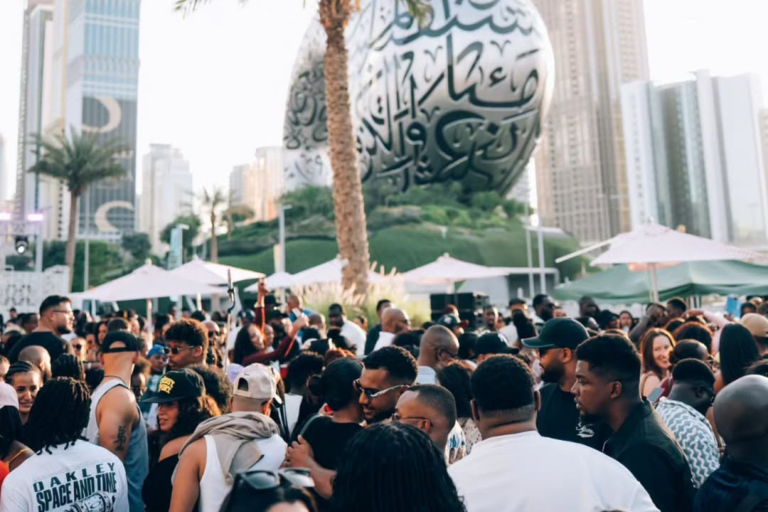
After enduring some of the harshest waves of classist rejection and public moral panic, Mahraganat has survived its painful labor and entered a long-overdue era of recognition. Around the turn of the 2020s, the genre finally crossed into legitimacy: record labels, indie and major alike, festivals, and upscale venues no longer shy away from its chaos. Cross-genre collaborations, once a wild anomaly, are now part of the mainstream.
Now that the dust has settled, a new question looms over the genre: what’s next?
Double Zuksh didn’t live as a duo through Mahraganat’s earliest, roughest years – they formed around 2019 – but their debut full-length Kol 7aga Ok captures this moment of evolution perfectly. Most of the album’s ten tracks depart from the same core and take a different road outward.
The opener, and the album’s best-performing track so far, “Ba2olak Eh,” stays true to the duo’s proven formula – an evolution of their earlier hits like “Tayarat” and “Fokak,” both collaborations with 3enba. Their knack for adding a subtle layer of studio polish to Mahraganat’s flamboyant maximalism makes their sound more accessible, but never less street.
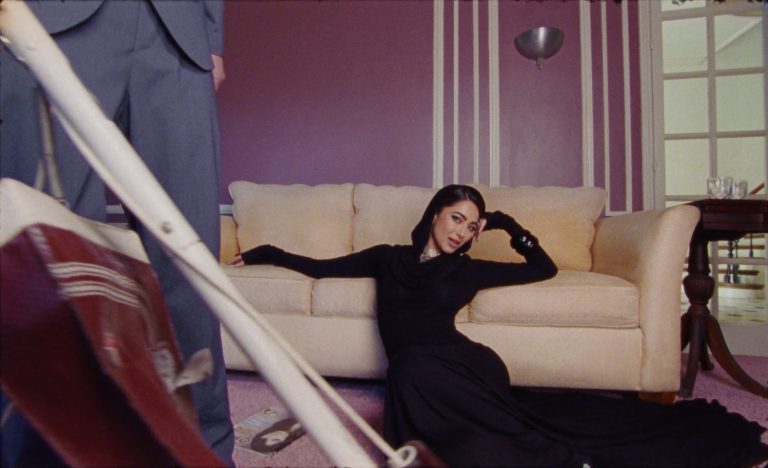
On the title track “Kol 7aga Ok,” the duo dip into pop bravado, gliding over bright, horn-laced beats and the occasional electric guitar riff. Even their abrasive swagger softens into cute charm: “I drifted in your face with my BMW,” they boast. The video cements the vibe – colorful, silly, and blissfully unbothered, like an acid trip in daylight.
The album’s most promising vision of Mahraganat’s future arrives on “Karakeeb.” The song captures a trend that has been unfolding in the genre for several years now: a stripped-down, radio-friendly Mahragan that smooths out the jumpy samples and sharp keyboards without losing its pulse. The result flirts with both Shaabi and Egyptian trap. Lyrically, however, the duo remain stuck in the genre’s old habit of airing folksy grievances.
“Basha,” featuring rapper FLEX, is billed as the album’s flagship collaboration. FLEX dominates so completely that Double Zuksh feel like guests on their own record – but that’s hardly a flaw. Catchy and dynamic, the track feels more like a nostalgic detour through Egypt’s early-2020s drill wave than a step forward for the genre.
“El Balad,” featuring Mahraganat veteran Shobra El General, channels a different kind of experimentation. Built on hypnotic electronic loops that circle like a Sufi dance, the song drifts toward trance territory – a rare crossover for Mahraganat, despite its deep roots in Mouled music. It’s a spiritual cousin to Fifty and Sadat’s comeback song “Satarana,” released earlier this year.
The album’s final surprise comes with “Morphine,” a plunge into horror rap where the duo deliver hardened trap bars over eerie strings and menacing atmospherics, fusing Shaabi grit with cinematic dread: “When we get hungry, we eat each other.”
Another sign of Mahraganat’s maturation is the fact that full-length albums are slowly becoming the norm after two decades of single-driven releases. Kol 7aga Ok carries the unease the genre still feels toward the album format, with its uneven sound. But in that inconsistency lies experimentation – sometimes mature, sometimes raw, but always hungry – capturing a pivotal moment for a genre still searching for what comes after survival.