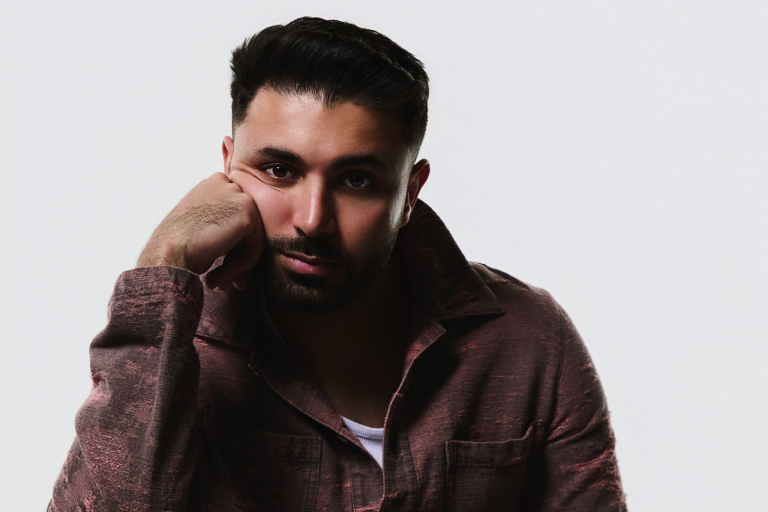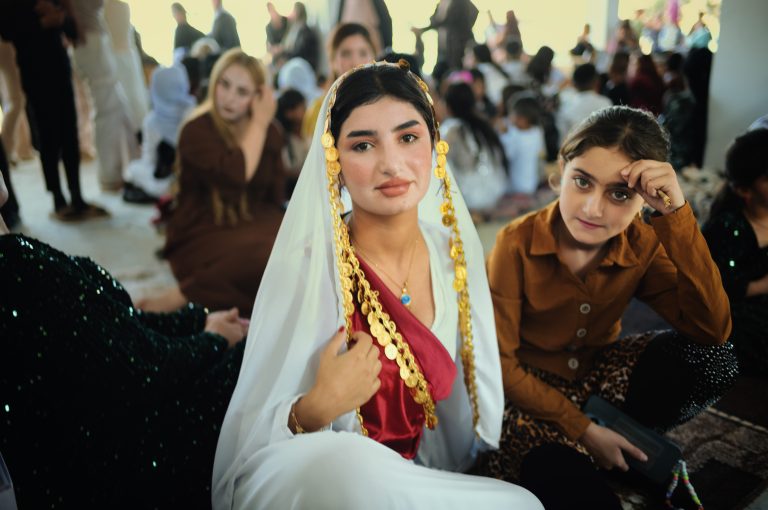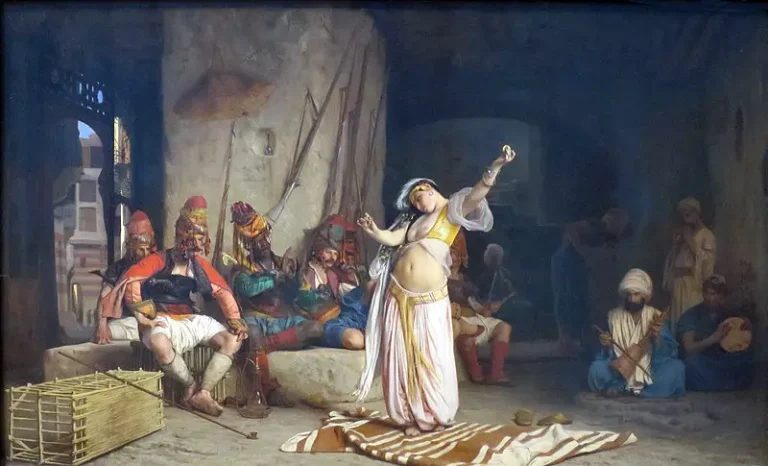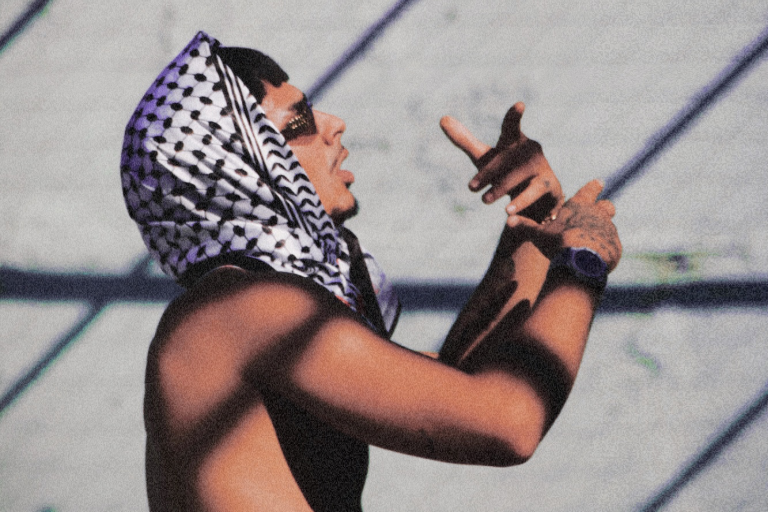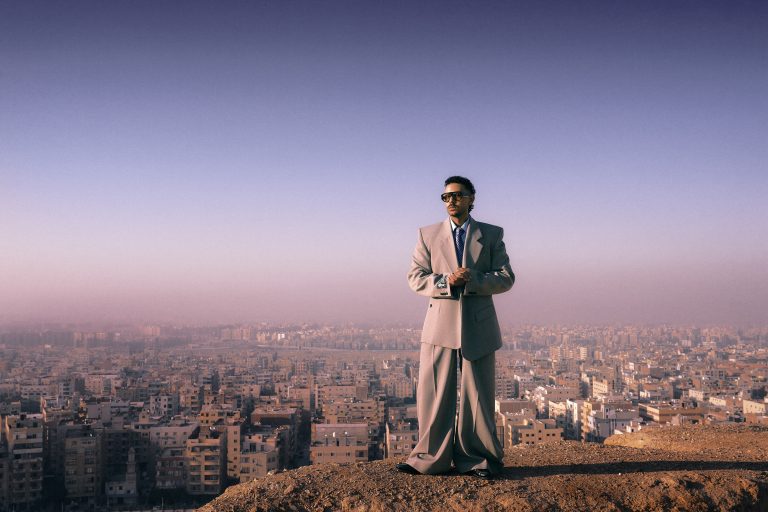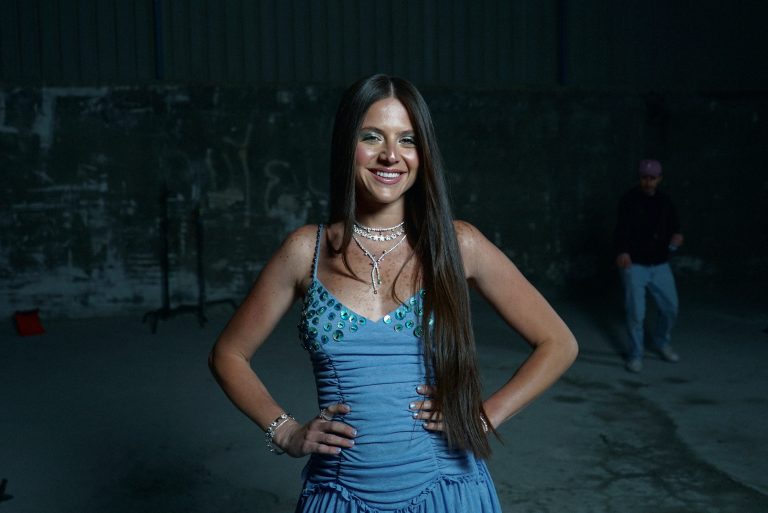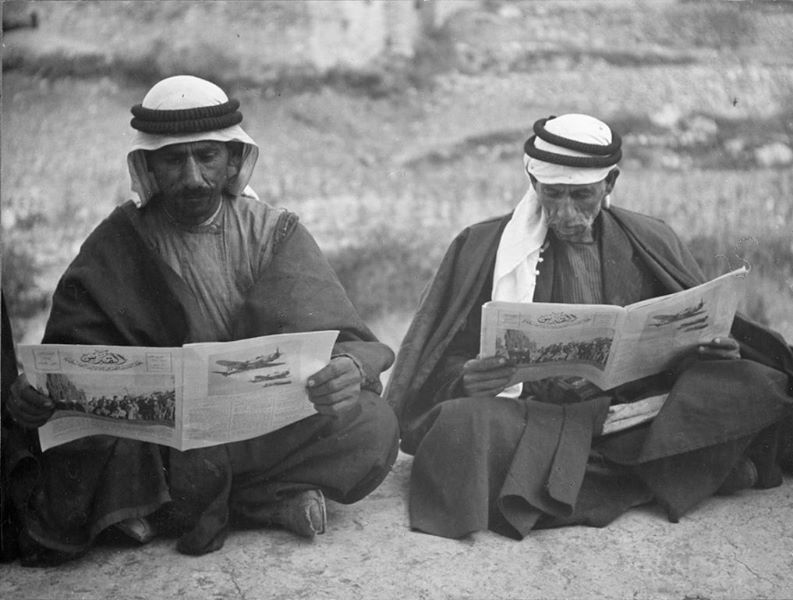
As media in the West shrinks – The Face shuts down, again, VICE implodes, and Paper magazine saves itself in a last-minute bailout, the MENA region is undergoing an opposite renaissance. On the surface, it feels long overdue, a celebration of all that the region has to offer.
But what does it actually imply, having “Arabia” embedded in the titles of global media franchises? The regional media landscape continues to expand, and so do the questions. What value does such a wave bring? And whom do Arab editions of major media franchises plan to serve?
To understand this surge, one has to acknowledge the three main players.
At the heart of this expansion is ITP Media Group, a private company based in Dubai and currently licensed to own over 60 media titles.
There’s also Penske Media Corporation (PMC), an American media and publishing company that sold Saudi Arabia’s Public Investment Fund a minority stake for over $200 million in 2018, and this year announced a strategic partnership with Riyadh-based SRMG Media Solutions.
And of course, the highly esteemed Condé Nast, which arrived in the region in 2023 to take over its titles that had been published under license, marking the first new owned-and-operated market for the company since 2007, when Vogue was launched in India.
Beginning in 2005, these media companies have slowly been integrating high-gloss lifestyle and luxury magazines into the region, starting with Grazia Middle East and, at the time of writing, arriving at WIRED Middle East.
While this expansion seems to be at its peak right now, this wasn’t always the case. In fact, this magazine you’re reading right here, Rolling Stone MENA, attempted a launch in 2013 with only one cover – featuring Lebanese band Mashrou’ Leila – successfully making it to life before it was discontinued. So what changed? And why now?
“I think the initial launch of Rolling Stone Middle East (now RS MENA) mirrored the uncertainty that came after the Arab Spring, especially being a music magazine at the forefront. At the time, a lot of the bands that were active in the region were dismembering or entering hiatus, partly due to what felt like despair after the failure to achieve what we hoped was a new era,” Ammar Manla Hasan, Editor in Chief of Rolling Stone MENA, tells me. Ten years later, the magazine is six covers in and counting, becoming part of a hulking publishing ecosystem in the MENA region. Their success today, similar to other titles, is tied to other reasons.
“Earlier, it was Harper’s Bazaar, it was Vogue, and now it’s more niche, more topic- and genre-centered magazines, so this expansion is just a natural continuation of all these kinds of bigger-name magazines that have been active here for the past 10 years,” explains Ahmad Swaid, Editor in Chief of Dazed MENA. “But ultimately there is more of an understanding that there is an audience and it’s an economic opportunity.”
And it’s true. In the case of Rolling Stone MENA, for example, there is a continually brewing and specific interest in the music coming out of the region – with many major record labels launching MENA subsidiaries; the same goes for fashion.
“Back then, you’d see a few luxury names enter the region, and it always felt very aspirational. Today, there’s a much larger, younger audience with real spending power, and they expect work that actually understands the cultural context,” Rusty Beukes, former acting editor of GQ Middle East, tells me.
For titles based and operating in the Gulf, the logic seems clear, as its luxury market is now one of the fastest-growing globally, even fitting into the soft power goals (projecting modernity, progress, global integration) that it has been working towards for decades now.
“Everywhere in the world, there are hubs for fashion and publications – think, for example, New York or Milan – so it’s natural to have a capital in the MENA region for magazines. But also, the Gulf has the infrastructure and stability to host such endeavors,” Manla Hasan explains.
But this explanation can fall flat when it comes to the rest of the region, where financial collapse is one step away, unemployment rates keep towering, and instability remains a specter hovering over daily life. Are the youth in Damascus or Bethlehem or Tunis really tapped into buying a Patek Philippe in this economy?
“A great editor is the person who can bridge that gap, not just fall into aspirational storytelling.” – Rusty Beukes
“There’s so much talent in this region – young, hungry creatives with real perspective and a strong voice. And that’s why having a proper custodian matters,” says Beukes, noting that “a great editor is the person who can bridge that gap, not just fall into aspirational storytelling because that’s what luxury brands expect.”
There is an admission, and a quiet (perhaps righteous) surrender to the business basis of these publications, but as Beukes explains, it’s about positioning. Swaid seems to agree. He explains that in June of last year, Dazed MENA shot its covers in Lebanon, in collaboration with Gucci, and worked with a fully local production team.
Given the economic situation in Lebanon, which often existed at the forefront of fashion and storytelling, opportunities have been scarce. Since the shoot, Swaid notes an increase in interest from advertisers to initiate projects in Lebanon.
“That is sort of a step in the direction of putting money into an economy, hiring people and creatives to create content. That’s one way, in terms of reconciling, so to speak,” Swaid explains.
I wonder: should these titles have claimed a Gulf representation before expanding to the broader Middle East? In the early 2000s, ITP launched Time Out Dubai, followed by Time Out Abu Dhabi, which follows classic magazine expansions, as they are usually country-focused rather than region-focused.
In the Arab case, it seems like this route is a continuation of a Western approach that disregards diversity, categorizing a broad civilization as Arab or Middle Eastern no matter the cost. The reality is that a lot of these titles struggle with this orientation: some titled “Arabia” like Vogue and Billboard, others “Middle East” like GQ and AD, and others like Dazed and Rolling Stone taking the “MENA” title.
“Using the term MENA, in my opinion, is a bit more encompassing than using the Middle East. This is why when we launched, we launched with nine covers, and we launched with covers that were even beyond the geographical recognition or definition of where we are based. We launched a cover shoot in Afghanistan, Sri Lanka, and South Africa. That was on purpose,” Swaid tells me.
It is true, terms are limiting, and it can get muddy sectioning and categorizing a region as big as MENA, sometimes coming to encompass Turkey or Iran, even Israel at times. So how do we reconcile the number of English-speaking magazines claiming to represent a region we struggle to even define? Whom exactly are we talking to?
“As Rolling Stone expands, we are finding ways to incorporate a bilingual approach to the magazine, but to be frank, it’s important to remember that English remains the common language that connects us to the huge number of Arabs in the diaspora,” Ammar explains, and it’s valid: part of this media surge is integration with the world, reflecting the reality of millions of Arabs living abroad.
“For years, Arab and Islamic societies fostered cultural isolationism. It was rigid and imposed, a way of saying we were against the West while also adopting (its values) as people. In recent years, there has been a strong trend toward cultural globalization in the region. We know that modernization is taking place. This can be criticized as a dilution of our culture, but it can also be seen as preservation by opening up to the world,” Ammar notes.
Dazed, too, sees publishing in Arabic in its future, with Swaid drawing a fine line between what the magazine is at launch and what it can be in the future.
“Everything that we’ve been able to accomplish in one year, for us at least, builds the foundation of where we want to go. What’s important with a publication like this is feedback. Many publications exist from an aspirational approach – do this, read this. For us, it’s really a case of evolving with our audience and our contributors, and taking feedback for us to then build what we’re hoping to build.”
“English remains the common language that connects us to the huge number of Arabs in the diaspora.” – Ammar Manla Hasan
Beukes, on the other hand, has his own reservations: “Looking at GQME now, it’s hard to tell who the work is speaking to. The team is incredibly talented and diverse, and it’s clear in the output. But the audience feels less defined,” noting that when the magazine sat under a regional publisher, “there was more room to fight for decisions that made cultural sense. Everything was a push, but it was a push in the right direction.”
Which begs the question: are these platforms an attempt to present to the world a new identity of a modernized Arab, or are they speaking to Arabs themselves?
“For us, it’s not necessarily speaking to the West, it’s more of a case of speaking to each other. This is important because we have to be able to honor our neighbors. We have to be able to have a place where we’re able to learn from each other,” Swaid continues. “I think the issue that we have is the expectation that we’re meant to exist as a catch-all, and that’s not the reality.”
Evident in their content and launch covers, Dazed aims to push boundaries, a place for neighbors to honor one another, no matter what borders they fall under, but it’s not always smooth sailing for them or any of the other titles. Challenges persist on all different fronts.
“Everything comes down to a profit and loss sheet, unfortunately, and for me, having also been on the other side, freelancing and being employed, I’m just an advocate for paying people. Outside of this region, everyone’s willing to do work for free; perhaps they come from a greater place of privilege.”
But there’s also censorship. Rusty continues, speaking on his first cover as acting editor of GQ Middle East, where there was a constant push and pull between remaining true to the words said by the featured artists and the bureaucracy of what can be approved and sent to print.
The conversation about editorial choices and cover stars is one whole different and long conversation by itself, but at first glance, there seems to be a tunnel-visioned focus on internet celebrities and influencers. This is a global trend, indeed, but in the case of the Arab world, where culture is generationally inherited and not as easily discarded, these publications seem to be focused on one singular archetype.
Ammar explains this as “capitalizing on the attention economy and not working against it,” which makes sense, adding that “internet culture” doesn’t really exist as a standalone domain anymore, as everything today belongs on the web.
In return, Beukes speaks on the editorial dynamics of GQ. “GQ’s Men of the Year has that iconic status. For me, that’s where you honor those icons. I think today, magazines are very youth-led, so it’s about finding those specific editorial calendars or moments where we bring in legend-status talent.” Before adding: “But it’s true, publications are kind of circulating the same talent. Every cover looks the same; it’s the same person in the same designer garment because brands are paying for it. There’s definitely a massive gap in the market for discovering and platforming new voices.”
So what does any of this mean? Where is this market headed? Dazed, for example, is pioneering in platforming the truly deserving and unexpected. However, a recent cover that featured Sakir Khader, a photographer outspoken on imperialism and currently covering fighters at Jenin Refugee Camp, also featured, on its back, a Louis Vuitton ad. The brand’s men’s vision is led by Pharrell Williams, who headlined the gala for the Friends of the Israeli Defense Forces in 2018. So is this a win, a slick infiltration, or a clash in ideology?
“What is the ultimate goal, right? Is it the idea that a publication is expected to just be very high fashion, or also be able to have incredible stories? I think that’s what it comes down to. It’s a little bit like culture jamming, if you will. I think there’s incredible importance in someone being able to pick up a magazine and have truth being shared where they might not expect it to be,” Swaid explains.
“We’re not meant to exist as a catch-all — that’s not the reality.” – Ahmad Swaid
Beukes insists there’s still a long way to go. His analogy is classic and true; it is a bit like Catch-22, where editorial integrity gets challenged on a daily basis, but for him, moving the needle even slightly is still change. For the future, he is hopeful the region will have the right storytelling platforms, and it’s starting to show.
“Frankly, if you’re not creating impact, you are kind of falling to the side. It’s one thing to have a publication and be a style authority, but we are beginning to see those slowly fading because of their inability to speak to the communities behind these magazines or the people that they claim to be speaking to,” Beukes states.
Ahmad Swaid, who previously worked at GARAGE Magazine, System Magazine, NOWNESS, and Dazed Media, shared a similar belief to Beukes: these magazines aren’t forever. “The interest within the region and our world has remarkably shifted, and we need to have spaces where we can have opportunity, ultimately. My expectation isn’t that our creatives will be in this system forever. We’ll be able to create our own. That’s what it is, and it’s happening.”
“The former team at GQ, before I took over as Editor-in-Chief, then launched their own publication, YUNG, for example,” Swaid says, referencing the publication Beukes went on to co-found with fellow colleagues. The logic behind his assessment is clear. From the ancient Hakawati tradition, Arabs helped shape some of the world’s earliest storytelling. The ability to tell our own stories is not something we have ever lacked.
He continues: “We have to reach a point where we don’t give Western titles so much importance. That’s the thing. We have to change our own psychology and our relationship with them, which begins by supporting, investing in, and buying independent titles that exist from and for across the region: MyKali, Ma3azef (where Manla Hasan held the role of Editor-in-Chief for years), Al Hayya, Azeema, and Plastik are a few that come to mind.”
The dream is there, and so is the talent, but for now, we still search for answers. So far, it seems that the rise of these Western titles in our region is neither a cultural renaissance nor a soft-power project; it is something in between. A moment shaped by talent in Beirut, editors in Dubai, corporations in New York, and audiences scattered across continents.
Perhaps this uncertain pursuit is the clearest reflection of the region itself: a place negotiating its identity in real time, caught between aspiration and precarity, global visibility and local fragmentation. The question is not whether these platforms belong here – they clearly do. What’s worth asking is whether the region’s storytellers themselves will eventually have the power to own the narrative, not just earn a monthly feature.