
.هذا المقال متاح أيضًا باللغة العربية
The Jazz Bar
To reach the Carlton Hotel, half-hidden at the heart of Cairo’s iconically gritty neighborhood of Al Ataba, you have to rub shoulders with the fronts of a series of fast-food joints, some Egyptian, some Syrian, with alarmingly affordable menus – including one storefront boasting sandwiches as cheap as eight Egyptian pounds, around fifteen cents. Then you turn into a muddied side street, barely wide enough for one car to pass at a time, and keep a sharp eye out for the rundown façade of the old hotel on the right-hand side of the alley.
While the name sounded familiar, it was only when I stepped into the narrow lobby that I was hit with flashbacks of the rooftop bar on the hotel’s eighth floor, which I used to frequent during my college years. The middle-class watering hole attracted a leftist-leaning crowd that came for cheap beer and shisha, as well as the uncanny, direct view of the High Court of Justice sitting right across the street – a backdrop that always felt fitting for tipsy conversations about local and regional affairs.
When I exited the old-timey elevator on the eighth floor, a colony of around forty crew members buzzed across the space like a loose beehive, weaving through wavy routes between film and sound equipment that had taken over nearly every surface. Moving with visible purpose, the crew had an image of a jazz bar in mind, and they wouldn’t stop tweaking the Carlton’s decorations and furniture until it resembled one.
The rooftop bar is divided into two spaces. An indoor area stretches in an L-shape, with a small elevated stage at the inner corner – where crew members were replacing wallpaper and gluing images into picture frames. The outdoor space, also L-shaped, opens onto a panoramic view of central Cairo, with an open-air bar and grill marking its far end.
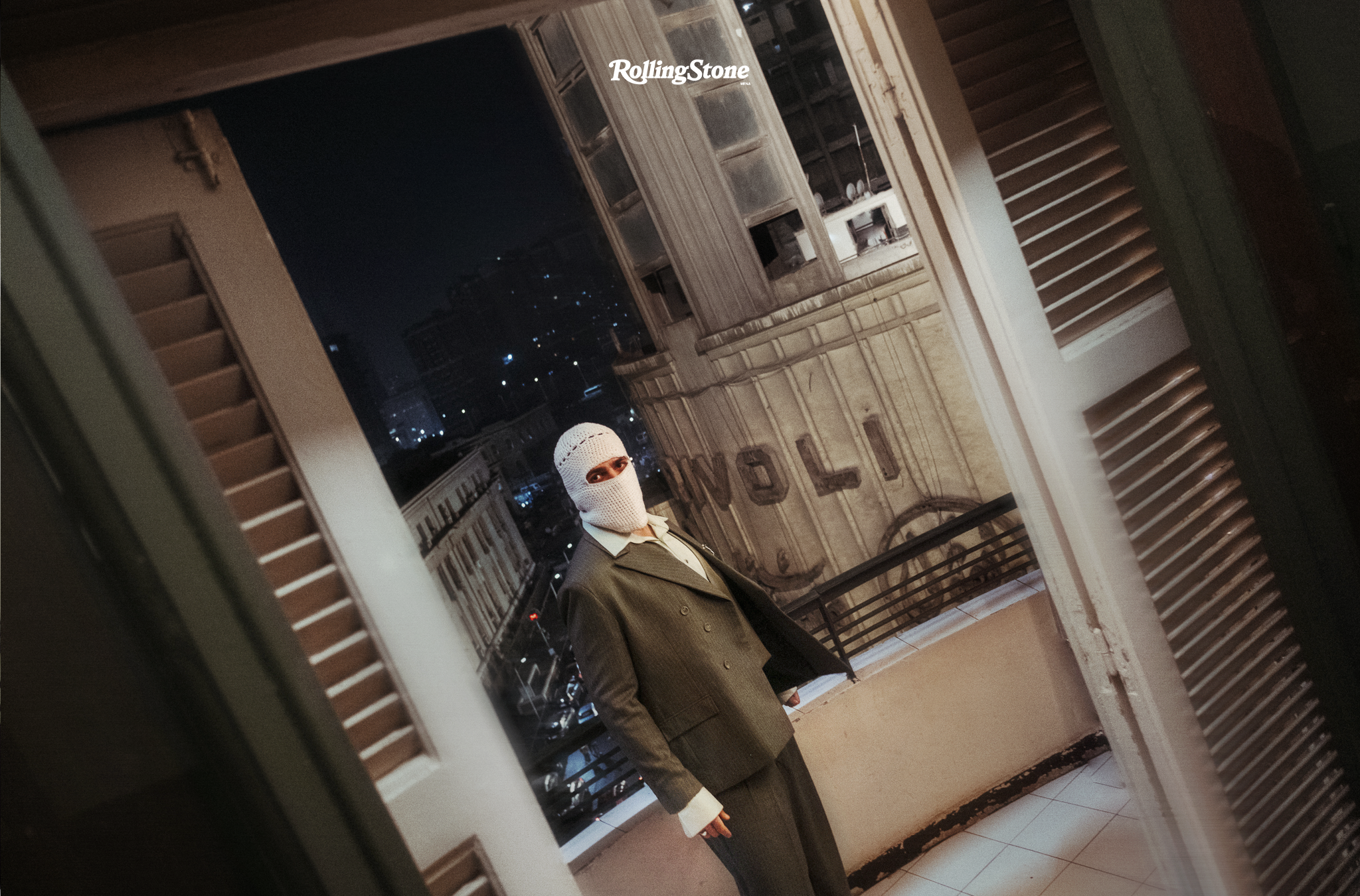
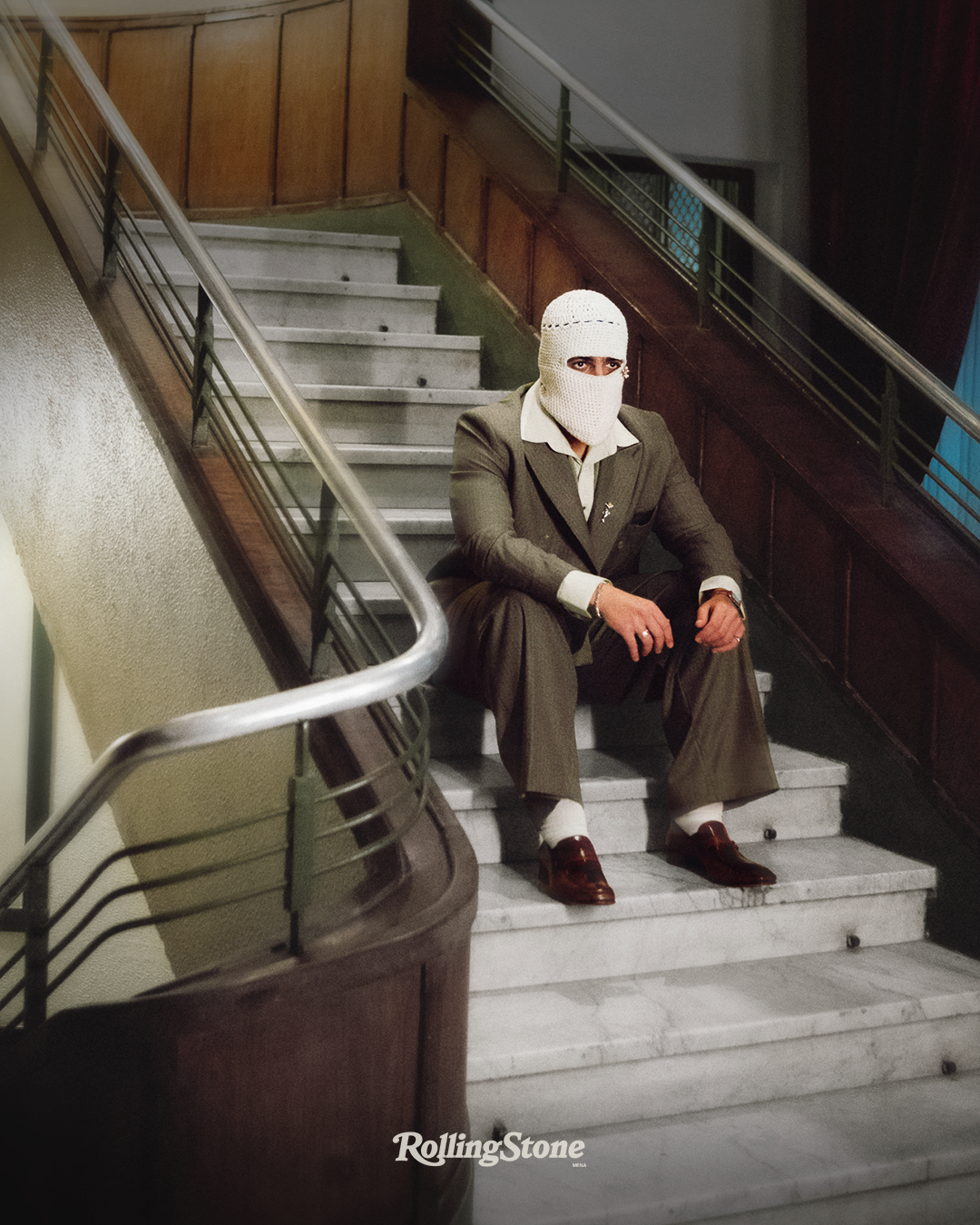
I was smoking a cigarette by the terrace door, standing strategically so I could blow smoke outside without getting soaked by the unseasonal Cairo drizzle, when someone abruptly yanked my cigarette-holding hand aside to make space for two men rushing through. The first was a young man in a tight, plain white T-shirt – Hussein Mardini, the photographer directing the set production and several photo sessions for both TUL8TE’s team and Rolling Stone MENA. Behind him followed a bulky figure in a loose ’80s suit and a milk-white, hand-knit wool mask.
Mardini and The Man headed toward the far corner of the terrace, slightly hunched against the drizzle and early winter breeze, checked the photography spot, then rushed back inside and all the way down to the sixth floor, where part of the photoshoot was taking place.
A drop of rain put out my cigarette and I headed back inside to find TUL8TE’s manager, Nora, who invited me to attend this recording session of a jazz rendition of his latest album, Narein, ahead of its world tour. She also promised an interview with the elusive star – one that would only be confirmed on the spot.
I was curious what a jazz rendition of Narein would sound like. The album already included a jazzy number, the Latin-tempered “Ghareeb Haly.” The rest leaned predominantly flamenco and guitar-led, a direction fully explored in the two standout hits, “Heseeny” and the title track “Narein.”
Other tracks like the serenading “Habeeby Da” trade acoustic strings for shiny, ethereal synths, while the cheerful “Enty Crazy” leans deeper into percussion, and the dancefloor-ready “Daroory” expands TUL8TE’s exploration of Levantine dabke territory.
The day around me was unfolding in unmistakable Cairo chaos. Everything was running several hours behind schedule. Every so often, a crew member would step onto a gear box and shout at the top of their lungs, ordering people to evacuate a corner or make way for young men hauling heavy equipment. The hotel staff worried about making too much ruckus next to the Court. Meanwhile, the sporadic rain was enough to clog the streets downstairs, summoning a choir of car horns that played on until they were rivaled by the band’s rehearsals.
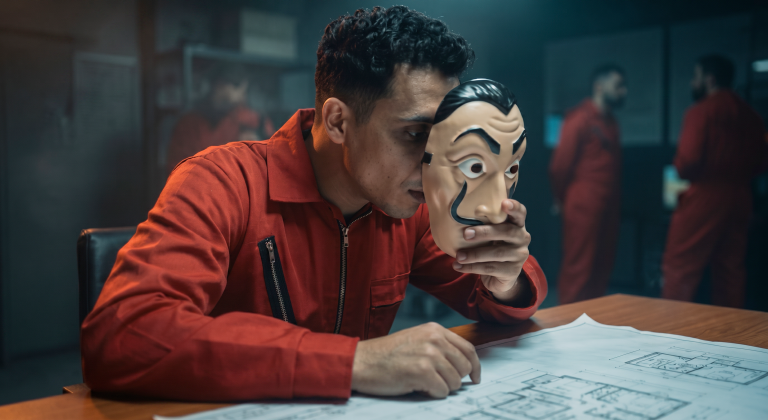
The five-piece jazz band were all dressed in similar baggy ’80s suits. While they initially appeared with their faces exposed, they soon slipped on their own variations of the iconic wool mask. The saxophonist had long dreadlocks, and to avoid the mask bulging like a hijab at the back, his version featured a hole to let his dreads spill through. The band took their places on the cramped stage, forming a crescent with an empty spot reserved for TUL8TE, marked by a lone microphone stand at its center.
The recording session was scheduled for 5:30 p.m., but by 7:30 the crew were as busy as when I’d first arrived, and the space remained cluttered with gear boxes. Nora passed by my booth and motioned for me to follow. I walked no more than eight steps behind her before we reached a black curtain separating the last table from the rest of the bar.
I followed Nora through the curtain, my eyes still adjusting to the dim lighting and smoke-heavy air, when I tripped over a parked tripod and nearly fell headfirst into the lap of a man seated in the corner, who sprang up and offered his hand. I grabbed his arm and heard a deep, warm voice dissolve the embarrassment: “Don’t fret – the same almost happened to me ten minutes ago.”
I looked up to thank my mysterious benefactor and was met with movie-star-handsome features carrying a wide, ear-to-ear smile.
I hadn’t realized I was meeting TUL8TE unmasked.
The Jazz Man
TUL8TE is a media-shy figure, another thread tying him to Amr Diab. He showed up for the interview as prepared as I was, and just as visibly nervous. Over the course of our forty-minute conversation, he drew from a bank of well-formed metaphors, analogies, and clearly articulated takes. He’s measured but not cautious, diplomatic but never vague. An artist shaped by underground ethos yet buoyed by mainstream fame, he moves with steady footing in both worlds.
His has been one of the quickest ascents in the history of Arabic pop, and he’s acutely aware of it. He’s constantly reverse-engineering his own success, trying to pinpoint what makes his music cut through an ocean of seemingly similar releases. By now, he’s arrived at a few golden rules – ones he not only follows, but is eager to share with a new generation of musicians.
His still-nascent journey into music-making began with production, under the mentorship of another disruptive force in the Egyptian scene, Lege-cy. The two have dominated Spotify charts in Egypt late last year, landing eight of the country’s ten most streamed tracks for nearly two consecutive months.
Learning production gave TUL8TE a 360-degree view of music-making from the get-go, and soon enough he became obsessed with its technical architecture – from song structure to instrumentation.
His immersive, hands-on approach to music-making made him take notice of how comfortable artists are today with outsourcing large parts of the creative process, from songwriting to composition. To him, this denies artists the chance to embed parts of themselves in the work. He thinks that an aspiring artist should always be involved. Always “be in the room. You don’t want to be passive.”
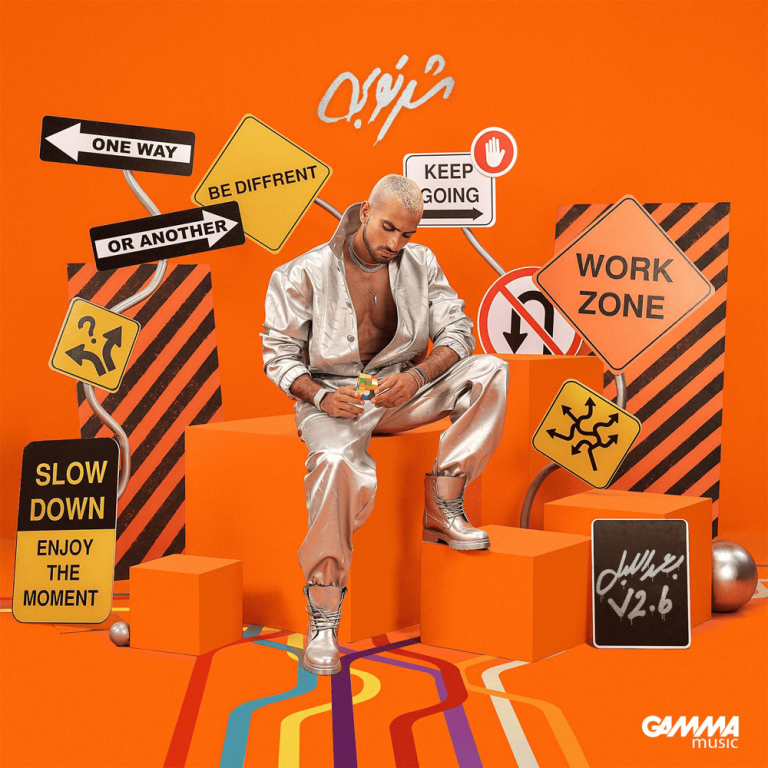
The issue, for TUL8TE, isn’t collaboration – it’s relinquishing control. After producing his first two albums himself, he brought in an external producer for the first time on his third full-length, Narein: Moataz Mady.
“With Moataz, it was a learning curve,” he says. “We made a lot of ideas that we threw in the trash – they didn’t make the album. But every time we worked together, every time I trusted his taste, I realized that if he chose a certain sound or sonic direction, I’d probably like it. He’s very good at making things that are close to my vision.”
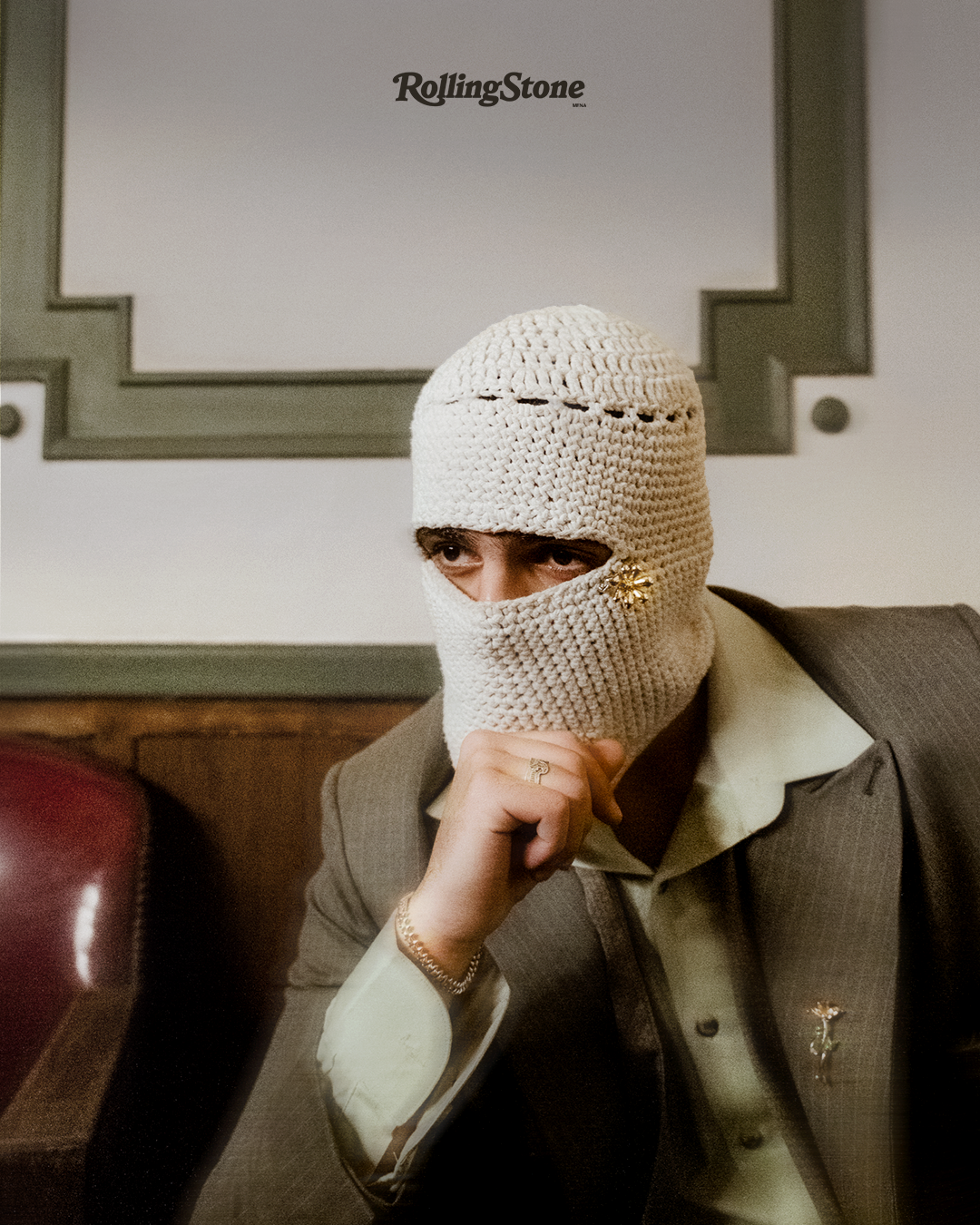
His collaborative process is built on creative honesty and a radical rejection of compromise. He stresses the importance of never greenlighting ideas that don’t fully align with the project’s core: “If you like something, say you like it. If you don’t, say you don’t. And if you’re not sure how you feel, take your time – listen to it for two or three days. But always be honest about what you feel.”
Beyond Narein, TUL8TE’s partnership with Mady also produced the late-summer hit “El Hob Gany.” The track revived an early-2000s radio feel, with its near-sleazy programmed percussion and funky Egyptian instrumentation – triggering some renewed criticism from detractors who accused him of leaning too heavily on nostalgia.
He sees it differently. His frequent revisits of older Arab pop references – whether Amr Diab’s flamenco era of the ’80s and ’90s or the breezy sensibility of early-2000s hits – aren’t about replication. To him, pop feels stalled, and his instinct is to reset it to the last moment when it was fully functional, before charting a parallel path forward.
“In the ’90s and early 2000s, music production kan to7fa el sara7a (It was honestly brilliant),” he says. “If you listen to production now, it’s very weird to me.” He points to figures like Tarek Madkour as reference points: “They were doing 7agat fashikha (really badass things). He’s one of the best in the game.”
And he’s not wrong. Early-2000s Arabic pop still dominates playlists, wedding DJ sets, and, thanks to TikTok-fueled revivals, even Billboard charts. But what drives TUL8TE isn’t an attempt to recreate that era’s success. It’s a pursuit of something more elusive: feeling.
“If I listen to a song and it makes me feel something,” he says, “I want to chase that feeling.”
That instinct shaped “El Hob Gany.” During a creative retreat with Mady on Egypt’s North Coast last summer, TUL8TE told him he wanted to “dance a bit.” Mady started building a beat from familiar elements they both loved.
“Fa (so), he put in the darabouka, he put in the claps,” he says, laughing “and I came in with ‘El 7obbi Gany Ga—’ instantly!”
Having recorded his debut album, Tesh Shabab, in his bedroom, TUL8TE is keenly aware of the need to preserve character amid increasing studio polish. He draws a clear line between what’s technically possible and what’s aesthetically alive.
“When music is too polished, it’s dead,” he says. “Music needs life. It needs character. I think attitude is more important than perfection.”
Throughout the rest of the interview, the serenader dissects nearly every aspect of his craft. But one idea keeps resurfacing – a phrase he returns to almost obsessively: playing it by ear. Simple on the surface, the concept carries a long, loaded cultural history, bound up in the tension between Eastern and Western approaches to music.
Where Western music traditions have often leaned toward standardization, notation, and near-academic systems – giving us memes about music theory being as complex as quantum physics – Middle Eastern musical practice has long prioritized intuition, memory, and feeling.
Despite historical attempts to formalize Arabic music, most notably the heavily scrutinized 1932 Cairo Congress of Arab Music, vast swathes of Arabic music resisted or slipped through those frameworks. Much of it remains transmitted through listening and imitation – playing by ear, or what’s known in Arabic as sama‘i.
“Belnesbali (to me),” he says, “when it comes to music, I learned everything by ear. I don’t read notes. I don’t really speak music theory. For me, music comes first, and theory comes second.” He sees this approach as more capable of producing organic, lush soundscapes than sheet-born composition. “It’s about listening, observing, and seeing how people did this. I want to achieve something native.”
Jazz, in that sense, feels like a natural fit for music that thrives outside rigid lines. For this project, he assembled a group of jazz virtuosos, drawn to a craftiness he has long admired: “Every instrument has something to say. Every musician, through their instrument, has something to say.”
During rehearsals, he even developed a new song with the band – one he was preparing to perform publicly for the first time: “I had four bars to sing,” he explains, “after that I wanted the music to turn samba, and I gave the musicians playground to improvise.”
When I prefaced my final question with “this is my last question,” a visible look of relief crossed his face. He stubbed out his third cigarette just as Nora, who had cleared the makeshift backstage for us, slipped through the curtain and told him it was time for rehearsal.
The Jazz
The Man slips his mask back on, adjusts it for comfort, and passes through the curtain, taking the twelve steps toward a stage that has been waiting for him. He notices a glue-like sheen on the column beside him and, wary of brushing against it, asks the crew: “Hwa el beta3 da feeh dehan aw 7aga?” (Does this have fresh paint or something?)
Suddenly, a jazz-bar mood settles over the Carlton’s rooftop. The air thickens with cigarette smoke. A crowd of forty-somethings chat quietly, scattered across a handful of tables surrounding the stage and the off-camera spaces behind them. TUL8TE plays the music by ear and his body by hip, swaying and spinning, unbothered by the activity around him – the occasional crew member hauling a gear box across the terrace, now slick and slippery after hours of drizzle.
Every now and then, rehearsals are interrupted by technical hiccups. At one point, the drummer complains that the click is too loud; moments later, after adjustments, he complains that it has disappeared entirely. Between takes, musicians pause to adjust their masks around eye and mouth holes, each interruption brief but inevitable.
Songs like “Narein” begin with vivid, quivering preludes before TUL8TE slips in with a sneaky vocal delivery that catches listeners off guard. He raises and lowers pitch and volume playfully like a cat pacing a stairwell. At times, his singing drifts slightly away from the band, each following a different interpretation of the song, bound together by feel rather than plan.
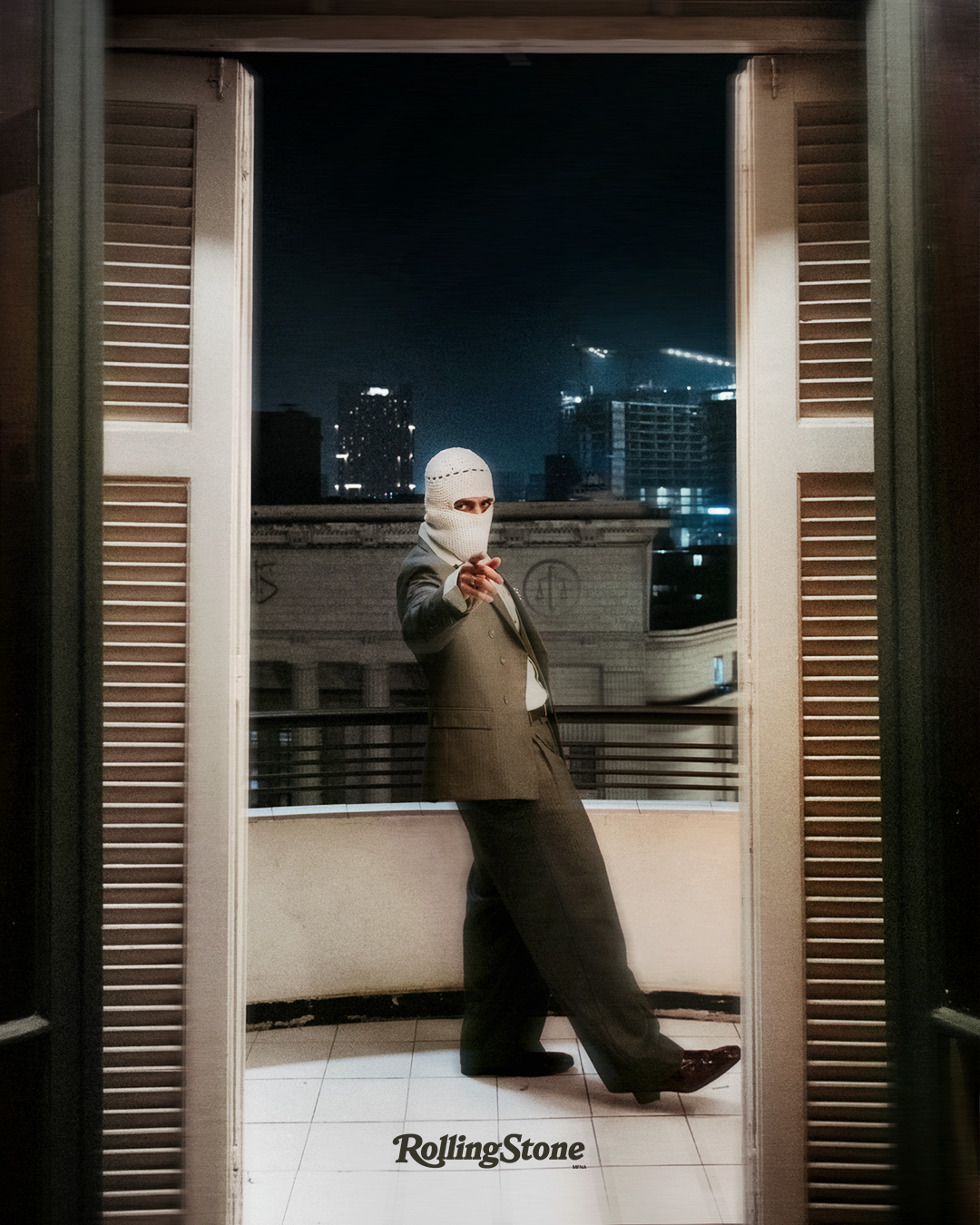
His relationship to jazz sits somewhere between playfulness and persistence. Sometimes he brings flashes of New York – even Vegas – to the Carlton, circling his arms as if pedaling an invisible bike. At other moments, he feels like a Gen Z artist flirting with jazz tropes via TikTok. Either way, he conducts the band like a tipsy maestro, an invisible undercurrent pulling everything together, his voice rustling against broad, slow sax and trumpet lines.
When rehearsals are over, TUL8TE rushes offstage with photographer and set manager Mardini, the two heading down to complete a photoshoot framed against one of the hotel’s windows, capturing the side profile of the iconic Rivoli Cinema across the street.
Upstairs, preparations stretch late into the night. Around 1 a.m. – after an endless series of “Yalla beena! (Let’s go!)” and sweat-drenched men shouting instructions from atop gear boxes – the space is finally ready for the main recording. I take a seat beside Mardini at the far end of the bar, shielded by three portable screens projecting live feeds from three cameras.
“Action,” Mardini shouts.
On one screen, TUL8TE enters the bar with a brisk stride, mounts the stage, grabs the microphone from its stand as if reclaiming something stolen from him, and introduces the session to the small audience gathered at the front tables.
They open with “Narein.” A heavy instrumental prelude swells before TUL8TE’s vocals crash in like waves against a shore, his whispered verses appearing and disappearing between sax riffs like the moon slipping in and out of cloud cover. Eventually, he hands the song over entirely to the band for a series of solos, which he shadows with sharp dance moves and the occasional, ecstatic “Whooooh!”
On “Habeeby Da,” horn lines rest atop a bed of precise percussion. Relative to the original melody, the band colors almost entirely outside the lines, chasing reinterpretation rather than reinstrumentation. Only TUL8TE’s voice reins the song back toward familiarity, gliding across the instruments like a slab of butter melting on a hot jazz pan. Instead of shouting “Enti mesh hassa biya walla eh?” (Don’t you feel me, or what?), he whispers it. Instead of commanding, he pleads. Instead of overwhelming, he flirts.
By the time they reach “Heseeny,” the band’s chemistry is unmistakable. The song opens with a sweeping introduction that all but erases its original interlude. Riding the momentum of the first two tracks, TUL8TE launches into his vocals with renewed force, injecting the set with a pulse it had only hinted at before. The performance feels almost declarative, laying out his vision for jazz and its place within his project.
If the first three songs leaned toward reinterpretation, “Shedeeny” leans into familiarity. Its recognizable melody flows out of the instruments like cool steam rising from a spring. The band accommodates TUL8TE’s vocals here, pulling back during verses, then rushing in to fill the silence the moment he stops singing, sketching close but distinct variations of the original lines.
Things shift again when they arrive at “Ghareeb Haly.” The song is already jazz-inflected in its original form, raising the question of what a jazz rendition of a jazz song might even be. While Mardini signals that it could be a good moment for a cut, TUL8TE ignores the call and launches into the track, visibly locked in, in the zone.
The night closes with the new song, “El Lahza Di.” Hearing it performed for the first time is quietly enchanting. TUL8TE delivers his now-familiar sentimental lyricism – “Habibi, had gherak fil donya? Oh, oh” (My love, is there anyone else in this world? Oh, oh) – with meticulous articulation, each word unlocking something tender. His voice drifts in and out of the arrangement, at times becoming a sixth instrument, adding warmth and texture as it runs alongside unrestrained sax and trumpet lines.
Just after 2 a.m., he wraps the session, introduces the band to an audience of no more than fifteen people spread across six tables, then steps offstage to thank each of them by hand. The exhausted crew look both spent and relieved as they trail him back toward the makeshift backstage.
The session has landed. The bar, the man, the jazz – they can now inscribe their names on one of the Carlton’s high-ceiling walls, for TUL8TE has been here.



Abdi Declares the SDF Integration Into the Syrian State Complete
The SDF has completed its integration into Syria’s state institutions, a major step toward a unified Syria.