This feature is also available in Arabic.
For a full month AlKhallat+ Series topped Netflix’s most-watched list in Saudi Arabia, competing against a wide range of international productions from different countries. This success points to a project that has continued to evolve from its YouTube roots, but it also signals the maturation of an entire movement that now produces work of remarkable artistic and cultural originality in the Kingdom – maintaining its deeply local identity while remaining open to neighboring creative currents across the region.
Absurdist Comedy: When Did the Spark Begin?
Back in 2020, driven by the boredom of the COVID-19 lockdown, I subscribed to a number of streaming platforms including Netflix. Out of curiosity, I clicked on a film called Shams Al Ma’arif without watching the trailer or reading anything about it. People from my generation know exactly what that title means to us. Shams Al-Ma’arif is the title of the infamous book that shaped our mythology around magic and the occult throughout our middle-school years. The idea of someone borrowing that name for an artistic work was enough on its own to grab my attention.
Beyond that, the film was highly experimental and far removed from conventional commercial formulas. It was entertaining and simple in its construction, avoiding forced complexity. The story follows a high-school senior trying to shoot a horror movie inside his school.
The film deepened both my curiosity and fascination with Saudi comedy – not the more traditional style I had grown accustomed to seeing since the early 2000s, particularly in television drama, but rather a younger movement operating with agility, far from the heavy cultural and production legacy that has long shaped creative trends in the region.
Between 2022 and 2025, Saudi cinema and television produced films and series offering absurdist comedy that ranged from classical to radical in tone, relying on multiple forms of humor: situational comedy, physical comedy, and verbal punchlines.
Most of these works use the desert and Bedouin landscape as their primary setting, benefiting from the tension between the harshness of that environment and its wealth of tiny social details on one hand, and the imaginative freedom it allows for events that break logic and defy audience expectations on the other. Adding to this is a distinctive kind of humor born from treating the absurd with complete seriousness. The plot, performances, and direction never try too hard to provoke laughter – the situations themselves do the work.
In Sikkat Safar, the 2022 series directed by Aws Al Sharqi, which went on to achieve commercial success spanning three seasons so far, the story unfolds inside a roadside rest stop run by a group of young men called “Happy Dreams Rest Stop” on a desert highway. The setting becomes a crossroads for all kinds of people from different classes, backgrounds, and legal or illegal professions, creating a playground for imaginative scenarios that drag its owners into adventures entirely unrelated to their actual business – sometimes out of greed, other times out of sheer necessity.
This same approach appears again in a more cartoonish, playfully horror-inflected form inspired by the worlds of Tim Burton, carefully polished to reflect Bedouin culture, in Malik Nejer’s 2023 film Ras Bras. The story revolves around the driver Darwish and his companions, who find themselves trapped in disaster after transporting the father of a dangerous gang leader. They bring him from a fictional neighborhood on the outskirts of Riyadh populated by terrifying, unusually shaped characters – a place where not a single police officer exists.

The desert setting also plays a major role in works that combine suspense with moments of dark comedy, such as Mishaal Aljaser’s 2023 film Nakah. The film includes numerous hallucinatory scenes and satirical takes on imagined desert folklore and traditional poetry gatherings. Even the narrative thread that determines the fate of the protagonist Sarah throughout the film carries its own unsettling surrealism.
The creators of this new wave draw heavily from the rich cultural layering that accumulated within Saudi society over more than half a century of large-scale immigration from various nationalities, especially among working- and middle-class communities. From these contradictions, they extract unconventional punchlines that highlight the subtle differences between those cultures.
This was especially evident in Abdullah Alarak’s film Sattar, particularly through the character of the Pakistani coach Abdul Qader, whose brutally direct commentary bypasses all filters. His confusion of names and titles – blending his accent with complete indifference toward formality itself – along with his hilariously primitive training methods, such as lifting refrigerators, helped turn him into an iconic satirical version of the Gulf martial-arts trainer archetype, much like Rocky in Creed or Mr. Han in The Karate Kid.
This directorial wave would never have emerged without this generation’s deep loyalty to internet culture, which forms a massive part of its creative reference points. Their dialogue and acting styles often rely on exaggerated performances inspired by the spirit of pre-professional YouTube culture — crude jokes, over-the-top reactions, and chaotic pranks were always central to digital humor.
The drama and cinema of this movement rarely revolve around a singular central character around whom everything else is built. Yet the looseness and ease with which these characters are written and directed create the same emotional effect. I felt that same creative ease again in last year’s films Al Zarfa by Abdullah Majed and Ruhain by Amin Al Aknash.
AlKhallat+: Saudi Youth Between Regional Influence and Heritage
The idea behind AlKhallat first launched in 2017 as part of Telfaz11’s productions – a collection of social comedy sketches released on the company’s YouTube channel. The series stood out for its boldness and its focus on the concerns of young people, including their complicated relationships with older generations and their interactions with the legislative, legal, and social transformations taking place in Saudi Arabia at the time.
At that moment, AlKhallat filled a major gap in youth-oriented content. It positioned itself somewhere between traditional drama and short-form digital content – what might now be described as a kind of pre-mini-drama mini drama.

The concept later evolved into the 2023 film Alkhallat+, created by Ali Al Kalthami and written by Mohammed Algarawi, Fahad Alammari, Wael Alsaeed, Mishari Al Shallali, and Ibrahim Alkhairallah, and directed by Fahad Alammari. Structured as an anthology of four different stories, the film explored deception within society through black comedy, relying above all on the moral contradictions embodied by its characters, their actions, and the consequences that follow.
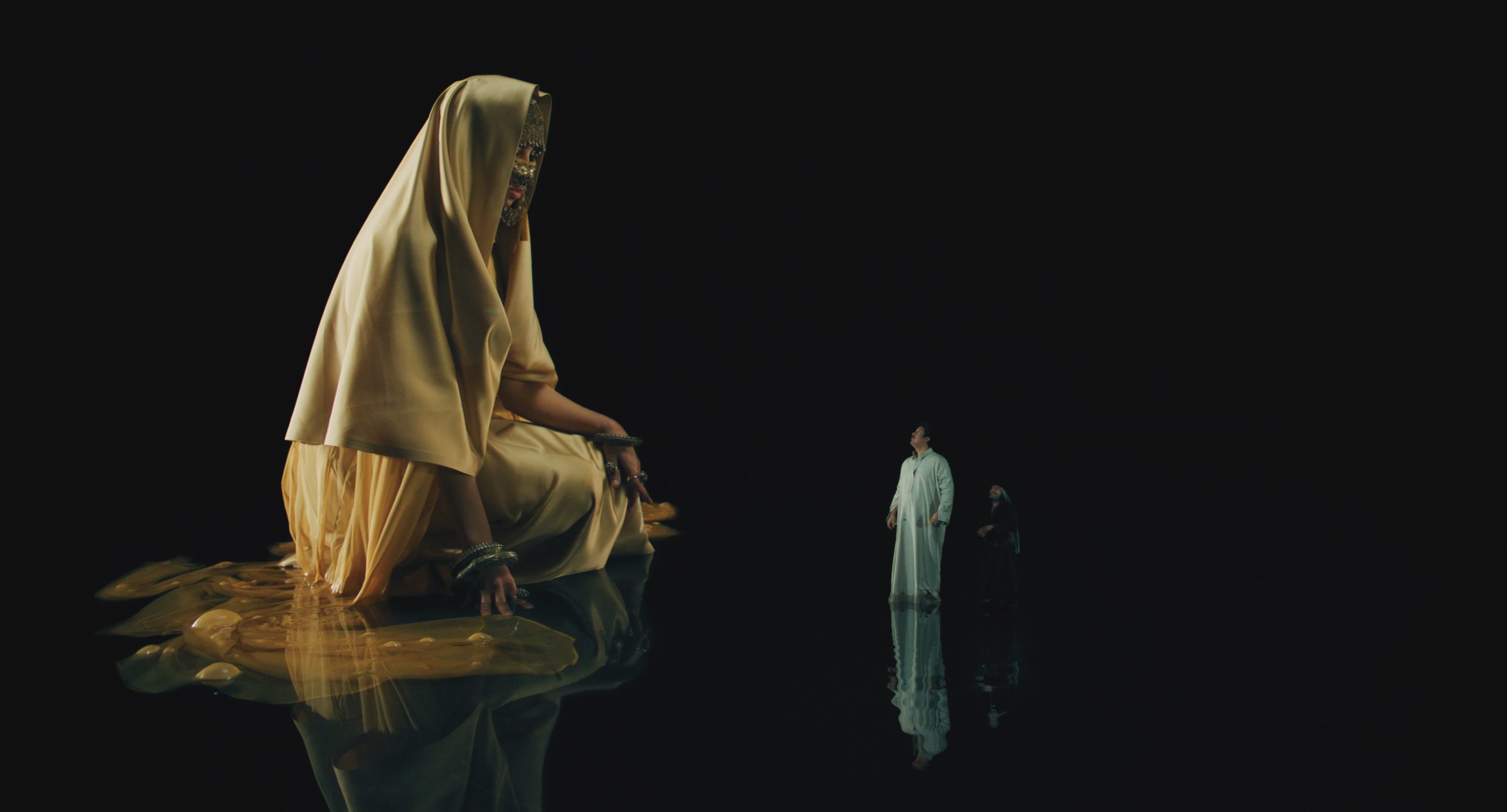
Telfaz11 later decided to revisit the world of AlKhallat+ through a new four-episode series written from a story by Ali Al Kalthami and Mohammed Algarawi. The only thing linking the episodes is a shared theme: the desert – under the tagline “The Desert Doesn’t Negotiate.”
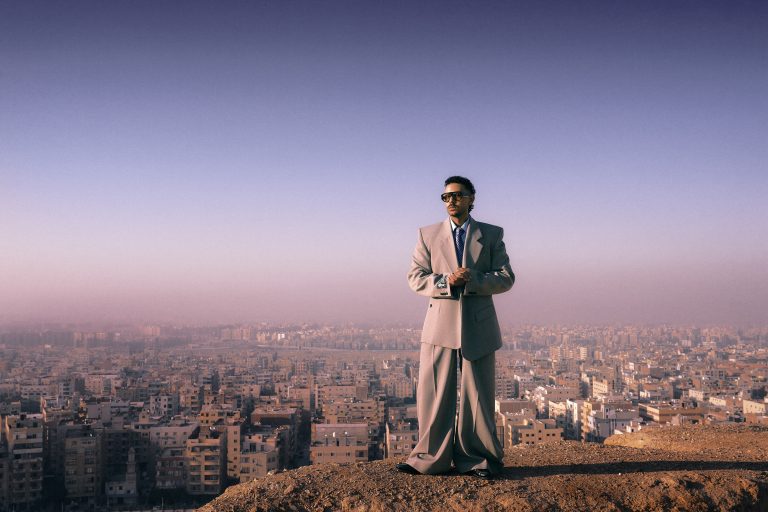
Treating the desert as both a terrifying and liberating space, the series places its four protagonists face-to-face with their fears, insecurities, and internal crises. The teenager Rakan enters adulthood emotionally shaken by his domineering father, only to rediscover himself and his sense of masculinity after being forced to help a blind former officer secretly tracking drug dealers, while disguised as a gas-station worker on a mysterious road everyone warns against – known simply as “The Road of Death.”
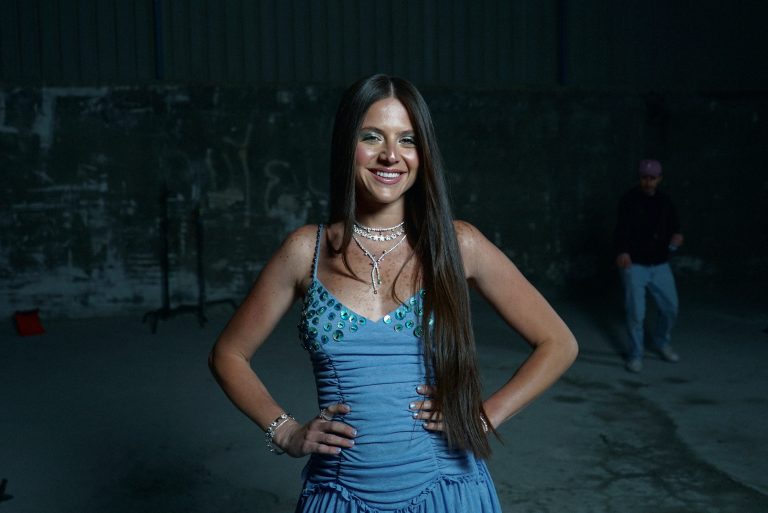
At the same time, Ouqab chases a jerboa that stole a ring belonging to the global fashion model Gigi Saeed during an international fashion show he was hired to secure in the middle of the desert. The jerboa, however, only followed him there to avenge its brother, whom Ouqab had hunted.
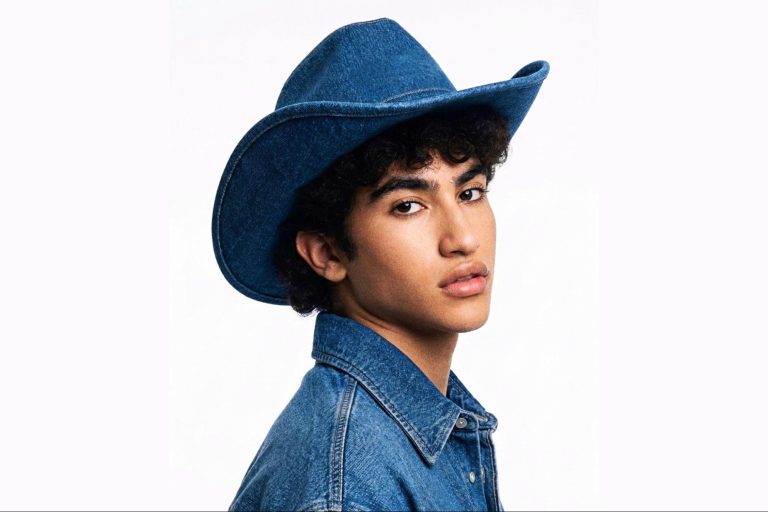
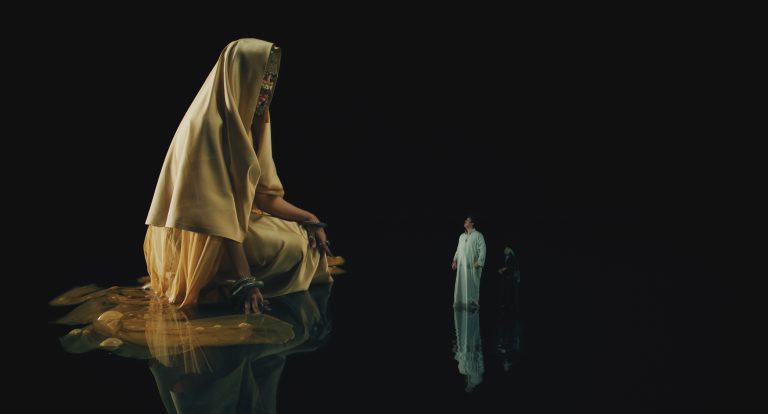
Saad, a wedding videographer dreaming of major film productions, gets the opportunity to direct and produce a fake advertisement staged in the desert promoting a Mars landing on behalf of the American space-research company Drover in an attempt to outpace its Chinese competitors. Then there is the poet Mazaal Bin Shamlan, who becomes entangled with a jinn specializing in poetry and is pushed into a verbal duel against the satirical poet Ibn Shalfa – whose mastery of poetic insult resembles the aggression of rap battle culture – all in pursuit of avenging his father.
The series clearly focuses on the psychological residue left behind by older systems of parenting and how they shaped the current generation’s confidence and self-image. It suggests that the only way forward is confronting the roots of those internal wounds until they dissolve, allowing individuals to express themselves freely.
At the same time, the series reveals how Saudi Arabia’s creative and production boom over the past five years, while opening huge opportunities for Saudi artists, has also placed them under intense pressure and competition – whether in securing major jobs in the creative industries or in fighting for representation and opportunities, much like any artistic center experiencing rapid growth.
Telfaz11 has developed a remarkable ability to create social themes that dissect society indirectly through broad and layered storytelling. Part of this stems from the founders’ background in direct content creation and advertising before moving into film and television production.
That advertising experience also shapes the series’ stripped-down visual style, one that emphasizes technical visual details and performance. This is especially noticeable in the action sequences, chase scenes, and even food scenes – from Abu Marda’a’s fight with the Turkish drug dealer to the jerboa chase sequences – all filmed in ways that heighten wonder, discomfort, and suspense simultaneously.
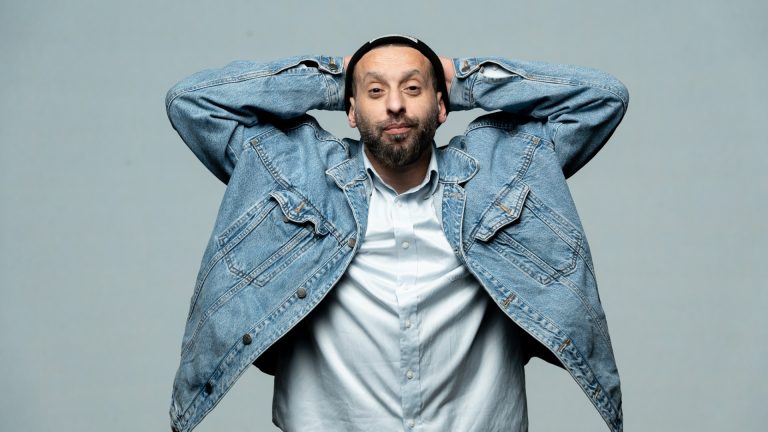
For a closer look behind the scenes of AlKhallat+, we spoke with one of the newest additions to the series: writer and director Mohammed Alajmi, one of two new names joining the project alongside writer and director Aziz Aljasmi.
How did you decide to join AlKhallat+ as the writer and director of the “Mars Race” episode after six years of the series?
Honestly, the moment I learned I’d be directing the episode, I felt intense anxiety – almost panic. I’d never had the opportunity to direct something on this scale before. At first, I was only writing the episode and assumed someone else would direct it.
I remember finishing the script and literally telling myself: good luck to whoever ends up directing this thing. I had no idea how anyone was supposed to pull it off. There were Chinese characters, Americans, Mars, and all these massive elements. It never crossed my mind that I’d be the one directing it.
So when they came to ask whether I was interested in directing, I immediately said yes – even though I was terrified. Part of what amplified that fear was the fact that I originally came in as a writer. Writing never intimidated me. I felt deeply confident there. But directing is an entirely different game.

Throughout the entire process, I kept wondering whether I’d really end up directing the episode or whether they’d eventually replace me with someone else. Sometimes I even wished they would, because the responsibility felt overwhelming. But gradually, as I met the team and saw everyone involved in the project, the fear began to fade, and I started feeling more ready to step onto the set and direct the episode.
Before this, my experience was limited to short films, commercials, and small projects. So this was a massive leap for me.
What were the first artistic changes you thought about regarding the episode’s themes and writing style?
When we started working on the episode, we were all fully aware of what AlKhallat represents and the cultural weight it carries. There was a very clear understanding inside the writers’ room that whatever we created had to remain faithful to that identity.
As I worked on the script, my focus was on making it culturally richer through world-building and characters – adding people like Saad, Daniel, and Lester – while ensuring the story retained the richness and energy that AlKhallat is known for. I think that’s an essential part of what AlKhallat is, and more broadly what Telfaz11 itself represents.
It’s an artistic entity that feels deeply connected to people, and that human and cultural connection is what makes it distinct. You can especially see that in the protagonists and supporting characters, and in the constant effort to stay attuned to what people are experiencing today. So even when an episode includes American and Chinese characters or expands into a more global space, it still has to remain Saudi at its core. That was always something we understood and actively tried to preserve.
We were also lucky to have people like Ali Al Kalthami and Mohammed Algarawi in the writers’ room – people we could constantly turn to and ask: Does this work? Does this feel right? Is this faithful to the project’s identity? Even though all of us grew up with AlKhallat in one way or another, having people who understood its voice on such a deep level was invaluable.
Earlier seasons of AlKhallat were closely tied to urban life and everyday Saudi experiences. Why return this time through a world rooted more heavily in the desert?
I think the desert is something that remains deeply connected to a lot of people in Saudi Arabia. That’s what made it such an exciting space to explore and build stories around. We wanted to ask what the desert actually represents and how we could use it inside these stories, because it’s inseparable from so many aspects of Saudi life.
Whenever we make something – especially with AlKhallat – we always try to challenge ourselves and create something different. We want to test the limits of this world while still preserving its identity. This time, we found an idea and a thematic framework that gave us exactly what we wanted while also feeling emotionally close to us – and, I think, close to many other people as well.
The desert also gave us the opportunity to tell a completely different kind of story while still saying something meaningful about the environment and the world around us. So even though AlKhallat usually lives in urban spaces and everyday city life, the desert felt like a natural extension of that world rather than a departure from it.
Despite their different themes, the episodes mainly revolve around four young Saudi men – their anxiety, dreams, ambitions, emotional burdens, and fight for opportunities. Does the project reflect your own journey as a young filmmaker and writer?
I remember joining Telfaz11 in 2020 as an editor. Back then, I was making Snapchat clips for them – taking old AlKhallat sketches and other classic comedy sketches and reformatting them vertically for Snapchat. That’s how I started.
Then a few years later, I suddenly found myself directing AlKhallat. It’s honestly beautiful, and a huge blessing. Even though it took years, it still feels surreal, because you remember exactly where you started and where you are now. It leaves you a little dizzy.
I think I poured some of that feeling into the character of Saad in “Mars Race.” One day he’s filming weddings, and the next he’s staging a fake Mars landing.
In “Mars Race,” Telfaz11, Ali Al Kalthami, and actor Mohammed Aldokhei all appear as exaggerated, semi-villainous versions of themselves. It’s a bold idea, especially in such a sensitive space despite the comedy. Who came up with it? Was there concern about it? Why did you want to use self-satire?
When I first wrote the script, the director character was completely different. Originally, he was more of a general archetype – the Saudi filmmaker who speaks in overly philosophical language and takes himself extremely seriously, even if he’s only made one short film and one commercial. That was the joke at first.
Then one of the team members suddenly suggested: what if Ali played the director as himself?
I remember finding the idea hilarious because it was so bold and slightly insane, but I didn’t take it seriously at first because I assumed Ali would never agree.
Then Ali surprised me by calling and saying the idea genuinely cracked him up and that he wanted to do it. He was fully excited to play this exaggerated, deeply irritating version of himself. And honestly, I think that says a lot about both him and Telfaz11.
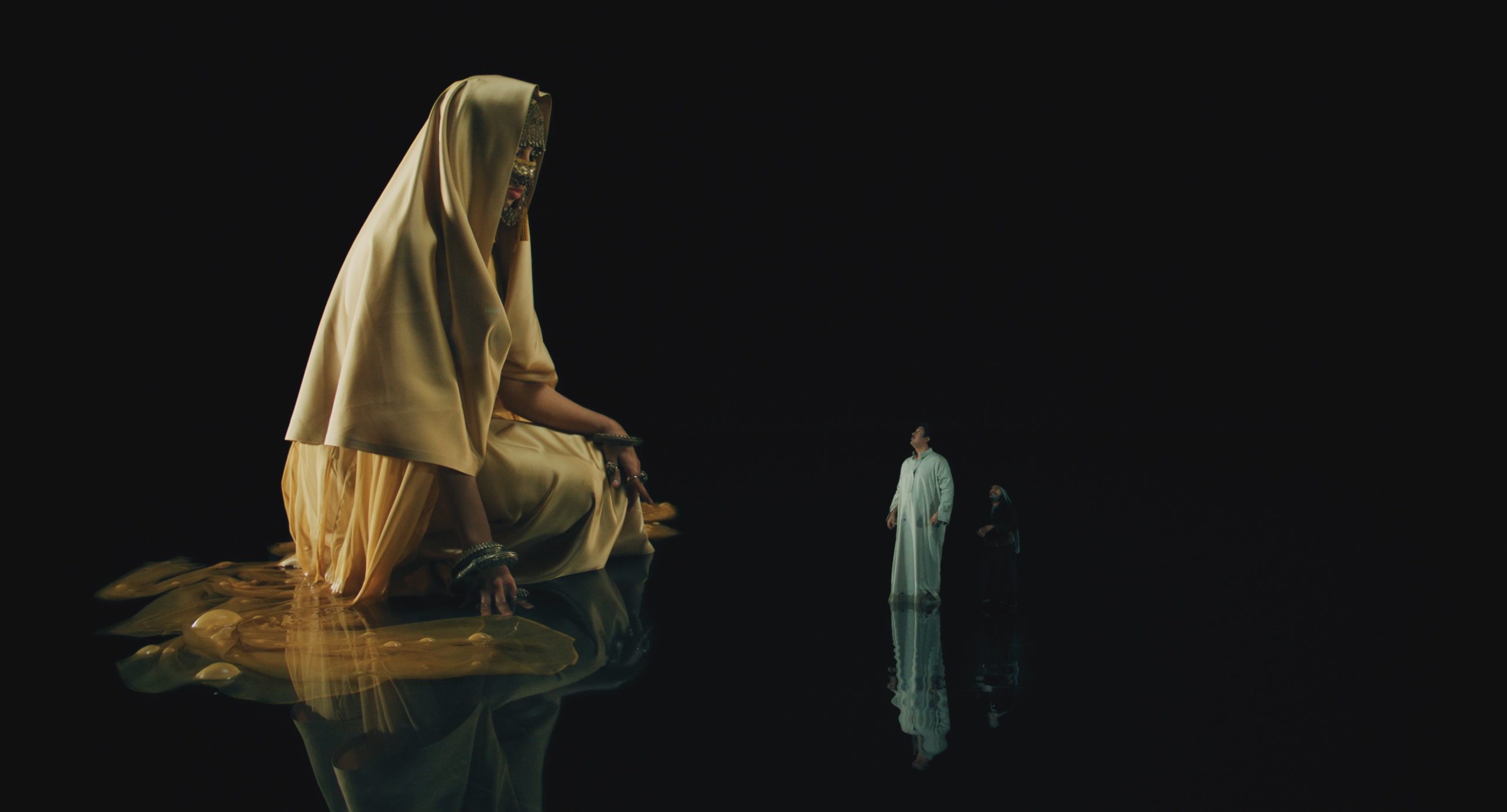
What made it work was everyone’s willingness to put their ego aside for the sake of the joke. I think that’s one of the things that makes both AlKhallat and Telfaz11 special: there’s a genuine willingness to mock themselves. That kind of boldness felt completely true to the spirit of the project. It made the comedy sharper while also making the episode more alive and entertaining.
Ali and I spent a long time discussing what this version of him should look like, especially in the table scene. At first we wondered whether he should be quiet and mysterious, but eventually we realized no – he needed to make Saad feel small. He had to come across as arrogant, dismissive, and condescending in a very specific way. Once we found that version of the character, we just let it loose.
Ali contributed some ideas, Abdullah Al Drees – who plays Saad – contributed many more, and Mohammed Aldokhei was incredible in the scene where his shemagh gets pulled off. It was amazing watching all of it come together. I remember standing there during filming thinking: this is unbelievably funny, but it’s also bizarre that this is actually happening. That feeling stayed with me.
What also helped is that Ali and Mohammed are genuinely talented actors, so they were able to fully disappear into the joke. The funny thing is they’re nothing like that in real life. They’re genuinely wonderful people. And I think their willingness to portray exaggerated, unpleasant versions of themselves says a lot about them.
To what extent do you feel that the comedy of AlKhallat+ and recent Telfaz11 productions like Ruhain and Al Zarfa are extensions of the Saudi sitcom generation of the late 1990s and early 2000s?
When Telfaz11 first started on YouTube, there was a sense of freshness and realism at the same time. I think, in many ways, it really was an extension of that earlier era – just in a different form and on a different platform.
I think the platform resonates with people who grew up watching Saudi sitcoms in the late 1990s and early 2000s because it remains deeply connected to reality. The characters feel familiar, the dialogue sounds natural, and the situations reflect ordinary people’s lives and the way they actually speak. That authenticity is a huge part of why Telfaz11 works.
At the end of the day, funny is funny. If something lands, it lands. Yes, I think this style of comedy speaks strongly to a younger generation, but I also think it reaches older audiences because its DNA is rooted in recognizable personalities, familiar behaviors, and real life.