“I will not bury my son until you bring home the trophy.”
July the 25th 2007, the Iraq football team have just reached the Asian Cup final, but after a devastating suicide bombing in Baghdad, the players contemplate whether to continue playing with sectarian violence affecting the nation. The mother of one of the victims went on national television, imploring them to continue their pursuit of glory in the name of her son. This inspired the players to victory, uniting their people as they did so.
Football is more than a game to the SWANA region, it’s a chance to heal the wounds caused by what feels like endless turmoil.
Ahead of the 2026 World Cup, the largest prize of a footballer’s competitive career, a record-number of eight Arab nations have qualified; Qatar, Morocco, Tunisia, Egypt, Saudi Arabia, Iraq, Algeria and Jordan – shattering the previous records of four Arab teams competing in the same tournament in 2018 and 2022. Even with the new increase in the number of participating teams, Arab representation remains unprecedented when looked at as a percentage. For Jordan, it is their first time ever attending. Qatar and Iraq are making their second appearance. All are hoping to bring pride to their countries.
However, some observers are recognising the discriminatory policies held in place against Arab countries by one of the host nations, the U.S., and a double standard levied by the wider sports world in how Arabs are viewed.
In 2022, sports media framed the tournament in Qatar as being money driven, voiced by Eric Cantona and other pundits that they were ‘not a country of football’ and the tournament was only about ‘money,’ unlike the US who are concerned by ‘developing the game.’
The irony perhaps is that the games this month will cost far more amongst the US, Canada and Mexico than they did in Qatar. The group stages tickets are astronomical in price, estimated at between $140-$2,985 (the average cost being $358) and the final could cost up to $10,990 according to the BBC. This is a 585% increase in valuation from the Qatar final with top prices then at $1,604 as per The Economic Times. While FIFA have defended the ticket prices, many fans feel being priced out from attending.
“Practically nobody will be leaving from here (Algeria) and it’s likely to be the same in Iraq and Tunisia.” – Maher Mezahi
Apart from Egypt and Morocco who have signed taxation agreements with the US, all other Arab nations will have to pay tax to the US on their financial prize earnings according to the Guardian. Qatar in comparison allowed for an exemption on all competing nations in 2022.
On top of this, fans of Algeria, Tunisia and Iraq were until last month given the stress of paying a visa deposit bond of up to $15,000 to enter the U.S., as reported by The Athletic, The Guardian, Dr Mahfoud Amara at Qatar University and others. On top of the ticket prices, travel and accommodation have proved to be unaffordable for many.
To better understand the impact of visa restrictions, players affected and the media’s role of responsibility, Rolling Stone MENA sat down with three football experts to discuss these issues.
Maher Mezahi, editor of Africa Is A Country and Algerian journalist, believes fans will be impacted by this visa saga. Having spoken to the US, Canadian and Mexican embassies in Algiers last month, he said, “they were shocked that virtually no tourist visa applications were approved.” While the visa bonds were waived last month, Mezahi states, “It’s too little too late. Practically nobody will be leaving from here (Algeria) and it’s likely to be the same in Iraq and Tunisia.”
According to Spanish-Moroccan journalist Leyla Hamed, the Trump administration has created a climate of “anxiety” for Arab fans facing the fear of “uncertainty, possible rejection, and being treated with suspicion before they even arrive… if those fans are kept away, the tournament becomes less global and less alive.”
While there will still be fans from the diaspora cheering up their teams, not having fans from home will have a significant impact on the players. Hamed says “Arab and North African fan culture brings songs, flags, drums, dialects, diaspora pride and emotion, if the supporters are reduced by border restrictions, the atmosphere suffers and the players feel it.”
The World Cup is not a right or a given, so the chance to see their team play may be a once in a lifetime opportunity.
“Some fans are treated as tourists. Others are treated as risks.” – Leyla Hamed
Hamed believes that these double standards are affecting more than just the Arab or SWANA communities, “it affects everyone from the Global South: Africans, Arabs, Muslims, Latin Americans, Caribbean communities and working class migrants. The double standard is that football celebrates these communities when they bring colour, culture and passion, but often accepts systems that make it harder for them to actually be present.” Adding that “Some fans are treated as tourists. Others are treated as risks.”
Mezahi draws attention to the fact that travel difficulties will impact whether some players’ families will be there or not, “For Morocco in Qatar, their family members were all in hotels. That’s one of the main reasons they did so well, because of the family atmosphere. That won’t be the case in North America.”
Echoing this, British-Moroccan writer at VERSUS and former editor of Footballer Fits Omarr Belhaj says, “Adversity won’t be new to many players, but the psychological impact of the aforementioned policies can’t be understated. Support systems are crucial to a player’s continued success, and the value of having your family and friends around you during the biggest moment of your career can’t be ignored.”
Not only are the fans facing these adverse policies, but now the players. On June 6th, Iraq’s talisman Aymen Hussein was detained for seven hours of questioning in Chicago’s airport before eventually being let into the US. The team’s photographer Talal Salah was held for ten hours before eventually being turned away.
Somali referee Omar Abdulkadir Artan – named Africa’s top male referee in 2025 and selected as one of FIFA’s 52 officials for the tournament – was denied entry at Miami International Airport on June 6th, barred from a tournament he had earned the right to officiate through years of distinction across the CAF Champions League and continental competitions. He would have been the first Somali to referee at a World Cup.
FIFA, for its part, declined to challenge the decision, stating that host governments ultimately determine who is admitted – a position that sits uneasily for an organization that stripped Indonesia of the U20 World Cup in 2023 over the exclusion of a single team.
Then there is Iran, whose situation has no precedent in the tournament’s history. Fifteen officials and support staff – including the football federation chief and his deputy – were denied visas altogether. Players received their visas just ten days before their first match, after the federation was forced to relocate its training base from Arizona to Mexico amid uncertainty over whether entry would be granted at all. Iran’s ambassador to Mexico then confirmed that under the visa conditions issued, the squad must enter and leave US soil on the same day as each match – fly in, play, fly out.
“Support systems are crucial to a player’s continued success, and the value of having your family and friends around you during the biggest moment of your career can’t be ignored.” – Omarr Belhaj
Whether players will respond to these harmful policies openly or not in forms of protest is yet to be determined. For Mezahi, “The most surprising thing is the lack of grassroots boycott movements, and the fact that no players have spoken out, knowing their fans are not going to be able to be there and support them.”
Belhaj believes that the football community should stand with the players, saying,“If players decide to use the opportunity to speak out for the causes closest to them, then we should collectively celebrate their willingness to put themselves at risk. Football at its core has always been and will continue to be political. The decision to speak out and risk repercussions shouldn’t be exclusive to the nations affected most by the discriminatory policies.”
Federations being tied closely to the political world are the reasons why many football infrastructures have been silent, Mezahi explains, “A federation president would be out of their depth criticising the foreign or immigration policy of the US, that can engender diplomatic crises, not to mention the risk of angering FIFA.”
On top of this, Mezahi says, “There was a lot of xenophobia and racism inbuilt in the criticism shown towards the Qatar World Cup. The biggest media outlets tend to be in the Western world and so when they see something they don’t like that’s foreign it’s easier to criticise than if it originates on your own shores.” Adding that “It’s very hypocritical that we haven’t seen as much criticism, with the policies we’ve seen from the Trump administration over the last 18 months of ICE raids and keeping the world away from the World Cup.”
Hamed continues this thought, “Football reflects power. Qatar deserved scrutiny, especially over migrant workers’ rights. But the silence around the U.S. shows that sporting institutions are selective with their outrage… because it is the U.S., war becomes ‘geopolitics,’ border racism becomes ‘security,’ and exclusion becomes ‘visa policy.’”
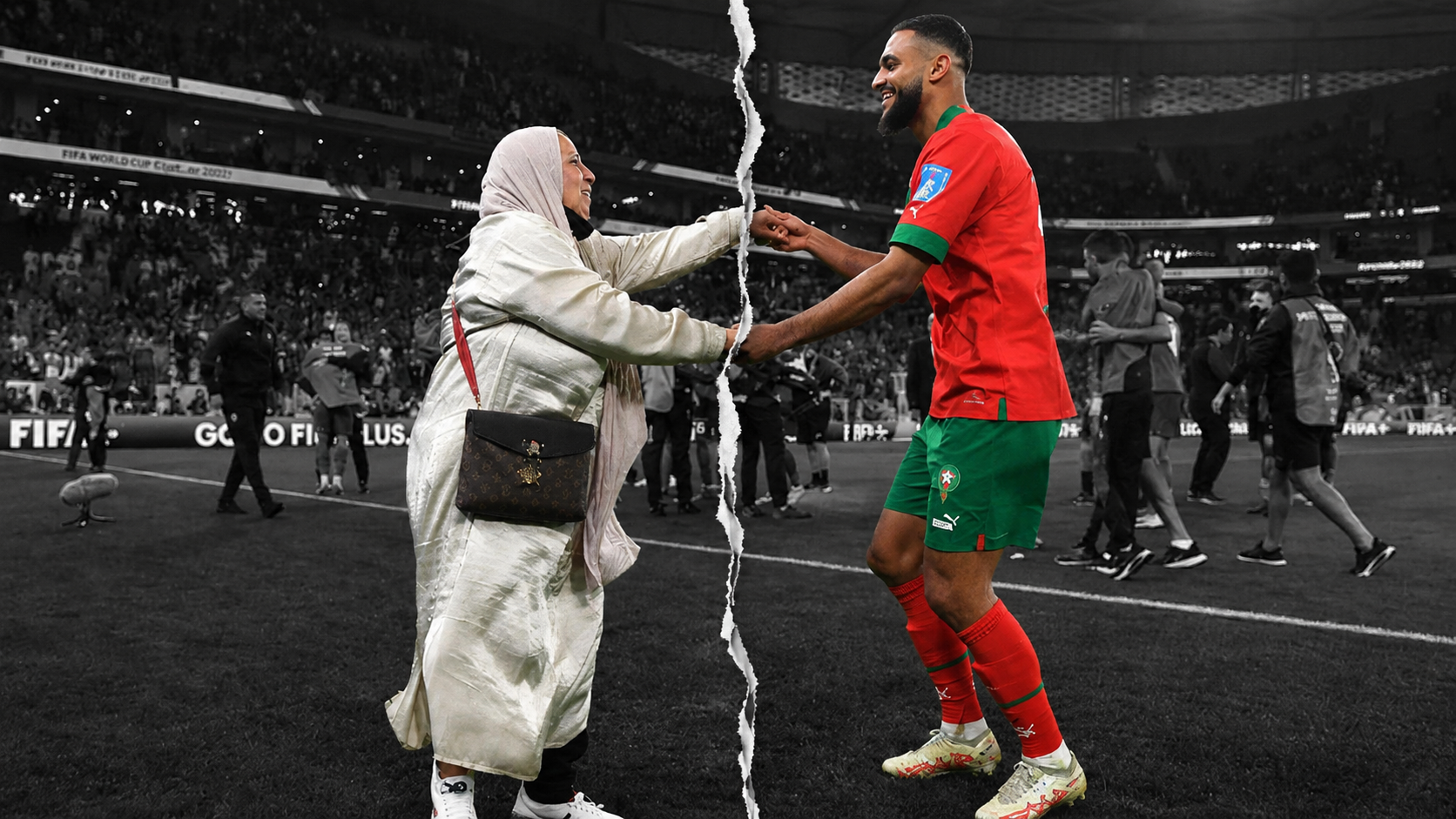
Belhaj hopes that the players’ actions on the pitch will also combat the stereotypes and bring unity in the face of all the external challenges. “Morocco captured the hearts and minds of the world during their epic run to the semi-finals. Openly celebrating by performing collective sujood – an act of prostration performed by Muslims during their daily prayers – and the celebrations between the players and their mothers – the tournament arguably shifted how Muslims around the globe were perceived.”