
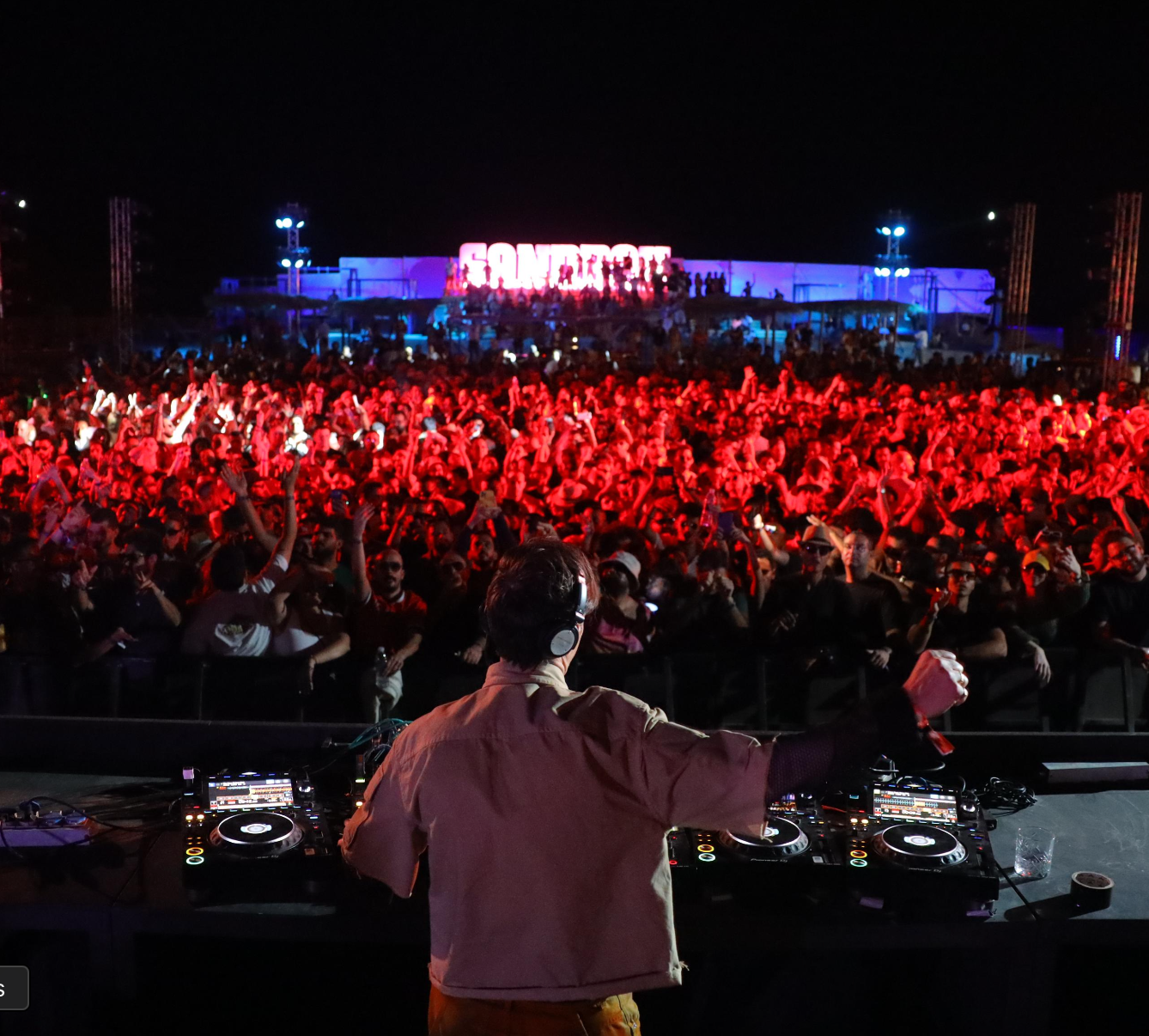
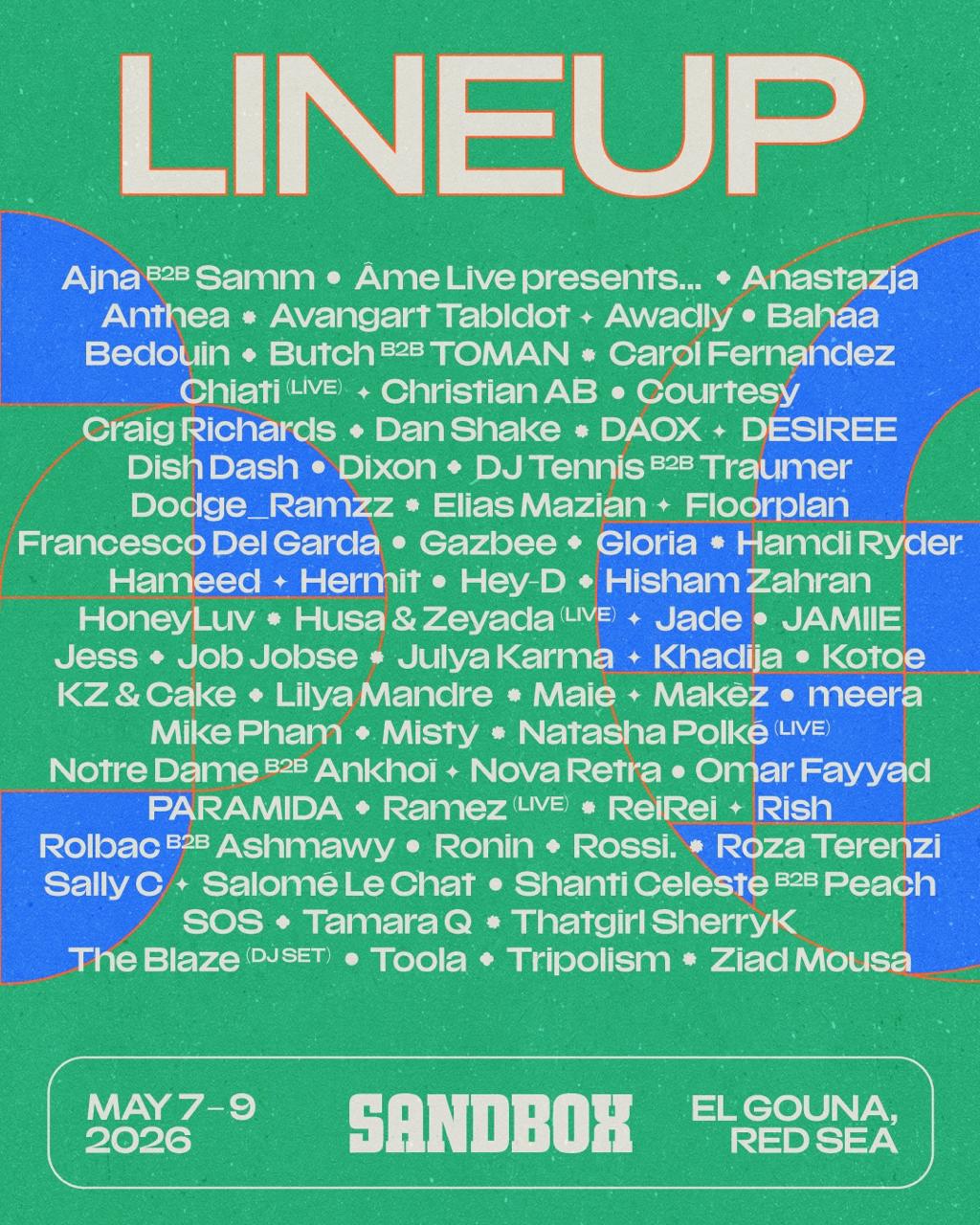
From May 7th to 9th, Sandbox Music Festival returns to El Gouna for its 12th edition – settling once again into the coastal sprawl of the Red Sea.
Established in 2012, well before electronic music found its current footing across the region, Sandbox didn’t arrive into a ready-made audience, it grew into one. That early timing matters. It’s part of why the festival carries a certain weight today, as one of the few platforms that persisted long enough to watch the culture around it catch up.
Over time, that consistency translated into a wider reach. What began as a largely local and regional gathering now draws a more international crowd. The shift isn’t as much about scale as it is about diversity.
With the 12th edition kicking off next Thursday and running until Saturday, here’s our Rolling Stone Sandbox 12 pocket guide to help you make the best out of your experience.
Setting & Navigation
Because Sandbox is contained within El Gouna, getting to and from the festival rarely feels like a separate effort. Most attendees stay nearby – in hotels, resorts, or rented chalets – so long commutes don’t really factor into the experience. With the festival taking place in May, it’s deliberately positioned in a window that avoids extremes. In El Gouna, that means long, dry afternoons with softened sunlight, and evenings that cool just enough to sustain movement without fatigue setting in too quickly.
The weather rarely dominates the experience, which in itself becomes a kind of advantage – it allows the rhythm of the festival to unfold without interruption, and makes it accessible to attendees arriving from very different climates.
The setting does more than frame the music. Being anchored along the Red Sea defines how people spend their time between sets, and sometimes instead of them. Days don’t build exclusively toward the dancefloor, there’s a parallel flow of activity: diving trips, snorkeling, kite surfing, or simply stepping away from the density of the stages to sit by the water. Wellness elements, yoga sessions, massages, meditation exist within the same environment alongside the music.
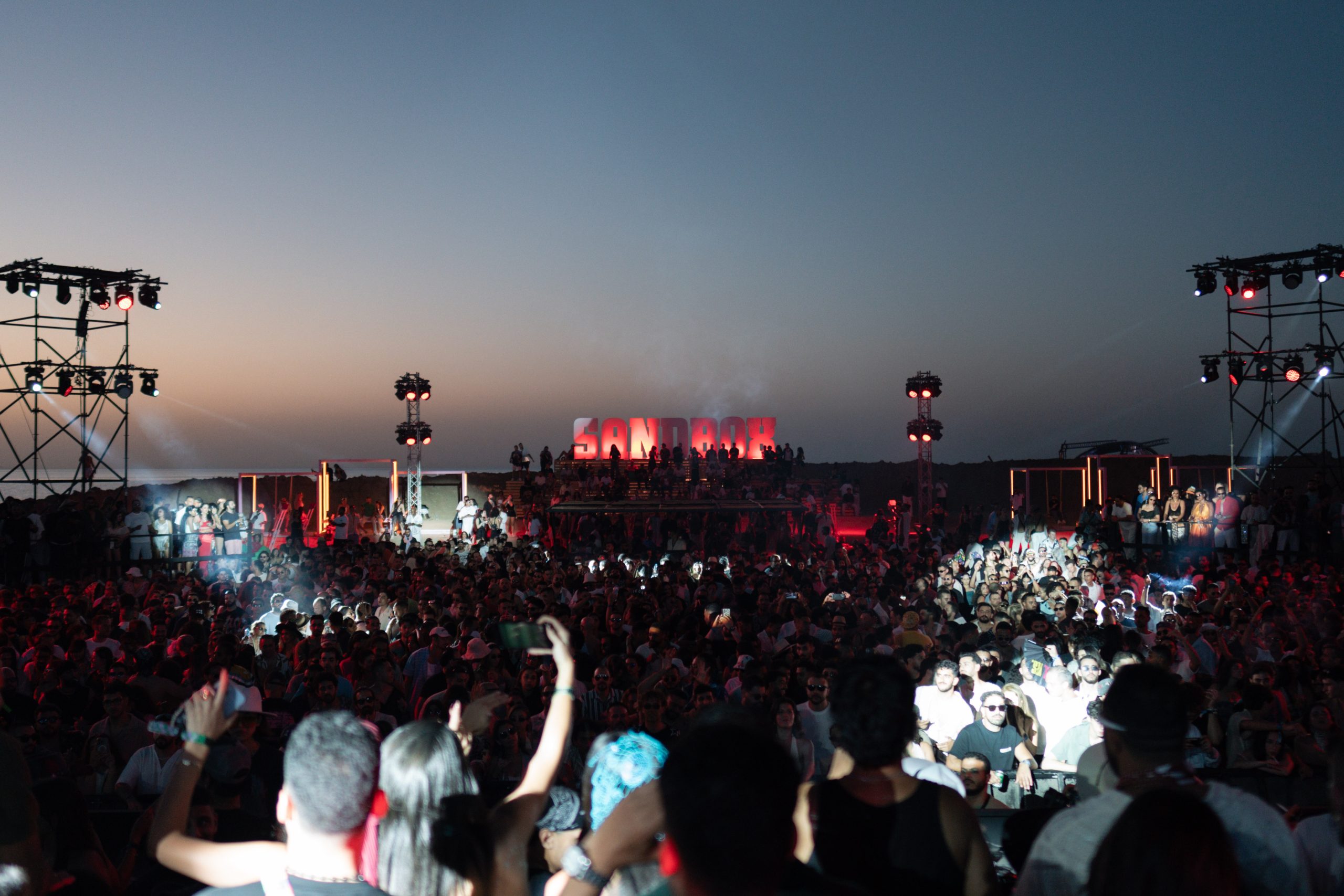
The physical layout also plays into how the festival is experienced. Several of the stages are set directly on or near sand, with others opening out onto the shoreline or positioned within open beach areas. Moving between them often means walking across sand or uneven ground, rather than paved or fixed paths, with stages spread out across the site rather than concentrated in one dense area.
Crowd Dynamics
At Sandbox, the crowd leans noticeably international. A large portion of attendees come in from Europe and the Americas, alongside a big, consistent presence as well from across the Arab world. At the same time, there’s a significant local contingent – mostly upper middle to high-income Egyptians.
Over the years, this balance hasn’t been without friction. Sandbox has faced recurring criticism over its entry policies, particularly around group requirements. Attendees are typically expected to apply as couples or mixed-gender groups, with solo access being very limited. For some, these rules are seen as a way to manage crowd dynamics and maintain a certain atmosphere; for others, they read as exclusionary.
In practice, this shapes the audience in a specific way. You’re less likely to encounter solo travelers or loosely formed groups, and more likely to find socially cohesive circles moving through the festival together.
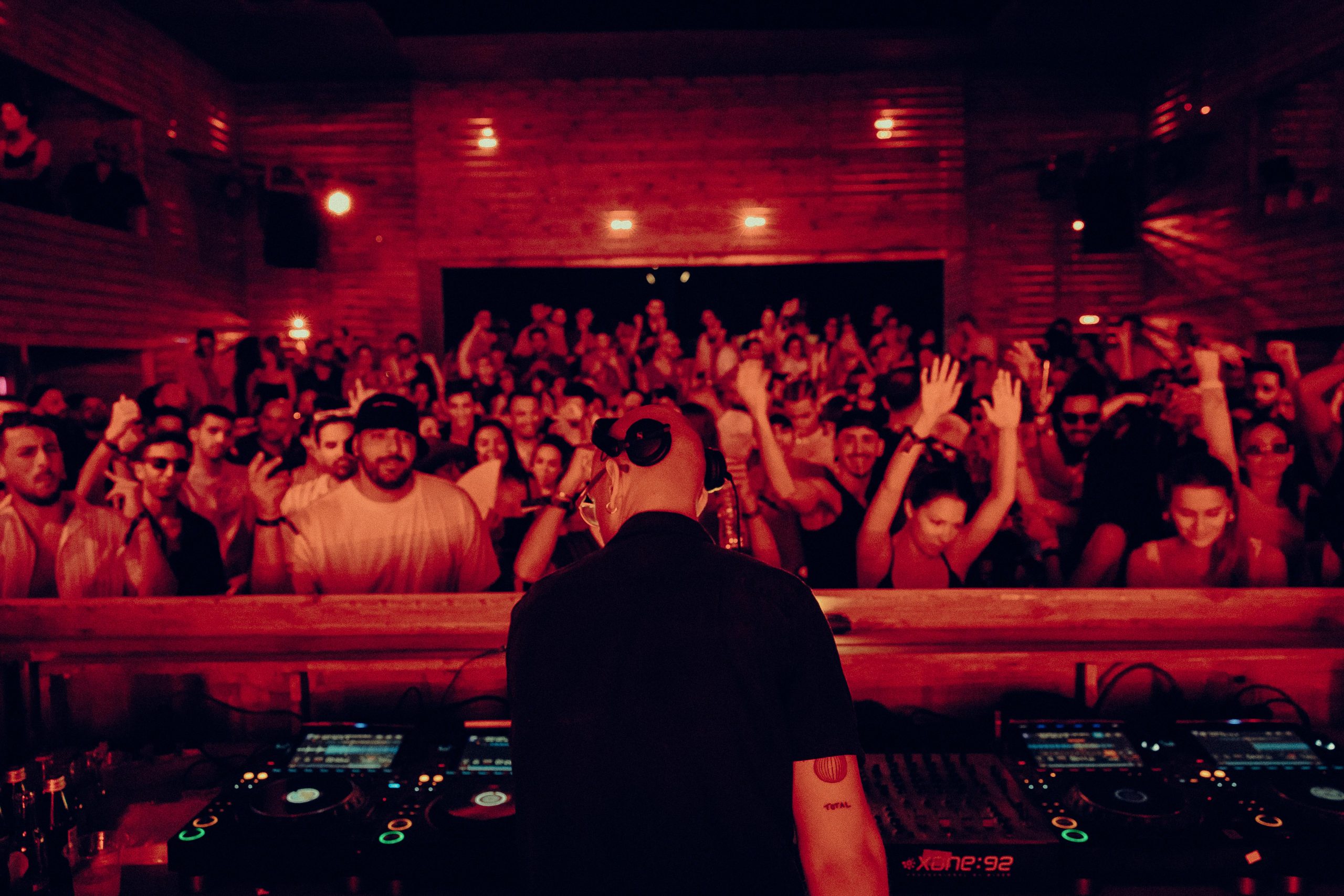
Once you’re through the entry process, one of Sandbox’s more consistent qualities becomes clearer: a general respect for personal space and privacy. Across the grounds, there’s a noticeable level of tolerance regardless of nationality, gender, age, or background. It’s not framed as a defining statement of the festival, but it tends to show in how the crowd behaves once it’s inside.
And speaking of age, Sandbox doesn’t really sit within a fixed demographic. The crowd spans widely, from early 20s to late 70s, without a single age group clearly dominating.
Inside the festival, the crowd flattens into something more unified around the music and the experience itself. No VIP sections, no balconies, no backstage bubbles, no endless guest lists – none of the “new norms” that have crept into regional electronic scenes.
Music Programing
Sandbox runs from 1:00 PM until around 6:00 AM, with performances spread across eight stages that operate continuously from start to finish. The layout is intentionally spaced out, preventing both overcrowding and excessive sound overlap, while still keeping movement between stages manageable rather than draining.
Beyond the main stages, music also spills into smaller, more hidden spaces – rooms and corners you come across while moving through the site. These aren’t always on the main map, and often appear as you drift between sets. They create room for emerging DJs and early-career artists to play alongside the larger names, adding another layer to how the festival is experienced in practice.
And these rooms are rarely empty. They offer a more intimate, enclosed setting to experience music away from the scale and intensity of the main stages. For moments when you want to step back from the crowds, they provide a smaller, quieter space where the music feels closer, with less distance between the sound and the listener.
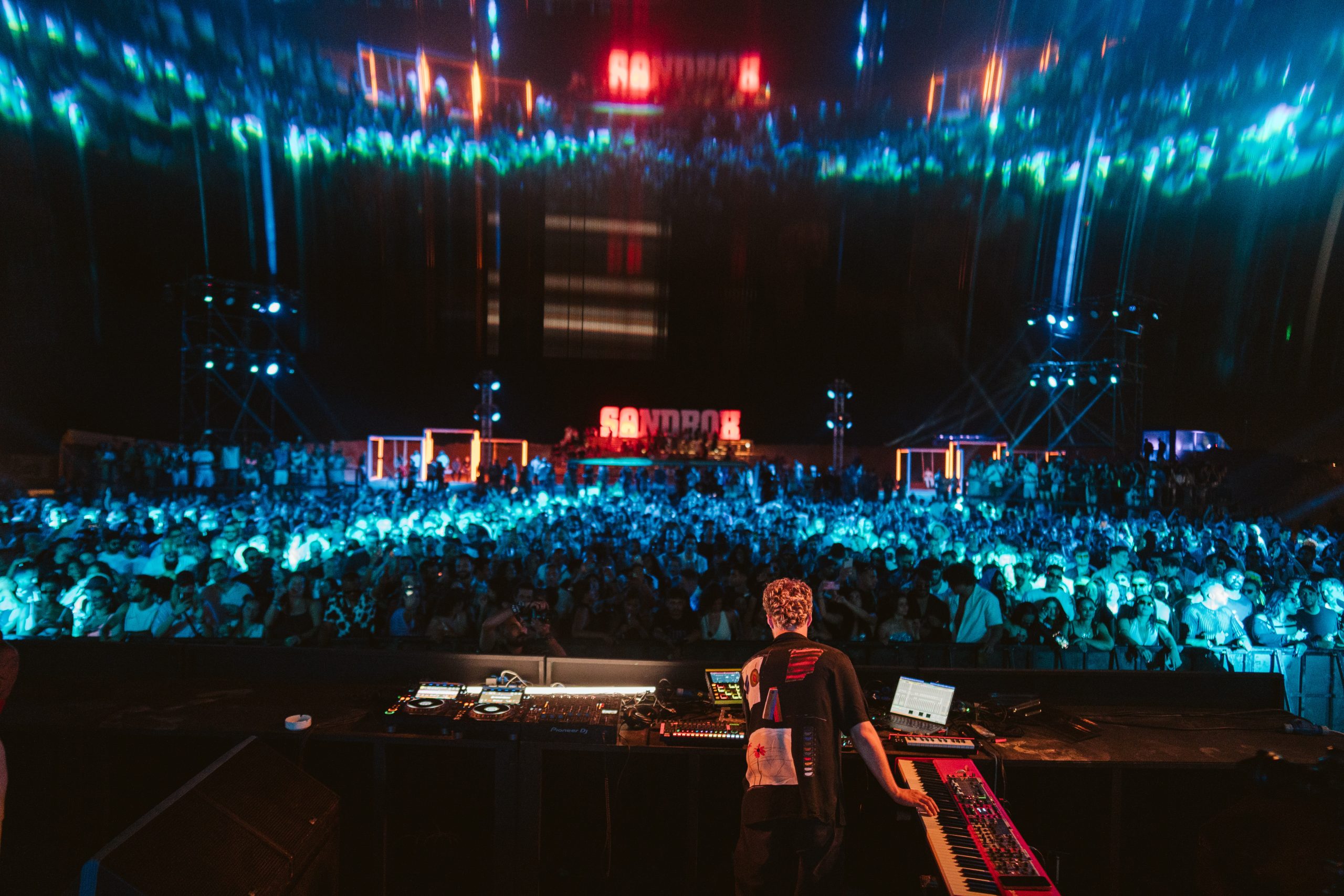
Even on the main stages, the lineup mixes familiar international names with artists most attendees won’t recognize immediately – and that’s partly the point. The curation leaves gaps rather than filling every slot with recognisable acts, encouraging exploration across sets. It shifts the focus away from going in with a fixed agenda, and more toward encountering music you didn’t arrive already attached to.
This more niche approach is also reflected in the music. Expect little of the mainstream EDM associated with larger commercial festivals. Across the stages, the programming leans instead toward deep and minimal house, tech house, melodic house, disco-influenced sets, groove-heavy selections, and occasional jazz-influenced or drum-focused electronic variations.
Most of the audience is already tuned into this direction. Sandbox tends to attract people looking for sounds outside the more commercial festival circuit, rather than familiar peak-time EDM sets. The focus is less on recognisable drops and more on slower, more exploratory forms of electronic music.
Pocket List
With this year’s line-up now revealed, anticipation naturally shifts toward how these names will translate in a live setting across the festival’s different stages. Some are already familiar, others are less known and likely to be discovered in real time.
Below is our selection of sets worth keeping an eye on this edition, along with what to expect from them.
The Blaze (France)
The Blaze sit in a space between electronic music and cinematic songwriting, built around emotional, vocal-led production that leans heavily into atmospheric house and melodic electronica. Their sound often unfolds slowly, layering synth-driven textures with restrained percussion and their signature spoken-sung vocals, giving their sets a more narrative, almost visual quality compared to traditional club-focused acts.
In a live setting, that translates into a more absorbed, less chaotic dancefloor. Rather than constant peaks, their sets tend to move in waves – moments of build-up followed by wide, open releases – drawing people into a collective, almost reflective kind of movement. It’s the type of set where the crowd isn’t pushed into intensity, but gradually pulled into it.
Their music can carry both weight and lightness at once, shifting between intimacy and intensity without settling into a single mood. It’s the kind of set where emotional response becomes the main driver of how you experience it, rather than rhythm or structure alone.
Husa & Zeyada (Egypt)
The prominent Egyptian duo, who met and developed their project in Dahab in South Sinai, create music that feels closely tied to where it began. Their sound carries the textures and atmosphere of that environment, shaped by its open landscapes and slower rhythms.
Listening to Husa & Zeyada often unfolds like a long drive through the desert – steady, expansive, and unhurried, with space for small details to sit in the foreground.
The duo doesn’t lean toward an intense, high-tempo dancefloor. Instead, expect a more soulful, live-leaning performance built on a blend of instrumentation, electronic production, and vocals.
Bedouin (The United States)
Bedouin are a DJ and production duo known for blending deep house with organic, Middle Eastern-influenced textures and melodic, atmospheric techno. Their sound often moves between hypnotic percussion, layered synths, and subtle acoustic elements, creating sets that feel both club-driven and rooted in a more cinematic approach to electronic music.
In a live setting, their sets tend to unfold gradually rather than rely on sharp peaks. The dancefloor response is usually steady and absorbed – people tend to settle into a continuous flow rather than jump between high-energy moments. It’s the kind of set where rhythm builds slowly, and the atmosphere carries more weight than individual drops.
DJ Tennis (Italy)
DJ Tennis operates across a wide spectrum of house and techno, often leaning into leftfield selections that blur genre lines rather than stick to one lane.
His sets pull from deep house, indie dance, electro, and more melodic or off-kilter tracks, with a tendency to shift tone more freely and frequently during the same set. There’s some sort of looseness to how he builds a set – less rigid structure, more instinct-driven, with a tendency to draw freely from a range of influences.
On the dancefloor, that usually translates into a more unpredictable flow. Rather than locking into one steady rhythm, the energy can rise and fall, pivoting between groove-heavy sections and more introspective or unexpected moments. It’s the kind of set where the crowd stays attentive, reacting to changes rather than settling into a single continuous pattern.
Dixon (Italy)
Dixon operates within the deeper end of house and techno, with a sound that leans toward atmospheric, melodic, and consistently driving energy. His sets are built through long blends and carefully controlled transitions, maintaining a strong sense of continuity across the dancefloor. Rather than moving across genres, he tends to stay within a defined sonic lane, drawing from melodic house and techno while focusing on pacing and gradual development.
On the dancefloor, that translates into a steady, locked-in experience. The energy builds progressively, pulling the crowd into a consistent rhythm. When shifts do happen, they tend to feel deliberate rather than abrupt. It’s the kind of set that fosters a sustained, focused connection between the DJ and the crowd.
Dish Dash (Saudi Arabia)
The Saudi duo brings a distinct, fast-paced sound that pulls you in almost immediately. It’s not your typical slow-building set, but rather a set where the energy is there from the start. Drawing on Saudi influences, particularly Khaleeji percussion, they weave in Arabic vocals comfortably, creating something that resonates well with regional audiences, while also connecting with foreign crowds.
Dish Dash are known for groove-driven deep-house. In a live setting, that translates into a dense, high-energy dancefloor that holds its intensity rather than building up to it.
Misty (Egypt)
One of the more established names in Egypt’s clubbing scene, Misty is known for his genre-fluid approach, moving between deep house, afro-house, tech house, disco, and occasional jazz-influenced elements within the same set. His selections tend to shift while maintaining a consistent groove.
In a live setting, expect a high-energy, fast-moving dancefloor. Misty leans into intensity from early on, driving the crowd rather than easing them in.
Hameed (Bahrain)
DJ Hameed works within a groove-led spectrum of house, drawing from deep house and subtle tech-house influences, with a strong focus on rhythm and progression rather than immediate impact. His sets are carefully paced, often unfolding gradually as layers are introduced over time rather than delivered upfront.
In a live setting, that makes for a slow-building experience. The energy starts restrained and steadily accumulates, with the crowd easing into the rhythm. It’s the kind of set where momentum is earned over time.
Shanti Celeste (Chile)
Celeste works within a warm, melodic strand of house music that often blends classic house structures with acid-leaning touches, soft techno edges, and playful, emotionally rich textures. Her selections tend to feel light but intentional, built around groove before intensity, with a focus on tone and feeling over force.
In a live setting, her sets usually sit in a steady, uplifting lane rather than peak-time aggression. The energy is smooth and continuous, often creating a bright, open dancefloor where movement feels relaxed. It’s the kind of set that builds gently, holding a consistent warmth rather than relying on sudden drops or high-impact moments.




Abdi Declares the SDF Integration Into the Syrian State Complete
The SDF has completed its integration into Syria’s state institutions, a major step toward a unified Syria.