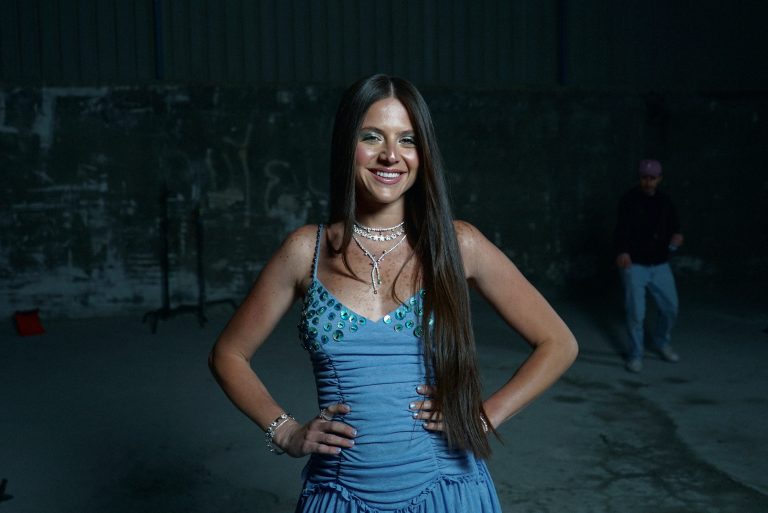
Isra Chaker is a disrupter. As the CEO of the maternal health non profit, Every Pregnancy, the 34-year-old Syrian-American sees the organization as an opportunity to disrupt systems that fail to meet the needs of mothers and babies globally. “I like to think of my team and I as disrupters. We disrupt when something doesn’t work, and if we put something in place and it stops working, we’ll disrupt it again.”
Before launching, Chaker toured both U.S. and internationally, speaking to community leaders and engaging in conversations about how Muslims and Muslim Americans discussed pregnancy and maternal health. “Family planning was a trigger phrase,” says Chaker, “If you say women’s health, people immediately associate it with family planning [and] abortion.” From her experience, the communities she met with put a strong emphasis on orphan care and support, tying a mother’s wellbeing into the support for widows specifically, as is the Islamic tradition. “I quickly saw the community was not where it needed to be. [When we launched] we knew we had to start socializing maternal, newborn and child health in a way that is an accurate narrative, in a way people can relate to it, and start recognizing that we have a responsibility here. If you save a mom’s life, you’re not just saving the baby and the family, you’re saving the community, you’re ultimately saving the entire home.”
Now, the coalition of more than forty organizations has partners in the MENA region and beyond; Chaker lists Gaza, Afghanistan, Turkey, Yemen, Jordan and Lebanon. By partnering with institutions already established on the ground, there is no parachuting: Every Pregnancy’s partners already have an in-depth understanding of their local surroundings, the cultural nuances, setbacks and needs of their patients.
In many parts of the MENA region, maternal health is shaped by deep cultural and structural barriers. Through Every Pregnancy’s local partners, Chaker has witnessed how women, especially mothers, often put themselves last. “They will feed their children before eating themselves, secure medical care for their kids while neglecting their own needs, and push through pregnancies and births without adequate recovery because family and cultural expectations demand it,” she says. In some communities, there is strong pressure to have as many children as possible, with little regard for birth spacing, family planning, or a woman’s agency in deciding what is right for her body. The result is a cycle where mothers’ health is deprioritized, not just by the systems around them but by the cultural norms they’ve been taught to uphold – even though, as Chaker points out, caring for the mother is the most direct way to care for the whole family.
Every Pregnancy’s latest fundraising campaign specifically for Syrian mothers and babies is a deeply personal one for Chaker. “People often forget about the Syrian people and forget that they underwent a brutal regime. And that the Syrian humanitarian crisis caused one of the most prominent and largest refugee crisis in the world.” As of March 2025, the Syrian refugee crisis is the one of the worst on a global scale: more than 14 million Syrians have been forced to flee their homes in search of safety. More than 7.4 million Syrians remain internally displaced in their own country where 70 percent of the population is in need of humanitarian assistance and 90 percent live below the poverty line. More than 6 million Syrian refugees live in countries neighboring Syria including Turkey, Lebanon, Jordan and Iraq or abroad.
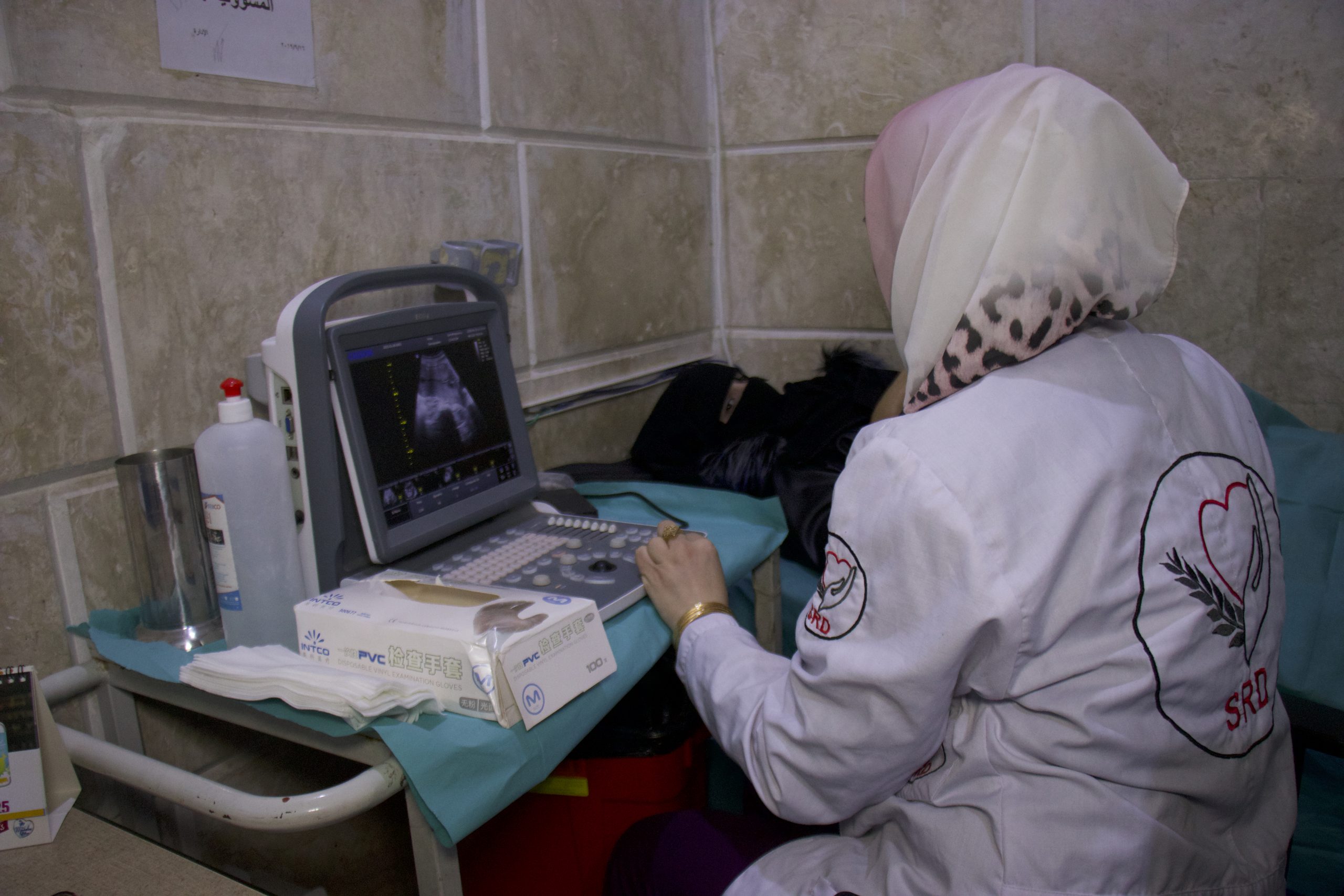
In all the pain and devastation, it’s easy to understand how something like maternal health and the needs of mothers and their young children get lost in the shuffle. “A lot of these traditional aid actors go into Syria with a top down, parachuting approach where they come in, deliver short term aid, and then they leave. And it was very important to me for Every Pregnancy to prioritize Syria, beyond my own identity as a Syrian American and having family there. Knowing the cultural context and being indigenous to the land in which we’ll operate, is an essential value add that Every Pregnancy brings to the tableI wanted to make sure that where maternal health is needed most, that we’re actually going to those areas and providing that care. Being from the country provides me the opportunity of really being able to step up, into this space confidently, and investing in local partners and systems that will benefit moms and babies in the longterm.”
Every Pregnancy’s Syria project is the first holistic strategy of its kind, a disruption to how maternal health has been handled in Syria in the past. The goal is to build from the ground up, tackling medical access with five partners from EP’s already existing coalition. “They are established inside Syria, they have the programming and have existing projects with Syrian partners,” Chaker says. “All of them prioritize health in different ways, whether that be maternal health, neonatal health, children’s health [and] including psychosocial support for moms. That’s also an incredibly important aspect that gets repeatedly overlooked.” And while of course Every Pregnancy has a goal to raise as many funds as possible to support these programs, the main goal is to reintroduce Syria as a challenging maternal health landscape that needs global attention and support.
“First and foremost, as Every Pregnancy, there is the responsibility of tackling different maternal health needs internationally. We’re prioritizing where moms and babies need care the most, and Syria has to be on that priority list for our communities and for organizations in operation. The goal is to build that awareness and visibility for Syria specifically. And secondly, it’s to raise awareness for the programming our partners are doing, giving people the opportunity to have their donations and their advocacy go directly where it’s needed most.”
Chaker’s own experience with pregnancy, while not her only motivator, truly shaped her outlook on the urgency for better global maternal health access. “For me personally, my pregnancy was a challenge. I was so happy to be pregnant,I was excited about the journey. We romanticize what pregnancy is supposed to feel like, and oftentimes we don’t realize that when a woman is carrying a child, that is in itself a miracle. There’s so much of it that is unexpected, and even if you are in the best of health and have access to the best resources, you can still undergo pregnancy complications,” Chaker says. “So I was one of those people that was taking the best care of myself, went to every appointment to make sure that my son had everything he needed from mom to be able to grow, and yet I still dealt with pregnancy complications.”
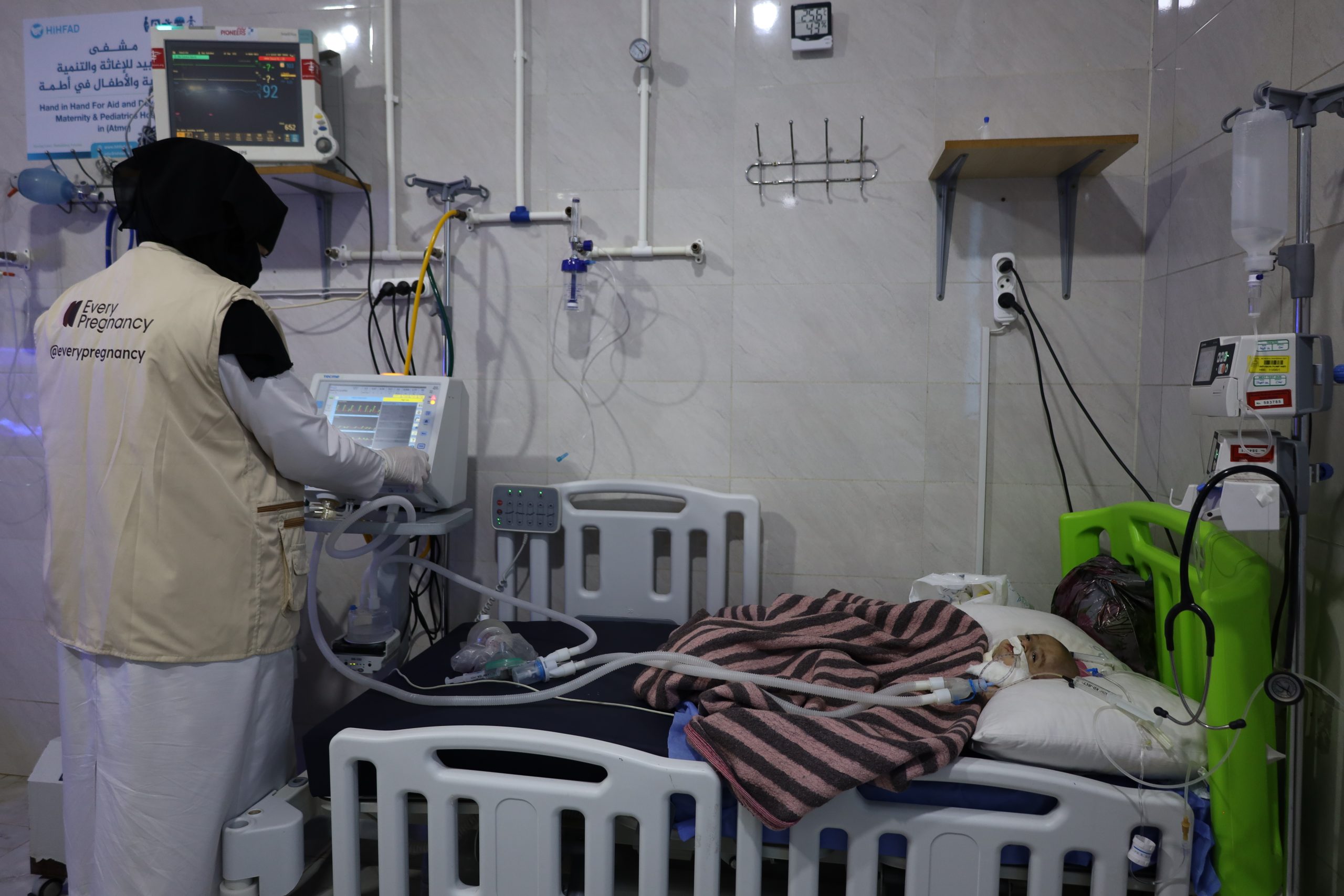
During her pregnancy, Chaker developed a heart condition. As a result, Chaker spent much of her pregnancy in and out of emergency rooms and doctor’s appointments. She was prescribed medication before he was even born. “It was the scariest experience of my life. And now, doing the work that I do, I can’t imagine if I was living anywhere else. The circumstances were outside of my control, Would I have survived it? Would my baby have survived it?”
With a condition such as Chaker’s heart condition, not surviving the pregnancy is a very real reality for so many women around the world. Studies as recent as 2023 show that 712 women die daily from complications related to pregnancy and childbirth, a very dire reality. This number averages to about one woman every two minutes. 90% of women globally do not receive the care they need and many complications, with the right care, are preventable.
“It was very eye opening. I recognize every single day that my pregnancy was a miracle, the opportunity that I had to care for my child, to have a safe delivery and a healthy baby is so rare. It made me more of an advocate and champion in a way that I can’t even describe, because I saw firsthand how things can change in one second as a pregnant woman. How isolating that feels, how you really want to feel like you are supported. Not just the doctors, but a full functioning support system.”
For Chaker, improving maternal health isn’t just about access to hospitals or medicine. It’s about building strong, supportive communities that center a mother’s well-being during pregnancy and beyond. She stresses that postpartum care, in particular, is one of the most challenging and overlooked stages, when mothers need both medical attention and a network of people who prioritize their physical,emotional, and mental recovery. Without that community component, she argues, too many women are left to navigate the physical and emotional demands of new motherhood in isolation, compromising their long-term health.
In five years, Isra Chaker hopes her organization is a major player in the global health space. She hopes to have saved and improved the lives of millions of mothers and babies around the world. And she plans to continue disrupting any systems that don’t work in the best interest of those most vulnerable in our communities.