
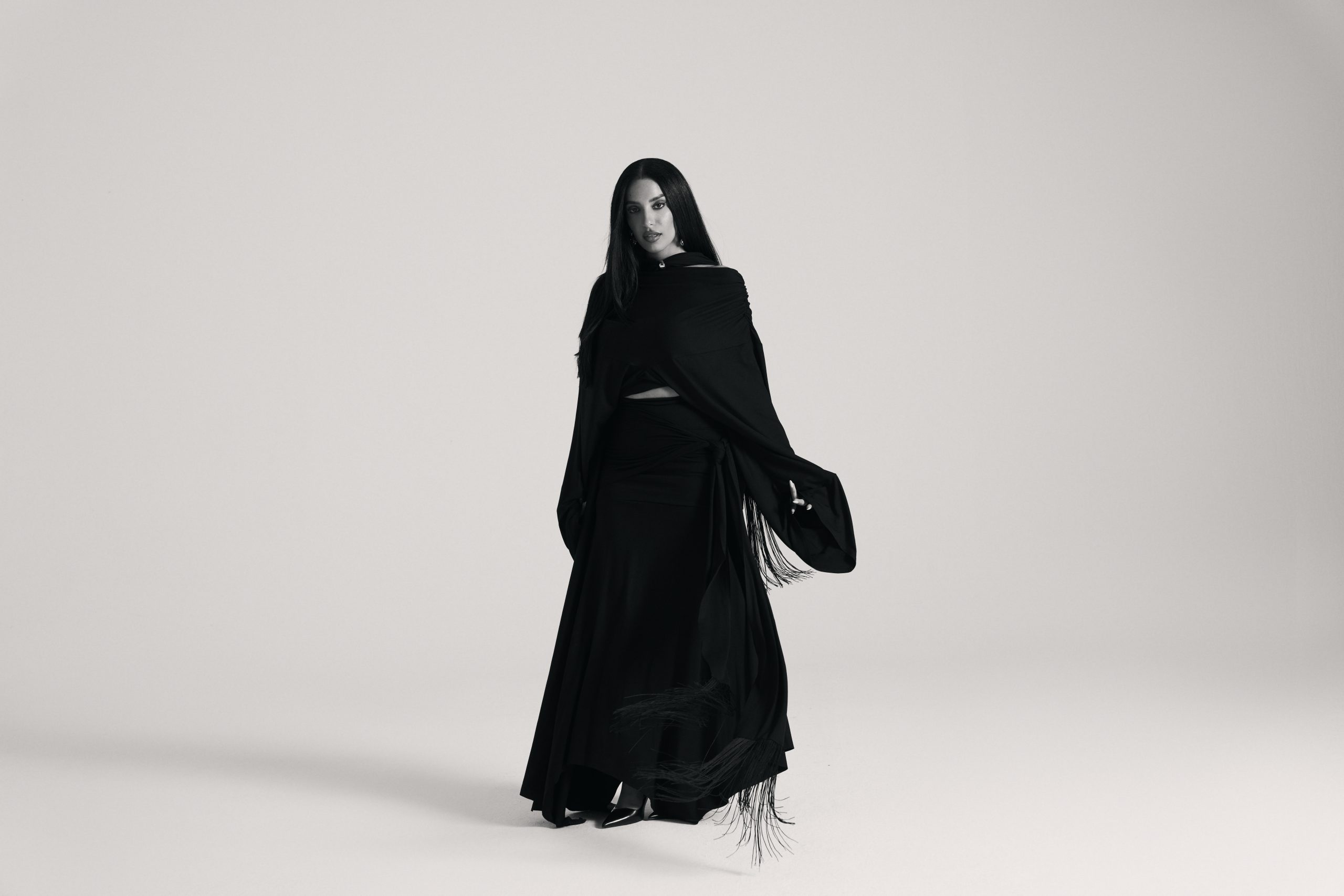
Six years after her debut album, Searching, Inez Atili made her comeback last June with Farasha, offering 16 new tracks across a plethora of regional influences.
While her debut album felt comfortable sitting within the confines of roughly a single musical style – Mediterranean R&B, and was devoid of any credited collaborations, Farasha makes a distinctive shift, one that has become quite familiar among diaspora artists from the Great Maghreb, from DJ Snake to Dystinct all the way through Tawsen: it visits a different sonic world on nearly every track, takes a maximalist approach to collaborations, and a similarly maximalist approach to genre diversification. It’s an album format that has recently become known as the Passport Album.
And like other recent Passport Albums, Farasha delivered on the streaming charts, with five of its songs traveling past the 1-million-stream threshold on Spotify alone, attracting over 800K monthly listeners to Inez’s profile on the platform.
We spoke to Inez about one of the longest between-album gaps you hear about in the modern music industry, what has changed in her perception of her music since Searching, and how comfortable she feels about understanding Farasha through the lens of Passport Albums.
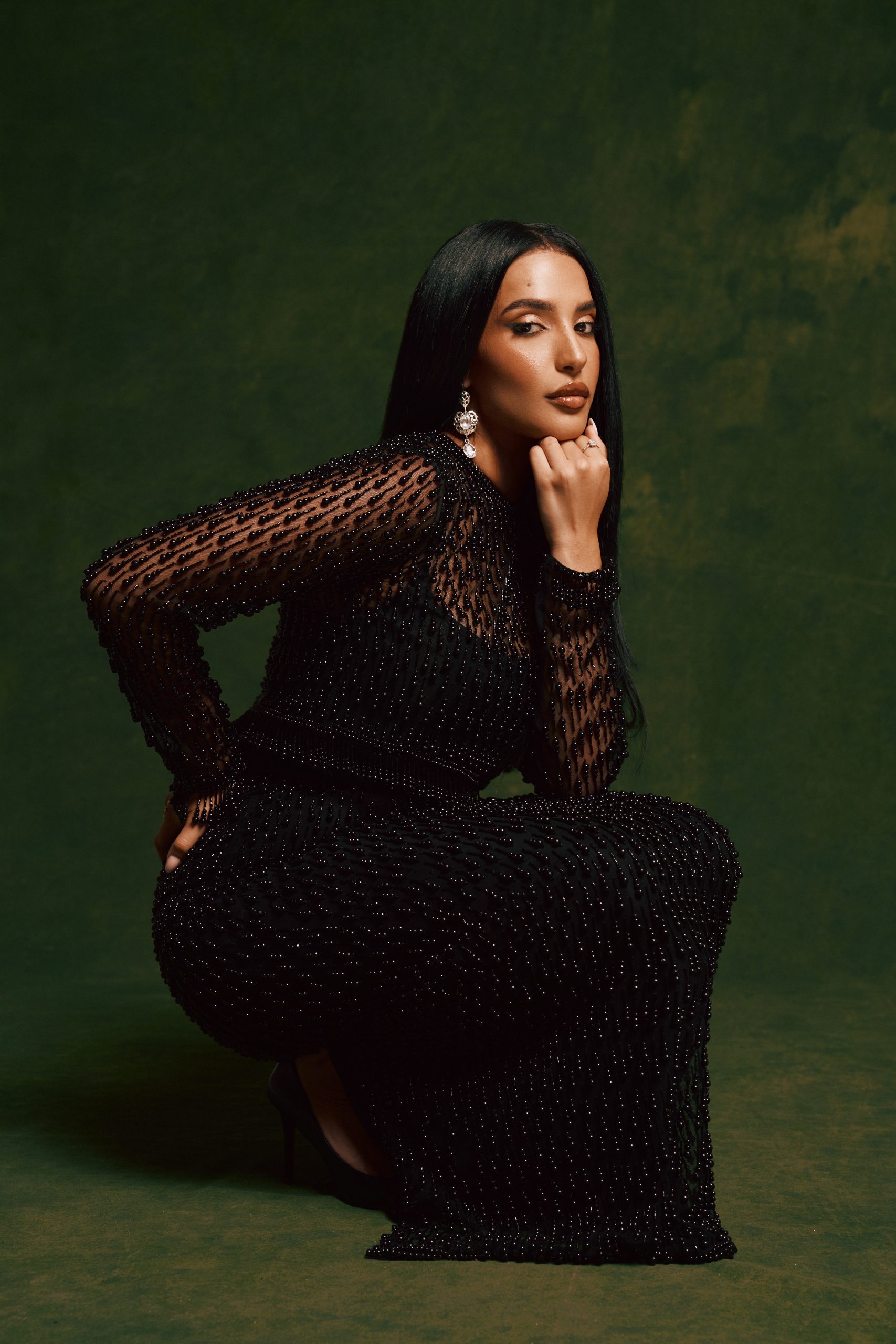
“I learned a lot about myself, both personally and as an artist. I took a step back, gave myself the time to reflect, and really figured out the direction I wanted to take for the next chapter,” says the Moroccan-Dutch singer about the past six years. “It helped me understand who I am, what I want to say through my music, and what kind of artist I want to become.”
Such a process of self-discovery is audible in the distance between the two records. Searching drew from R&B, neo-soul and Latin pop, while Farasha feels more rooted in pan-Arab music, in keeping with an increasingly interconnected and interdependent Arab region.
“The music I make always reflects who I am at that moment in my life. Back then, I was listening to a lot of R&B, and since I naturally make the kind of music I enjoy listening to, I ended up making an R&B EP,” she says of the creative direction that shaped her debut.
“With Farasha, it happened the same way. Moroccan and Arabic music have always been part of my life; you can already hear those influences on Searching. But over the past few years, they became even more present in my own playlists, so it just felt natural to explore that side of myself even more on this album.”
Her second album brings together a diverse range of names, with artists from across the Arab region, from the Levant to the Great Maghreb. Jordan’s Akhras, Morocco’s Najm, Tawsen and Nouaman, and France’s Keblack each take the album in a different stylistic direction. The same is true for genre diversification: dabke appears on “Dayman Heik,” Raï on “La La,” Egyptian pop on “Ana Sittek,” Afro influences on “Dima,” while trap enters through “Galou Fiya” and “I Got You.”
From a Passport Album perspective, diversifying collaborators is often understood as a strategy to penetrate as many different markets as possible, giving the record more than one chance to find its audience. Inez pushes back against that framing.
“From the beginning, I wanted Farasha to be a very diverse album because that’s exactly how I listen to music. If you looked at my playlist, you’d probably think, ‘What is going on here?’ It’s all over the place.”
Yet, with such a large number of collaborations, it can be easy to lose sight of what makes a collaboration work in the first place. This level of diversity can land as a double-edged sword, expanding the album’s reach while diluting its core sound. Inez’s answer to that threat was, in one word, balance.
“I wanted every collaboration to feel balanced. I was inspired by each artist’s own style while bringing them into my world. I think every collaboration sounds like them just as much as it sounds like me, and I’m really happy we found that balance.”
For Inez, calling Farasha a “Passport Album” would certainly make sense from the outside, but it wasn’t her explicit intention to construct one.
“Was it a strategy? Not at all. It just happened naturally. There was no plan to tick boxes or cover different genres. It was simply the most honest way for me to make music.”
That honesty, she says, is ultimately what holds the album together despite its seemingly disparate sounds. “That’s why I always say Farasha represents every layer of who I am. I like to think of each song as a different side of my personality.”
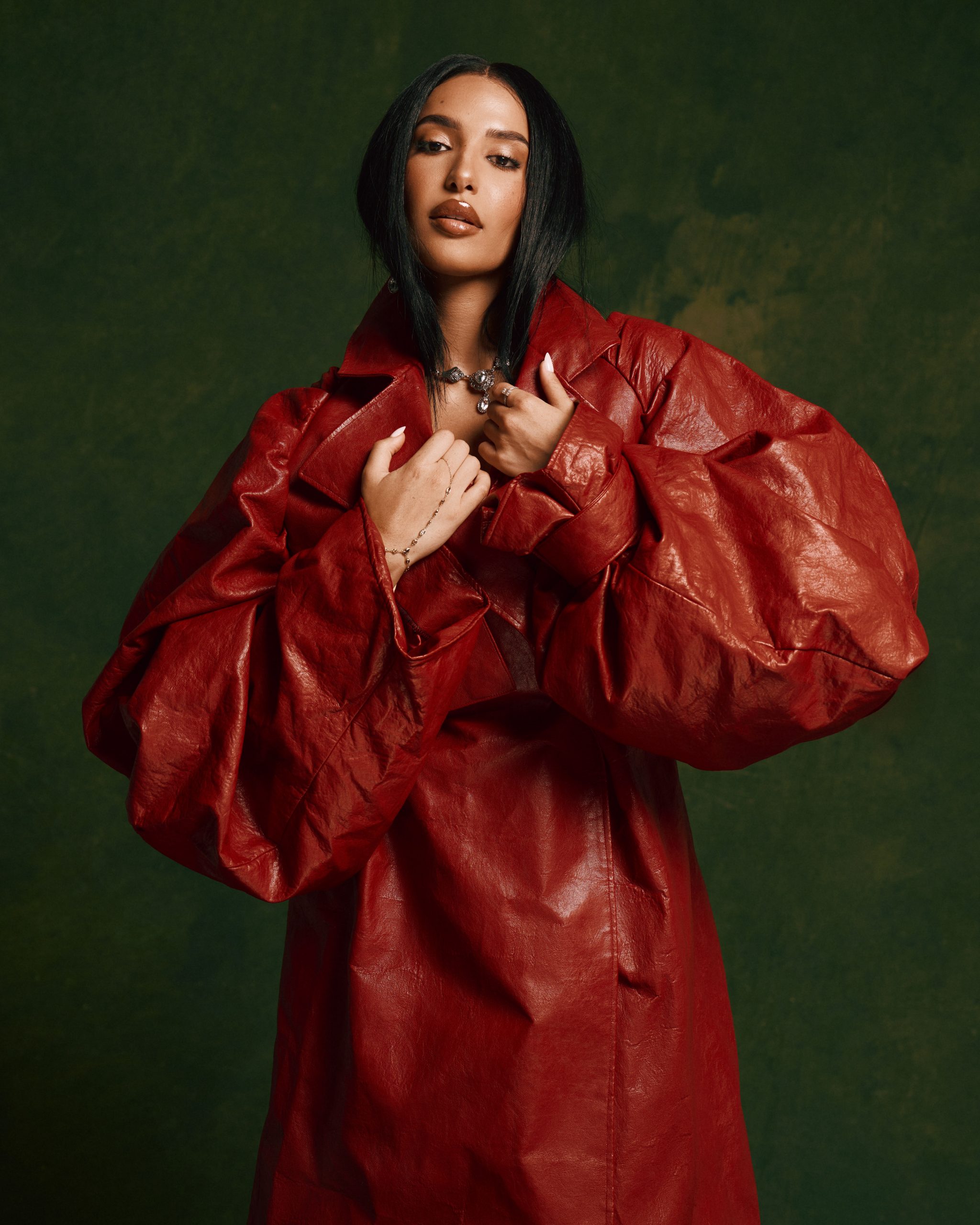
The album’s experimentation also extends into sounds that might initially appear further removed from Inez’s established musical identity.
In recent years, there has been a growing wave, both regionally and globally, of artists merging Arabic musical structures with house music. On “Hayati Ana,” Inez ventures into the genre herself. Surprisingly, however, the song was not originally conceived as a house number.
“This house version actually started as a completely different song that leaned much more towards pop-chaâbi. One of my producers started playing around with the production and experimenting with different ideas. Then he sent me this completely unexpected house version.”
The unexpected direction clicked. “We immediately fell in love with it. We liked both versions, but this one just felt too cool to ignore. I also loved hearing my own voice on a house record. DJs have remixed my songs before, but this time I finally have my own house track.”
Farasha’s run of stylistic play stretches to the very end of the record. The album’s final track, “Sabri Swiya,” incorporates rock elements, offering yet another glimpse into the breadth of sounds Inez is willing to explore. And, according to the singer, it may not be a one-off.
“I hope so! I really love elements of rock music, and it’s definitely something I want to explore more, especially live. I promise we’ll keep surprising you, especially once the tour starts. There’s a lot more to come.”






Abdi Declares the SDF Integration Into the Syrian State Complete
The SDF has completed its integration into Syria’s state institutions, a major step toward a unified Syria.