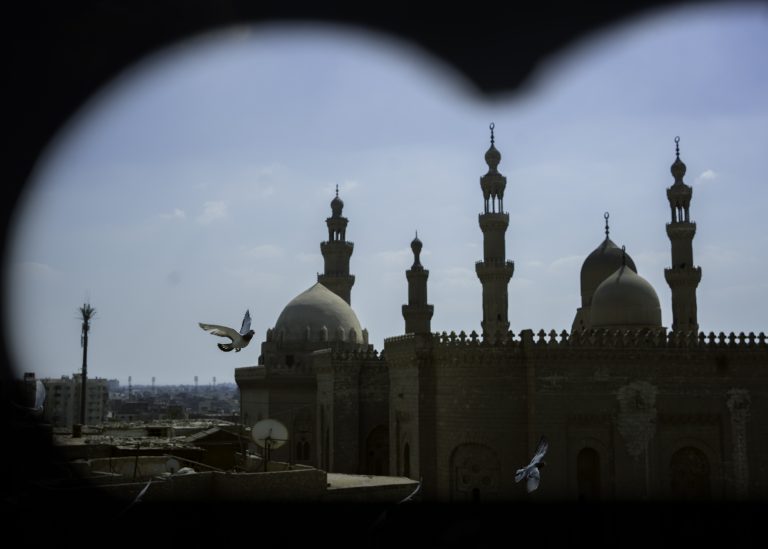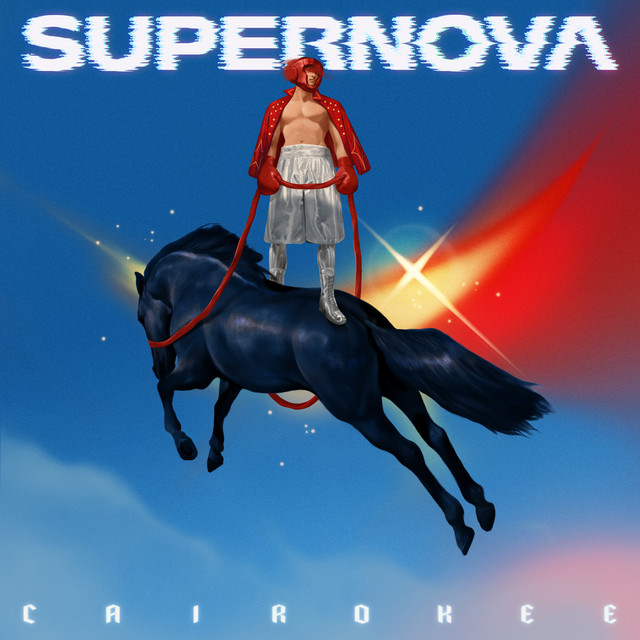

Mourning the ruins is one of classical Arabic poetry’s most recognizable tropes. Countless epic sagas open with the poet standing at what is no more – a lost lover, an abandoned campsite, a departed tribe – shedding a few lyrical tears before venturing into the poem’s core subject. For Cairokee’s seventh full-length, Supernova, mourning the ruins isn’t just a prelude; it’s the whole thing.
The album mourns both the personal and the collective. On the personal level, it mourns youth, innocence, and the sweetness of firsts. On the collective level, however, it mourns something far heavier: the perceived generational defeat of those who hoped the Arab Spring would bring about a different regional reality.
But producing an honest account of a generation lost to a romanticized defeat is one thing; producing a musically solid album is another.
The Documentary
Across its ten tracks, half written by Amir Eid and half by folk poets and guest lyricists, the album offers invaluable material for discourse analysis. Nearly every song explores a different face of the inheritance of defeat among leftist Egyptian millennials.
At its core, Supernova captures a generation who lost hope of collective salvation, and surrendered to escapism and individual solutionism. Over the past couple of decades, many works of pop culture have voiced exactly that shift. You can hear it in The Strokes’ “Machu Picchu” and Emsallam’s “Last Step,” and you can see it in films like Captain Fantastic – all of them bound by a common logic that rejects the modern world and seeks an idealized hideout with a lover or a core family.
In Supernova, we hear this theme in songs like “Mategy,” written by Amir Eid, where he pleads to a lover: “Won’t you join me, living in an unreal world / you, me, and imagination.” A couple of songs later, on “Tata Tata,” also written by Eid, we encounter more of that escapist sentiment: “We escape, we leave this world / we go somewhere still real.”
Another heavy theme the album carries truthfully is that of dreams collapsing under their own weight and becoming their very antithesis. A line like “I was intending to become Batman, but ended up the Joker,” from “Mategy,” rings especially true, summoning flashbacks of celebrated Tahrir heroes turned psychological wreck.
On “Mot Leh,” the band borrows a poem by the late folk poet Mido Zohair, previously performed by iconic shaabi pop trio Lekhfa on their 2017 self-titled debut. Revered as one of the most prominent folk poets of the Arab Spring era in Egypt, Zohair left behind a poem that muses over a relationship burdened with alienation, one that could be with a lover, with post-revolution Egypt, or both: “I was running, trying to reach / but you were a faraway country.”
Other songs, whether written by Eid, folk poets, or guest lyricists, either carry this torch or fall into a generational trap of romanticizing and intellectualizing depression. The fans weren’t oblivious to the hints of empty-calorie melancholy across the record, posting endless videos imitating how Amir Eid writes his songs with the same familiar set of tropes: times / bygone, place / space, street / cinema, last cigarette / alone, hero / last man standing.
Some of the album’s weakest conceptual moments arrive when some songs indulge in millennial self-mythologizing, like this verse from “Wahdy,” written by Mohamed Shafaay: “Only I face this world, only I carry the responsibility / only I fear, and only I know that I’ll play the hero’s role” – or when Eid slides into the role of the cynical rock star, like this verse from “Tata Tata”: “People run and act stupid / (it’s a) jungle, jungle, jungle (out there).”
The Music
Evaluating Cairokee’s music has always been a challenge. To evaluate a release you need to assign it a context, and Cairokee made a name for itself by precisely refusing such attempts at contextualization. While they look like a rock band, they sit at several fault lines at once. They’re too mainstream to be alternative, too mild to be punk, too existential and political to be pop. Like many Arab Spring-era rock bands, they make rock for people who don’t listen to it, or for those whose playlists stop at the outer edge of the classic rock era.
This timeless, placeless rock sound defines many of the album’s most popular tracks, like “Nesena,” a song with an addictively comfortable vocal melody but an almost absent band that contributes little more than generic guitar riffs and drum beats. Songs like the slow rock number “Ana Fadel” are difficult listening for true rock aficionados, with Amir Eid’s depressive verses dragging behind them electric guitar lines that feel forced and unnecessary, bored drum beats, and a baseline you can barely notice or remember.
On the other end of the spectrum, the Sary Hany-produced “Mot Leh” offers delicious acoustic guitar lines that accompany Eid as he delivers emotionally-charged lyrics, including a pre-chorus I believe will live on as one of the year’s most memorable hooks: “If you want me to long, I will / If you want me to lose my mind, I will.”
“Wahdy” is another standout, leading with a catchy electric guitar riff that recalls Tame Impala’s opening to the 2015 single “The Less I Know the Better.” That riff hands the song over to a surf-rock-inspired line that carries its half-whispered melancholy.
The band is more confident, and more present, on the shaabi-leaning songs like “Tata Tata” and “Haseb Haseb,” playing with shaabi and mouled influences, catchy keyboard lines and solos, and a folksy string arrangement – all dimmed down and delivered with Cairokee’s signature quiet restraint.
One of Supernova’s most troubling musical aspects is the difficulty the band exhibits turning some of the folk poems into song. Egyptian folk poetry is not standard or uniform in any form, and turning such poems into singable songs takes a special skill that Cairokee doesn’t seem to have. The verses and stanzas map clumsily onto the songs’ structures, leaving an abundance of awkward pauses, delayed lyrical delivery, and rushed lines squeezed to fit in. “Ana Bakbr,” written by the folk poet Mostafa Ibrahim, is an example of that shortcoming.
This is the paradox of Supernova. It is the perfect album for a lost generation precisely because it, too, is a lost record – fluent in mourning the ruins and unable, or unwilling, to move past them. As a document of collective defeat, it is remarkably accurate and occasionally beautiful. As an album, however, it’s defined by Cairokee’s least praiseworthy impulses.