
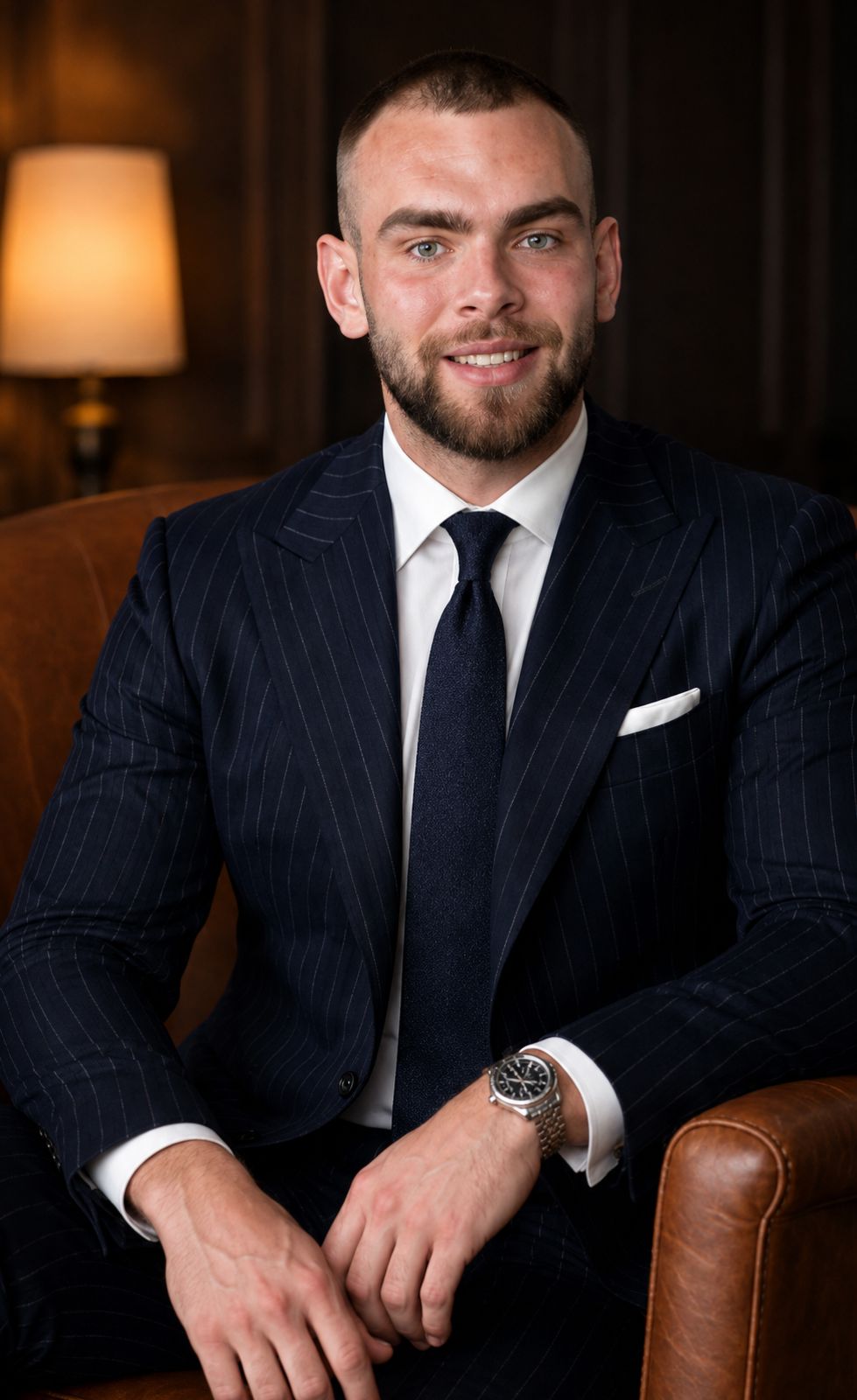
Entrepreneurs are often judged by the opportunities they pursue. Far less attention is paid to the opportunities they reject.
That distinction has become increasingly important to Niklas Freihofer.
Over more than a decade in finance, Freihofer has worked across forex, CFDs, banking and blockchain. The industries have changed, but the pattern behind his decisions has become clearer with time. His career has gradually moved away from simply participating in opportunities and toward deciding which businesses are worth owning, building and remaining accountable for.
That shift began with exposure to the brokerage industry.
Early in his career, Freihofer worked as a forex introducing broker, giving him a practical view of how financial businesses attracted clients, distributed products and built commercial relationships. The experience placed him close enough to understand how the industry worked, but not yet in a position to determine how the businesses themselves were built.
That distinction began to matter.
As his experience expanded into banking and later blockchain, Freihofer became increasingly interested in ownership. In his early twenties, he made a deliberate decision to move beyond distribution and focus on building businesses himself.
The decision changed more than his title.
Ownership meant accepting responsibility for what happened after an opportunity was identified. A business still had to generate sales, build a team, create enough structure to support growth and survive once the initial momentum became harder to maintain.
For Freihofer, that made the quality of the opportunity only one part of the equation.
The more important question became whether the opportunity deserved the time, responsibility and attention required to turn it into something durable.
That distinction is increasingly relevant in a business environment where new markets, technologies and models compete constantly for a founder’s attention. Opportunity is rarely scarce. Judgment is.
Freihofer’s approach has therefore become less about pursuing everything that appears commercially attractive and more about understanding where his involvement can make a meaningful difference.
He describes himself as a hands on operator, particularly around sales and commercial momentum. Rather than separating ownership from execution, he prefers to remain close enough to understand what is driving a business forward and what may be preventing it from progressing.
That mindset also shapes how he thinks about investing.
Capital can create room for a company to grow, but Freihofer does not see capital as a substitute for involvement. Where he believes his experience can contribute to the outcome, he prefers to remain engaged rather than operate purely as a passive investor.
This is one reason company acquisitions interest him.
The attraction is not simply the ability to own another business. It is the possibility of entering a company where his experience in sales, finance and business building can help create new momentum.
That does not mean every opportunity requires the same level of involvement.
As an entrepreneur becomes responsible for more businesses and assets, selectivity becomes increasingly important. Some opportunities may justify direct operating intensity. Others may require capital, judgment and patience rather than constant intervention.
Knowing the difference becomes part of the investment decision itself.
People introduce another layer of complexity.
Freihofer has identified trust as one of the hardest parts of building companies. A founder may understand the market and recognize a strong opportunity, but growth eventually requires responsibility to move beyond one person.
That creates a different kind of decision.
Who can be trusted with responsibility? Who remains aligned when pressure increases? Which people allow the business to move faster without forcing every decision back to the founder?
For someone who places a high value on execution, those questions are not secondary to growth. They determine whether growth can continue without making the founder the constraint.
Freihofer’s current interests continue to broaden across finance, real estate and potential company acquisitions, but the filter behind them appears to be becoming narrower.
He is increasingly drawn to situations where ownership creates the opportunity to contribute rather than simply participate.
That is a more demanding standard than chasing momentum alone.
A business can be growing and still be fragile. A market can be attractive without being worth entering. An asset can appreciate without deserving a large share of an investor’s attention.
The harder task is deciding what is worth committing to before the outcome is obvious.
For Freihofer, that has become one of the defining differences between finding opportunities and building something that lasts.
The further his career has moved into ownership, the less progress has been about discovering the next opportunity and the more it has been about judgment: deciding what deserves capital, what deserves attention, who deserves responsibility and which businesses are worth building for the long term.
RS MENA staff were not involved in the creation of this content.







Abdi Declares the SDF Integration Into the Syrian State Complete
The SDF has completed its integration into Syria’s state institutions, a major step toward a unified Syria.