
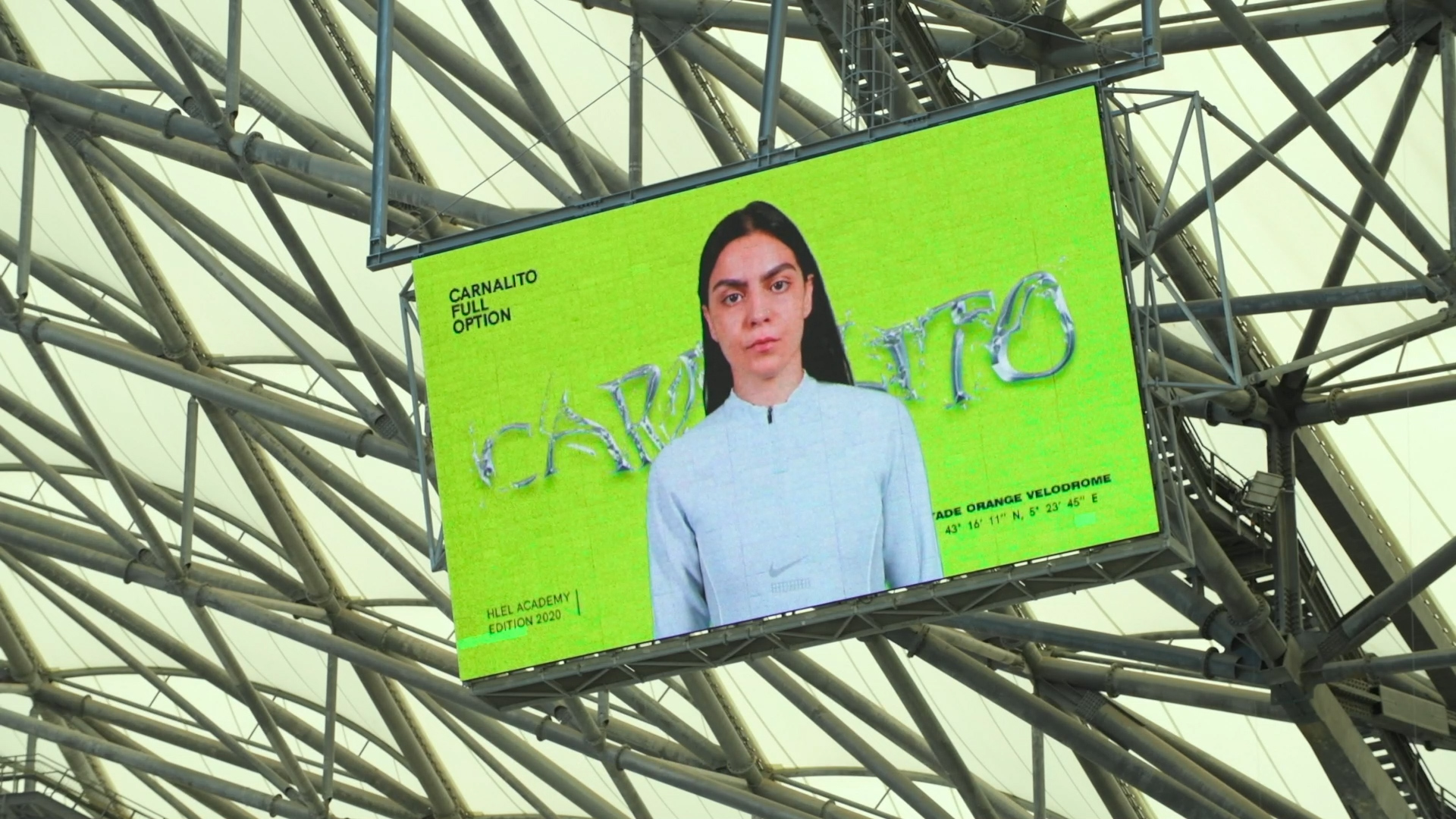
Khtobtogone opens with a young man watching the sun set over the Mediterranean. He is a delivery driver. He is in love. The city behind him is Marseille, but not quite – run through Grand Theft Auto’s engine, softened and shimmer-lit into something that exists just outside the realm of real. He is looking for a girl. The obstacles are not dramatic. They are the kind that accumulate quietly, and that most art does not bother to show.
Sara Sadik made Khtobtogone in 2021 using game-capture software on a budget that did not allow for much else. Five years later, her work has been shown in Istanbul, Oslo, Warsaw, New York and London, commissioned by Luma Arles, Google and BMW, and is now headed to the Stedelijk Museum in Amsterdam and the Museum of Contemporary Art in Marseille. The tools have scaled up, but the subject hasn’t moved.
The Wrong Room
Sara never wanted to be an artist. The arts track at her lycée in Bordeaux was a calculation, a way out of her neighbourhood. She applied to the Beaux-Arts and was rejected. The second time, she performed a version of herself she thought they wanted to see, and it worked.
She spent the next two years feeling like she had walked into the wrong room. Everyone around her had references she did not have, a vocabulary she had never been given, money that shaped everything. “I felt like I wasn’t meant to be where I was,” she says. “I had the ideas. I just didn’t have the language yet.”
The shift came when she typed “art contemporain banlieue” into Google and found Mohamed Bourouissa’s Périphérique, photographs of young men in the housing estates outside Paris, composed with the precision of seventeenth-century painting.
She reached out to him, he responded, and something unlocked.
“The people in his photos made me think of my own world,” she says. “The places, the faces – I felt a connection. And from that day I told myself: your culture, the things you want to talk about, they can exist in contemporary art too.”
She started working in earnest after that, spending days and nights at the school’s video studio, writing stories inspired by herself and her teenage friends, borrowing old camcorders, building costumes, doing her own editing, playing every character herself. “I had a green screen, wigs, the full thing,” she says. “I was doing everything alone, and I was having the time of my life.”
Her thesis took the form of a magazine. Inside it, she wrote about Bourouissa and about Meriem Bennani, a New York-based artist she describes as her favorite, the two figures who had made her believe she had a place in this world.
The Right City
Paris held no appeal. Too competitive, too loud, full of people performing ambition for each other. She arrived in Marseille 9 years ago and felt, for the first time, like the city was already speaking a language she fluently knew. Years later, going through old family photographs, she found images of her parents there, taken in the eighties or nineties, before she was born.
“I wasn’t at all aware they’d been to Marseille,” she says. “Finding those photos meant something I can’t quite explain. Years later, their daughter ends up living there.”
She has spent a decade working with local schools, social centers, youth detention facilities, building projects around the people she meets.
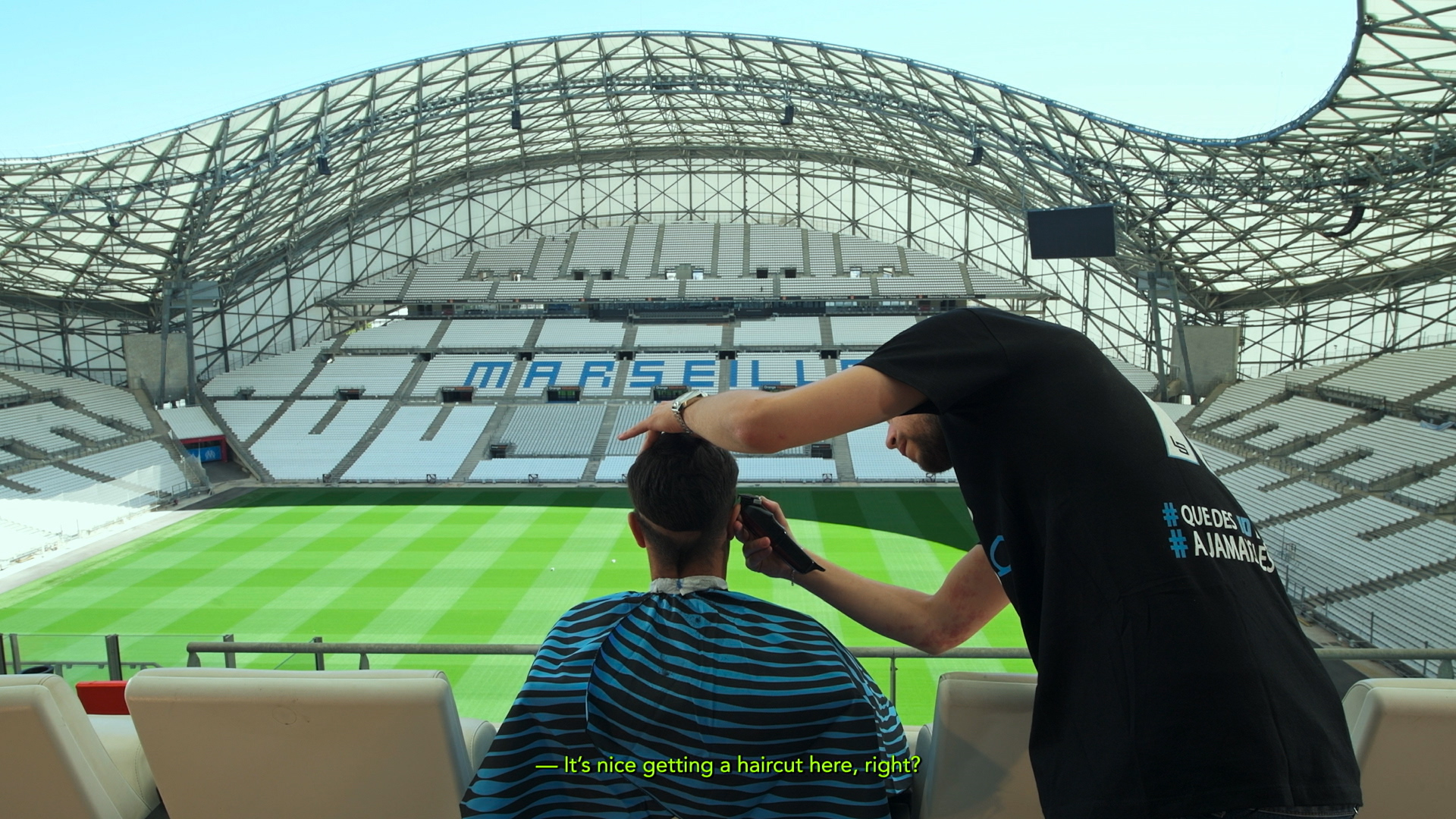
Carnalito Full Option, made for Manifesta 13, started with a question: how do teenage girls on social media define the ideal man? Sadik brought that question into a secure youth facility in Marseille and filmed what happened when they tried to answer it, shot at the Stade Vélodrome, emptied by the pandemic.
“These teenagers wanted to talk,” she says. “Nobody had wanted to listen before.” She describes the experience as more human than artistic. “If I hadn’t been an artist, I think I would have worked in social services. Except I’m probably too empathetic for it. Luckily, I can come in for a defined period for a defined project.”
She watches the city’s gentrification now with something close to guilt. Her work, by making a certain image of Marseille internationally legible and desirable, may have fed the very process that is transforming the city. “I have had moments where I thought: I contributed to this,” she says.
The 2 a.m. Feed
The internet is where all of this started, and it remains the primary laboratory. As a teenager, forums and social media were the only space where the alienation of an elite school did not apply, the only place where she maintained a connection with people who looked like her, after years of trying to look like everyone else.
“I lost myself in that lycée,” she says. “I wanted to be like them. And the internet helped me find myself again.”
What she is after is the unguarded expression, what people write at two in the morning thinking nobody is watching, on Facebook groups that have gone quiet, on Yabiladi, on Wattpad threads from a decade ago. She would spend hours hunting a single comment.
Her TikTok average is three hours and forty-nine minutes a day, a number she states without embarrassment, scrolling until something stops her, then printing it out, gluing it into a thick notebook, writing next to it exactly what drew her attention. It is a way of pausing the flow, of holding something still to understand why it matters.
“Otherwise everything disappears,” she says. “My memory is terrible, and the internet moves even faster.”
What she misses most, though, is Périscope. “My favourite social network, ever,” she says. She loved the map feature, clicking on a city, any city, and watching someone’s unfiltered daily life appear; she loved the anonymity that made people speak freely. She cites Roman national, a film by Grégoire Beil assembled entirely from Périscope footage, as one of her favorite works of art. “When you watch it now, you feel the nostalgia. It shows how extraordinary Périscope actually was.”
Reddit is where she thinks. Twitter was deleted when the algorithm stopped serving anything but far-right content. TikTok is noisier and more surveilled, “it’s become a shopping channel,” she says, but it still generates what she needs: a visual vernacular moving too fast for the institutions that will eventually try to deconstruct it.
GTA as a Language
Video games are not a metaphor in her work so much as a working language she has spoken since childhood. She came to Grand Theft Auto through her brother, playing together in his bedroom with a printed notebook of cheat codes open between them.
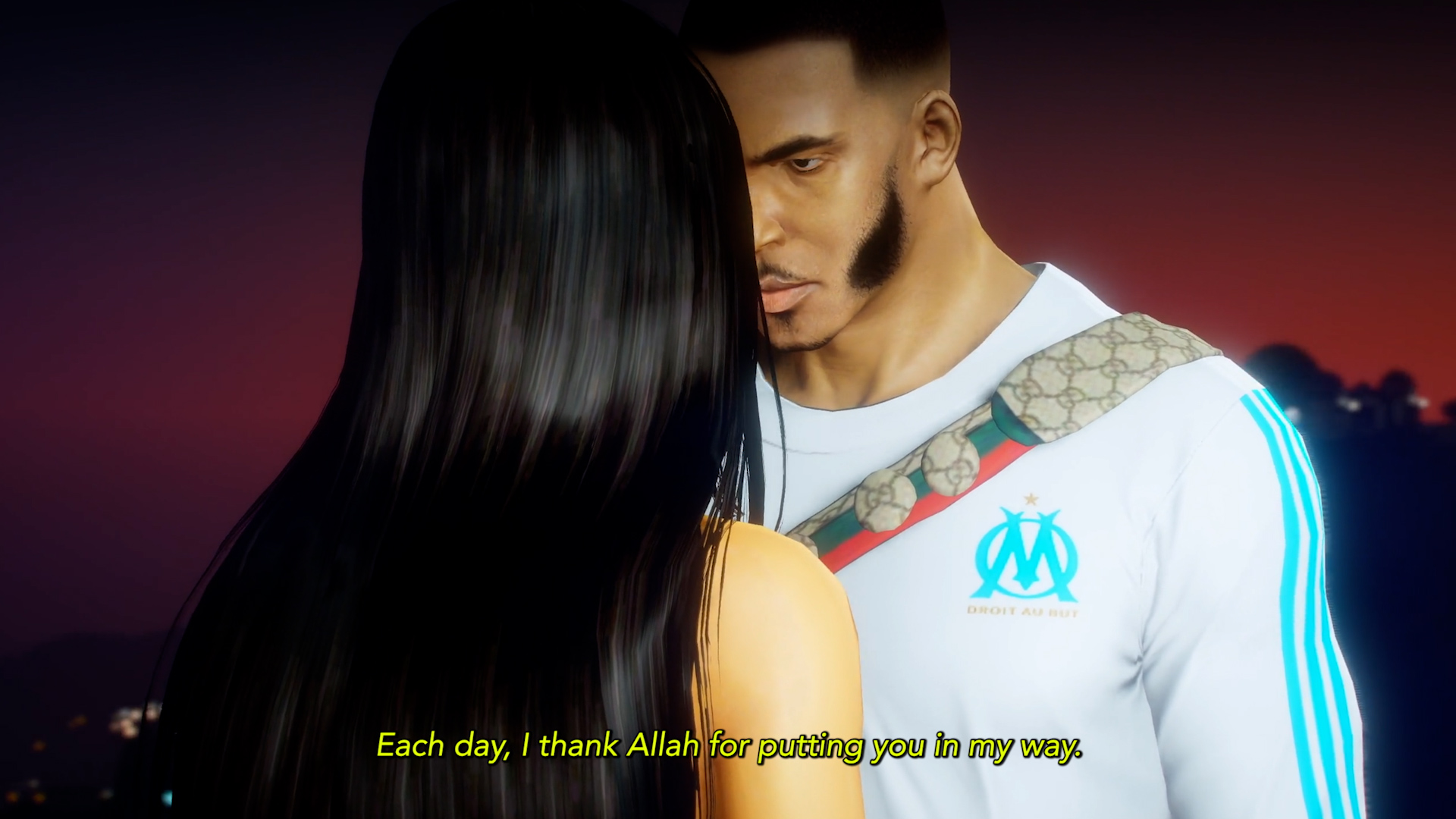
When she made Khtobtogone, her character was a young Arab man from Marseille, and there was nothing in GTA’s Los Angeles-inspired world that corresponded to his life. No kandoura, no Algerian football shirt, no delivery bag. So she built them with a 3D creator and uploaded them publicly, so that anyone who wanted to play as a character who looked like him could. “I felt like my culture wasn’t in this game,” she says. “So we put it there.”
Her current project pushes this further, inspired by the Fortnite’s lobby and creative environment with students at a Marseille high school studying automotive bodywork, exploring the gamification of the employment system.
Digital application forms and automated screening have made discrimination invisible without stopping it, and the students who built the project are familiar with the feeling from both sides.
Beyond GTA, she is drawn to games built entirely around narrative, What Remains of Edith Finch, where objects tell a life story, because they ask the same question her work asks: how do you tell a story in ways cinema and the novel cannot?
“Video games are the most interesting form of storytelling that exists,” she says. “Architecture, music, cinema, everything at once, with the player inside it.”
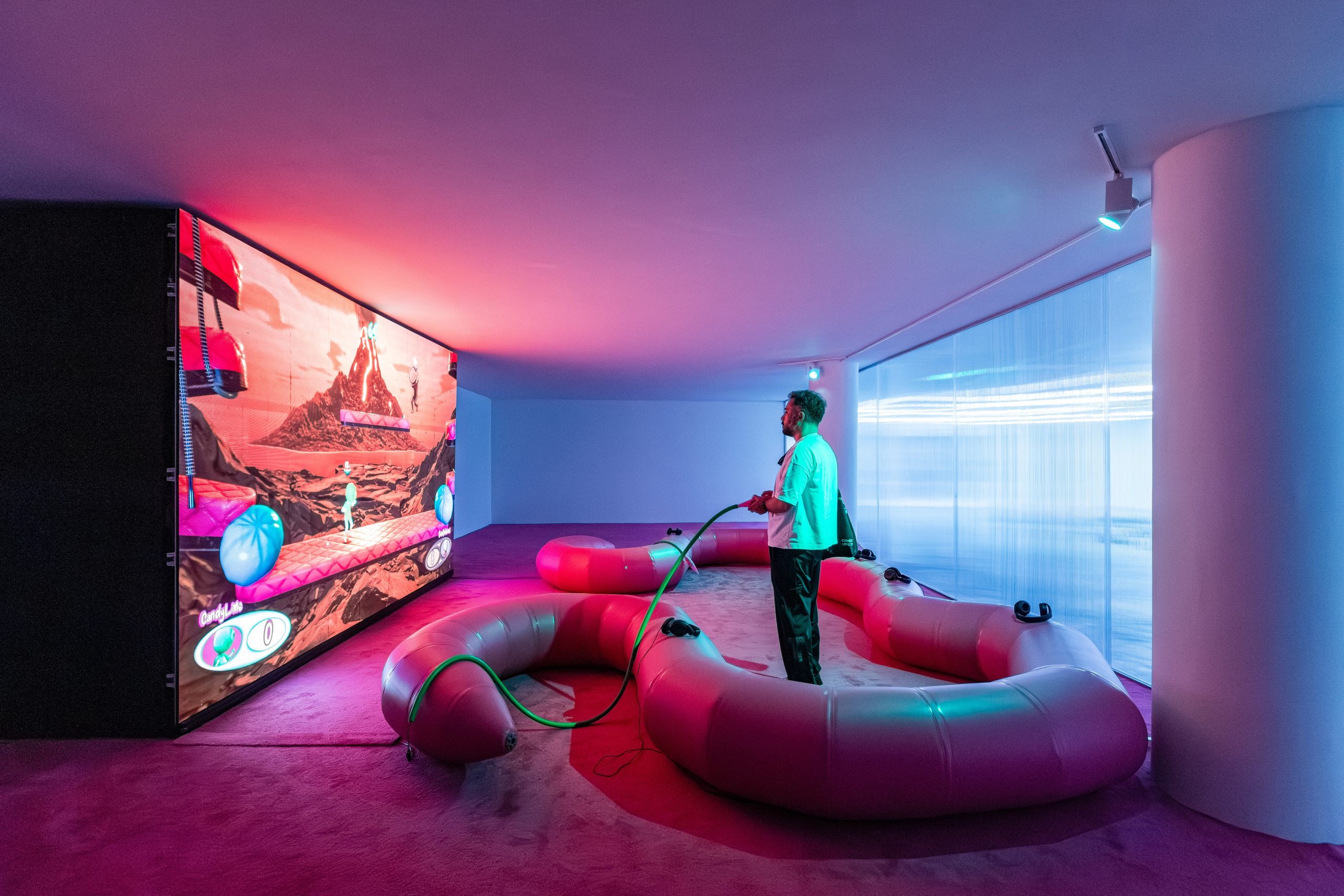
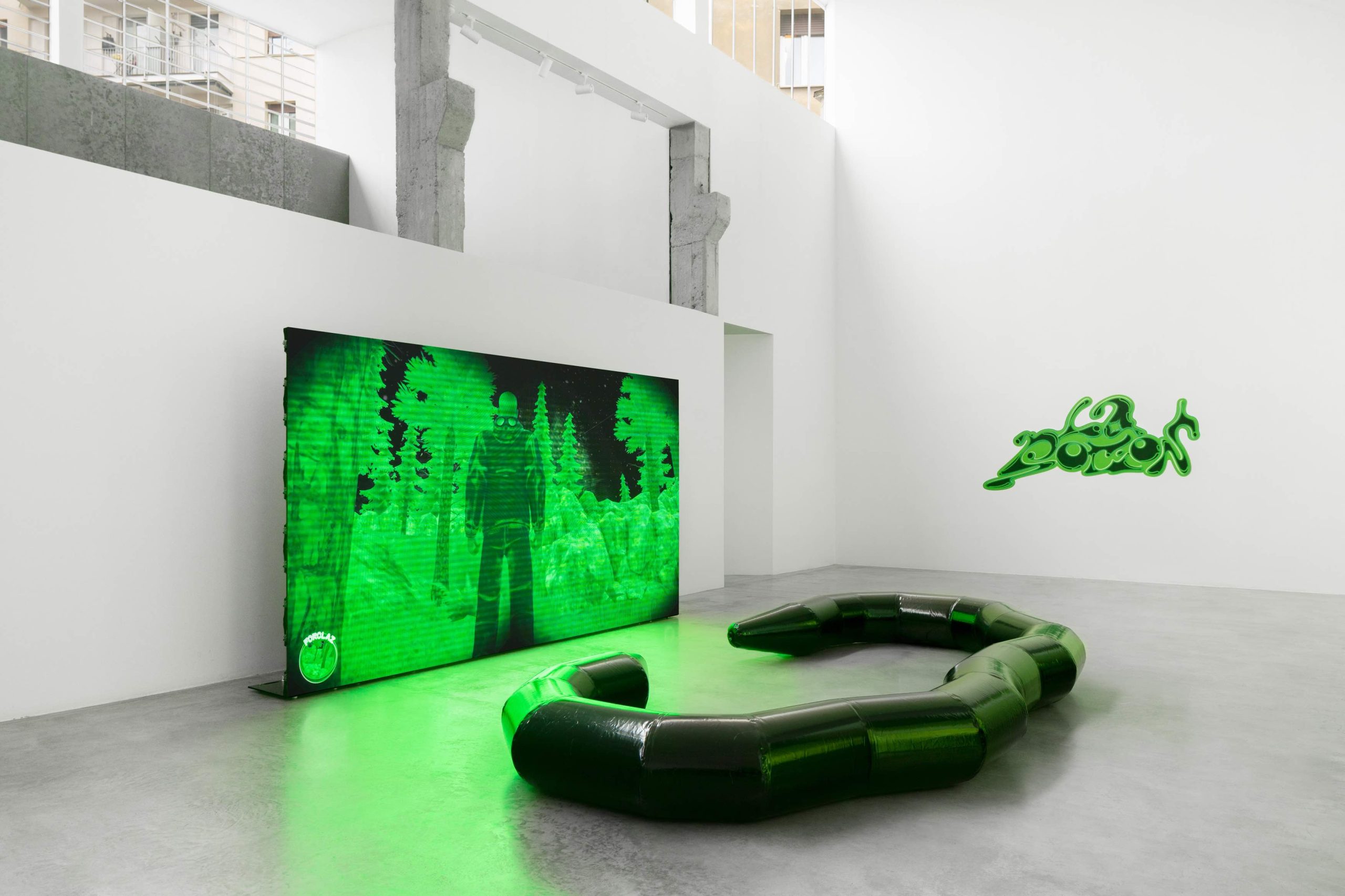
Her best-funded project to date, Xenon Palace Championship, commissioned by Luma Arles and Google, was the first time she could build something as ambitious as she had imagined it, with a real budget, a game studio, and a full production team. “Every decision, no compromise,” she says. “If every project could be like that.”
The Taboo Screen
There is an influence in her work that critics tend not to mention, perhaps because it does not fit the frame they prefer: television. Not prestige drama but reality television, the confession booth, the elimination round, the group of strangers locked in a space together.
She grew up with reality TV and still watches it, and she’s direct about where it sits in her hierarchy. “Before video games, before French rap, there was TV. That came first.”
The cultural condescension it attracts, she notes, is the same condescension once directed at video games and still directed at the culture she documents. “It’s always the same reflex,” she says. “The things that belong to people who don’t count get dismissed until someone decides they matter.”
The confession booth appears in every project she makes. She places the camera, leaves the room, and tells whoever is sitting there to say whatever they want.
Beyond the feature film she would like to make one day, a project so central to her that she describes herself as blocked by its importance, she wants her own television channel. Not a streaming platform but a channel, the kind you discover by accident at a strange hour.
The reference she gives is Khalil Joseph’s BLKNWS, a work of contemporary art that is like a continuous television broadcast on Black American culture, refreshed for every exhibition and shown in museums worldwide and among the two or three works she loves most. “I’ve gone to see it everywhere it’s been shown,” she says. “It’s what TV should be reclaimed for, not left to the people who are killing it.”
She wants to make something for people who never see themselves, not a mirror but a window into something they didn’t know existed. It is, in the end, the same project she has always been working on, whether the canvas is a game engine, a Périscope archive, or a notebook full of printed screenshots: building worlds that already feel inhibited.





Abdi Declares the SDF Integration Into the Syrian State Complete
The SDF has completed its integration into Syria’s state institutions, a major step toward a unified Syria.