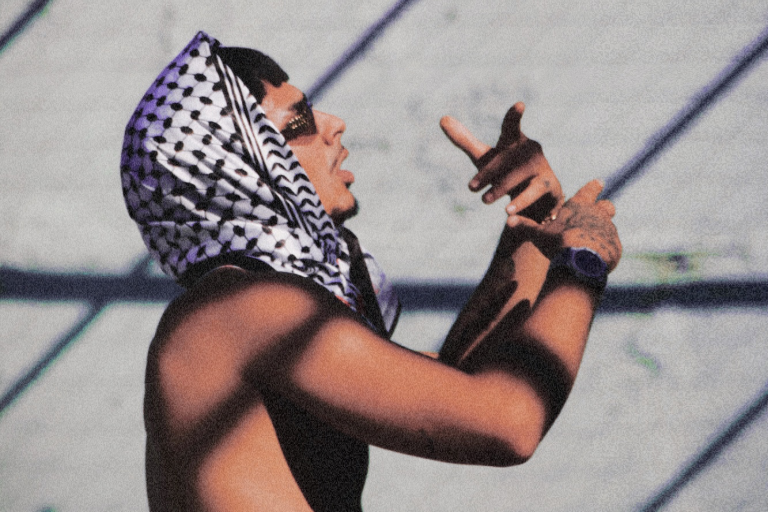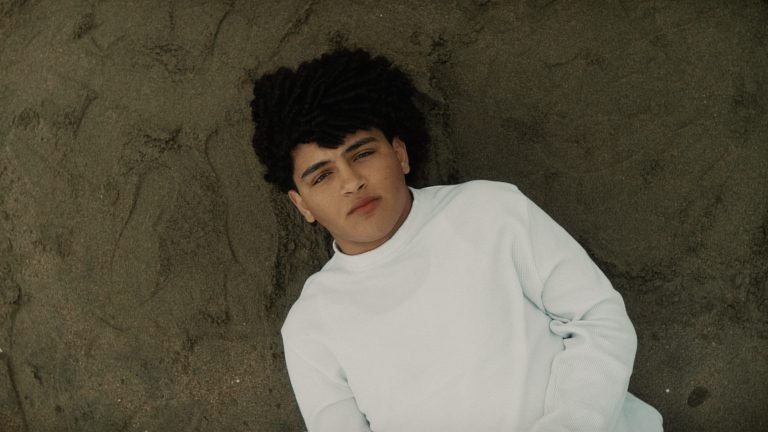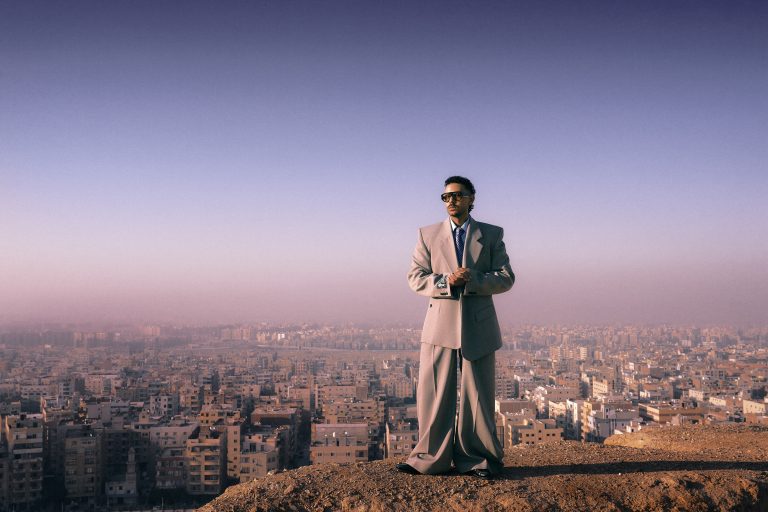
The pre-Islamic Arabic tradition had a specific word for the man who fought and sang. The faris. The knight. His poetry was his battle record and his battle record was his poetry. The same hand that drew the sword drew the verse. To hear him was to be inside the fight. That tradition did not disappear. It went underground. It moved into the camps and the refugee neighborhoods and the West Bank streets and eventually, inevitably, it found Smokaholic’s production. It found Shabjdeed and Touch.
Kattal is its latest expression.
The word itself is the first thing to hold. كتال. Written with a كاف (Kaf), the way certain Palestinian accents in the northern West Bank pronounce the ق (Qaf): in Qalqilya, Tulkarm, the villages between them. The word announces where the speaker is from before the verse begins. In formal Arabic, قتال (Kital) means combat, killing, war. In this dialect, in this mouth, it has become a term of supreme designation. To call someone kattal is to say: this person is extraordinary in a way that standard praise cannot reach. The word carries the old violence inside it but has transformed that violence into admiration. A kattal is someone who has defeated the impossible so many times that defeating has become their identity.
Three artists. One word as title. The declaration is collective.
I.
The song opens with a single declaration before anything else:
والهوى قتال
And desire is kattal (here: fatal)
هوى. One of the most loaded words in classical Arabic. It means love, desire, longing, passion, but the root also carries the act of falling, from Hawa, Yahwee, to descend. The classical poets used it precisely because it holds both at once: the pull of love upward and the danger of falling. In Palestinian speech, it can also be heard as الهوا, the air, the atmosphere itself; the line could turn outward there. I keep it with desire. This is the word Shabjdeed opens with. And desire kills. Before the verse begins, before the oscillation, before the weapons, he names the force that animates everything that follows. The extraordinary thing, the lethal thing, the thing that makes a man a kattal, is what he loves.
Then he lives inside that statement:
Shabjdeed opens his verse moving between states.
اوقات بتشوفني بحالي بخبط
Sometimes you see me alone and banging
اوقات بواجه اوقات انا بهرب
Sometimes I face it, sometimes I run
اوقات بعلّي اوقات انا بهبط
Sometimes I rise, sometimes I fall
على وقتي يخي
On my own time, brother
بس مش اشكال
But it’s not a problem
Alone and banging, facing, running, rising, falling, but not a problem. The oscillation named and released in Arabic in five syllables, على وقتي يخي. On my own time.
He rises and falls and the rhythm of it belongs to him. In a place where every movement requires a permit, where the land is organized to remind you that you move at someone else’s discretion, the clock you set yourself is the last thing they cannot touch.
Then he reaches for the classical:
رمحي سلّال
My spear is drawn and ready
وسيفي دلّال
And my sword guides
قوسي ونبال
My bow and arrows
Lance. Sword. Bow and arrow. The language of the qasida, the pre-Islamic ode in which the Arab warrior-poet named his weapons before battle. To name the weapons was to name the man. Shabjdeed knows exactly what register he is standing in.
Look at what he does to the sword. سيفي دلّال. The root د-ل-ل means to show, to guide, to make something manifest. The sword guides. In a tradition where the warrior-poet names his weapons to name himself, a sword that guides is a sword that leads the way; for the verse, for the listener, for whoever follows. Shabjdeed’s catalog shows a man who sees himself as someone who shows people things they have missed. The sword is the extension of that.
The classical weapon given a personality out of the ghazal. The warrior-poet, intact.
Then, two lines later, he makes the thesis explicit:
تخطرلي فكرة احكيها اسويها
A thought comes to me, I speak it, I do it
احكيها تصبح حقيقة
I speak it and it becomes reality
This is the warrior-poet’s understanding of language stated plainly: saying the thing makes it real. The qasida tradition knew this. The Arab poet who named his weapons in the ode was conjuring them into being. Shabjdeed carries that same understanding into the song. The verse is the act of living, spoken into existence.
يم زي ما هي اتضلها هي هيّ
Yam! Just as it is, it stays that way
يم is a Palestinian exclamation, a push of emphasis before the point lands. He retells the story as it was told, and the thing retold holds its shape, just as it is, it stays that way. The warrior-poet is a witness. He does not change what he records, and what he records does not need him to survive.
II.
The verse turns, and Shabjdeed goes somewhere his catalog rarely goes.
و اسأل هل خلصت يا همّي
And I ask: has my worry finished?
ارجوك اتركني سيبني بحالي احسن لي بركي
Please leave me, let me be alone, maybe better for me
سِبني مع تراب الارض يوماً
Leave me with the earth’s dust one day
بركي بشعر انه لي وحدي
Maybe I’ll feel it’s mine alone
He is asking his anxiety to leave him. Please. He addresses his worry by name, يا همّي, calling it out like you call out a person who has overstayed their welcome. The worry has a body. It sits somewhere in the room. It has been there long enough that Shabjdeed knows its habits. And now he is asking it, directly, with a please, to go.
In years of Shabjdeed verses, the defiance, the catalog of self, you hear please maybe once.
سِبني مع تراب الارض يوماً. Leave me with the earth’s dust one day. تراب الارض is burial ground. The only day a Palestinian is guaranteed ownership of the land is the day he is under it. No permit, no court, no surveyor. Just his. بركي بشعر انه لي وحدي. Maybe I’ll feel it’s mine alone.
And then, at the end of the private section, the dismissal:
انت مش من هان روح من هان
You aren’t from here, go from here
He turns and expels something. The anxiety that has been sitting in the room with him. The occupation. The dread. Perhaps even death itself, which he just looked in the face and sent away. Whatever has been living in him that arrived uninvited. The private verse ends with an eviction notice written in seven words.
III.
The next verse arrives in the calm tone of men who have stopped performing urgency:
بعد الحرب نعود نحن
After the war, we return
نحلم نحكي نرجع زي زمان
We dream, we talk, we return like before
After. Not if. The war sits in the verse as a grammatical fact, already passed. War in Palestinian life is a constant. What follows it: the resumption of ordinary life. We dream, we talk, we return like before. The most radical line in the song is also the most casual.
Then the image that stops everything:
كل متر بقيسوه بالشبر
Every meter they measure in palms
كل سانتيمتر يعده اميال
Every centimeter he counts as miles
The شبر is the span of an open hand, thumb to little finger. Land measured by the body before the surveyor arrived. And this is how Palestinian land gets measured now, in court proceedings and settlement permits, centimeter by centimeter, the body’s unit turned into a bureaucratic instrument.
The second line turns it over. Every centimeter the Palestinian counts as miles. Each small loss measured against all the losses before it, so the subtraction of an inch carries the weight of everything already gone.
IV.
Touch’s catalog is his street.
انا كنت بالمدرسة هامل صح
I was a slacker in school, true
بس شارعي شبر شبر حافظو خال
But my street, inch by inch, I memorized it, empty
The شبر (palm length) again. He learned his street with his body before he learned anything from a classroom. Inch by inch. When the occupation uses the شبر to take, Touch uses it to keep. They are both measuring the same ground. Only one of them loves it.
Before his closing, he gives the tension its name:
داير اداوي بِ الناس وِأواسي
I go around healing people and consoling them
وانا اللي يأسان
And I am the one who is despairing
He guards the neighborhood. He cannot sit at home. He carries everyone’s trouble and is the one quietly despairing inside it. The healer who holds others together while coming apart himself; this is the weight Touch carries into his closing, and it makes what comes next feel earned.
Then his closing:
مرتاح
I am at rest
ب كوني تعبان
In being tired
ب كوني زعلان
In being sad
ب كوني لا أهتم
In not caring
These four lines sit at the bottom of the song.
Rest found inside the tiredness, inside the sadness, inside not caring. The ground he has stopped trying to leave.
There is an old Arabic word for this: رضا. The contentment of a man who has settled into his difficulty the way a body settles into cold water, past the shock, into the temperature. Touch has arrived there. The fish does not fight the water. He learns to breathe inside it.
مشتاق
Longing
بس مش محتاج
But not needing
ارجع زي زمان اليوم انا احسن
To return like before, today I am better
The رضا is completed here. He is longing for the past but no longer needs it. The man who endured the cold water survived it and came out changed. Mshtaq, longing, but not needing. The distinction between the two is the whole length of the journey.
The song opened with والهوى قتال. And desire kills. It ends here: the desire still present, the falling no longer fatal. The love is still in him. It has just stopped being the thing that controls him.
V.
The classical Arabic tradition had a specific poem called the fakhir, فخر, the boast. You enumerated your qualities out loud so that no one could say them for you and get it wrong.
It was delivered in the open, before the tribe, under sky. The poet-warrior stood where everyone could see him and said his name into the gathering.
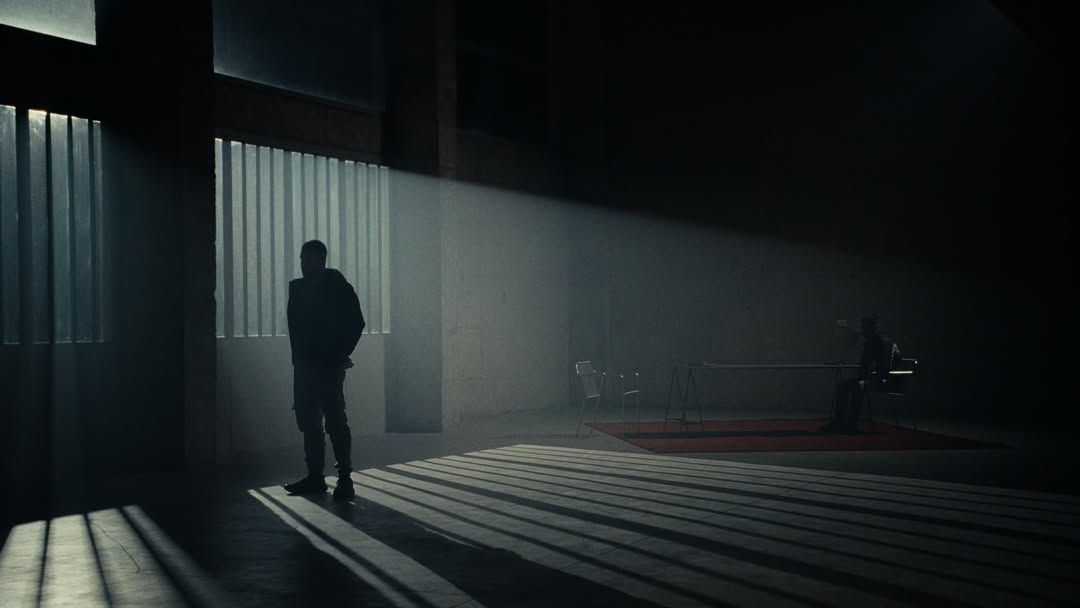
The music video for Kattal takes place in a room that looks like a holding cell.
Concrete walls. A table. Two chairs. Light coming through vertical bars in hard parallel lines, cutting the floor into stripes of shadow and brightness. Shabjdeed and Touch sit across from each other, talking in low light, in the grammar of men who already know the room.
The camera finds an overhead angle at one point, looking down through bars at Shabjdeed sitting at the table. The shot places the viewer exactly where a jailer would stand. You are looking at a Palestinian from the surveillance position. You are the guard. He is the observed. And he is still making his fakhir.
The lance still flows in that room. The sword still guides. The fakhir arrives intact. The room just makes the context visible: a man naming himself in the space that was given to him, which happens to look like every space Palestinians have been made to name themselves in. The interrogation room.
The warrior-poet traditionally chose his stage. This one was given. And he uses it anyway.
Kattal makes no demands on the listener. It is a self-portrait in two voices arriving at the same interior territory: the lance that performs, the childhood street memorized in the mind, the rest found inside the tiredness.
Kattal is a fakhir for the Palestinian man of this generation. He carries the Nakba and the Intifada and the prison and the exile inside him without being reducible to any one of them. He rises and falls on his own time. He asks his worry please to leave him alone and knows it will return. He measures loss in miles and keeps the street memorized in his mind.
Still here. Sword guiding, lance ready, bow drawn, in his own hell which he knows by heart.
The warrior-poet never left.