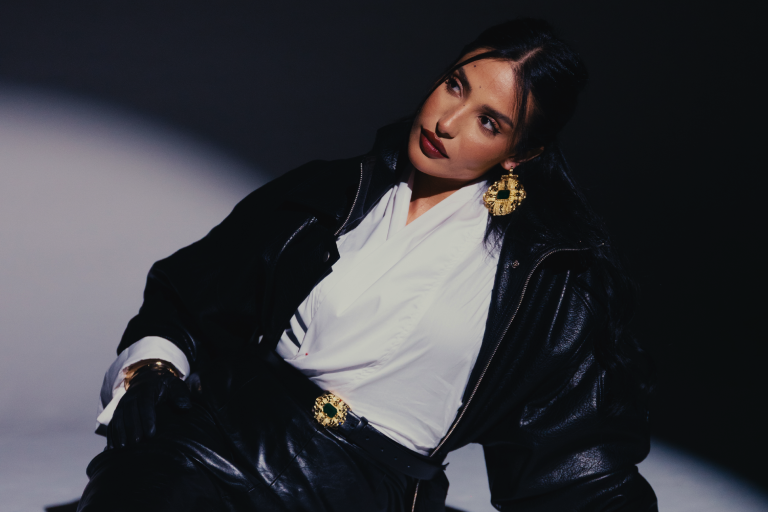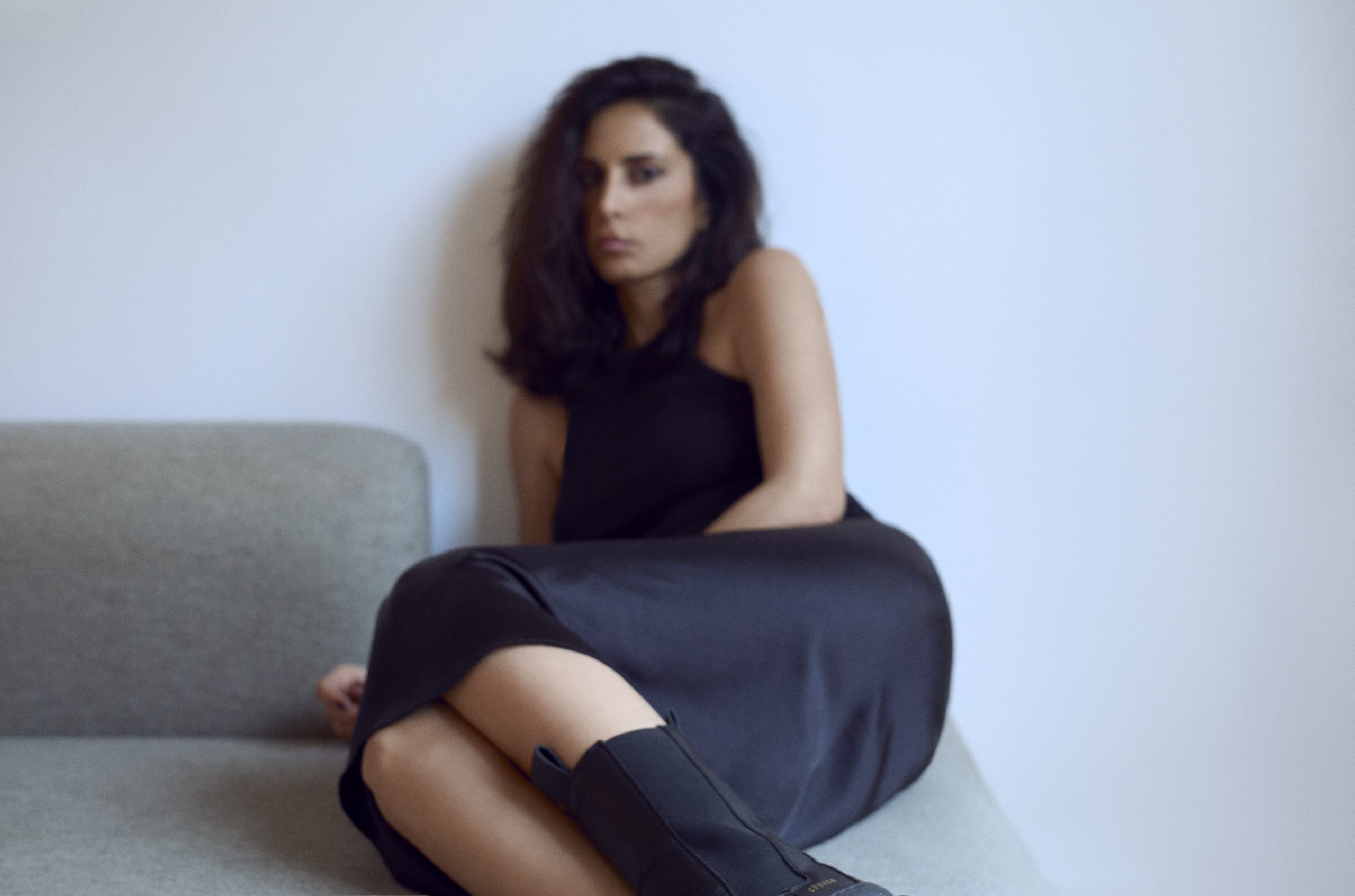
Yasmine Hamdan sounds as mysterious and enchanting as ever when she steps onto the stage, dressed all in black in a classic rock fashion,to deliver a restrained yet moving performance at Le Trianon in Paris on a March evening, kicking off a series of concerts after releasing her fourth solo album I remember, I forget last September.
The 50th year old, who spearheaded Lebanon’s underground scene as half of the iconic duo SoapKills, shows that she is at once a transmitter, iconoclast, and guardian of an Arab musical heritage to which she constantly breathes new sonic pathways. Her performance feels like a temporary refuge and as much as a memorial.
When she steps onto the stage, she immediately captivates the Parisian audience in the city she lives in. On the dimly lit stage of the Trianon, her voice undulates through the darkness as she occasionally plays with the reverb of two separate microphones and a synthesizer, while accompanied by her live musicians.
The belief in the collective and healing power of music, which runs deeply through the album, becomes particularly tangible when she invites her sister to join her in singing the Palestinian song Shmelli, as well as Omar Harb, who collaborated on the record.
Nine years have passed since her last release, Al Jamilat – a tender and contemplative set of songs. On I remember, I forget, she’s reunited with her collaborator, the producer Marc Collin, with great versatility.
True to herself, Hamdan chose to distance herself from the pressures of a music industry increasingly driven by social media. A break that lasted longer than planned, while the situation in her home country deteriorated. The words she finally found to express all her emotions find a cathartic and renewed resonance now that she sings them while Lebanon is attacked and Palestinians still suffer deeply from the aftermaths of what the UN and other organizations have deemed as genocide in Gaza.
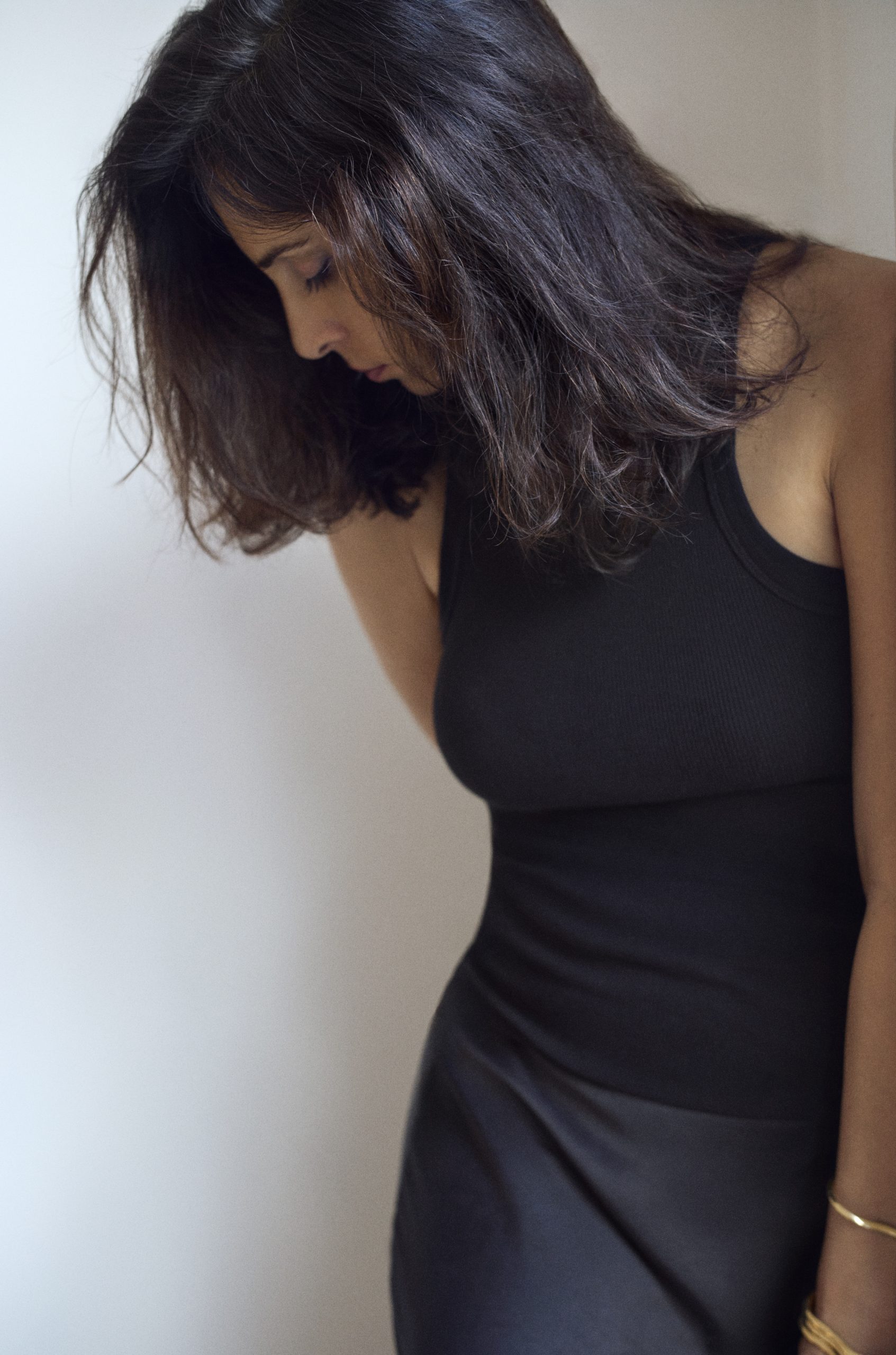
Her engagement and creativity resonate strongly with other artists, as demonstrated by the many remixes of the album already released by prestigious DJs such as Tunisian Deena Abdelwahab and Chilean Nicolas Jaar.
Can you tell us more about the composition of this album and the process behind its making?
When I work on an album or any kind of project, I usually draw from my personal experiences and from what I’m feeling at the time. At the beginning, the process was actually quite painful for me. It was easy to imagine melodies, harmonies, arrangements, or even the overall concept of what I wanted the album to be. But what proved the most difficult was finding the words. In fact, the words only came very late in the process, when the project was already quite advanced.
It’s very difficult to put words on something violent when it shakes you so deeply. At some point in 2019, I felt the need to take a break. I felt somewhat emptied out, and I needed time to reflect on why I was making music in the first place, and on what I was willing to accept or not within that world.
Today, as musicians, we are confronted with ways of working that are not necessarily in harmony with what we truly want to do. For example, the expectation that artists must become their own promotional machines on social media. In a way, it feels like a kind of dictatorship, a set of rules that are imposed on us whether we like it or not.
I needed silence in order to gather my strength and to recentre myself.
Then Covid happened, and at the same time the economic crisis in Lebanon began. Both were devastating. On a personal level first, because it directly affected my parents and my friends. And then there was the experience of watching the country collapse in real time. Seeing a country in free fall is extremely hard. It’s heartbreaking.
It was in the middle of that crisis and those doubts that I slowly began working again, starting with very small ideas, sometimes just fragments, a little every day.
Eventually I went back into the studio with Marc Collin. We listened to a lot of music together, explored different sounds, and then we started organizing sessions with musicians. That’s when I really began shaping the vision of the album and the world I wanted to create around it. And interestingly, that’s when the words finally started to come.
At the time, some of the songs were directly inspired by what was happening in Lebanon, including the explosion at the port, like in the track “Hon.” But at the same time, I never see these songs as limited to a specific time or place. It’s not nationalist in any sense.
What I didn’t expect was that we would so quickly fall back into trauma again, as happened with Gaza. The war in Lebanon and the genocide in Gaza pushed me back into an intense state of stress and deep pain. Some of that suffering found its way into the music, especially in songs like “Hon.”
Many of us in the diaspora are experiencing all of this from a distance, and that creates a very strange feeling, as if we are living in two different realities at the same time, in two different space-times. There’s almost a form of schizophrenia in that experience.
How did you decide which songs to revive, like “Mor El Tagany”? What do these songs mean to you?
“Mor” is a mouachahh, which is a traditional form of classical Arabic vocal music. My friend, Oussama Abdel Fatah, a brilliant oud player and singer, introduced me to the piece, and I immediately felt drawn to it and wanted to reinterpret it. In a way, I often feel that songs choose me rather than the other way around.
With this particular piece, I felt a kind of catharsis in it, something that gives me strength. I enjoy taking something that already exists and placing it in a new context, adapting it, experimenting with it, and playing with the codes. I like giving myself the freedom to transform things completely if needed.
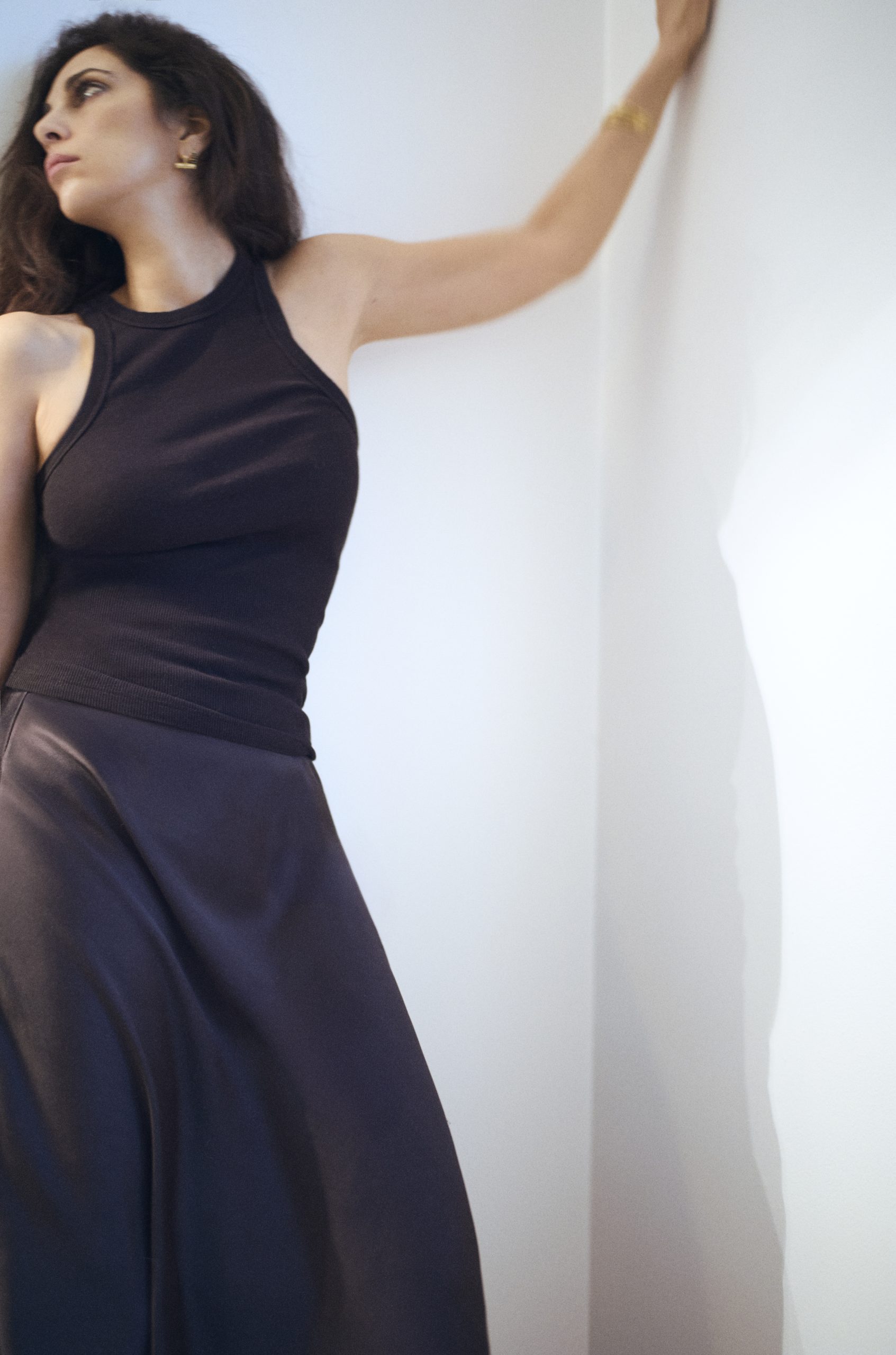
We reworked the piece and really made it our own. I first worked on it with Omar Harb, who also co-composed “The Beautiful Losers.” Later on, Marc Collin and I transformed it even further. We deliberately submerged the traditional aspect of the piece while still keeping a trace of its memory, almost like recycling the original song and giving it a new life.
What made you want to cover “Shmaali,” a very lively Palestinian song?
I actually discovered it by chance, and I was immediately captivated by the melody and the emotional power it carries. Later I became even more fascinated by its meaning, the idea of a secret language, the resistance embodied by Palestinian women, and the poetry within the song.
By singing coded songs that carried hidden messages to their imprisoned loved ones, they managed to escape control and resisted violence with poetry and music. It shows much strength and dignity. And therefore they are victorious, despite everything.
These songs called “tarweda” exist since the Ottoman Empire and British mandate and echo what is happening today, that is also why I chose to do this cover. What moved me deeply was the creativity of these women who managed to transform their experience. Instead of simply enduring oppression, they found a way to reclaim agency: they excluded the jailer from their world.
Today the song has an even stronger symbolic meaning, given the occupation and the ongoing horror that Palestinians continue to endure. I find it incredibly inspiring.
All my Palestinian friends know these kinds of songs. They are passed down from mother to daughter, generation after generation. It’s a form of cultural resistance that has survived for decades, and I find that extremely poetic.
In Lebanon, we had similar types of songs as well, and I imagine that this kind of tradition exists in many countries that have experienced occupation.
People can have everything taken away from them, and yet they continue to resist.
What does the album title mean to you?
I named the album after the song “I Remember I Forget.” Looking back, I realize that the song emerged out of a lot of pain. It took me a long time to finish it, and even longer to fully understand what it was expressing.
In fact, it almost happened by accident. I struggled with that song for nearly three years just trying to find the right key and tone for it.
Now when I revisit the lyrics, I see that the song touches on many different themes: memory and responsibility, how we cope with difficult memories, the way violence becomes normalized in our societies today. It also reflects on the expectation that we should somehow learn to live with this normalization, and the question of how we continue knowing everything that we now know. So it’s not a pessimistic song, but rather a lucid one.
I think the title resonates because it leaves space for interpretation. Everyone can project their own meaning onto it.
How do you approach the challenge of aligning classic tarab aesthetics with trip-hop?
I’m not even sure it’s really trip-hop. I learned music by listening to a lot of it. I’ve always loved integrating samples from old songs that I chopped.
I try not to confine myself in one single geography or style or genre because I get bored easily. I go with the flow, one thing leads to another. I look for ideas everywhere. It feels good to be creative: you are connected to your intuition, you are hopeful in many ways. Even with the ups and downs and doubts and frustrations, you know that there will be a lot of pleasure that will ultimately come your way. And this gives you the strength to continue.
Sometimes things simply happen by accident, by intuition, or just by desire. What interests me is blurring the boundaries, breaking down walls that might confine me, and trying to feel as free as possible creatively.
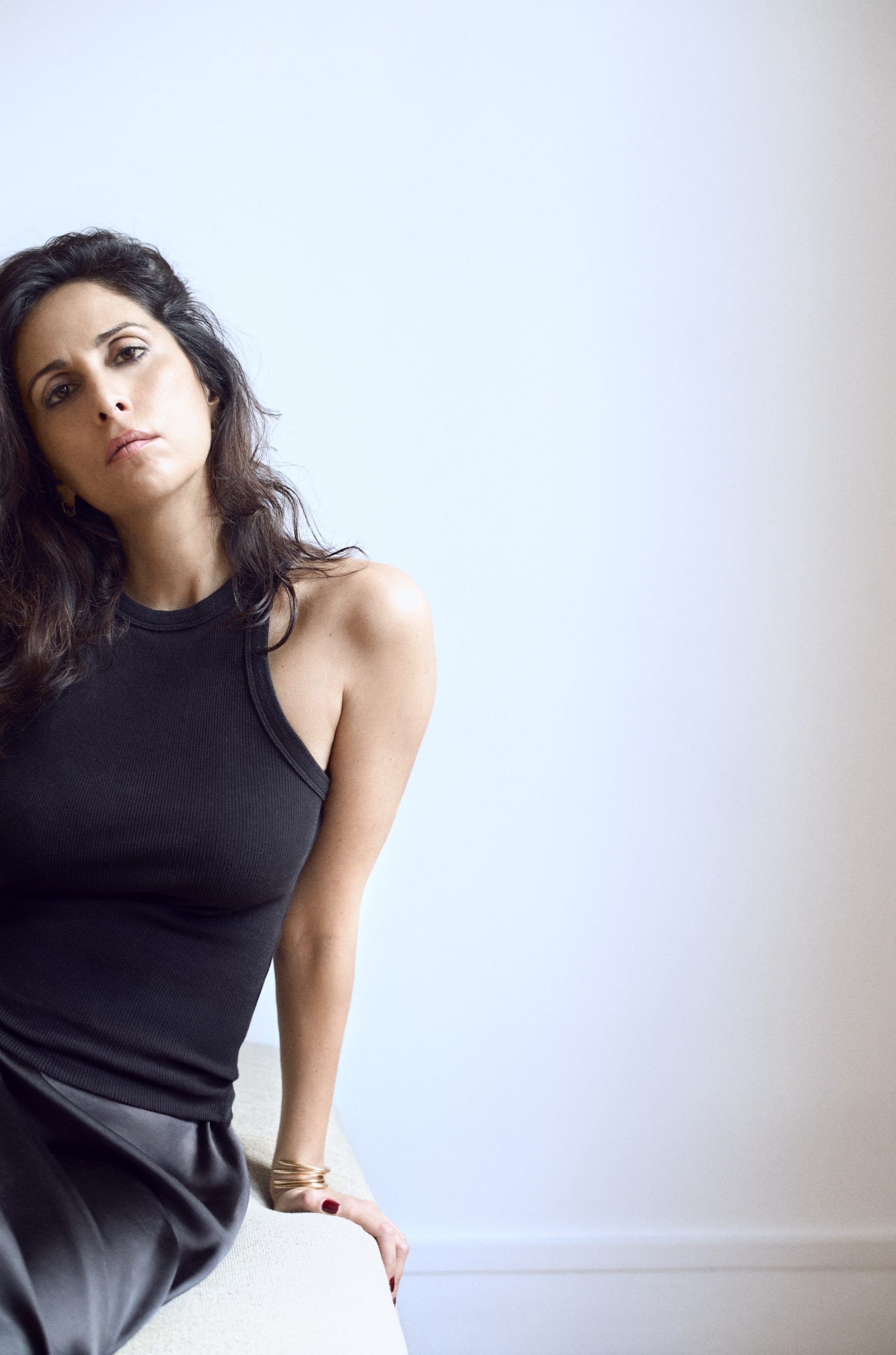
When I’m in the studio with other musicians who bring their own musical worlds into the process, interesting encounters happen. That’s what makes it exciting. An album is never the work of one person alone; it’s always a collective project.
I love working with sound almost like a material, experimenting, shaping, transforming.
For me, singing in Arabic has always been a political act. When I first started doing it, it really wasn’t fashionable at all. In fact, in the beginning people criticized the way I sang Arabic, they felt I wasn’t doing it “properly,” and that upset quite a few people. But I felt that I had to push through that.
Arabic music is extraordinary, but if I wanted to be sincere, I couldn’t pretend that I came exclusively from that culture. I come from multiple cultures that nourish me. National borders are not something that interests me very much.
What I wanted was to place my language within something universal. Often what we are told represents “our culture” or what is labelled as “Arab” does not necessarily reflect the complexity of reality.
On this album you sing in several dialects. Why was that important to you?
I’ve always sung in different forms of Arabic, Egyptian, Lebanese, and classical Arabic as well. I also lived in several Gulf countries, and I love the way the musicality of the language changes from one place to another: the rhythms, the sounds, the words themselves.
Each dialect carries a certain cultural sensibility that I associate with particular emotions or atmospheres. For example, Egyptian Arabic evokes a specific mood for me.
So it often depends on the tone I want to give a song, whether I want it to feel lighter or more serious. Classical Arabic, for instance, has a heavier quality.
In the end, the choice always depends on the melody and on what emotion I want to express.