

This feature is also available in Arabic through this link.
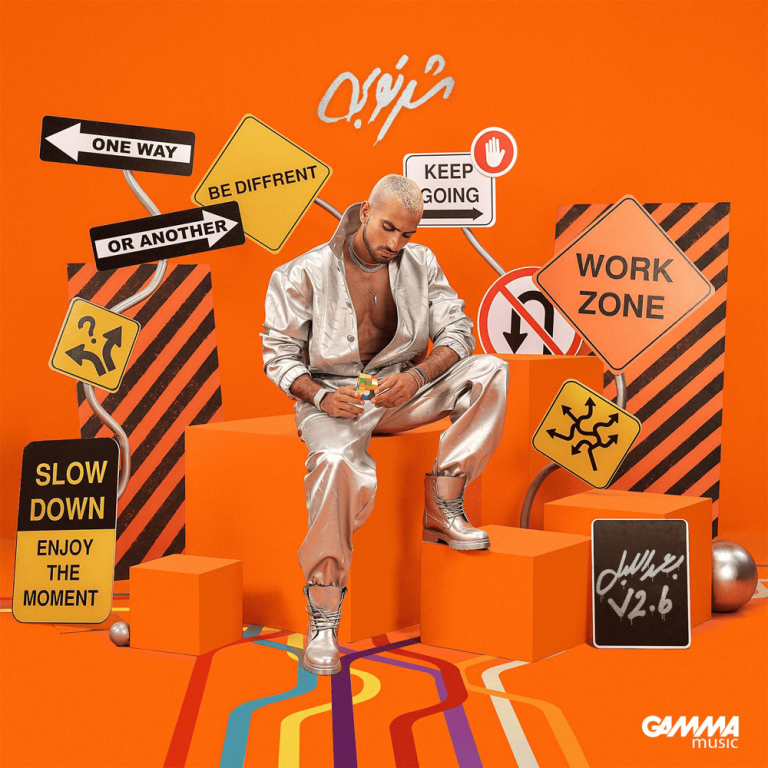
After half a year filled with “Ana Five Star Ala Kawkaby,” “El Wala Hamo Geh” and other Hamo El Morshdy hits, and as everyone packs their bags to head home after a summer season whose final two months were crammed with major releases, El Morshdy has left his mark on the season by reaching No. 4 on Billboard Arabia’s Artist 100. He is the first mahraganat performer to climb that high, surpassing his own previous peak at No. 7 and remaining in the top 10 for more than three months – a feat neither Essam Sasa nor Eslam Kabonga had previously achieved.
The most explosive phenomenon in Egyptian and Arab music this year hasn’t attracted much attention, largely because it arrived through a quiet, gradual ascent. Hamo El Morshdy has been steadily pushing deeper into the region’s streaming charts since making his chart debut in March. And his sustained presence in the top 10 hasn’t been powered by just one or two hits: He currently has eight songs on the Billboard Arabia Hot 100, as well as 10 tracks in Spotify’s 50 most-streamed songs in Egypt.
The easiest explanation for this remarkable rise might be “Ana Five Star Ala Kawkaby” and “El Sadara Beity,” the most-streamed and most-viewed songs in his catalog. But the more compelling reason – and one that hasn’t received nearly enough attention – is sheer output. In just six months, Hamo El Morshdy released 27 tracks, in addition to the nine-track album Hamo Geh, the five-track Kaseh El Gedara and the five-track King Kong. In other words, in half a year alone, he produced almost twice the annual output of an artist working in virtually any other genre.
That made me take the strategy of “flooding the market,” or high-volume production, within the new-school mahraganat scene more seriously.
It is one of the movement’s most underestimated factors, and it has helped propel a new wave that carried mahraganat’s popularity beyond the streets to a level of reach and visibility that has become increasingly difficult to ignore – not only in Egypt, but across the region.
Its artists can now compete with those working in the biggest genre of all, pop, without being accused of simply trying to climb into its clothes, an accusation that has dogged artists from numerous other genres, particularly Egyptian hip-hop.
The Elephant in the Room
Our theory begins with Essam Sasa, the first mahraganat singer to break into Spotify’s most-streamed artist rankings in both Egypt and the MENA region. In Egypt, Sasa ranked second in 2025, first in 2024 and 2023, and fourth in 2022. Across MENA, he ranked sixth in 2022, topped the list in 2023 and slipped to fourth in 2025. He also ranked eighth among the most-streamed Arab artists on Anghami in 2025 and ninth in 2024.
Alongside this unusual dominance, the man behind “Ana Mesh Ghayeb Ashan Aoud” and “Mahkama W Dakhalna Ala El Maframa” released 21 tracks in 2025, 24 in 2024, 25 in 2023, 32 in 2022, 29 in 2021 and more than 40 in 2020. Before he even entered Spotify’s top 10 most-streamed artists, then, he had amassed more than 70 tracks over the preceding two years. Over the following four years, during which he topped the Egyptian and regional rankings, he released more than 100.
That makes his output over the past five years one of the largest bodies of musical work in the region by sheer volume, if not the largest outright. So far this year, he has released another 14 tracks.
Eslam Kabonga, who ranked third on Spotify’s Egypt list in both 2025 and 2024, and whose “Ana Mesh Dealer Ya Hokoma” was Egypt’s most-streamed song in 2025, has taken this production model to another level. In 2023 alone, he released 58 tracks, followed by 49 in 2024 and 37 in 2025. This year, he has already released more than 30. Altogether, his output exceeds 150 tracks in just four and a half years.
What this makes clear is that new-school performers’ breakthrough into the regional music scene – and Essam Sasa and Kabonga’s firmly established staying power within Egypt’s multi-genre domestic market – isn’t the product of one hit, or two, or three. It is built on enormous momentum generated through digital accumulation and the relentless assertion of presence.
Between the Platforms of Masr and the Platforms of Egypt
Against the backdrop of the Covid-19 pandemic, 2020 marked the peak of digital content’s ascent, and mahraganat music in particular. The trio of Omar Kamal, Hassan Shakosh and producer-arranger Eslam Saso led that wave with romantic tracks such as “Bent El Geran,” “Oud El Banat Aaly,” “Bonbonaya Sakta Fe Nutella” and “Oud El Batal Malfouf,” which together surpassed 1.25 billion views on YouTube alone.
Then there was the pairing of Hamo Bika and Shakosh, whose collaborations brought in other mahraganat artists including Abo Lila, Houda Bondok, Figo El Dakhlawy, Ali Adora and Nour Eltot, among others. The best known included “Wada3 Ya Donia Wada3” and “Shams El Magara,” as well as Hamo Bika and Omar Kamal’s collaboration on “Enty Maalma” and other tracks.
Those songs shone a spotlight on numerous names in the mahraganat scene, including Mostafa El Gen and Hady El Soghayar – the duo known as Team El Ebdaa – as well as Samer El Madany and Hamo Eltekha, followed by Karim Cristiano, Amin Khattab and others. These are artists whose YouTube views are enormous compared with their streaming figures on other platforms, including YouTube Music itself.
That is because a huge segment of mahraganat’s loyal audience still relies on downloading tracks from YouTube onto flash drives or listening to them by playing the videos directly. Workers in all kinds of shops, from salespeople to merchants; drivers of trucks, trailers, microbuses, tuk-tuks and other forms of transport; and even members of the middle and lower-middle classes who can’t justify adding music-streaming subscriptions to their monthly expenses – all count YouTube as their primary source for listening to music.
In 2020, for example, 16 mahraganat tracks entered YouTube’s list of the 50 most-streamed songs in Egypt. Among the biggest were “Han3mel Laghabeeta” and “Bent El Geran” by Omar Kamal and Hassan Shakosh, “Shams El Magara” by Hamo Bika, Hassan Shakosh and Omar Kamal, and “Hala Wallah” by Hamo Bika, Felo and Abo Lila. The following year, 17 tracks made the list, including “Habibty” by Hassan Shakosh and Yasmine Raeis and “Khatar” by Houda Bondok and Muslim. The number fell to 12 in 2022 and reached 13 in 2023, before rising again to 17 in 2024, particularly as stars of shaabi music began moving into mahraganat territory, whether Mahmoud El Leithy with “Am El Magal Koloh” or Reda El Bahrawy with “Aal Doghry.”
Last year, nine mahraganat tracks appeared among YouTube’s most-streamed songs in Egypt, during a year considered particularly crowded with pop and indie releases and featuring stars including Amr Diab, Fadel Chaker, Ahmed Saad, TUL8TE, Haifa Wehbe, Saint Levant and Dystinct.
Over the past five years, mahraganat artists have filled listeners’ feeds with a relentless succession of releases, something a sample of the scene’s biggest names makes particularly clear. Leading the pack is Team El Ebdaa, Mostafa El Gen and Hady El Soghayar, whose combined output last year alone exceeded 55 tracks. Next comes Hamo Bika, who at his most prolific released more than 35 tracks a year. Artists including Karim Cristiano, Amin Khattab, Hamo Eltekha, Samer El Madany and Ahmed Moza El Sultan, meanwhile, have typically put out between 15 and 20 releases a year, with even the lowest-output cases reaching 10 or more annually. These production rates are among the highest of any artists across the music scene, regardless of genre.
A Marketing Strategy or Part of the Culture?
In the early hours of May 16, Cairo time, Drake unexpectedly ended a long wait by dropping three albums at once, totaling 43 songs. Flooding the market with such a massive amount of music in one shot allowed him to break numerous records this year.
He became the most-streamed artist in a single day across several platforms, most notably Spotify, while Ice Man became the most-streamed album on its opening day and “Make Them Cry” the most-streamed track in a single day.
But the frenzy went beyond the numbers. The Canadian rapper quite literally broke the internet, as Spotify and Apple Music temporarily went down under the enormous pressure of listeners rushing to hear the new albums.
A week later, Drake had shattered several Billboard records, including overtaking Michael Jackson as the male singer with the most songs to top the Hot 100, becoming the first artist to place 400 songs on the chart, and becoming the first artist to occupy the top three positions of the Billboard 200 with three different albums in the same week.
Many music critics and commentators saw Drake’s internet-breaking flood-the-market strategy as the ideal comeback after the setback that followed the Kendrick Lamar beef. In a single move, he managed to get his enormous global audience to move past that setback as though it had never happened.
Seeing a strategy like this deployed on such a massive global scale invites another thought: New-school mahraganat was ready to break the internet before “breaking the internet” stopped meaning one runaway hit and started meaning an entire project, even a model of production.
What is striking about mahraganat is that prolific output as a strategy isn’t driven purely by marketing. It also has roots in the culture of shaabi singing and in attitudes toward work among the social classes from which mahraganat emerged.
Mahraganat, and especially its new wave, is a direct technological extension of shaabi music, particularly live shaabi performance. It developed in informal conditions through accumulated technological and social shifts, as well as both commercial and noncommercial contexts, until it reached its current form.
Even mahraganat’s recurring controversies over sampling, stealing melodies and borrowing them without prior permission are, at their root, an extension of the rituals of shaabi singers at working-class weddings. For decades, major shaabi singers have improvised over melodies from classics as well as contemporary hits – most recently Amr Diab’s “Baba,” which has been performed in multiple arrangements and forms since its release.
The sheer volume of releases, and the way songs resemble one another while individual passages change from performance to performance, is also a thoroughly shaabi tradition. When I was working on the biography of Reda El Bahrawy, one of the most prominent young legends of shaabi music, whose fame began around microbus stations and the rural governorates of the Nile Delta, I discovered that most of the well-known songs released on his official YouTube channel were live recordings. Many appeared repeatedly under different names and in different versions, with lyrics changing and new arrangements and musical layers added along the way.
At the same time, most new mahraganat tracks include shout-outs to the social-media managers overseeing the artist’s pages and streaming platforms, and there is an unmistakable awareness of how content travels online.
A mahraganat track finds its way onto every platform imaginable: from the everyday TikTok videos of ordinary users to football clips, social and political commentary, and even patriotic/nationalist videos. On the street, meanwhile, it remains ubiquitous at weddings, on public transportation and across playlists.
What mahraganat has done is bring all of this to the surface in a more professional package, with different titles and distinct releases, while preserving singing and performing as a job – as work. This makes particular sense given the low returns that streaming and video platforms pay for plays and views. Earning a satisfactory income requires volume, while that same constant output keeps mahraganat artists permanently plugged into the heat of the street with every new release.
While pop stars in Egypt and beyond continue trying to charm and captivate the internet with a handful of carefully calculated releases each year, mahraganat singers would rather win the race by tickling the internet instead of charming it. Over the past few years, that strategy has succeeded in carving out a distinctive space for mahraganat, one that now competes with the territory occupied by the biggest pop stars and their production machines, fortified by PR firms, distributors and organized production structures.
More importantly, this strategy has imposed a measure of creative justice in the face of the marginalization, blackout and indifference that the genre continues to encounter even after two decades of shaping contemporary Arab music.
** Statistics from Top Sounds, a channel specializing in this type of data, were used in preparing this article.





Abdi Declares the SDF Integration Into the Syrian State Complete
The SDF has completed its integration into Syria’s state institutions, a major step toward a unified Syria.