In Bad Taste is Salma Mousa’s gonzo-style column at Rolling Stone MENA. New installments on the 13th of every month.
Art in the Arab World is no longer just art; it is also theatrics, mimicry, an all-season Olympics with the Western world. In fact, rising TikTok singer Etaf articulates it, in what remains her most famous song, with disarming clarity: “we are iconic cool Arabs.”
In Arabezi, she sings about not shaving her armpits or her shanab (mustache), making her, almost immediately, an iconic and cool Arab woman.
Now, bodily hair is not something I fear, nor do I fear its absence; this discourse is reductive and frankly no longer radical. We are beyond this point, or that’s what I had assumed.
What troubles me, however, is that there seems to be an insistence on proving progressiveness, therefore earning a place in a world we assume won’t welcome us without armpit hair. Simultaneously, we lead, first and foremost, with stereotypes that are washed out, already resolved, and no longer deserving of a renewed discourse.
This connotation of the “iconic cool Arab” recycles itself endlessly, like a fountain that appears to clean itself simply by continuing to flow.
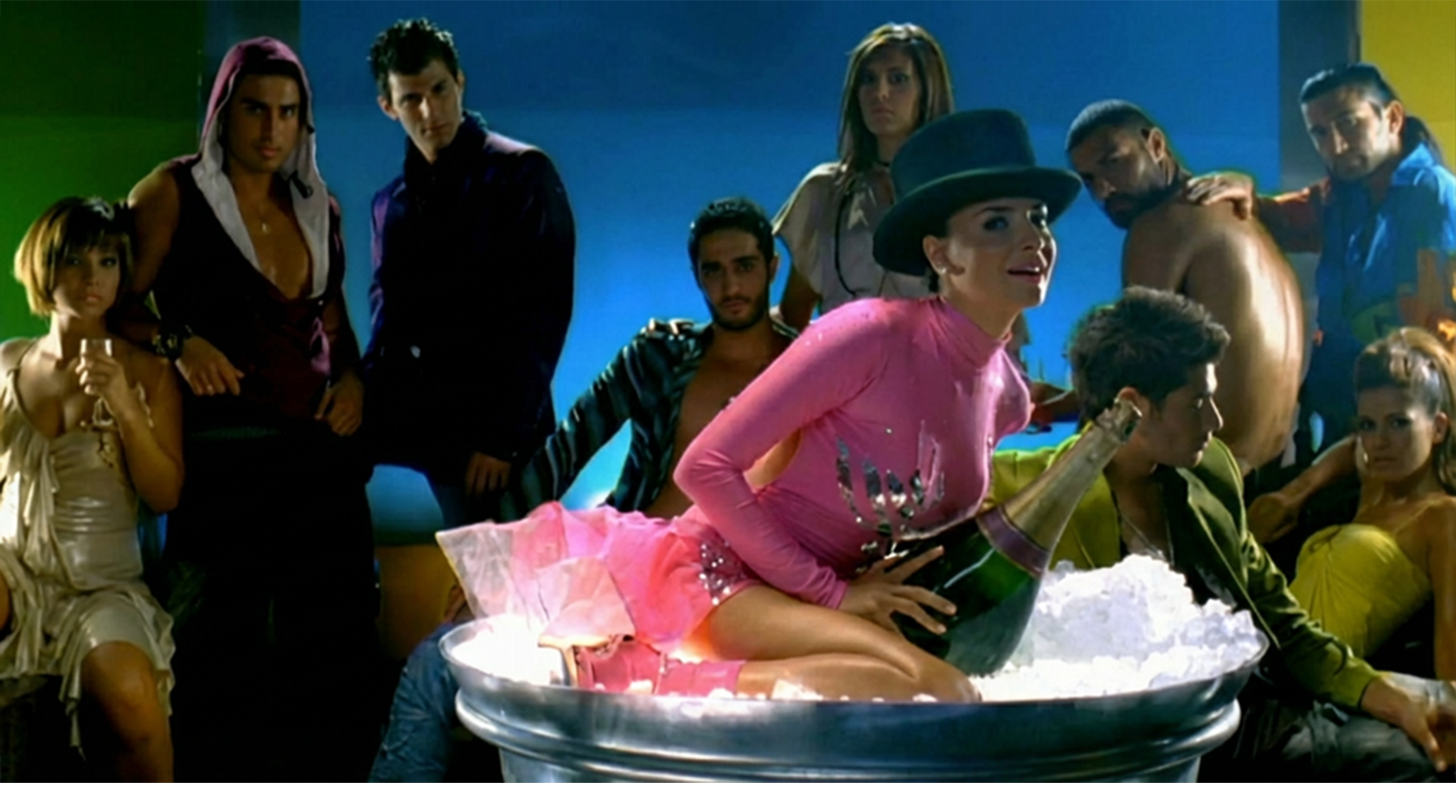
Sixteen years ago, Lebanese singer Jad Shweiry declared the truth in Funky Arabs, a song part-camp, part-statement: “We got sexy girls, arab beauty that will rock your whole world / loaded guys, you gotta see them when they get their highs.”
To stress it even further, the music video of sweat, partial nudity and hip grinds, announces on a black screen: “Every individual that has participated in the following video is Arab.”
It’s all been said and done, and these gestures are now predictable, if not cyclical. They are no longer to be framed as proof of worthiness. And while this conversation is compromised and no longer revolutionary, it presents a very interesting dilemma: We are free indeed, except from our internalized diffidence.
We cannot claim that we don’t care what the world (Arab world precisely) considers us to be: openly queer, openly funky, openly contrarian, but build whole careers on wanting the approval of Americans, Europeans, or anybody we think is better than our own selves. It is simply unaligned.
The need for assimilation, or acceptance, or recognition, is not in itself a moral failure, but it presents a contradiction when compared with the absolute claim of freedom that Arab musicians flaunt endlessly, and freedom is nothing if not absolute. Freedom is to be digested whole.
It is true we are free, and cool and funky, and whatever lingo comes up next. We are free, except for the performance of acceptability, the lust for inclusion, and the thirst to be considered by the West. It’s an impersonation squared, a pandering to the West disguised as liberation, like a prisoner escaping a jail cell only to work in a cubicle.
Freedom collapses when it requires an audience’s approval.
This is Coolness: hiding from applause, the opposite of self-proclamation. Nowhere near coolness is this constant self-translation, self-exoticization, self-explanation.
Coolness is futurism, not stagnation. It is asceticism, not self-objectification. It is an abundance of self worth, not a whiff of validation. It is nonchalant, not a clenched fist. Risky, but faithful.