Stormy completely disappeared.
Not many artists vanish like that after releasing an acclaimed album.
Typically, and especially in the age of streaming algorithms and the pressure of feeding the content beast of social media, artists try to maintain that momentum and carry the praise and success forward with haste into new projects.
Sabrina Carpenter immediately followed up her GRAMMY-nominated 2024 album Short ‘n Sweet with Man’s Best Friend in 2025. Drake released Certified Lover Boy, Honestly, Nevermind, and For All The Dogs in successive years from 2021-2023 respectively. Even Marwan Moussa dropped two full-length albums in the same year in 2025, releasing both El Ragol Allazy Fakad Qalboh and Matador.
Musicians nowadays feel the need to harness the momentum of their creative achievements, fearing that they would get lost in a sea of whatever streaming platforms and AI-driven codes decide to push to the forefront of listeners’ ears, as the ever-changing popularity of any given artist or song now has a shorter and shorter lifespan in ways unimaginable just ten years ago.
Yet, some artists still try their hand at bucking this trend altogether, choosing instead to take more time to thoughtfully create their music, sometimes waiting years in between releases.
The decision to wait and to be patient is not one that is made lightly. As access to music becomes increasingly democratized and the power of the traditional gatekeepers slowly erodes, hundreds of thousands of artists are now able to compete for listeners on a daily basis.
That competition remains hyper-intensified in the Moroccan rap scene as it always has been since its early days.
Each week, it seems that hundreds of independent rappers from the country release music, ready to fight established acts for placement on a flagship playlist or a spot at a notable music festival. And while that blitz from younger artists comes at a fast pace, rare are the full bodies of work from rappers that stand the test of time.
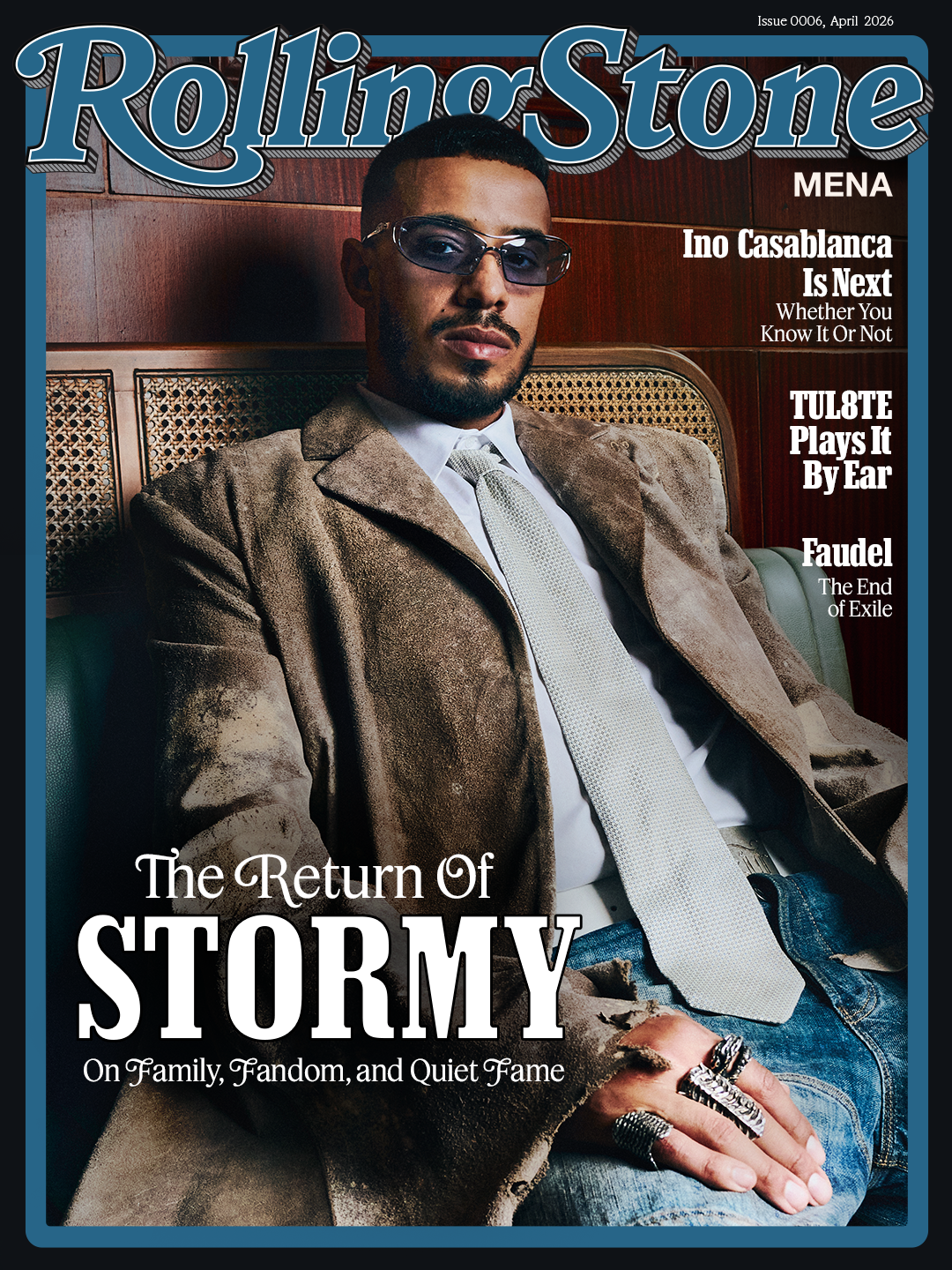
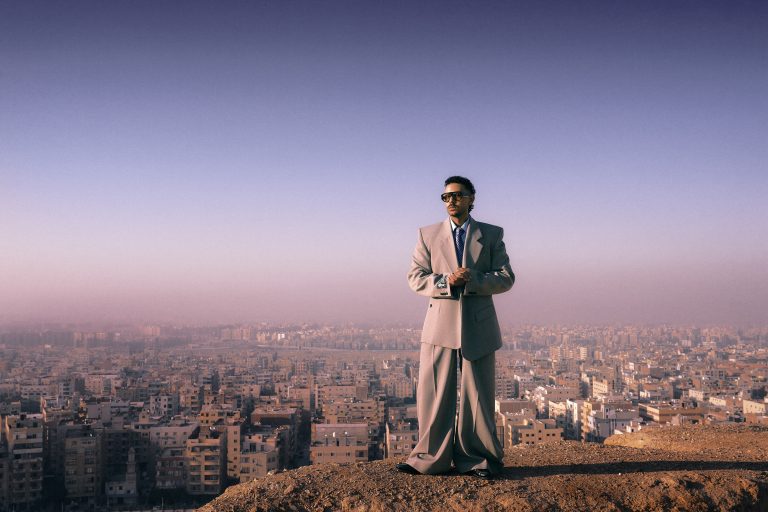
Stormy came into 2024 understanding the stakes for his debut solo album, Iceberg. After all, he had taken three years since Jackpot, his joint project with fellow Moroccan emcee Tagne, to process and assess how Iceberg would create new expectations for his storytelling and become a cornerstone for his career.
While Iceberg went on to be one of the most streamed rap albums in North Africa that year, Stormy refused to engage in the usual press tour and marketing campaign typically associated with major releases. Instead, he chose to be deliberately absent, save for his short EP Omega and a couple sporadic features on other musical projects in 2025.
Organic Aversion to Manufactured Fame
That exodus from the rap scene was by design. If anything, Stormy prefers to be more recluse and introspective than to be constantly online feeding into any algorithm or trend.
He loathes all of that, anyway.
Stormy and I last spoke after the release of Iceberg, one of his few public media interviews. I felt eager to speak with him again, in anticipation of his follow-up album Desperado, particularly given how quiet he had been musically over the last couple of years.
Iceberg is still racking up streaming numbers even years after its release, a feat for an age where musical amnesia seems commonplace as listeners constantly ask “what’s next.” The songs “Moon,” “So High,” and “Rbi M3ana” continue to chart on Spotify’s Top 50 Morocco playlist—cementing Stormy in the upper echelon of Moroccan rappers and a true force in the regional rap scene.
As we both logged into our Zoom call, Stormy arrived on video as he had three years ago: unbelievably calm and noticeably reserved. Not the kind of reservedness that conveys any sort of reluctance to do the interview, but the kind that speaks to a certain humble shyness from talking about one’s self.
“I didn’t want to drop Omega as well,” he shares with a low-key tone. “But I knew that it was going to take me a long time [to release Desperado] and I’m going to disappear for a long time.” He firmly believes that Iceberg proved to him what he always held true: listeners care more about lyrics than they do about catchy melodies and passing trends.

“After Iceberg, I learned that people still care for the lyrics – lyrics matter and they sometimes change people’s lives, they change people’s thoughts,” the rapper says. “We should keep taking care of our lyrics. I don’t mean that we need to do something philosophical or some deep crazy stuff, but at least do something that has meaning, something that can inspire people, that can show them the way.”
Perhaps the most emblematic way that Stormy exemplified this philosophy came through the song “Saka”, one of the standouts from Omega that sees the artist at his most explicitly political.
“Bla matswl ra genocide is real,” Stormy raps early on in the track in direct reference to Palestine.
And while listeners may not be used to hearing his politics so unambiguously, Stormy insists that this wasn’t forced. Talking about politics comes naturally to him.
“My parents taught me since I was a kid, that’s something I heard in my house, in school, in the street,” he says about the Israeli occupation of Palestine. “That’s something like we grew up listening to. I didn’t have the knowledge to know if this was true or not because I was a kid.” He adds: “When I grew up and I gathered my own thoughts, I said to myself, ‘Yeah, that’s true.’ That specific topic, the more we grew up, the more we learned some stuff, the more we got shocked.”
Stormy admires how everyday people, not politicians, were the driving force behind spreading awareness globally of what has been happening in Palestine.
The rapper pauses, adding a caveat to his admiration.
“Social media is really powerful, but we should use it the right way,” he adds. “Everyone can influence people now. Even someone with no following can go viral. So we should be smart about what we say because there’s a lot of youth following you. I don’t want someone to get in trouble because they got something wrong from me.”
Stormy remains acutely in tune with how much influence he now carries as a public figure in Morocco and North Africa more broadly. While he understands the good that citizen journalism can bring to documenting human rights abuses and atrocities, he himself loathes the entire concept of social media.
“I hate it,” the rapper says emphatically but with a smile.
Prior to wiping his Instagram clean on March 29 in preparation for the release of his next project, Stormy barely shared any posts on his account – except for a few concert photos and some public appearances engineered through brand partnerships.
That extends to his antipathy toward algorithms and the formulaic nature of music creation and consumption.
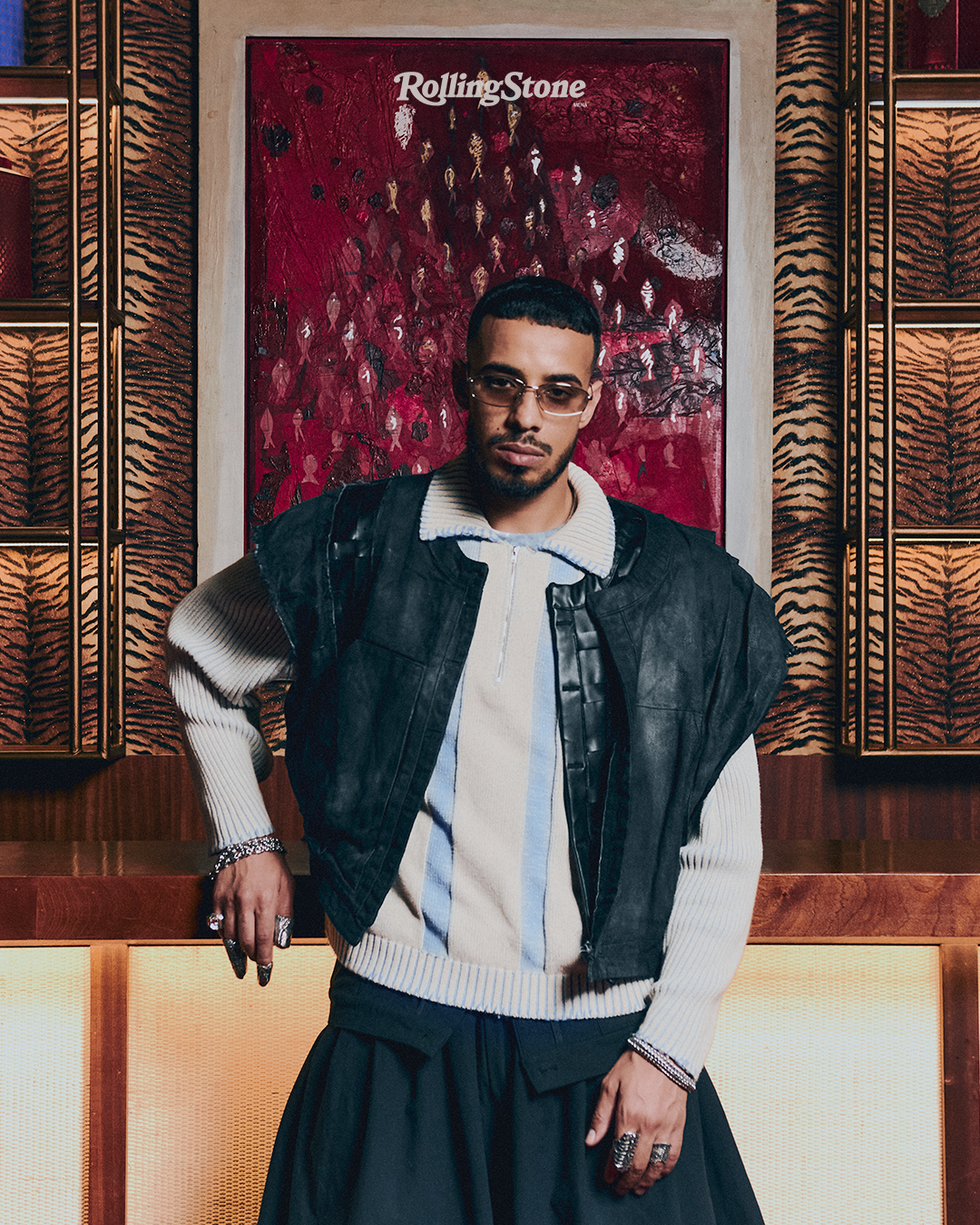
It may seem cliche nowadays for an artist to hold any kind of grudge toward algorithms and the approach that both social media and streaming platforms have implemented and, in some ways, imposed upon the music industry. Yet Stormy speaks about algorithms with such hostility that his frustration feels palpable. His eyes widen and his disarming smile dissipates at the mere mention of algorithms.
Even with an eye-catching marketing campaign, the music will not succeed if it’s not good, the rapper shares.
“I see a lot of people that tell me that I have to post 25 Instagram reels a day and do this and do that type of stuff [to promote music],” he begins. “For me, that’s not it at all. I’m not saying don’t promote your songs. Definitely promote them. But there are ways to do it without always being in front of people’s faces.”
In many ways, Stormy embodies the ethos of the accidental superstar in a world increasingly reliant on the desire for virality.
And yet, his music continues to travel and engage with audiences in ways that the regional rap scene simply cannot ignore. Each release commands attention, which has been the case since his first studio hit “Fratello” with fellow emcees Tagne and Khtek.
Even now, as Stormy teases Desperado with two singles—the brooding drill track “Chanel” and the pop trap song “Katana” with Moroccan pop superstar Manal— fans wait on the edge of their seats for what kind of musical impact the song could produce.
Grassroots Music, Grassroots Fanbase
Stormy emphasizes that his mission is to create music for everyone and ensure all audiences feel included. And his music indeed cuts across multiple generations, resonating with younger and older listeners alike.
“I was speaking with my engineer and he told me that, until now, I don’t know what Stormy fans look like,” the rapper shares with a chuckle. “He told me like every time we meet someone and they ask for a picture with me, it’s someone different. Sometimes it’s kids, sometimes it’s moms, sometimes it’s parents, sometimes it’s the whole family that wants a picture. Even at my concerts it’s a mix of Gen Z, Gen Alpha, millennials… and I love that.” Adding with heightened emphasis: “Sometimes I think about it, there’s probably a fan who borrowed money to buy a ticket. Or a fan who took an Uber from very far away to see me perform. So for me, when I go and do a show, I treat every show the same.”
His measure of success comes from his relationship with fans and the ways in which they consume his music.
Stormy relishes in moments of emotional vulnerability with his audience.

“I remember at my last concert in Morocco, there was a kid that came to me and started crying,” he recounts. “I was shocked. I was like, bro, what’s wrong with you? And he hugged me and said I was his inspiration. He said I was like his big brother. I was really touched by that.”
The primary motivation for Stormy comes from that human connection, more than the fame and influence that comes along with his career. It’s a perspective rooted in his upbringing, maintaining a close relationship with his family who have remained his emotional center even as his career expands beyond Morocco and North Africa.
His success has afforded his family certain opportunities that they could only dream of when Stormy was a child.
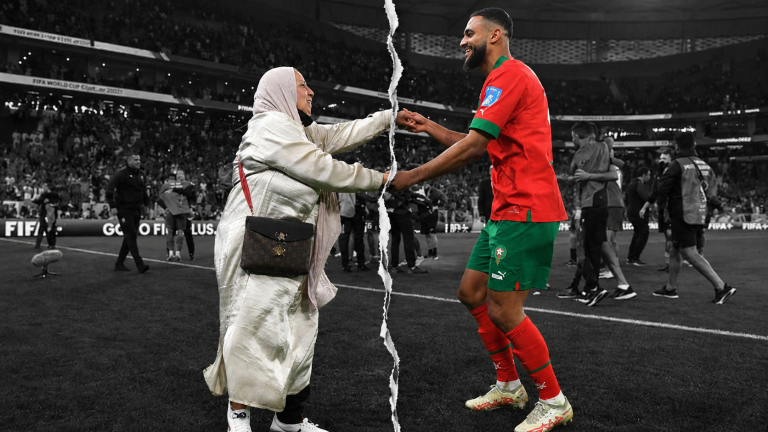
In a few of the concerts Stormy performed after Iceberg, he made sure his mother joined him to see her son live in front of his fans. But during one concert in Rabat, despite Stormy’s insistence, she decided against joining him out of fear of making him nervous and negatively impacting his performance.
Or so he thought.
“You know what she did? She snuck into the show, my dad parked the car away from the venue, and at the end of the show she started asking fans whether they liked the concert,” Stormy shares laughing. “Some fans recognized her and my dad, they were taking pictures with them. And for me, that’s a blessing.”
He shares that fans have told him that his closeness to his parents and bringing them on stage at his concerts are “dreams come true” for them.
Being able to take his parents to Europe for the first time, or going to umrah in Mecca with them, means more to Stormy than any number of streams or virality for his music.
“Me being able to change my family’s life is so huge for me. Trust me, it’s not the views, the streams, it’s not all that. It’s you being able to use your art to change people’s lives, to change your family’s life.”
His humility should not be mistaken for a lack of self-confidence. Though he will not admit this explicitly, Stormy knows that he is him when it comes to Moroccan rap. The fierce competition facing Stormy only includes a handful of other artists considered at his level.
It was a surprise to him, then, when the annual Moroccan music festival Mawazine did not include him in 2025 as part of their star-studded lineup that featured artists like Becky G, Nancy Ajram, and 50 Cent.
It also included the rapper’s friendly rival, ElGrandeToto.
Shortly after the lineup reveal, Stormy took to social media and did something he rarely does: voice frustration.
“Am I good enough?” he pointedly asked Mawazine in a caption to a post featuring one of his live performances.
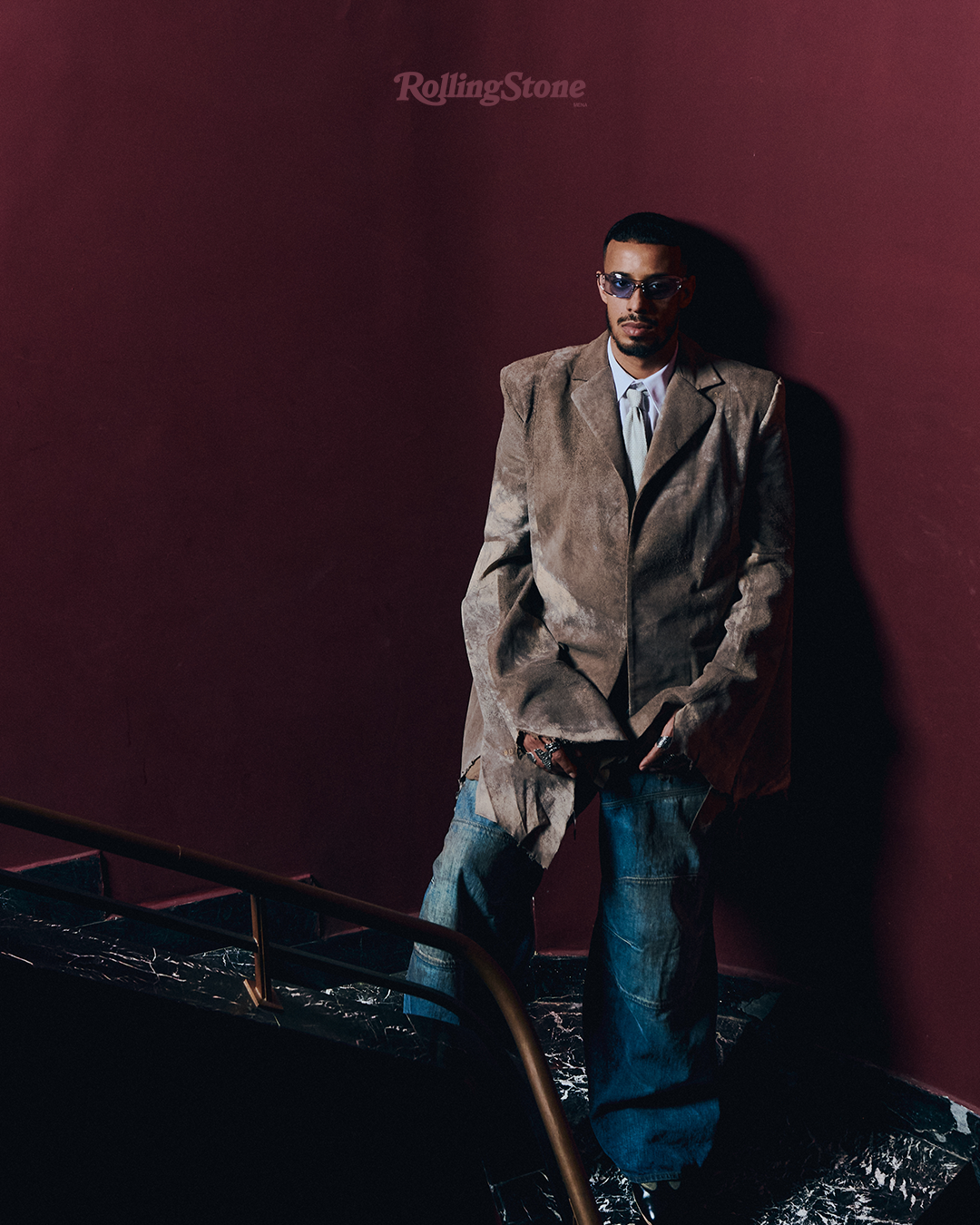
Stormy insists that he does not feel disrespected by the festival organizers. Rather, he sees his exclusion from the lineup as “motivation” for his career.
“I’m not the type of person that’s going to sit down and cry about some stuff that they didn’t give me,” Stormy explains. “Yeah, it’s a good festival and all that. But at the end of the day, for me, the most important thing is to be able to make people listen to you, to inspire people. We did a lot of shows in some very far places that I’ve never been to and even though it was small, it had a big impact on me.”
A Moroccan Desperado
Desperado serves as that culmination of patience in himself and ambition for anyone who may still be doubting the rapper’s capability.It progresses as a natural evolution to the rapper’s artistry, pushing his creativity in ways that will feel new to his fans.
The twelve-track body of work captures Stormy navigating a complex set of emotions in arguably his most vulnerable project to date.
The first single off Desperado, the brooding and melancholy piano-drill track “Chanel”, sees Stormy in his feelings – a bit about the state of the relationships in his life, coming to terms with the longing for a lover, while simultaneously understanding how his existence fits into this world.
The standouts on the album, however, showcase the rapper’s ability to truly push himself to places rarely seen in his discography.
“Ski”, an upbeat electro-funk track, sounds as though it could easily have been part of a film like “Fast & Furious” or “Black Panther.”
And when listeners see the title “Candyshop” in the tracklist, do not be fooled. This is nothing like the 50 Cent classic. In fact, Stormy clearly has something to finally get off his chest, with this song serving as an aggressive in-your-face track that sees the artist almost yelling to lift some weight he carried in his heart.
The album also showcases Stormy’s ability to seamlessly glide into multiple genres across trap hip-hop, house, Moroccan shaabi, and even a capella over acoustic piano as showcased in the emotionally introspective song “Kilowat.”
The rapper emphasizes that the sprawling array of genres and emotions displayed across Desperado are meant to underscore a holistic identity and sense of self, both for him and as representative of his fanbase.
“Some things I personally experienced and other things are, for example, things my friends have been through or I’ve witnessed them go through.” Stormy shares about the storytelling on the album. “I’m good at telling my story and I’m good at telling other people’s stories. I’m only 29-years-old, and sometimes I want to speak about 35-year-old problems or 40-year-old problems that are probably my friends’ problems. I speak on behalf of an 18-year-old who probably feels that no one understands him. It’s just me speaking on behalf of everyone sometimes and seeing life from different perspectives.”
He continues: “Sometimes I’m the mad Stormy. Sometimes I’m the emotional guy. Sometimes I’m the guy that speaks about social issues. And sometimes I speak about some stuff that are not my problem now, but I still feel them.”
The rapper wants audiences to listen to this album as motivation, a narrative for facing challenging moments head on rather than avoiding those difficult moments.
“Sometimes when you’re young, you wish you were spoiled, or you wish you had this or that because you see some kids who have it. But when you grow up you understand that those moments pushed you to be better. You get me? They gave you this energy to take everything and to get everything. This album is about taking this life as it is, trying to experience everything, and letting yourself experience everything.”
In this moment, Stormy returns back to his family, the grounding force in his life and how he navigates each decision.
Nothing, he says, will top the feeling of seeing the pride in his parents’ eyes for what music has afforded them.
Stormy would be ready to drop his entire career for his family.
“Even though sometimes we think that we are related to material things… trust me, they don’t matter,” he says. “I didn’t get this feeling when I bought my dream car or when I bought my first house or when my album did over 100 million streams. Not to say that I wasn’t happy, of course I was crazy happy when I accomplished these things. But the exact feeling of seeing pride in my family’s eyes, it’s the craziest.”