“I don’t need to fake things that I don’t have.”
That’s the philosophy behind BADER’s latest EP, Clash. It’s why the music sounds so deliberately unpolished, why he refuses to clean up the rough edges other producers would sand away. Clash sounds exactly like its title—metal grinding against metal, the kind of raw production most artists would fix in post. BADER couldn’t care less.
The process behind the EP was just as raw as its sound. Forget pristine studio sessions and A&R oversight. This resulted from a chaotic, global network built on trust and encrypted messaging apps. From Lebanon, Whyvsef and Alnasik sent files for Qlq. Sizer beamed in raw vocals over WhatsApp for what is one of my favorite verses of the year on Geopolitical Reasons. Loris contributed her interpretation from Mexico for Kahraba, while Egyptian producer 5amaseen added his signature breakcore textures to Derna. The result is something uncompromising and absolutely unreproducible.
This rawness bleeds into every track on Clash. When BADER first played the EP for crowds, “I swear to my God… People were screaming, man.” The energy wasn’t despite the rough production—it was because of it.
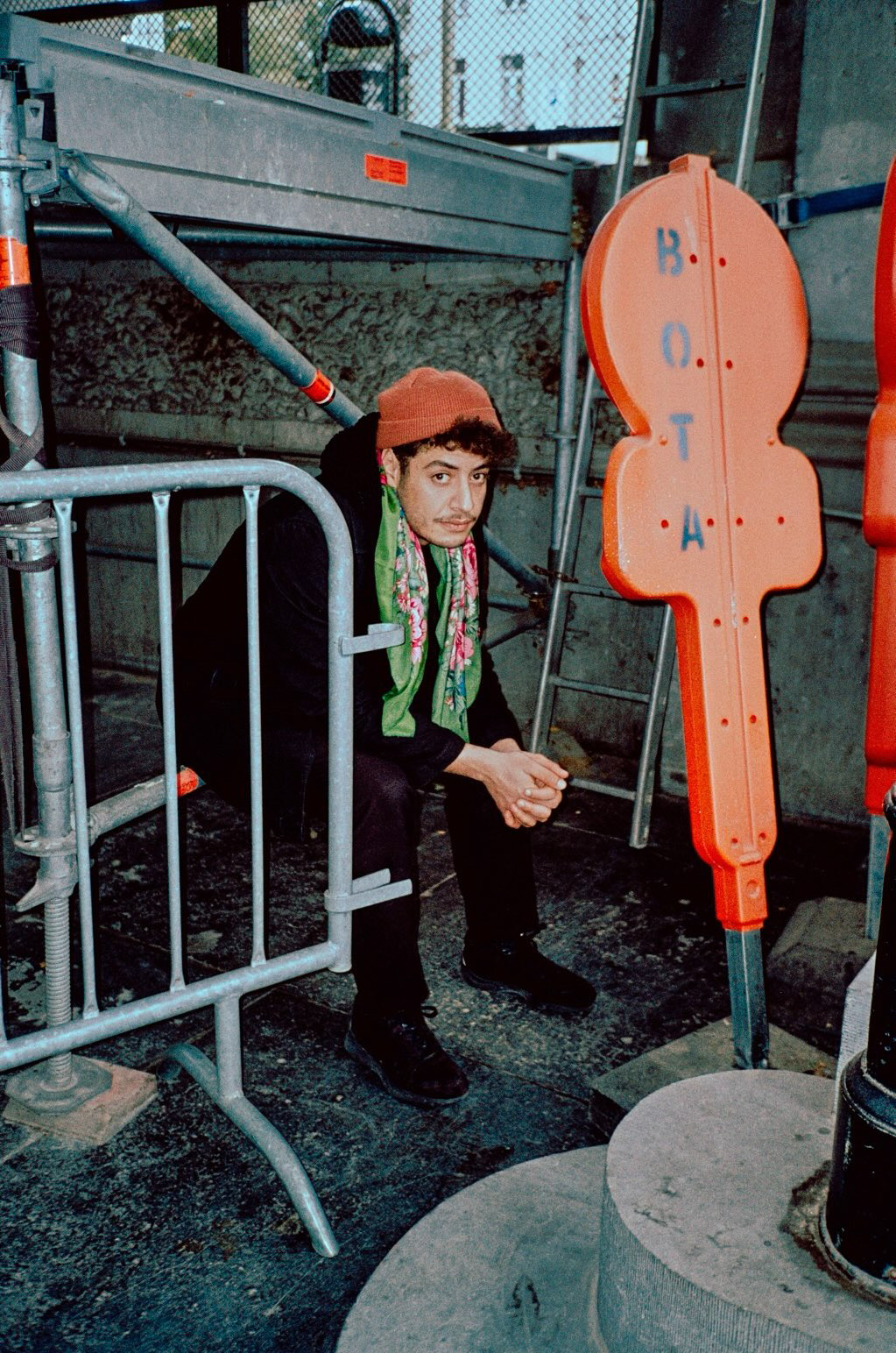
“I’m done with this identity stuff, you know, that’s why I’m trying to do to make new punkish identity.” It’s a rejection that extends beyond personal branding to an entire wave of Arabic electronic music he calls “Habibi edits”—nostalgic, sample-heavy tracks that have been dominating the scene for over a decade. Take the countless remixes of classic Arabic songs designed to make Western audiences feel worldly without challenging their comfort zones. “Arabic-based music started to flow… And then everyone like, want to create this shit, all of this Habibi edits… And it’s just kind of like mainstream… But now it’s just, okay, I saw it, please, give me something else, you know?” He views much of the current MENA scene the same way. “I see it as McDonald’s, Burger King, you know?”, all Ahla Leila Ahla Nas enjoyers may exit stage left.
This rebellious streak runs in his family. His brother Khalil Shashit was “one of the first DJs in Syria in the 90s,” secretly mixing on cassettes because “their father would have killed him if he found out.” “He was mixing with cassettes, and it was really something crazy when I saw it, I grew up with this shit.” When Khalil upgraded to CDs and started making digital copies, young Bader would burn them for two dollars each, spending entire days on Nero watching music transfer disc by disc. When Khalil finally rented a CDJ-1000, it looked like alien technology. “Once he rented the CDJ Thousand, it was like a space machine. A lot of buttons, and I was like, okay, this is something cool.”
When the Syrian conflict forced BADER to Belgium in 2015, that DIY spirit became survival. Ironically, he’d arrived in one of the biggest electronic music hubs in the world, where Fruity Loops was created, but Ghent’s club scene had clear unwritten rules about who belonged. “You go there, every time you want to go get in, they tell you like, we are full. No, sorry, come back again. We are full, always they say this. When you are walking with a white girl, then they let you in. Easy, you know?” So he started building his own infrastructure instead. Through his day job as art director at the cultural organization Voem, they established a studio in the city’s immigrant neighborhoods, buying CDJs and equipment for kids who’d never touched electronic music gear.
“For them, art is the new gangster, you know? It’s not doing the old bad things because, bro, selling weed, you can do €50, by doing DJ set, you can do €500.” Kids they mentored are now headlining festivals in Belgium; the philosophy worked. “You know, when you are so hungry and no one believes in you, and one moment you get like the main stage of 4 or 5000 people. You go all in. And that’s the energy they have.”
BADER’s background in photography and videography seeps into his musical composition, ‘In music and photography and film, you put layers until you make sense,’ he explains. Just as he learned to build images through layered exposures and visual textures, he constructs tracks by stacking drums, vocals, and samples until they coalesce into a coherent whole.
This can be seen on the title track, layered above 1930s field recordings of Amazigh vocals he’d loop for hours until they became hypnotic; the song’s creation sidesteps conventional process. “Everything was meant to be somehow… It was just experimenting, experimenting, putting your things on things, on things, and things, and things. And if you ask me now to recreate this, I would say I don’t know how to recreate it.”
The track’s video, shot on grainy Super 8, is a collision of expectations. Figures in balaclavas hold flowers—society sees the mask, he argues, but underneath “we are full of flowers, you know? It’s a visual metaphor for the gap between perception and reality, between what people expect from Arabs and what they actually are.
Earlier this year, everything came full circle in an unexpected way. BADER returned to Syria for the first time since departing for Belgium, helping renovate the family home after Israeli bombing had damaged it. The trip was heavy, emotional, but at a Damascus club, something happened. Khalil, who had quit DJing decades earlier, heard his brother play and felt something reawaken. “Once he entered the club, he heard the music… And he made it like really low clubby sound. And I played the best DJ set ever… And he told me, ‘Man, I want to DJ again.'” Now Khalil is back in the scene after decades away, the brothers united by the same rebellious spirit that started it all.
This vision of bringing authentic underground culture back to the region drives everything BADER does. The anti-perfect manifesto continues in Belgium’s neighborhoods, where kids are learning that making art matters more than making it pretty, that energy trumps technique. But his ambitions stretch far beyond Europe. He’s done with the DJ-for-hire circuit, building instead toward a live show where he’ll bring friends in balaclavas and kuffiyas (on their head and not on their ass as BADER liked to point out, real shit).
He wants to “leave everything in Europe… go back to Damascus and organize a party Friday in Amman, Saturday in Damascus, and then do the after in Beirut.” He’s planning a festival in Syria with Palestinian anti-pop legend Shadi Zaktan and other artists, funded not by European NGOs but by selling parties and merchandise themselves through his record label SAWNA—a deliberately misspelled version of the trendy SWANA acronym.
BADER is creating pathways for the next generation of artists who refuse to fake things they don’t have. The movement extends from WhatsApp collaborations to hood studios to Syrian clubs, all connected by the simple belief that sometimes the most powerful thing you can do is refuse to clean up your sound for anyone else’s comfort.