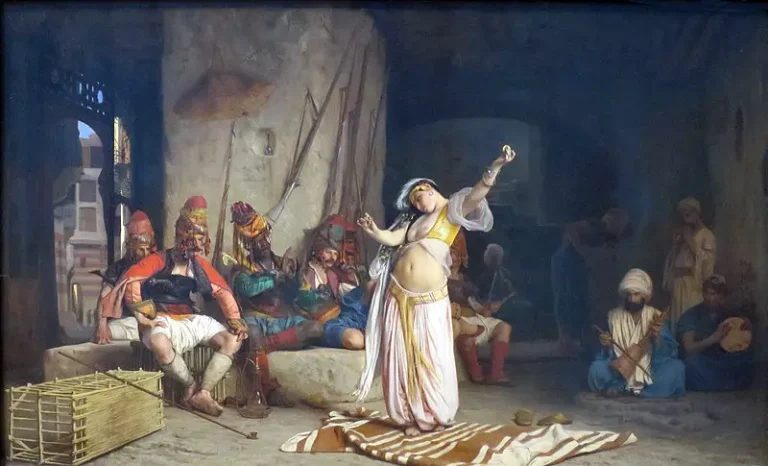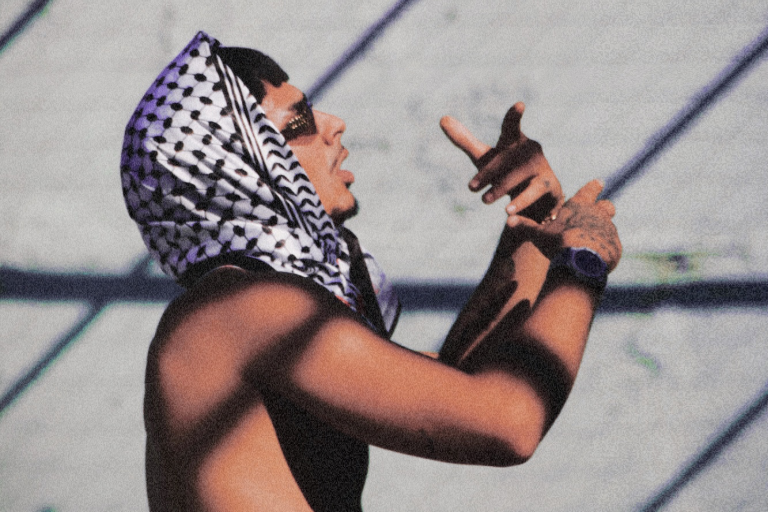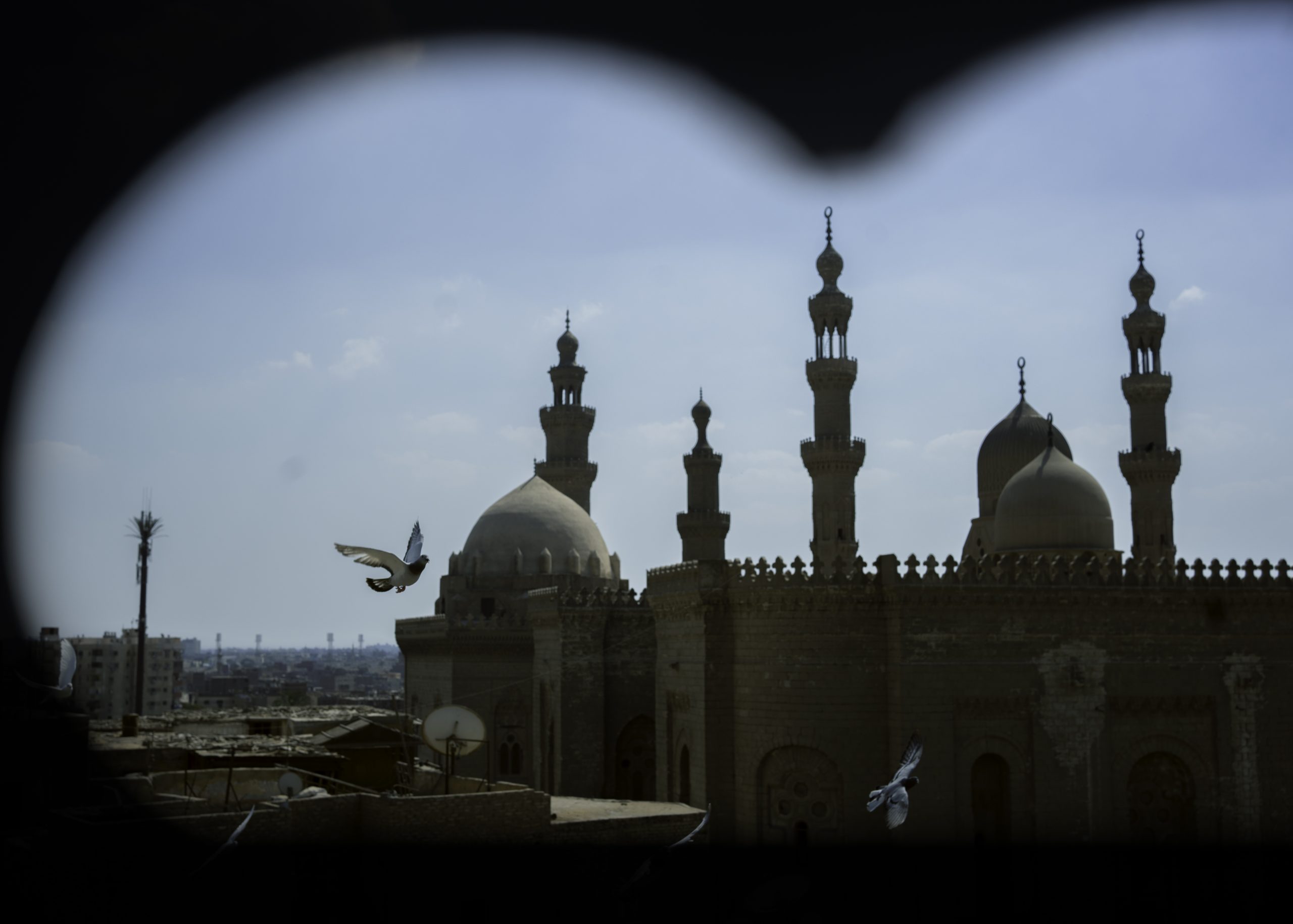
Cairo has a special light. It seeps in soft gold from the desert, flooding crowded streets and draping the plastic chairs of an ahwa in pastel-coloured nostalgia, or peeking through the thin grooves of the city’s million sheesh. You wait for your mango juice in a small alley, spotting the tip of a pyramid in the distance. If you turn around, you can see the glistening Nile carry falayek in the warm breeze. A fruit seller passing by on his donkey cart throws you a fig; behind him, a girl rushing by gives you a quick smile before jumping in the backseat of a tuktuk, the beads on her bedlah belt ringing as she drives off. You take a deep breath and inhale the scent of bakhur, watching its smoke dance out of a window above your head as the adhan sets in.
At least that’s what fashion editorials and music videos will have you believe. Aleiy rolls his eyes. As do Omar Kafrawy and NEDZ. Were they all in one room, their voices would form an exasperated choir, exclaiming “It’s so cringe!”
The Soundtrack of Diasporic Dreams
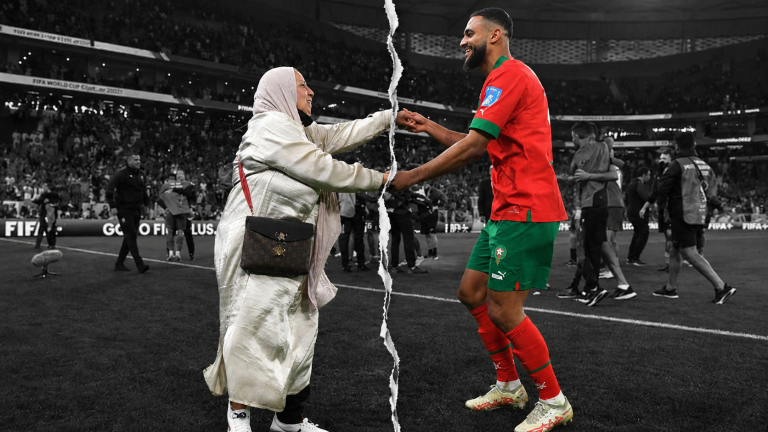
In recent years, Egyptian diasporans have begun remigrating home. Aided by money flowing in from Saudi Arabia and the Emirates, Egypt has become a centre of artistic endeavours for Gulf-based branches of western music labels and magazines. As a result, Egyptians who were born and raised in places that never felt like home, or that they became disillusioned with after October 7, are seeing an opportunity to find cultural belonging in the country of their parents instead.
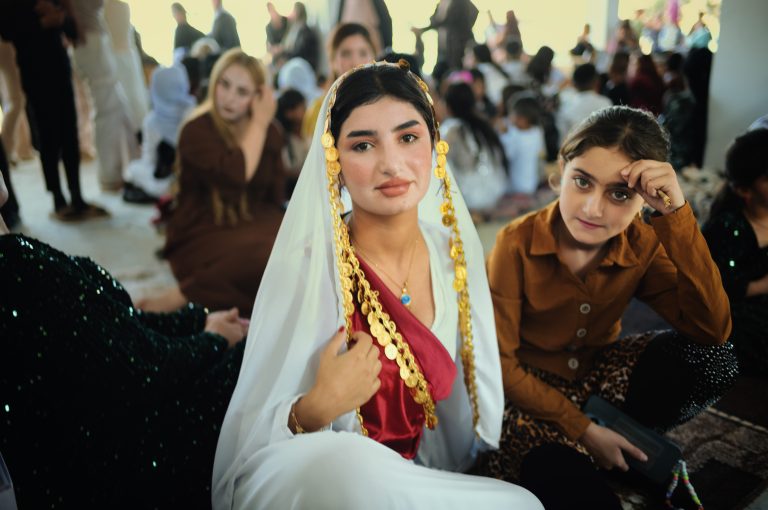
A colonial remnant permeating Egyptian society to this day is okdat al khawaga, the foreigner’s complex. By virtue of their foreign passports and flawless English, diasporans find themselves in the comfortable position of fitting in with the general public while enjoying a foreigner’s privileges. Even though their idea of Egypt is often skewed by their parents’ and grandparents’ nostalgic memories, as well as the class difference that separates them from the everyday person, diasporans can access funds and connections that help them represent Egypt to the world. How does one know if a creative project was headed by a diasporan? The diasporic gaze.
“That ends up creating music that feels far away to people in the region, and that’s because it is.” – Menna Shanab
“Because liberal identity politics are a way of life in the west, music in the diaspora has created ‘the first this’ ‘the first that’ kind of narratives. We actually like this in the region, because it makes us feel like we’re growing and evolving,” says Menna Shanab, an Egyptian-American music journalist who moved back to Cairo seven years ago.
“At the same time, it risks us self-orientalising and putting ourselves into boxes of certain genres. What value does that add, and what does this representation actually mean?” Artists in Egypt are innovating genres in search of new sounds, while the diaspora tends to sample Arabic classics and fuse them with western rhythms – these sonic differences, amongst other factors like use of language and visuals, often leave audiences from the region feeling misrepresented.
Having grown up in the US, Shanab understands the need for cultural preservation as a way of survival. “Identity is your value in these [western] societies. It’s how you build community and find like-minded people”, she says. “It keeps you close to your home, so you clutch on to what’s easy for you to access. That ends up creating music that feels far away to people in the region, and that’s because it is.”
This dissonance breeds distrust between audiences on the ground and diasporans trying to make it in the region. “I think there’s a larger conversation around morality and consequences that we should all have”, says Shanab. “How can we reconcile and exchange resources and help diaspora artists connect to their culture in a more authentic way? The diaspora vs. native narrative divides us, and who benefits from that?”
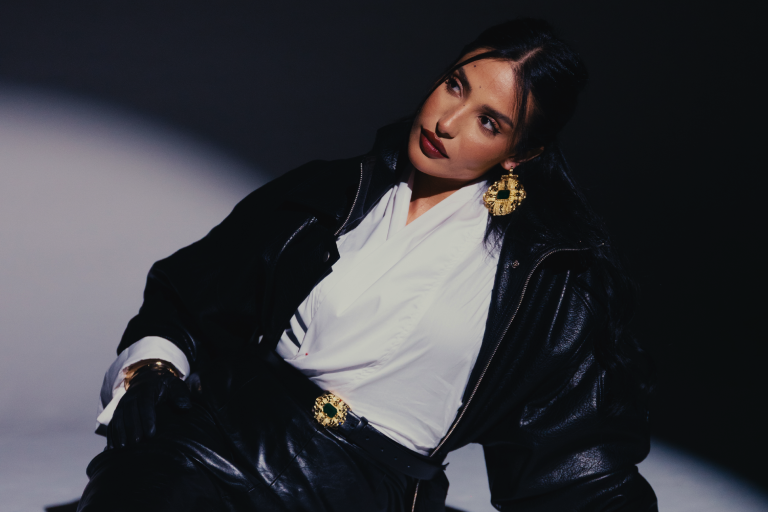
Widely recognised as an artist operating at the sweet spot between the local and global, NEDZ built a career that thrives on international cross-pollination. In her DJ sets, she mixes Justin Timberlake with Wegz and Pa Salieu with Marwan Pablo, rappers she discovered upon returning from studying in the U.S. in 2019.
Back then, this underground genre was the first Arabic music she related to. When she posted videos of herself dancing to her mixes on social media at a time when it was uncommon to see a female Egyptian DJ online, she was met with scepticism. “Here, we do things a certain way and everyone who does something else is not easily accepted,” she says. “It was difficult to position myself, because it was confusing to Egyptians.”
Struggling to find a space that welcomed her sound, NEDZ continued to post her mixes online, where she cultivated a local and diasporic following, and eventually organised her own event “NEDZ and friends,” waiting for society to catch up.
Fast forward to today, NEDZ hosts Midan El Qara at Cairo Jazz Club, a night that focuses on global sounds centred in her Egyptian identity, remixing local and regional music with global sounds like Afrobeats, Amapiano, Brazilian funk, reggaeton, and dancehall.
“Diaspora music has influenced people in the region, so it’s not unique to them anymore.” – NEDZ
Despite the scepticism, NEDZ and Shanab are witnessing an emerging, more integrated sound. “Diaspora music has influenced people in the region, so it’s not unique to them anymore,” says Shanab. NEDZ adds that the diaspora’s perspective has given local music scenes exposure and popularity, which in turn has helped Egyptians embrace Arabic music.
“It’s very validating to see mainstream representation of Arab artists, we spent our upbringing consuming western music and now we’re proud to showcase our own culture. Because it’s now globally accepted everywhere else, it’s cool for Egyptians to accept it too”, she says, remembering how clubs specifically told her not to play Arabic music in 2021. “At the same time, it takes away opportunities from homegrown talents who have less resources and access to opportunities.”
A Rich Person’s Authenticity Dilemma
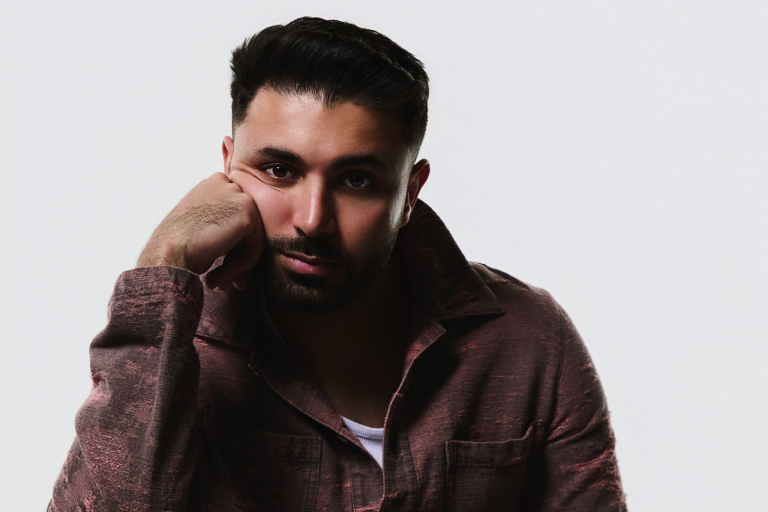
“Aesthetics of wealth under the current hegemonic imagination of Egypt are postmodern and sort of identity-less,” says Kafrawy, a photographer whose clients often demand the romanticised Cairo dream. “These ephemeral, concrete-strange structures lack what would set you apart in an identity-sense. There would be no point for those who would like to claim the homeland to move back and cover Tagamo3 (a new suburban expansion of Eastern Cairo). You need to cover downtown.”
Kafrawy observed a defining moment in Cairene aesthetics with the rise of candid, unpolished visuals that were inspired by the 2019 emergence of working-class rappers who made being poor mysterious and sexy; this identity was short-lived, however, as the same rappers now try to align with wealth. “People associate authenticity with poverty,” he says. “They think that by associating with the everyday person on the street, on the ground, in the mud, we’re being real.”
He gets anxious whenever someone discovers a ‘new hot thing’ in Cairo. “It happens every now and then with downtown – the old cinemas, old this, old that,” says Kafrawy. “It’s like picking up toys, but to many people, this is real life. Next, an investor comes in and wants to redo downtown. Dabblings have material repercussions.”
Often, class decides who gets to play with aesthetics. A wealthy Egyptian who relates more to an American-Egyptian pop princess than a hyper-masculine rapper from a poor neighbourhood, is not making art but marketing when shooting high fashion models in a street they would not set foot in otherwise.
“‘Authenticity’ is a well-understood aesthetic amongst creatives and people in marketing. A fetish that is up for grabs.” – Kafrawy
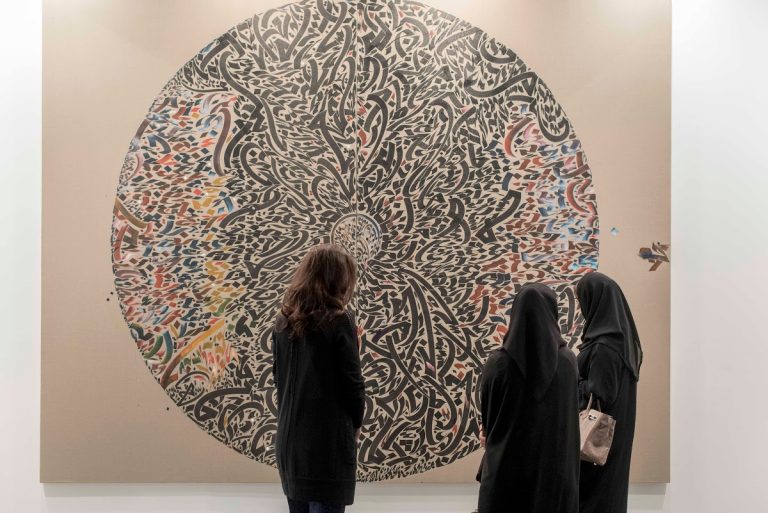
Similarly, visuals that make contemporary culture seem queer-feminist are in high demand, for example by placing women at the forefront of a skating video (backdrop: downtown and the pyramids) when Cairo’s skating scene is dominated by young men. When Egypt’s actual skating scene is in Alexandria.
“‘Authenticity’ is a well-understood aesthetic amongst creatives and people in marketing. A fetish that is up for grabs” says Kafrawy, whose interest is youth cultures and the ugliness of Cairo. In his personal work, he documents places like Tagamo3 and the city’s sprawling highways, because that feels more authentic to his time and what he’s lived through.
The Inner Lining
“Current Egyptian culture is street culture. Not the pharaohs, not the Islamic caliphate or Arab culture. It’s actual street culture,” says Khaled Mitwally, representative of the Risky Boys. “Even back in the day, culture was shaped by the streets, not kings. The diaspora and A-class live in gated communities that don’t give them any exposure to the Egyptian street. They portray poor people as barbaric and dehumanise us.”
The Risky Boys are Ahmed Atef and Mohamed Tarek, a duo that has nailed the authenticity game by staging viral impromptu fashion shows in the markets, butcher shops, and garages of the working-class neighbourhoods that raised them.
“We try to democratize fashion, because it’s not exclusive to certain social classes,” says Tarek, a model and stylist who works with recycled materials of his environment, asserting that it doesn’t take money to create taste.
The Risky Boys consider it their social responsibility to modernize and preserve the Egyptian identity they know to be true, to subvert international stereotypes of camels and pyramids and local stigmas against the “poor, uncultured masses.”
The success of their work is both a direct challenge to the simplistic stories many creatives in the scene continue to tell, and it fulfills the authenticity narrative. “We’re losing ourselves and our identity to imperialism,” says Mitwally. According to him, the diaspora’s cultural impact plays a negative role in this. “They’re cultural infiltrators, because we give them trust, but they’re programmed by western thought.”
Fashion designer Aleiy recognizes that honest intra-cultural exchanges can result in “genius modern culture.” He likes art that adapts the experiences and skills gained from living abroad to a local context.
“I’m noticing women having fresh perspectives on what it means to be Egyptian, maybe because they’re less judged abroad than here,” he says. “It’s inspiring, because they discover things that they only have space to talk about abroad which allows them to tap into more approaches as artists.”
“You can always tell when an installation or a photo is coming from a foreign eye, because it aestheticises Cairo in a superficial way.” – Aleiy
Rather than centering his culture in his art, Aleiy infuses it with Egypt’s craftsmanship and work ethos. In his practice, he borrows from its palette of materials, like locally made cotton and denim, as well as the concept of ‘make do’: a flexibility that makes anything possible and, to him, is the most Egyptian mindset of all.
“My collections are about being fun and crafty,” he says. “I believe that being Egyptian is enough to make your art Egyptian.” When he sees another editorial on a felucca, he takes it as a reminder to do something fresh. “You can always tell when an installation or a photo is coming from a foreign eye, because it aestheticises Cairo in a superficial way,” he says. “Especially when they use ancient monuments as a backdrop to their art, it’s offensive and disconnected.”
“Arabesque aesthetic is peaking, and then it will fizzle out,” predicts Kafrawy. “I’m curious about what will happen after, but right now we’re still in the confused stage and I think that cringe is an important way to measure when something is off.”