
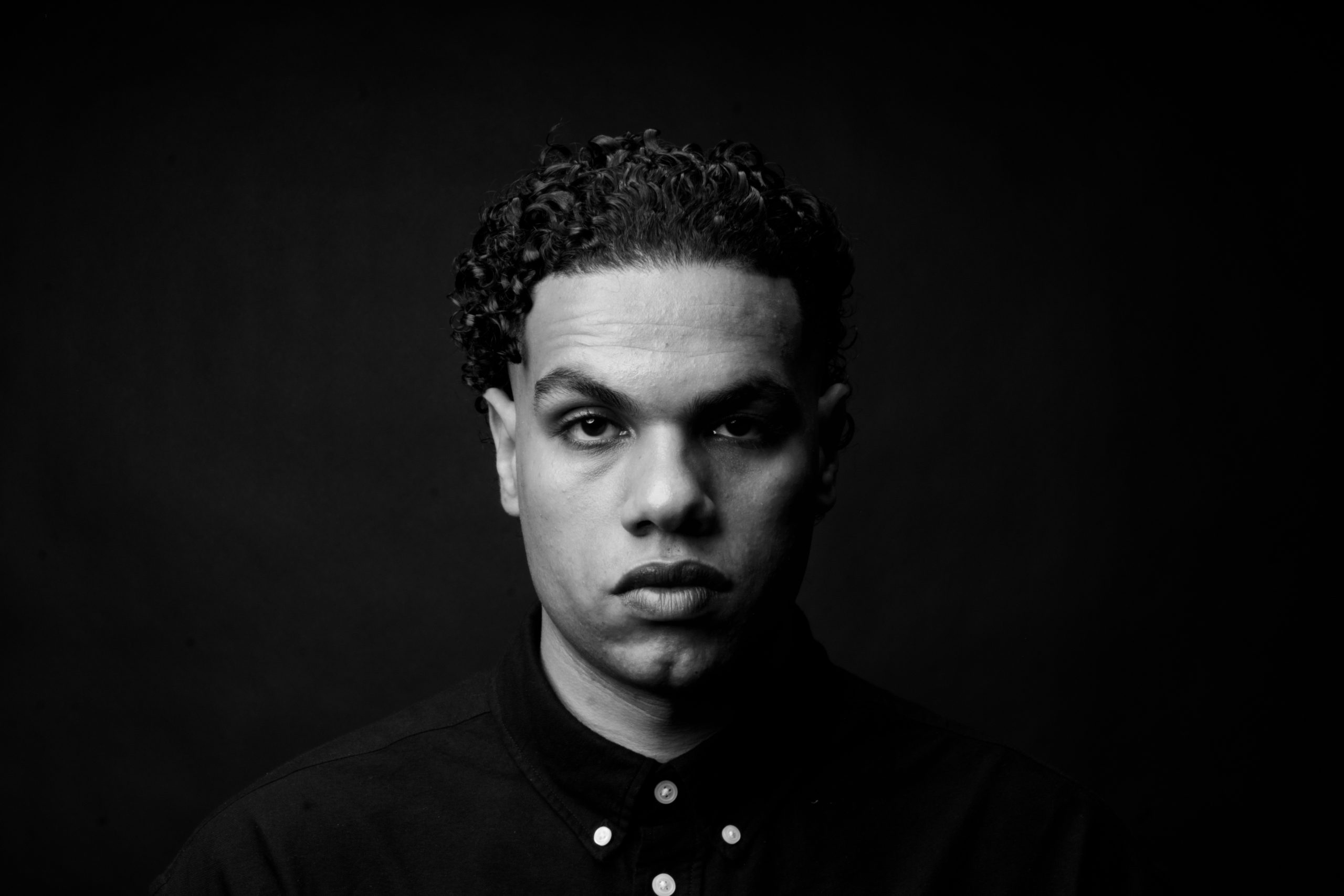
Ziad Zaza insists on forgetting his own songs. “I delete them from my mind, quickly and on purpose,” the burgeoning Egyptian rapper tells Rolling Stone MENA. “It’s like clearing out data on your phone so you can have space for new things.” A stiff feat for an artist whose tracks have become Tik Tok fodder, but this philosophy is telling of the restless and cyclical logic that underscores his work. “I act as if I haven’t made anything at all, so every time feels like the first time.” Having released a string of celebrated projects over just a few years— from the hard-edged El Rayes to the genre-agnostic Wrangler Beda—Zaza has become a kinetic force in Egypt’s new generation of rap.
His latest EP, BALINI, was dropped just May this summer; his discography has proven him a stylistic chameleon, embracing all manners of rap, Afrobeats, old school hip-hop. But replete with vulnerability, BALINI signifies a deliberate departure from his default drill aggression toward a soft and introspective pop, carried by live instrumentation. “We’re really proud of how it turned out,” Zaza shares. “A lot of people really connected with this style; they saw it as something fresh even though I’ve touched on it before. This EP had more of a pop edge, which I think surprised people in a good way, even though I’ve released emotional songs before.”
When we meet on Google Meet, he’s dripped out in a red snap back and graphic tee combo, incongruent in the swivel-chair at Beatroot Studio’s sleek Cairo office. He’s an unsurprising, standoffish kind of cool before he goes to speak — but his wry smile and endearing, dry humor front the tenderness that runs through the diaristic songs on his latest EP. “People always think I’m a little different at first,” he smirks. “Even my friends took some time to understand me at the beginning.”
The new project is the result of an unhurried gestation. “It took over two years to make, from the idea to people actually hearing it,” Zaza shares. “I found that now was the right time for it.” Many of the tracks were completed long before, but he resisted the urge to trickle them out one by one. He wanted them to live together, in conversation, as opposed to being pulled apart in isolation, lending the EP an unprecedented pop-forward cohesion. “The more you listen to the song the more you discover new elements,” he says. “We worked with real musicians, like a guitarist, and that gave the song new layers. Moving forward, I want to collaborate with more live musicians and balance that with digital production — I like having a good mix between the two.”
Zaza was born and raised in a rural town southwest of Cairo, where he couldn’t help but be conspicuous. “Growing up in Fayoum, far from the capital, I always stood out with my clothes, my hair, my style,” he reflects. “Back then, expressing yourself with your style and sense of fashion wasn’t as familiar as now. Even now, I still feel like I stand out sometimes.” It was foreign rap that got him into the genre. “I remember listening to a lot of 50 cent,” he recalls. “And I loved Kanye’s songs before I even knew who he was.” He first tested professional waters as a singer, but the effort faltered before it found direction. “I didn’t succeed commercially at the time,” he admits. “I didn’t know who I was yet; I hadn’t formed my persona as an artist. I was out of the loop. I still don’t get it sometimes,” he adds, huffing a laugh.
When he found the Egyptian rap scene, he was quickly underwhelmed, certain his potential might leave a dent it hadn’t seen yet. “Once I saw artists doing what I want to do, I thought: ‘it may work out for me too,’” he explains. “And that’s exactly what happened. I came in with my own style, and people accepted it.” He casts rap as salvation itself, a path whose stakes were total “Failure was not an option,” he declares flatly. “If we didn’t succeed, God knows what would’ve happened. I consider that this music saved my life — after Allah, of course.”
For someone who insists on living in the present, Zaza speaks about his life as unfolding in cycles. He describes periods where he often falls into familiar fixations. “My life is made up of these little cycles,” he observes. “I sometimes find myself going back to listening to the same music from last year.” Lately, he’s been steeped in a film soundtrack phase — a resurgence of a perennial interest. Zaza often returns to the scores in The Godfather, Joker, and Scorsese films.
“I could show you the playlists,” he offers, almost sheepishly.“I get obsessed with soundtracks; I return to them months later. It’s like a loop.”
Beyond his auditory diet, these loops also feed into the conditions under which he creates. Motion, even a sort of healthy emotional turbulence, is integral to his creative process. “When life is happening with its intense ups and downs, that’s when I feel the most inspired,” he comments. “If I’m settled and things aren’t changing, I don’t create as much. I love living life in sadness and joy. If I had lived a life of easy luxury and privilege, without sadness or chaos, I wouldn’t have anything real to sing about.”
Protecting that flux means shedding songs and the emotions they hold the moment they are finished. Zaza is allergic to the stagnating symptoms of rumination, opting for a blank slate and a clear cognizance of his own limits. “I try not to force myself to make music every day,” he explains. “I don’t want it to feel like a job, otherwise I might start resenting it. I need time away so I can come back to it fresh.” To linger on past triumphs, he fears, would be to calcify. “I don’t rest on my laurels, otherwise, I’ll find that I’m sitting on hot air,” the saying sounds way cooler in his slangy Egyptian-Arabic. “I won’t make myself a throne to settle into. I’m rebuilding the throne all the time.”

The rapper’s conviction is this practice was reinforced by his time with Hany Shenouda, legendary Egyptian composer and founder of the 70s Egyptian band Al Massrieen. The two shared a stage at The GrEEK Campus in Cairo, days before Zaza dropped BALINI. A luminary in the game, Shenouda’s presence gave Zaza a confirmation that his instincts belonged to a lineage larger than himself. “The happiest I’ve ever been was when I was in the studio with Mr. Hany Shenouda,” Zaza extolls. “Sharing with me his knowledge and expertise… I loved the whole experience and wish for more of it. He makes you feel like you know the right things. He reassured my way of thinking, told me that my creative instincts were valid, and gave me the confidence to create more.”
Collaboration for Zaza is rare, though he lights up when talking about rapper Lege-cy. The two created WALA MEEN, a track that has since clocked over 3.5 million streams on Spotify since Zaza released it earlier this year. “He’s a true artist, someone I’d definitely want to work with again,” he remarks. “He’s devoted his life to music; he doesn’t talk about anything else.”
Despite his admiration for such a variegated array of artists, Zaza has learned to pander to no one. “There was a time in my life I wanted to impress the artists I listened to, and I think that’s wrong,” he asserts. “It makes you create music for one person instead of for everyone. Now, I only seek to satisfy myself and my listeners.” Clarity is paramount for the rapper — sounds should be simple enough to resonate everywhere, without sacrificing depth. “I like to write what people can relate to, understand, and get influenced by, I like to say what’s inside of me in a way that people could understand, and translate what I feel in a straightforward way.”
But writing for himself is not an insular practice. To feed his lyrics, Zaza often looks outward: “I used to only write about myself and my own experiences, but then I discovered that a good writer is someone who knows how to write other people’s lives as well, like how you see in novels,” he elucidates. “I watch people and I imagine their lives: their intimate lives, their social lives, their lives at home… I easily live their stories in my head, and that inspires my work.”
Beyond music, the rapper also hopes to further permeate the fashion realm. Earlier this year, he collaborated with Egyptian brand Coddiewomple in the release of a vibrant, street-style capsule collection. “It was an alright experience, but I still want to design my own line, [suited to] my own vision and tastes completely,”he shares. It’s satisfying dressing people in my pieces and seeing them wear it everywhere I go. But making my own line from A to Z, with every detail.. That’s what I really want to do.”




Abdi Declares the SDF Integration Into the Syrian State Complete
The SDF has completed its integration into Syria’s state institutions, a major step toward a unified Syria.