
Even in a country crowded with hip-hop artists, the Moroccan rapper Valerieblud stands out. Delivering heartfelt rhymes in a disarmingly soft-spoken cadence, he gives his eerie trap anthems a goth-y sadboy twist. His name is inspired by the city of Valyria, from George R. R. Martin’s fantasy novel series A Song of Ice and Fire. But of course, Valerie is also commonly known as a feminine name, and he revels in the idea that listeners could at first mistake him for a woman.
“That created a beautiful controversy,” he says in a video call. “I love when people think it’s a girl’s name, but then they find this guy.”
Hailing from the small city of Oujda near the border with Algeria, Valerieblud has risen from the depths of Morocco’s rap underground to reach impressive heights – and like lots of artists nowadays, his success has as much to do with the uniqueness of his music as it does the savviness of his social media strategy. Popular tracks like “Violet” and “Cobra Pretty” went viral on Instagram and TikTok in part because he and his manager seeded the platforms with multiple clips of the music set to visuals. And as his music was gaining steam, he felt privileged to hear directly from a senior manager at Spotify, who reached out to offer guidance and collaborative opportunities.
“When I first started talking to Naoufal, I had only about 11,000 monthly listeners,” Valerieblud says, referring to Naoufal El Amrani, a Dubai-based member of Spotify’s team in the Middle East, North Africa, and Pakistan. “I’m pretty sure you don’t get that elsewhere.” Today, the softcore crooner attracts over 400,000 monthly listeners on the platform.
“The music industry is famously opaque when it comes to money, and those questions come up in MENA as well. That’s why transparency matters.” – Mark Abou Jaoude
For better and worse, navigating the digital landscape has become a must for many ambitious artists. But to catch up with ever-shifting trends, streaming platforms themselves have also put in groundwork outside of cyberspace.
In Morocco, Egypt, and other countries across the region, staff from platforms like Spotify are taking on roles similar to traditional A&R representatives at record labels, working to build public trust while cultivating emerging artists. It’s a welcome helping hand for some artists. But widespread anxieties remain over AI, royalty payments, and the way that streaming has shaped the industry as a whole.
For Valerieblud, whose real name is Zakariae Neqrouz, his real-life contact with the Spotify team has been just the latest in a series of upward turns. Growing up, the 28-year-old rapper was first drawn to alt-rock and grunge bands like Nirvana. But he wasn’t able to put together his own band to rock out, so he downloaded the beatmaking software FL Studio after falling in love with the supercharged dubstep of American producer Skrillex.
Getting into making hip-hop beats and Southern-style trap, he took cues from Kanye West and Travis Scott. But he also continued to draw heavily on the raw, confessional songwriting of departed Nirvana frontman Kurt Cobain, finding particular inspiration from the home recordings featured on the 2015 documentary Montage of Heck.
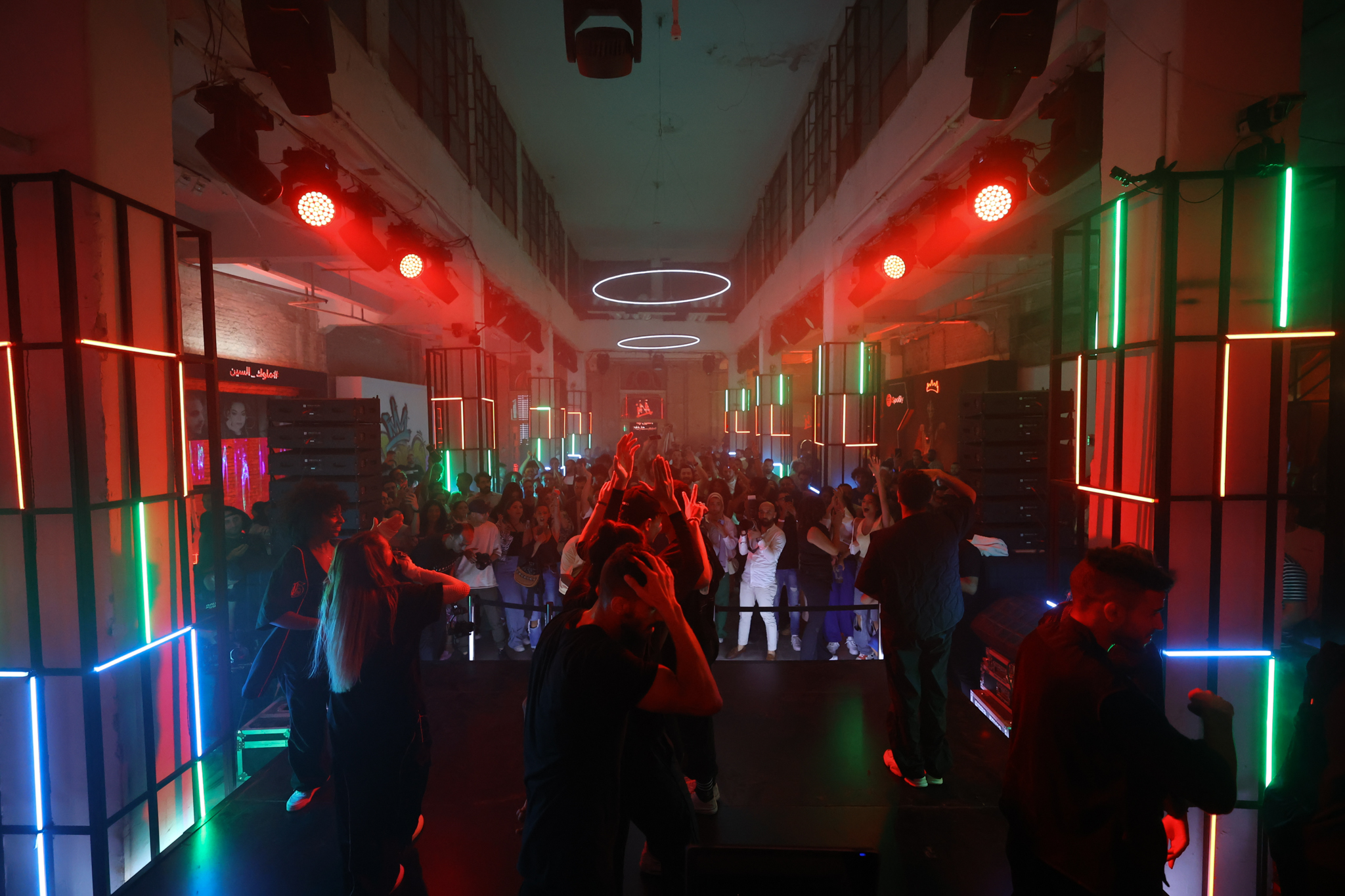
As Valerieblud’s music spread online, audiences at his live shows grew too. At a recent performance in the northern city of Meknes, fans crowded in and sang along to his lyrics.
“I was the nerd in school. I was the weird kid. I’m 28 years old and I’m still the emo kid. I’m still the weird nerd, you feel me?” he says. “My priority is to tell the kids that went through the same thing that it is so cool to be whatever you like.”
When he was first starting out, music like his proliferated across SoundCloud – a freewheeling platform at the time, full of unlicensed audio rips and unexpected gems. Music critics and fans regularly trawled the platform in search of fresh sounds, and entire genres sprouted up in the ecosystem. In a January 2025 interview with Rolling Stone, Egyptian rap star Marwan Moussa reminisced about the wild SoundCloud years, while lamenting that those days are over: “Everyone on SoundCloud was doing it for real. No one was doing it for money or for clout.”
“Imagine if you were in the U.S. You wouldn’t be able to get access to the Spotify team unless you were an accomplished rapper.” – Valerieblud
Across the region, artists and industry insiders note that expectations are different now. “The young generation are very influenced by social media. They are very influenced by fame and they are very influenced by trends,” says Ahmed Shawly, the founder of Wall of Sound, a recording studio and record label based in Jeddah, Saudi Arabia. “When they put music out – even one track or two tracks – they expect a lot back when it comes to fame, being trendy, being recognized. When it doesn’t happen, it really hits them in the face and they get disappointed. They start thinking, ‘Am I doing the right thing or not?’”
In Egypt, there’s still plenty of raw energy to tap into: Mahraganat artists Eslam Kabonga and Essam Sasa ranked high on Spotify’s 2025 year-end Wrapped results for the Arab world’s most populous country, underscoring that this unvarnished shaabi sound remains popular despite long-running state efforts to shut it down. While Amr Diab was the top-streamed artist of the year, the top-streamed track (with nearly 24 million streams total) was Eslam Kabonga’s rowdy banger “أنا مش ديلر يا حكومة”, whose title translates to “I’m not a drug dealer, oh government.”
But Egypt’s hip-hop scene has transformed and expanded radically over the years – both deeper into experimentalism as well as further into pop. Tommyy (formerly Tommy Gun), a rapper and singer from the southern Cairo suburb of Helwan, grew out of Cairo’s hip-hop scene. But he’s also dabbled in house music and he shifted towards a sentimental pop sound with live instruments on his latest EP, Ayam W Layaly. “I still haven’t reached a point where I feel like I’ll stick to one genre forever. Maybe that’ll happen later when I find a sound that truly fits my voice,” he says in an interview. “For now, I’m still discovering – and I feel like I should continue that way.”
Perhaps even more so than in Egypt, beats and rhymes have become central to everyday life in Morocco. Hip-hop dominated on the year-end Wrapped results for the country, with ElGrandeToto standing as the streaming service’s top artist, a position he has held every year since 2020. Meanwhile, the Ministry of National Education, Preschool, and Sports raised a bit of controversy when it advised physical education teachers to begin training on the fundamentals of breakdancing, so that they can incorporate this time-honored form of hip-hop dance into school curriculum.
“If we want to actually help and elevate the scene and make it more professional, more educated about streaming, we have to get this direct contact with them.” – Naoufal El Amrani
Spotify first launched in the Middle East and North Africa in 2018, and since then the team has kept a keen eye on markets like the hip-hop scene in Morocco. “We stay close to what’s happening on the ground, because music in places like Egypt, Morocco, and Saudi Arabia is growing in very different ways,” Mark Abou Jaoude, Spotify’s Head of Music for the Middle East, North Africa, and Pakistan (MENAP), tells Rolling Stone MENA. “The focus is on helping artists build audiences locally first, before their music travels more widely.”
“If we want to actually help and elevate the scene and make it more professional, more educated about streaming, we have to get this direct contact with them,” explains Naoufal El Amrani, the senior manager for Artist & Label Partnerships at Spotify MENAP, who has worked with Valerieblud and other artists in the Moroccan rap scene. “Also, if they need to talk to us, it has to be easy.”
In the final quarter of 2025, Valerieblud was selected alongside Saudi singer-songwriter Yazeed Fahad as part of Spotify’s RADAR Arabia program. RADAR Arabia provides the artists with PR support, photo shoots, and opportunities for events and shows. Abou Jaoude notes that the MENAP team runs other initiatives as well, including Loud & Clear, which is designed to increase transparency around streaming royalties – a major point of contention as artists worldwide have raised alarm about the dismal payouts offered by streaming services.
“The music industry is famously opaque when it comes to money, and those questions come up in MENA as well. That’s why transparency matters,” he says when asked whether regional artists have expressed concerns about royalties. “Spotify pays rights holders, who then pay artists based on their contracts.”
Amid protests against anti-immigrant policies in the United States and efforts to stop the what the UN deemed as genocide in Gaza, a boycott campaign has sprung up in recent months, raising the pressure on streaming services.
Souhail Guesmi, aka Ratchopper, the songwriter and producer behind some of the biggest hits off Saint Levant’s critically acclaimed Love Letters EP, notes his concerns around how streaming services use AI. He worries that artists are being coerced to hand over their creative work to be used to train AI bots to copy their original ideas. “I’m honestly trying to move away from platforms. It just doesn’t make any sense anymore,” he tells Rolling Stone MENA.
Abou Jaoude says that Spotify is making an effort to build trust around the AI question. “Our focus is on protecting artists from impersonation, spam, and deception, while supporting responsible and transparent use of AI,” he says. “That includes stronger impersonation rules, protections against music spam, and clearer AI disclosures in music credits.”
“I’m honestly trying to move away from platforms. It just doesn’t make any sense anymore.” – Ratchopper
But AI isn’t the only concern: A growing chorus of artists and music lovers simply want to make a clean break from the digital overload and creative devaluation that has become such a defining feature of everyday life. In November, Ratchopper put out a solo EP, B.T.S | عِتِّيدك, exclusively on his own website, offering the EP in a limited run of digital copies. He explained his reasoning in an Instagram post: “No ads, no streaming revenue, no corporations in between. This is not meant to be placed in your algorithm recommendation or to blow up on radio/streaming platforms. It’s meant to encourage intentional listening in the age of passive consumption of art.”
Back in Morocco, though, Valerieblud gives his contacts at Spotify credit for the support and guidance he’s gotten in recent months – not just online but on the ground in his scene. He’s especially enthusiastic about how El Amrani has made himself available to local artists, even younger ones with no label or management support.
“He’s in contact with 90 percent of the underground scene. And that’s a privilege – that’s a big privilege,” he says. “Imagine if you were in the U.S. You wouldn’t be able to get access to the Spotify team unless you were an accomplished rapper.” Indeed, it turns out that even in an increasingly digital world, face-to-face connections make all the difference.





Abdi Declares the SDF Integration Into the Syrian State Complete
The SDF has completed its integration into Syria’s state institutions, a major step toward a unified Syria.