If Lily Allen’s West End Girl captures heartbreak in its rawest form, then Rosalía’s latest album, LUX, portrays the renewal and light that follow after pain.
Literally translating to light in Latin, LUX took Rosalía three years to perfect, and in it, she explores themes of love, God, faith, and the divine feminine – ultimately reflecting her personal and artistic transformation.
During this period, she ended her engagement to Puerto Rican singer Rauw Alejandro, signed with Adele’s manager Jonathan Dickins, and took on her first major acting role in Euphoria.
Singing in 13 languages – a challenge she describes as “very much human,” and deliberately completed without AI – Rosalía demonstrates in LUX that pop has no boundaries and can be reinvented, so much so that merging classical orchestral music, opera, electronic, and hip-hop influences would still constitute pop.
On Popcast, a music and pop culture show, she explained: “I want to think my music is pop. It’s just another way of making pop, because there has to be another way of making pop.” Adding that: “Björk proved it. Kate Bush proved it. And I need to believe that what I am doing is pop, because otherwise I don’t think I am succeeding.”
Yet beyond reinventing the sound of pop, the album also feels like a reinvention of Rosalía herself.
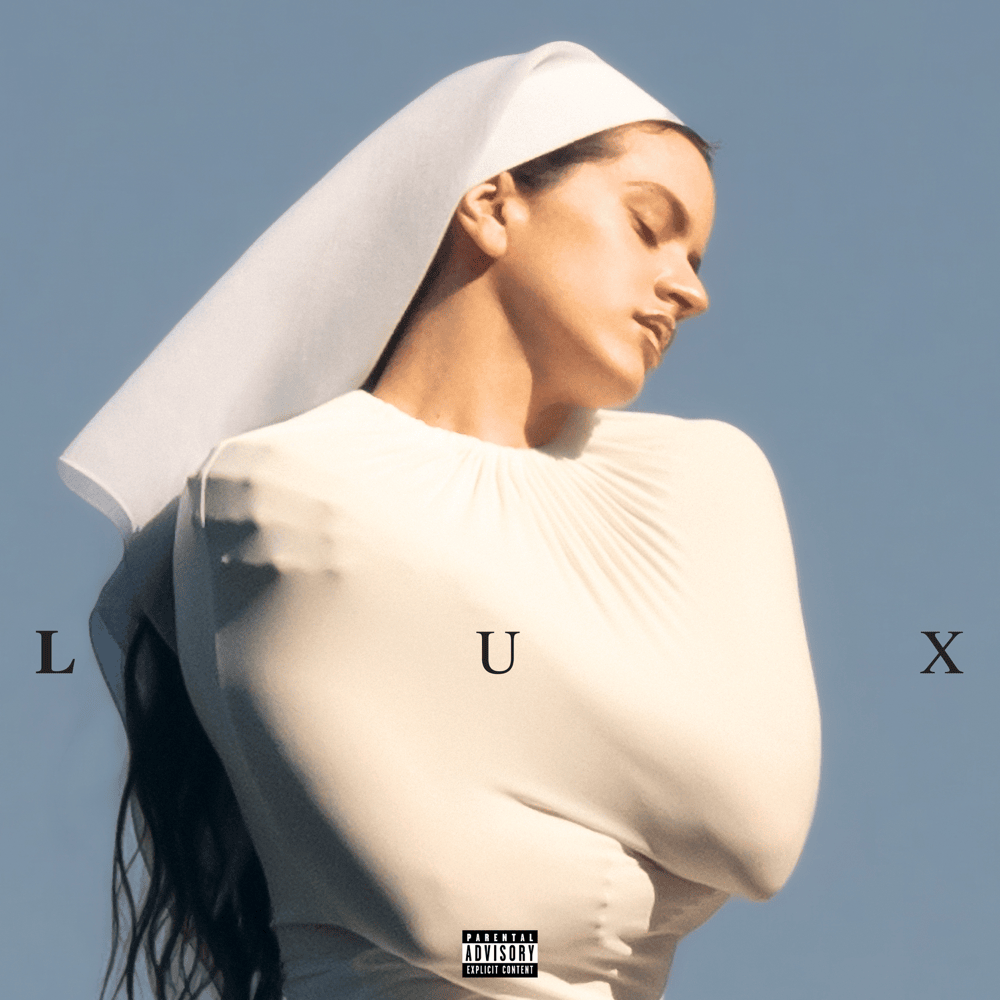
Moving away from her Motomami era – which Rosalía describes as “minimalist” and defined by Caribbean and reggaeton sounds, as well as a bold, edgy stage style featuring leather, butterfly grills, corsets, and schoolgirl-inspired outfits – she embraces a more ethereal and elegant aesthetic in LUX, which she now calls “maximalist.” This shift is evident on the album cover, where Rosalía is draped in a nun’s habit, holding herself gently beneath the white cloth.
One could say this saintly persona finds its source in Rosalia’s Catholic roots and her dedicated study of holy women and mystic feminine figures across different cultures, which are referenced throughout the album. In “Berghain,” for example, she references Saint Hildegard of Bingen; in “Porcelana,” Saint Ryonen Genso of Kyoto; and in “Reliquia,” Saint Rosalia of Lima.
Interestingly, Rosalía’s so-called “ascent to the divine” on this album is partly inspired by Sufi Islam. She explains that Islam was a major source of inspiration for the album because, as she puts it, “For me, there are ideas in different religions that I resonate with. I resonate with Buddhism, Islam, Christianity, and Hinduism. I think they all have things I connect with. They resonate with me.”
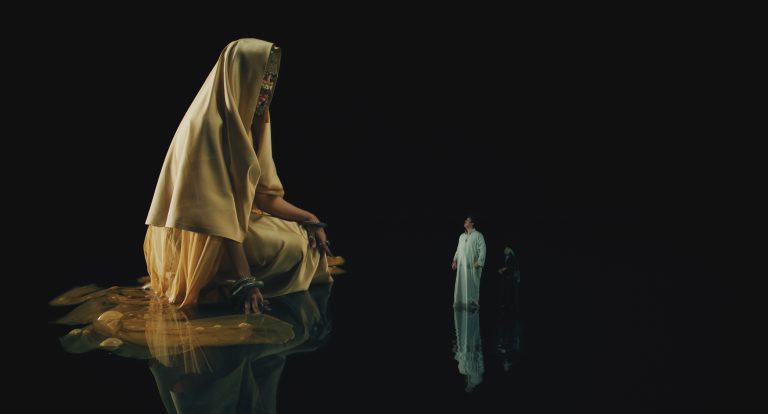
Adding further context, earlier this month, in an interview with Zane Lowe, Rosalía revealed that her song “La Yugular” was inspired by Rabia Al Adawiyya, a Sufi saint from Basra, Iraq, widely considered the first female Sufi saint in Islam – whom Rosalía studied extensively along with the other female saints featured throughout the album.
Known for founding the doctrine of divine love, Rabia is remembered for her guiding principle: to love Allah for His own sake, rather than out of fear or desire for reward. To embody this philosophy, she carried fire and water, symbolically seeking to destroy both Hell and Heaven so that devotion would come from pure and selfless love.
Singing in Arabic, which Rosalía said was inspired by Rabia, she delivers in the chorus: “من أجلك أدمَّر السماء، من أجلك أهدم الجحيم، فلا وعود ولا وعيد,” translating to: “For you, I would destroy the heavens, for you, I would demolish hell, without promises and without threats.”
Like Rabia, Rosalía’s chorus expresses her deep, unconditional devotion to God, moving beyond transactional faith while linking flamenco’s Andalusian roots with Sufi spiritual traditions.
In the second verse, Rosalía references Rabia again, singing: “Mira, yo no tengo tiempo para odiar a Lucifer. Estoy demasiado ocupada amándote a ti, Undibel,” which translates to: “Look, I’ve got no time to hate Lucifer; I’m too busy loving you, Undibel.”
Here, Undibel is a Gitano (Gypsy) term for God used in Andalusian Romani culture, and the lyrics echo the teachings of Rabia, who explained that she had no time to hate the devil because she was too busy loving God.
By making this reference, Rosalía reinforces the album’s focus on her relationship with God. At the same time, it’s hard not to interpret these lines as a metaphor for letting go of past resentments, particularly toward those who have hurt her. Enter: Rauw.
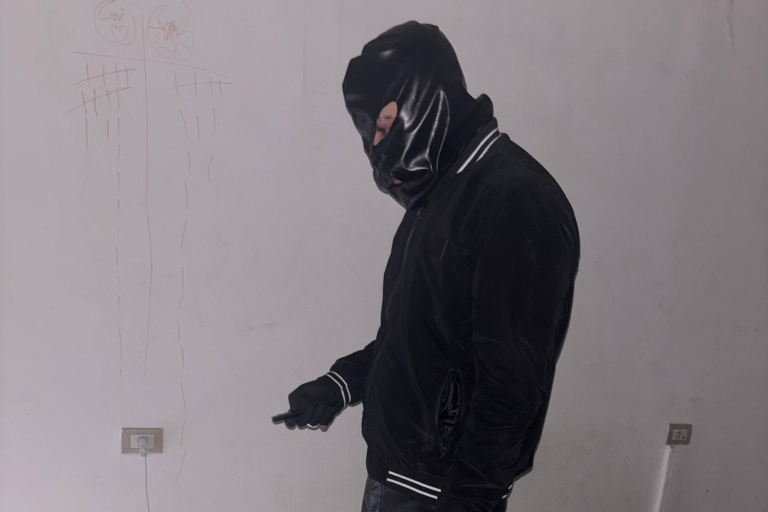
Although Rosalía gives herself permission to vent her anger at her ex, Rauw, calling him a “local fiasco, national heartbreaker, emotional terrorist, world-class fuck-up,” and later describing him as a “walking red flag” and “absolute drag” in her track “La Perla,” the lines in “La Yugular” suggest that she ultimately chooses not to dwell on hate. Instead, she lets go, focusing on her own transformation and cultivating a closer connection with herself and with God.
The sense of divine nearness that Rosalía seeks explains the title of the track, “La Yugular,” which translates in English to the jugular, referring to the veins in the neck that drain blood from the brain, face, and neck back to the heart. At one point in the song, Rosalía sings: “Tú que estás lejos, y a la vez más cerca que mi propia vena yugular,” which in English means: “You, who are far away and yet closer than ever to my own jugular vein.”
This line recalls Surat Qaaf (Qur’an 50:16), where Allah is said to be closer to a person than their jugular vein – the vein that sustains their very life.
Yet, for Rosalía, even as she seeks divine nearness through the jugular vein, she recognizes that her search for deeper connection will always be endless.
This is why, at the end of the track, Rosalía includes a sample from a 1976 interview with Patti Smith, in which Patti encourages artists to keep reaching higher even after achieving success, saying: “Seven heavens – big deal! I wanna see the eighth heaven, tenth heaven, thousandth heaven. You know, it’s like, break on through to the other side.”
This statement not only invites reflection on Islamic cosmology, especially Patti’s reference to the seven heavens – which echoes the Islamic belief in seven skies, reminding Muslims of the vastness and complexity of the universe and the power and majesty of Allah – but also highlights what Rosalía conveys with this sample: transcendence, the ceaseless search for the divine, and the limitless nature of love and devotion.
And as Rosalía moves through this journey, one truth becomes evident: the Islamic references she draws on to explore her relationship with God in “La Yugular” shine as a source of illumination, a tribute she describes as “my love letter to Arabic.”