In a time when a news cycle is 23 and a half hours long, and an artist’s song is expected to go viral before it’s even released, retreating from the “single-album-tour” grind could be the kiss of death.
Many major artists have done it. Cardi B just announced the highly anticipated follow up to her debut album after seven years of keeping fans waiting.
The last time Frank Ocean released a full album was in 2016.
Rihanna can’t post on Instagram without spectators in the comments asking “where is the album?”
And many fans are still waiting for Lauryn Hill to drop new music—any day now!
A hiatus from music is always a risk and yet it’s becoming increasingly common; when it seems like the world is moving at warp speed—and fans may move on without them—artists are choosing to slow down between releases.
But why?
What may appear to the public like a break—an absence from social media, a pause on releases, a string of unrelated singles—is actually more than it seems.
Artists are choosing to be more old school, choosing their craft over the optics, taking time to fine tune their work, prioritize their authenticity and purpose, and grow and evolve their sound before sharing their work with their supporters. We’re seeing artists take their bows and then spend time behind the curtain before the encore. And the results are always worth it.
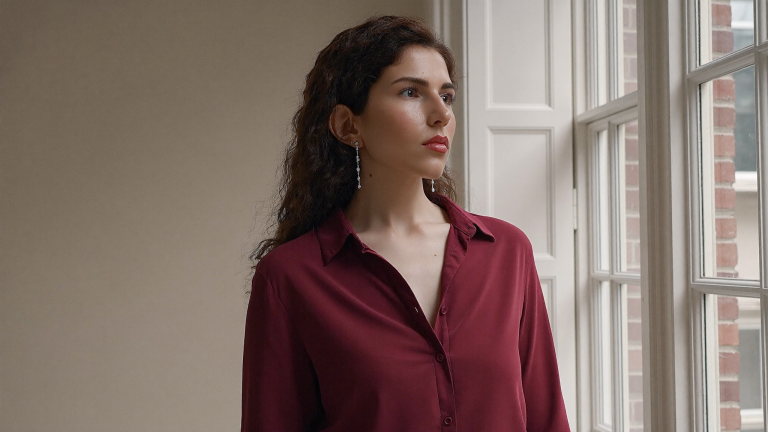
For Abir, it was about being authentic to herself. The 31-year-old Moroccan-American artist released her three-track EP The Tip Off this past May, five years after the release of her last album Heat in 2020.
“Being a perfectionist puts you in limbo and doesn’t allow you to get out more art into the world” Abir says. “I feel like one of my flaws as an artist is that I am very precious about everything that I make, and everything is so intentional. Everything has to be perfect.”
Abir is careful to call it a hiatus and not a “break” because for five years, she was still working. While working a short residency in Kuwait and performances in Dubai and Korea, Abir was in the studio, churning out creative projects the world would never hear, entirely off the grid.
“I did an Arabic country album, which I thought was next level,” she says, “[My creative process] is all trial and error at this point because I pride myself on being able to do a lot of different things.”
Despite all the work Abir was putting into her career during those five years between releases, her social media presence was completely diminished.
“I was not having to really show up on social media,” Abir says, referring to her time away, “And that’s every artist’s debacle right now, how to show up on social media, how to prioritize it. And I think throughout that time, I was just focused on music again.”
“I just used that time. This is really the only time that I can just explore every thought in my brain without having to essentially be active [online].”
Abir says that time away from the public eye allowed her to show up for herself first and foremost. “And while I’m not sure that my manager and my team were excited, it ultimately led us to the music that we have now.”
On The Tip Off, Abir’s signature East-meets-West sound feels revived by a breath of 90s RnB. The opening of “Something Real” features a guitar riff that brings one back to the motherland.
Lyrically, her track “Made 4 U” makes a hymn out of a love letter, thanking a higher power for bringing a soulmate into her life.
It’s clear the time away served as inspiration for her new releases, to the point Abir says she knew she was ready to come back when she just couldn’t keep her projects a secret any longer.
“And as soon as I wrote it, I was like, ’Oh my God’,” Abir says of “Something Real”. “ I was like, we gotta get this out tomorrow. That [happened] so far from being able to release any music. But I was like, ‘God, dang, we have to wait how long?’”
Moroccan musician Nova Queen relates deeply to the sentiment of being out of the public eye but grinding behind the scenes.

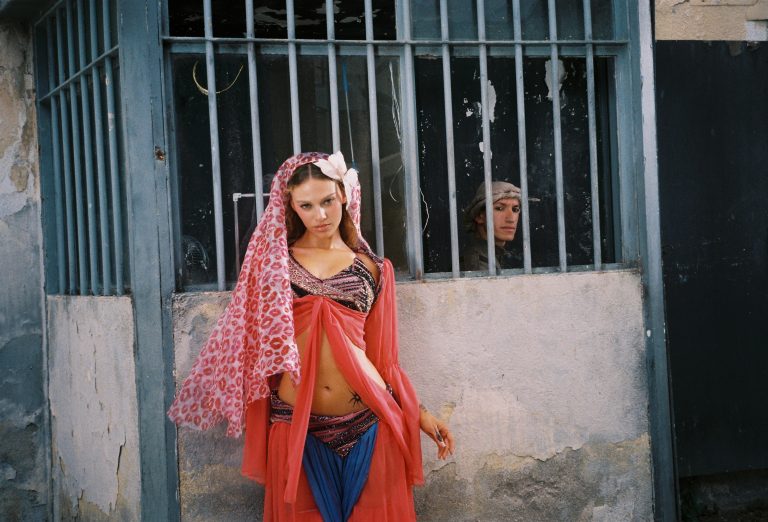
Launching into her career at nineteen years old with bangers like “Enta Habibi” under her former stage name Psycho Queen, she stepped away from the public eye in early 2020 only to re-emerge four years later with a new name, a new look, but the same fierce sound.
Psycho Queen had neon blue hair, wore bright colors and fun patterns. Now, Nova Queen has dark hair, a more classic Arab look.
But if you listen carefully, her feminist spirit and her courageous heart still shines through in the same empowering way. Songs like “Gada” and “Qamar” showcase that while the name might be new, her talent remains unchanged.
“Everyone’s asking me why you change your name from Psycho to Nova,” Nova Queen says, “And you know what I say here? A name can never define me. I’m the essence. My music is my essence.”
Born in the town of Sidi Slimane in Morocco, Nova Queen, whose real name is Kaoutar Bougerine,says her father instilled a love of Arabic poetry in her at a young age. Themes of self-celebration, Arab pride and empowerment run deep in her music no matter the stage name.
When asked what motivated her to step away from the spotlight and reinvent herself as an artist, Nova Queen said it was simple: change is an inevitable part of life.
“As humans, sometimes we get lost, and there was a moment where I felt lost,” she said. “I decided to give time to myself, to recognize myself more, and to ask myself, ‘What do I want from this life? What are my goals?’”
Despite any doubts or difficulties during those four years, Nova Queen always knew she would release music again.
“God can’t play like that. He’s perfect. I feel like it was just an exam, like ‘Do you really want to achieve your goals? How? Are you gonna quit or not? How much can you sacrifice to achieve your goals? And I was like, okay, I can sacrifice everything.”
You can hear Nova Queen’s passion when she talks about overcoming her doubts and naysayers.
“I was like, ‘It’s okay Kaouter, one day you’re gonna achieve your goals, and you’re gonna remember all those things [that people said], and you’re gonna say, See, I told you. So for me, I can’t quit music in my blood. It’s not a choice that I made. You know, I was born for this.”
And all that sacrifice was worth it. Nova Queen signed a new deal with Moroccan record label SSC Music, moved from Casablanca to Tangier, and has multiple projects coming down the pipeline, including a feature with Syrian artist Sarah Farah and an EP planned for September with some of what Nova Queen is calling her most personal music yet.
“Life keeps moving. Its ups and downs and mindsets change. We grow in age. So I felt like I’ve changed a lot, and my music changed, but the main message didn’t change.”
An artist seeking to reinvent themselves five years into their career is an incredible risk. Their fan bases, social media, and global footprint have been established and the risk only increases with more time, acclaim and accomplishment.
This was a risk worth taking for Outlandish, an internationally recognized group with hip hop roots and a 20-plus year career.

“Everyone is different. Some people like to keep going, releasing songs all the time. But I think the best thing about [a hiatus] is that you get to have some new experiences to write songs about.”
Lenny Martinez and Waqas Qadri have been a part of the band Outlandish since the late nineties. Once a trio, the Denmark based group released their debut album in 2000 with Outland’s Official, but the band became a global name with their sophomore album Bread and Barrels of Water and their cover of Cheb Khalid’s iconic song “Aicha”.
They disbanded in 2017, citing the need to explore opportunities separately. Martinez and Qadri revived the band in 2019, releasing their most recent album The Cornershop Carnival in 2023, twelve years after their last major release.
That time away was transformative for the band. Bandmate Isam Bachiri left the group and Martinez and Qadri took the time to experiment with their sound and their musical identity.
“To be brutally honest, it was a scary transition because we were so used to being three and being so set in separate roles within this great success that we created together,” says Qadri. “And then you take one very important person out of the equation, and then you have the blueprint for failure, basically, because you hear it all the time from the media and people: we just wanted the way it was before.”
Most importantly, the band took those twelve years to let the music catch up with them. In the twenty years of their career as a group, Martinez and Qadri toured the world, became fathers and acknowledged that they were no longer the teenagers they were when their careers kicked off.
“We’re not pretending to be what we were when we started out in Outlandish. We admit that we change. We age. Your priorities change. We have families. But also the topics change, and they should. We shouldn’t be rapping about, you know, the stuff we did on El Moro because we’re not those persons anymore. Basically, we’re a different place now. And that’s beautiful, because that’s the type of music we’re actually doing, the type of music that we want to hear at this age that we’re in now.”
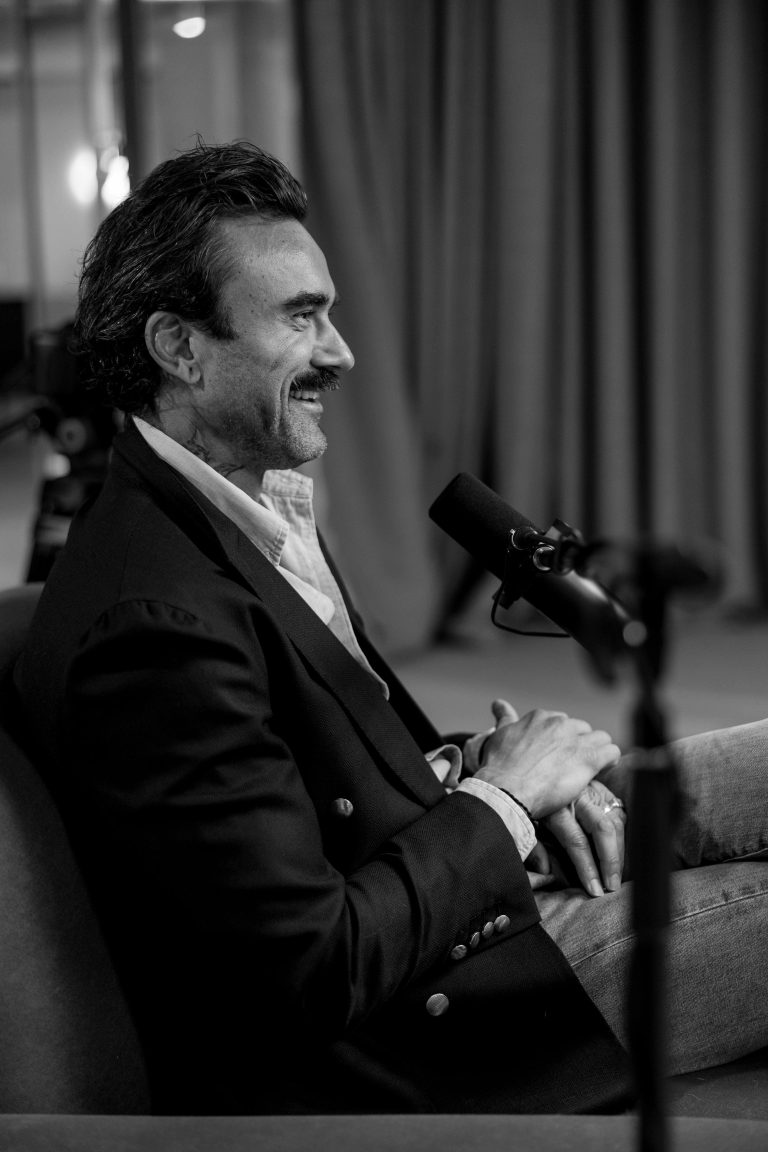
Even as the group is in the midst of producing their next album, hopefully to be released early 2026, the duo plans to continue writing songs that cover the experiences of the diaspora in today’s social and political climate. “You can do music no matter your age. The important thing is you have something to say,” says Martinez. “If you’re good, you’re good. And if you have something to say, somebody is going to listen, it’s just about finding the right ears.”
As spectators of art, audiences are allowed the time and space to grow into and outgrow the artists they listen to. Listeners create a world of their choosing depending on who they listen to and why. If listeners are going to want their artists to reflect not only their lives, but the social and political climates in which everything exists, artists themselves are going to need to experience life. They have to have the grace to reinvent, explore and first and foremost, take a break.