In Paris, a new generation of comedians is rewriting who gets to make France laugh. They are not only performing; they are creating their own clubs, producing shows, and building platforms that are setting the standard. That many of them are of Arab descent is either background noise, or the headline – depending on who you ask.
Act One: Welcome to The Club
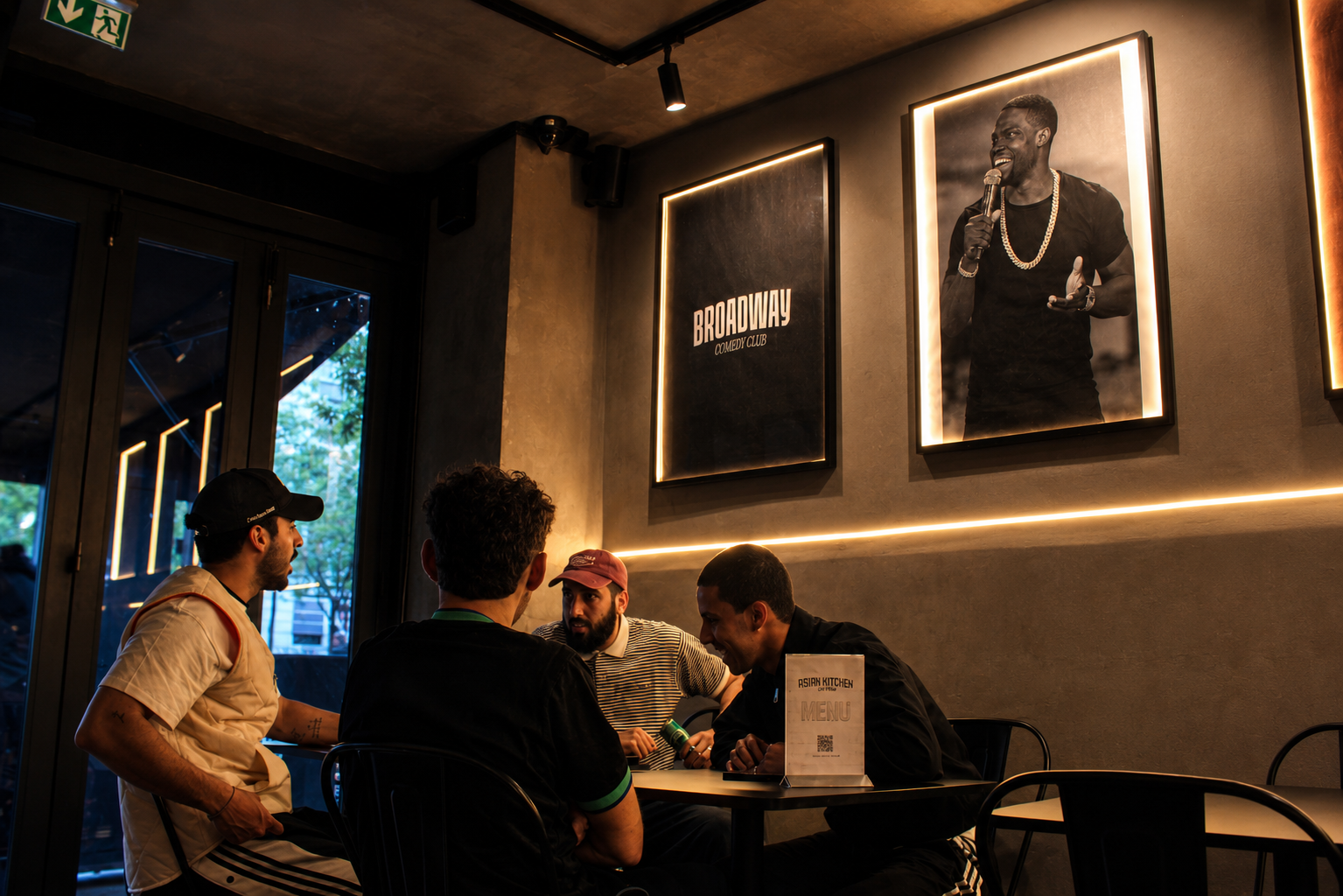
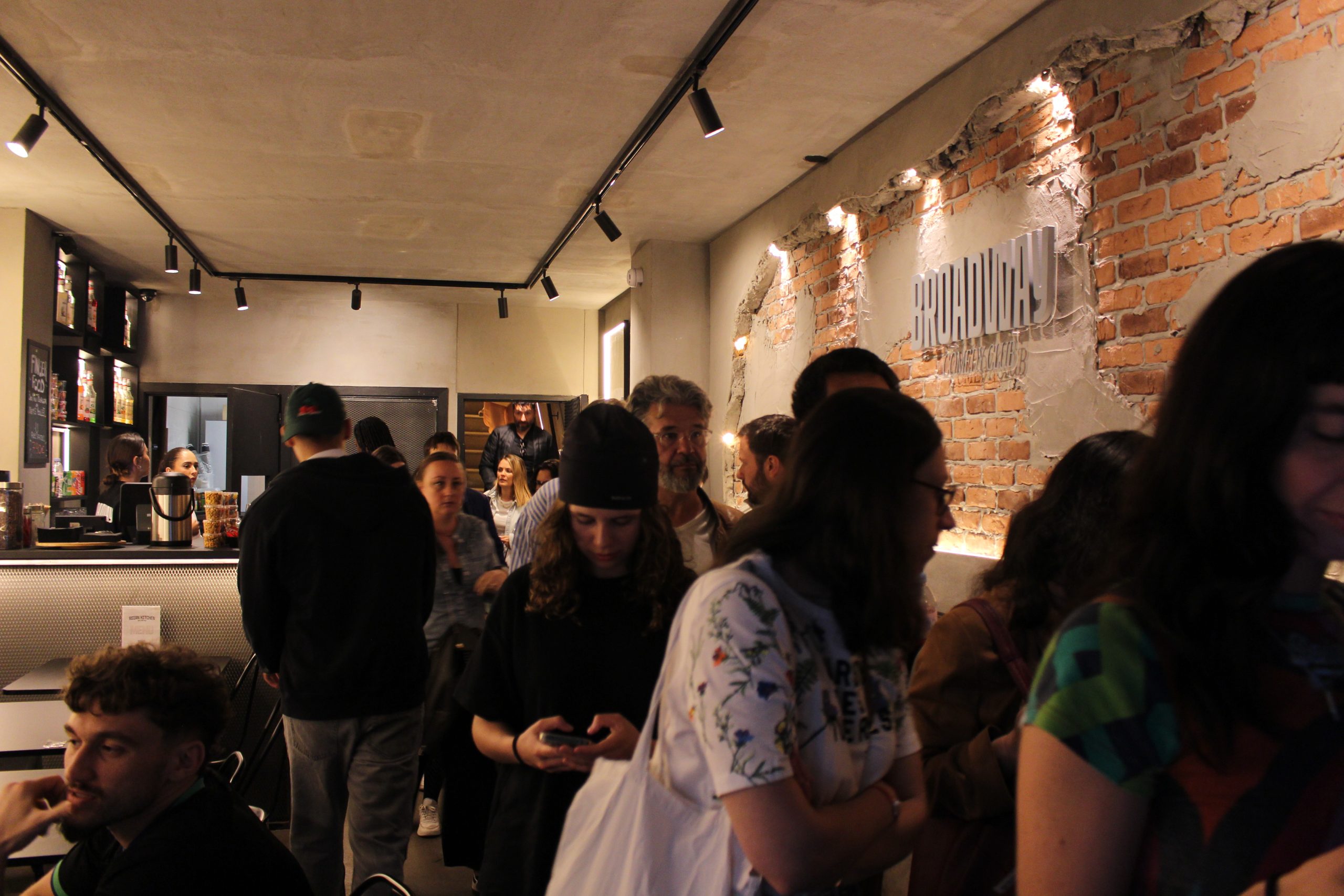
To enter the Broadway Comedy Club, you queue outside, near the bright billboard announcing the club’s roster of artists. Inside, a portrait of Dave Chappelle looms beside the bar. The aesthetic is unambiguously American. So is the philosophy.
What you’re walking into is not a theatre show. In a country with one of the oldest and most celebrated theatrical traditions in the world, comedy has long meant characters, costumes, a fourth wall. Stand-up strips all of that away: a comedian, a mic, and nothing to hide behind.
Since venues reopened after Covid, comedy clubs have become the trendy night out. Fary opened the Madame Sarfati, Kev Adams the Fridge, Gad El Maleh the Michou Comedy Club. Every comedian their own house. Comedy critic Adrien Denouette calls it “a French spring of stand-up: Paris first, then everywhere in France.”
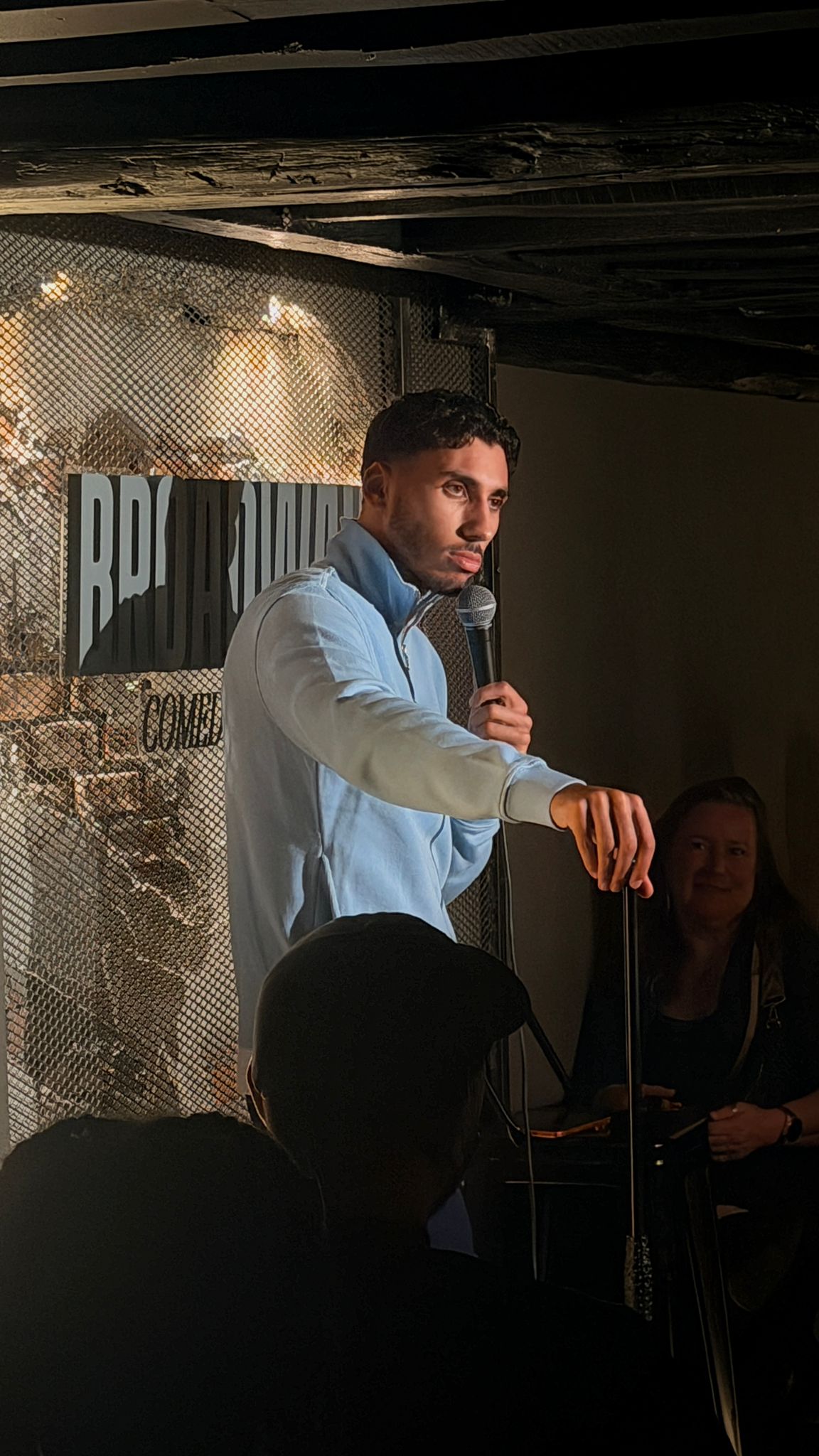
The Broadway Comedy Club belongs to Ilyes Djadel, not yet thirty. He grew up in Hazebrouck – a town in northern France that has become a reliable punchline – and his life might have taken a whole different path had a French teacher not driven him to his first open mic on her own time.
His debut show, Vrai, was built around exactly that story, a very French kind of dream: the kid from the provinces who makes it to Paris. His breakthrough was a sketch about being an Arab kid in a Catholic high school, the outsider gaze that, as Denouette argues, is the engine of stand-up itself.
Inside, the bar rarely sits empty. Your drink is included in the entrance, roughly ten to fifteen euros according to the hour of the show. The lineup, as always, is a secret. The room has the warmth of a family kitchen.
Chahine, Djadel’s brother and artistic director of the club, jokes with the comedians and serves them tea when he is not busy deciding who goes on in what order.
Melikoun, tonight’s MC who warms up the crowd and introduces the show, is a former PhD Candidate in sociology with a razor-sharp dark humor, still waiting for stand-up to pay the bills properly. He fist-bumps Ilyes Melha and Malik Belkhodja, whose faces are on the billboard outside. A few other comedians nurse drinks at the bar, hoping for a slot. Each comedian gets around ten minutes.
Tonight the crowd will get names they already follow online alongside emerging voices they will be talking about tomorrow. On the way out, every spectator will pass by a hat and leave what they can. That is how the artists get paid.
Most of the artists passing through tonight are names that French mainstream culture has long treated as a quota. On the six-comedian bill that evening, half of Arab origins or Black, half white French. “There is no quota,” Djadel once told French radio, regarding a comedy YouTube show he co-produces with footballer Kylian Mbappé. “I put the people I liked, the people I found funny. (…) That’s racist stuff, having to put in an Arab or a Black guy.”
Yet it is not a coincidence. “Stand-up comes from the margins,” says critic Adrien Denouette. “And the Arabs of France were the first to understand it, drawing on a model that came from the United States: a community-based point of view that said, I don’t have your history. And that ‘I’ allowed them to bring a perspective on French society that had never been heard before.”
Beyond Arab identity, one wider common denominator may be class: children of the banlieue, heirs to a culture of verbal sparring that long predates the microphone, and to the legacy of Jamel Debbouze, who first brought that world to French stages along with the stand-up culture in the 1990s and 2000s.
Upstairs, seventy seats at most. On the menu tonight: sexuality, illness, family, origins, the banlieue and the thirtysomething Parisian existential crisis.
The crowd defies easy description: eight teenagers with Pass Culture vouchers (government-funded cultural credits for youth), a man in his twenties and his mother, a fiftysomething engineer, a young woman in a hijab who laughs loudest when Melikoun calls out “Okhti” in her direction from the stage.
Among them, Florence, Lucile and Pauline on a girls’ night out. They flag one disability joke that landed less cleanly. Maladresse, difference in sensitivity, or comedians still working out the words. Hard to say. They enjoyed the evening enough to consider seeing some of these comedians in their own shows.
Act Two: Fifty Shades of French Arabs
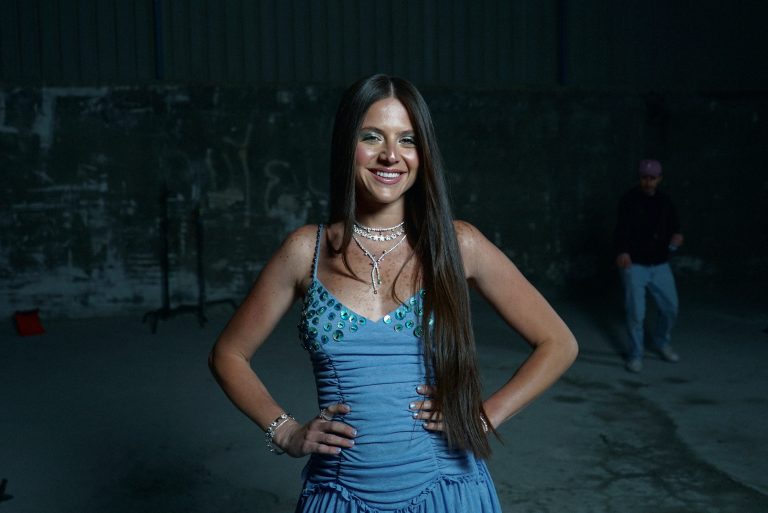
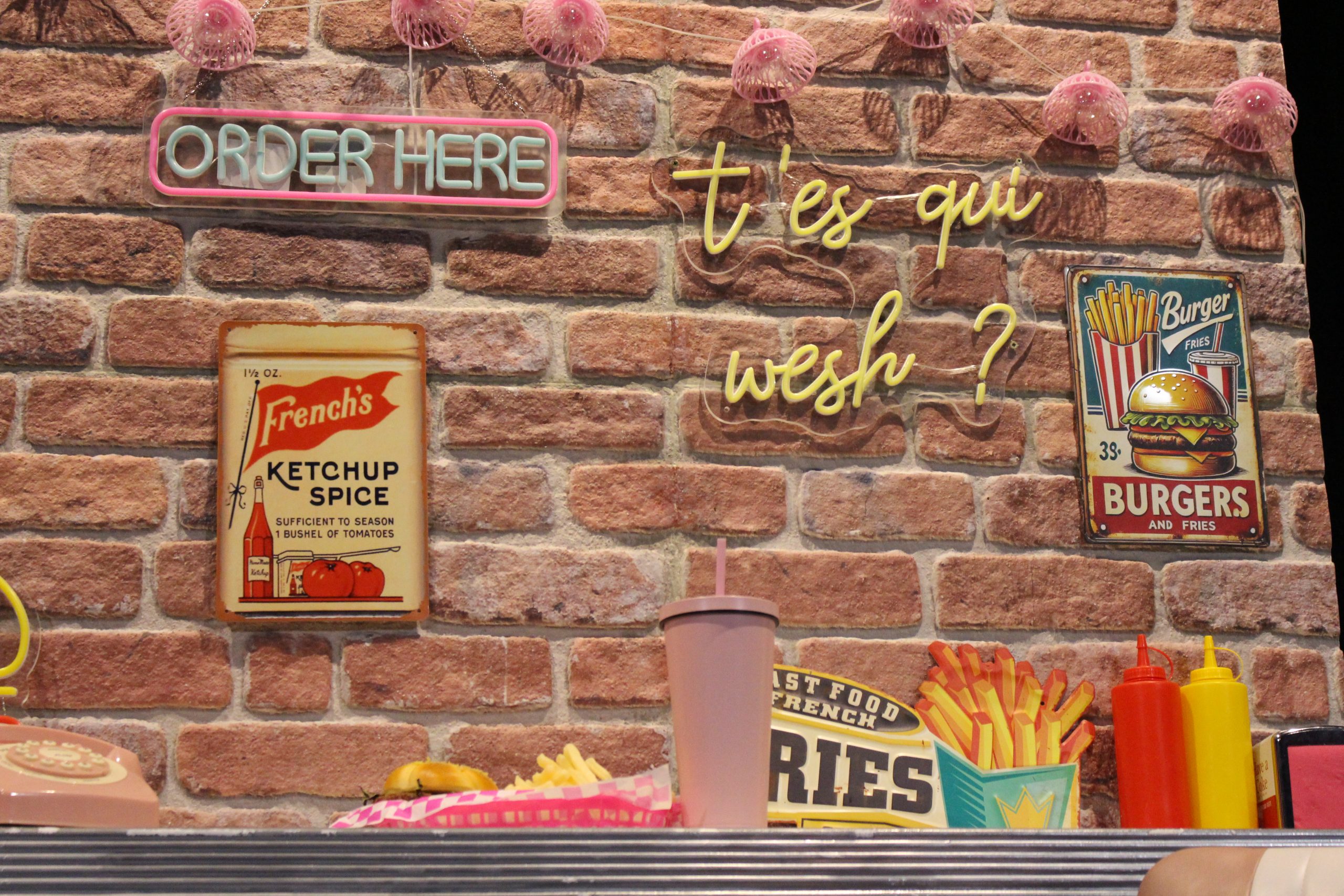
Sofia Belabbes is selling out the Comédie de Paris, 180 seats, twice a week, with a month and a half’s wait for tickets. We meet in the set of Ketchup Mayo, the title of her show and a feeling: Sunday at the kebab with your friends, putting the world to rights, everyone’s week, love life, work drama. Just happy.
People discover her through TikTok and Instagram, where she has racked up millions of views, the way a previous generation was made by television. What the algorithm doesn’t show is the decade of theatre training that came before.
She grew up on cassette tapes of Fellag, Gad El Maleh, and Élie Kakou, each born in a different corner of the Maghreb. The latter two dominated the 90s in France with character-based comedy, a tradition she would eventually leave behind for the rawer, first-person voice of stand-up. But the comedy club grind that followed those years never left her either. She still goes back to them, she will head to one straight after this interview.
You can feel those years on stage: she reads a room the way a doctor reads a patient. “I always keep my eyes fixed on the person I’m teasing,” she says. “If I see a signal that they’re no longer with me, I pull back.” Audiences leaving Ketchup Mayo use one word: bienveillante. Kind. “The goal,” she says, “is that we all laugh together.”
For a long time, none of her Arab identity appeared in her material. She was wary of being reduced to a category, and had reason to be. When she started getting castings, she recalls, they would ask whether she expressed herself well. “Would they have asked that if I didn’t have this face?”
Her arab roots are there, but not where you would expect them. In Et merci maman, one of her best-known sketches, she introduces her mother: a tough woman who falls asleep watching true crime. The Algerian mother as a figure of fierce pride is a well-worn trope in comedy, and a funny one when well executed. Here, she simply doesn’t specify it, to avoid the cliché. “My Indian friend, my white friend, they can relate to it too.”
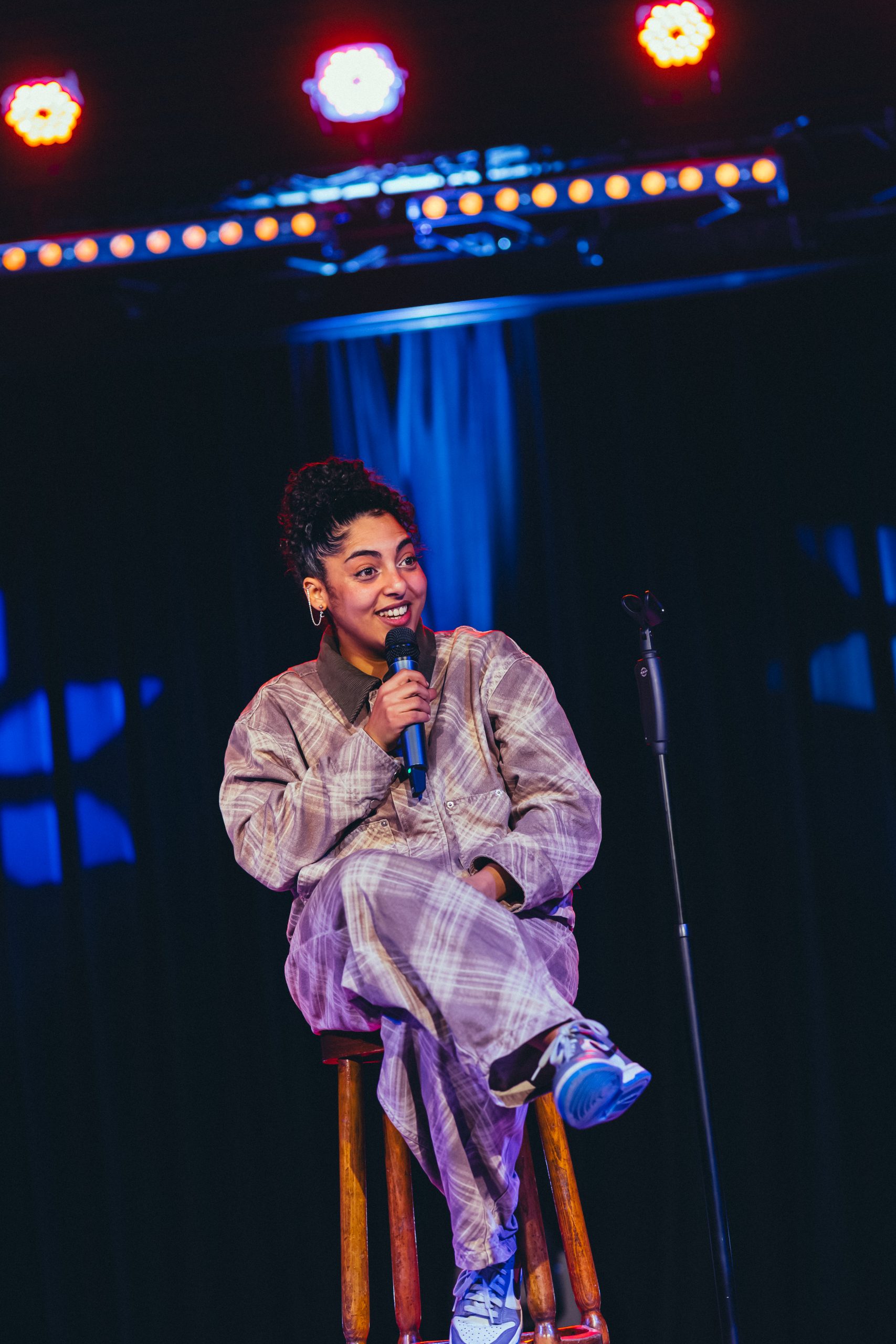
When she does mention her roots, it lands differently. On stage she jokes that she is a “bounty” or a “Schoko-Bon”, Arab on the outside, French on the inside. “We grew up in France, we don’t speak Arabic, but we know a few words and we’re deeply attached to this culture. We’re a lost generation.”
Between her Algerian grandmother’s house and the French friends she grew up with, Belabbes made what she calls “a strange mix.” She is not alone. Adel Fugazi, who performs in the same venue, performs a sketch where he explains he would love to learn Arabic, but gets lost between all the dialects, producing invented sounds, phonetic approximations of a language half-remembered. A new generation of French Arabs, finding new words for who they are, in a country where the far right has reached one in three voters.
Act Three: The Replacers
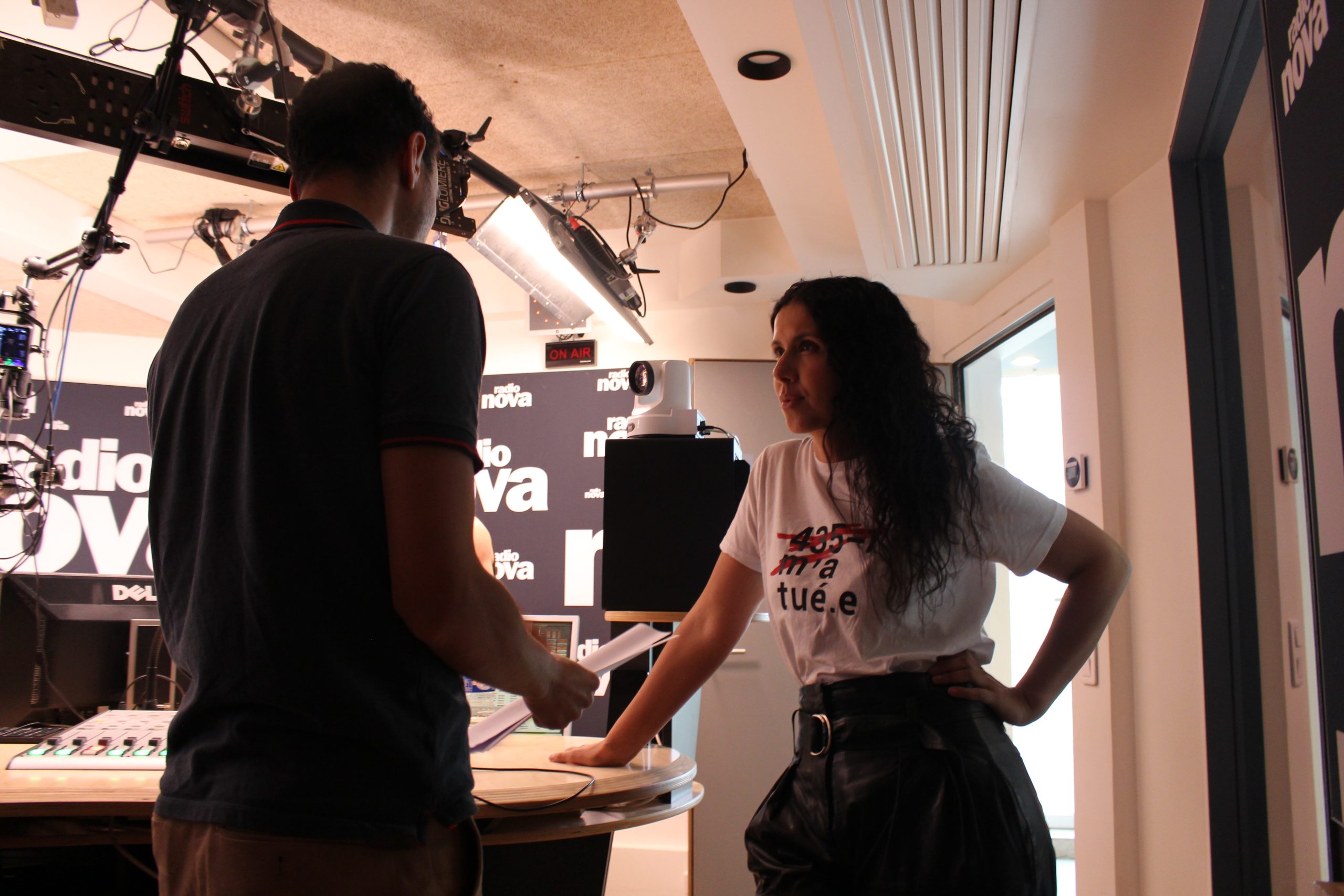
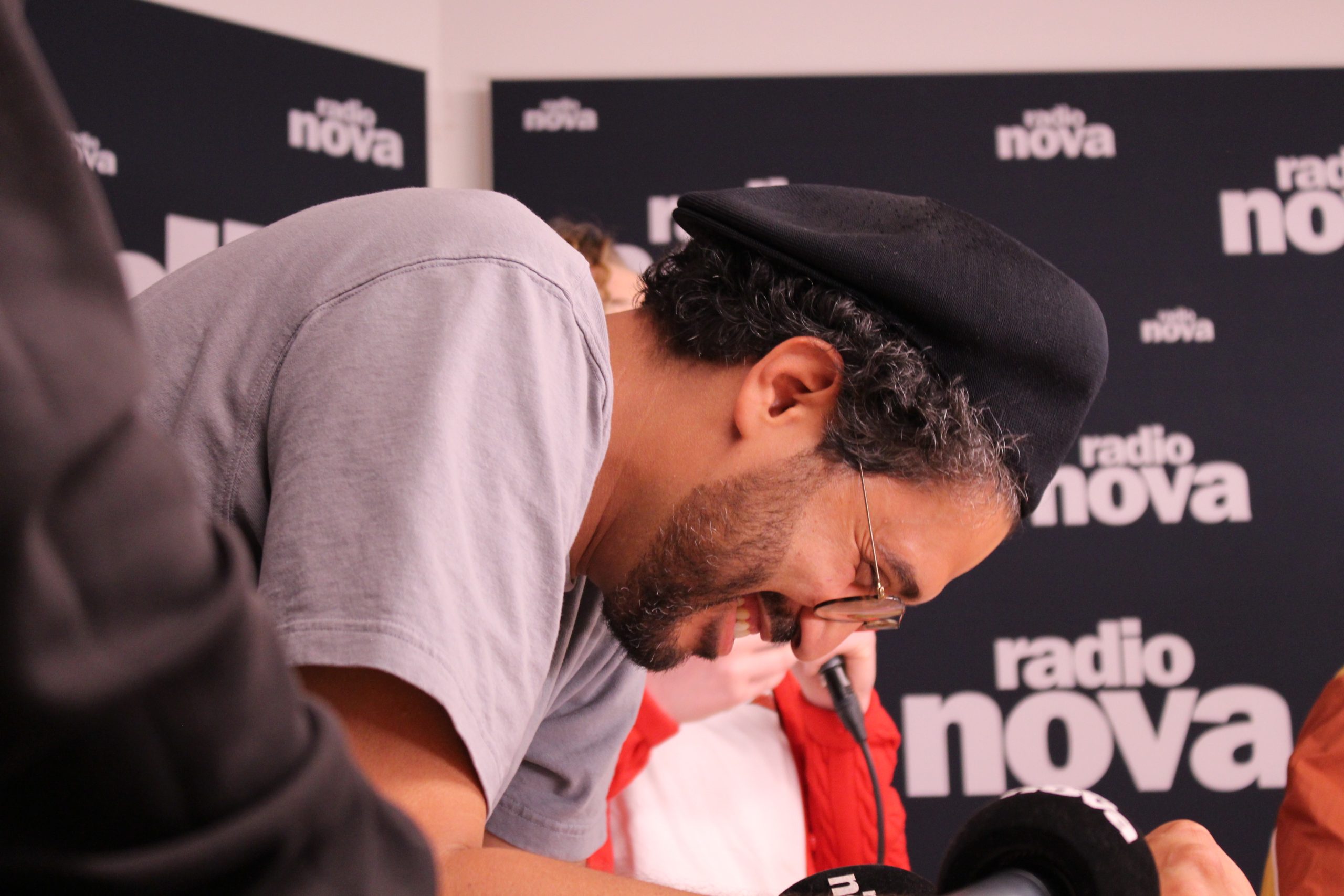
Fugazi is also a regular on Les Grands Remplaçants. Look at the recording studio: the comedians, grinning. Hard to see the threat.
The podcast comes from the comedian Djamil Le Shlag and his co-author Mounir Soussi. Its title references the Great Replacement theory, the conspiracy coined by French author Renaud Camus claiming that native European populations are being gradually replaced by non-European immigrants, a theory that inspired the Christchurch mosque shootings in New Zealand.
Le Shlag landed at Radio Nova after leaving France Inter, where his colleague Guillaume Meurice ended up fired for calling Netanyahu “a sort of Nazi, but without a foreskin,” — a joke the prosecutor found “not established” as incitement to antisemitic hatred.. “I take back control,” Le Shlag said. “It’s me who decides to leave.”
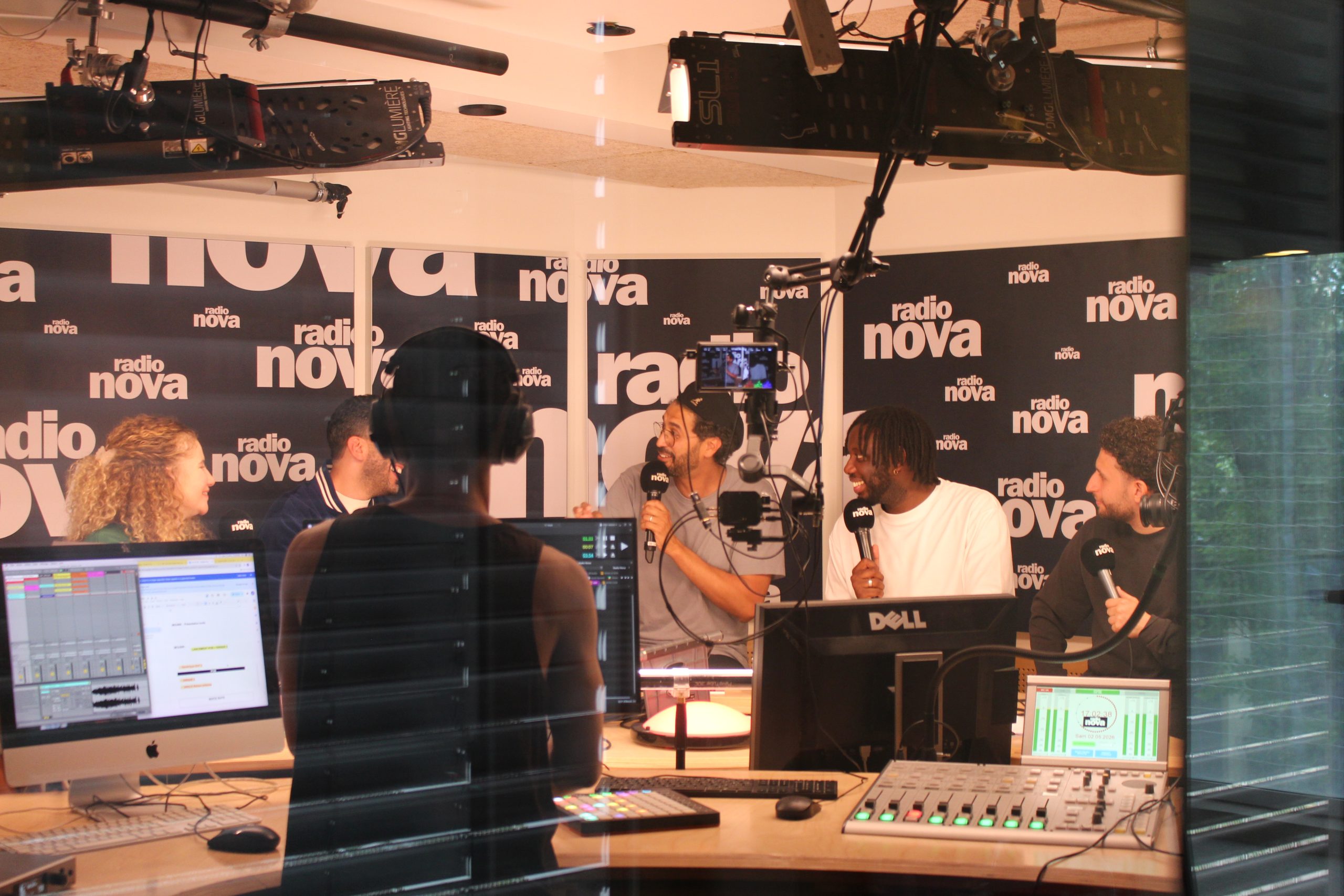
Nova, openly engaged in a cultural battle against the far right, has found both “success and controversy with its sharp humour,” as leading French daily Le Monde noted. Meurice, after his own departure from France Inter, now broadcasts there too. A station that, despite holding around 3% of the national audience, doubled in a single year, reaching nearly 1.6 million daily listeners in early 2026.
Unlike the stand-up world, where Arabs and Black comedians found their place organically, Le Shlag argues that French radio chronicles have long operated on a different logic. “There is often one Arab, one Black person, but not too many,” he notes. “Always one, as a kind of quota.”
On Les Grands Remplaçants, he recruits his chroniclers explicitly on that basis. The show also doesn’t spare the left. “We grew up with the Socialist Party and the anti-racism slogan ‘Touche pas à mon pote,’ don’t touch my mate,” he tells Rolling Stone MENA. “But maybe the mate wants to speak for himself. Maybe that’s a little paternalistic.”
The show’s primary terrain is humour, but political weight arrives anyway. “Arabs of France assuming a political point of view in such a grouped and flourishing way, yes, this is new,” says Denouette. For Le Shlag, the responsibility can feel heavy. “I try not to be a political comedian,” he says. “I try to bring politics into my subjects.”
On May 2nd, two episodes are recorded back to back. The first features Samia El Khalfaoui, whose nephew was killed by a police bullet in Marseille in 2021, and who campaigns for the repeal of the 2017 law that expanded the conditions under which police officers can open fire. “You can see the first recording was more politically charged,” he says. “The second was much lighter.” The second features a comedian. Just laughs.
For its listeners, Les Grands Remplaçants is a breath of fresh air in a media climate that can feel stale, earning a place in the Apple Podcasts Top 20 Comedy Shows in France. For those directly concerned, it is a form of “communion and validation,” according to Soussi. For others, the left-leaning white listeners Le Shlag knows well enough to joke about on air: Perrine from Vaulx-en-Velin, 52, self-described communist, writes in to say it is the first time she has heard a point of view like theirs.
Act Four: Enter the Villain
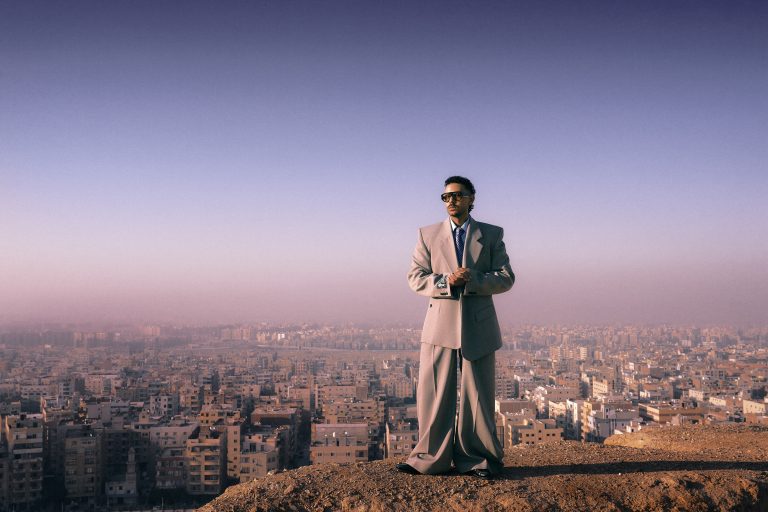
Wednesday, May 6th. Champions League semi-final night. Half of Paris’s Arab community is watching the match, supporting the PSG, or so it feels. The other half is inside the Casino de Paris, waiting for Mustapha El Atrassi to take the stage, to the sound of Oum Kalthoum.
Ba3id, ba3id.
Close to fifteen hundred people. Far from the media’s attention.
Mustapha El Atrassi no longer speaks to the press. He opens the show by celebrating it: “We’re sold out, no media, no compromise, we don’t kiss anyone’s ass.” Between October 2024 and December 2025, he filled L’Européen for more than a hundred shows, drawing around 45,000 spectators. No billboards, no PR, just Instagram and word of mouth. Fellow comedians cite him as a reference. Some say he is simply the best.
View this post on Instagram
Instagram post by Mustapha El Atrassi, his only press office. “Coming back on tour soon, khey!! (I know I look like a Moroccan police officer)”
To understand where he stands, Denouette maps three figures of the Arab comedian in France. First, Smaïn: the pioneer, the first Arab of the French comedy scene, and perhaps of French media altogether. He made his name in the 1980s, in an era when integration meant assimilation, an “Arab who apologised for being Arab.”
Then Jamel Debbouze, who changed the terms: still “seeking the complicity of a white audience, Republican and fédérateur”, but arriving with his own point of view rather than the audience’s expected one.
Today there are many, so many that grouping them together barely makes sense anymore. But for Denouette, one name stands apart. Al Atrassi, the third figure: representative of no one, unique in his radicality. “The one who doesn’t give a damn about the white audience. If they want to be there, they’ll be treated as the dominant group they are. And they’ll take one in the face.”
His trajectory followed the standard path: Jamel Comedy Club, Ruquier’s shows on France 2, one of the most-watched late-night programmes on French public television. He was known. Then a slow withdrawal, a depression, a decision. In a 2023 interview with comedian Amel Chaabi, now a chronicler on Les Grands Remplaçants, he said he was done. Done with the way veiled women were talked about in the media. Women like his mother. Done with the whole thing. He ended up starting afresh, away from the media. Or so he thought.
In a clip that went viral in May 2025, he tells his crowd that the time Moroccans and Algerians spend insulting each other is time wasted not insulting the gwers (the Westerners, in North African Arabic slang). A spectator stands and walks out. “Apparently I’m not welcome here.” El Atrassi, unfazed: “Aren’t we better off?”
Marion Maréchal, far-right MEP and granddaughter of Jean-Marie Le Pen, announced she was referring the case to the public prosecutor for incitement to hatred. The clip, which El Atrassi posted himself, kept spreading.
The night we attended, several people walked out during the show. Among them, someone of Tunisian origin who had been singled out by El Atrassi and taken the full force of it. El Atrassi’s style is corrosive by design. “He doesn’t play the victim,” says Denouette. “He plays the aggressor.” The French public, Denouette argues, has never quite known what to do with that.
“The French public has traditionally never wanted to feel threatened or attacked. The American public is not afraid of its emotions. It doesn’t hide them behind a mask of social prestige.” El Atrassi pushes into exactly that discomfort. For Denouette, a critic who does not deal in easy praise, El Atrassi belongs alongside the greatest, above them even. “Dave Chappelle, Chris Rock, they’ve become completely dusty.” He is, in Denouette’s words, a seismic event. The kind that starts underground and stays there.