In a small town in the province of Frosinone, between the mountains and the long shadow of Rome, a girl sits in a classroom every morning and waits.
Her name is first on the list, before the easy rhythm of the Italian names that follow.
The teacher squints, takes a breath, then opens her mouth and does her best.
Al… Zooool?
Presente, the girl says, sinking into her chair. That stumble would follow her for years, always trying to make her smaller.
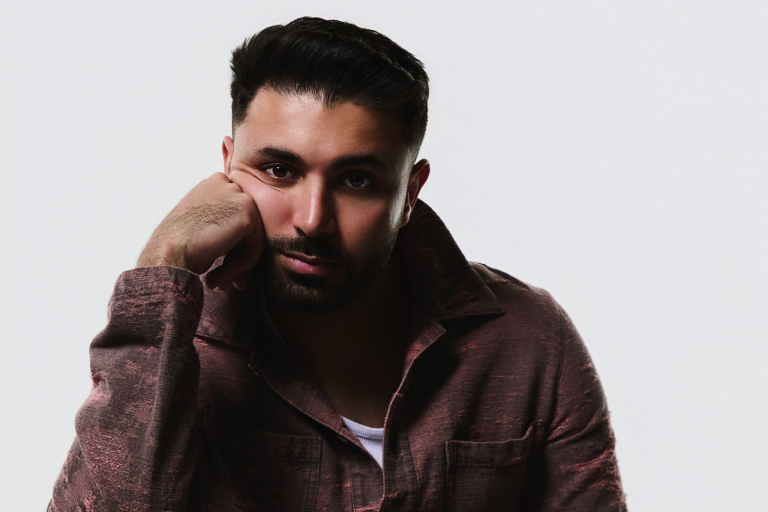
Tamara Al Zool decided to sing into it instead. She’s 23 now and goes by TÄRA, umlaut and all, planted there on purpose.
“I had two O’s, which is strange in Italy, an Arabic surname. So I took this thing and put it there. The duality of the thing. I just put it there.” She laughs.
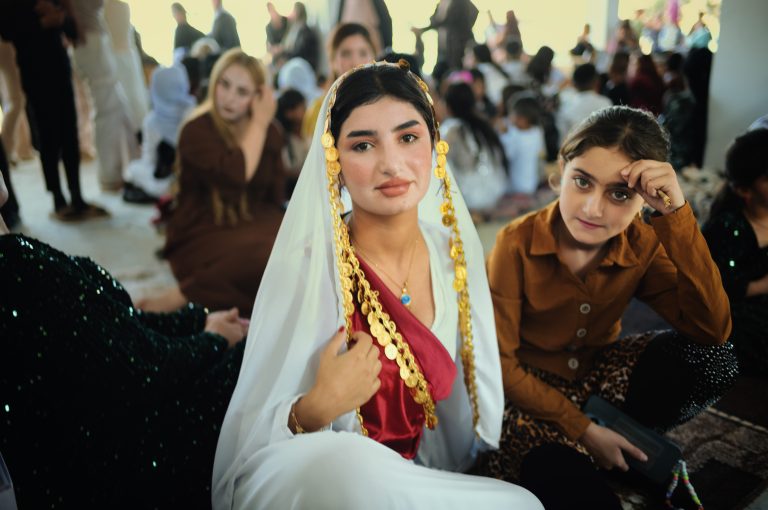
Her debut EP, Zefiro, arrived on May 15th, the anniversary of the Nakba, a date seared into Palestinian memory. Her grandparents lived it. father carried it to Italy. She was born into it and she turned it into music.
It has always been the people pushed to the margins who see a culture’s contradictions most clearly. Jazz from Black New Orleans. Flamenco from centuries of collision in Andalusia. Friction is where the sharpest work gets made, and TÄRA has spent her whole life inside it.
With Italy in her heart and Palestine in her bloodstream, she came with a sound Italian music didn’t have a space for yet, so she named one herself: Arab&B. R&B shaped by Levantine melody, UK bass underneath, lyrics that move between Italian, Arabic, and English. Nobody in Italy has made music that sounds like this, at least not for a long time.
It was the quarantine of 2020 that gave her the pause she needed; time to reflect on what diaspora slowly takes away.
“Putting my hands on my instruments, putting pen to paper. Writing, even if it was not perfect, because it never is, isn’t it. The lockdown connected me back to parts of myself I was losing,” she says.
In the music that followed, the languages she moved through every day followed too. “Arabic is family, the connection I have with my soul, with faith. Italian is what connected me to what made the music happen. And English is my love for exploring. Every language speaks for a part of me.”
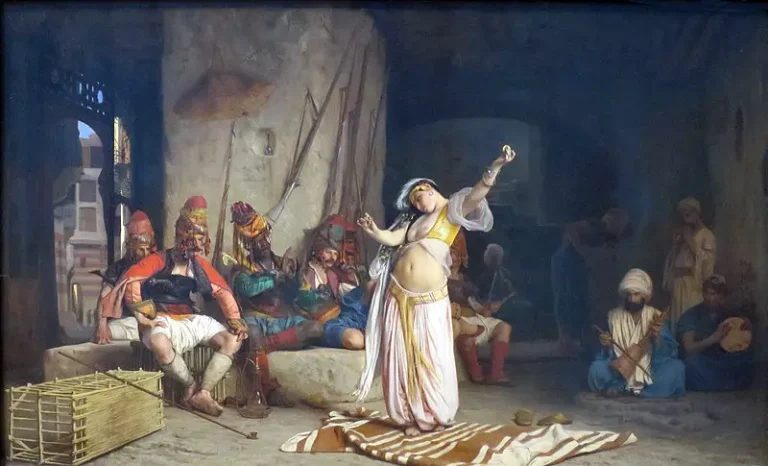
She brought up Dalida unprompted. Born Yolanda Gigliotti in Cairo, raised in Italy, famous in France, beloved across the Arab world, Dalida sold over 170 million records singing between Arabic, Italian, French and English. A kind of internationalism the world once embraced more easily.
“She could do an Arabic song, then an Italian song, then a French song, and she was successful,” TÄRA says. “It’s not something new. It just keeps getting forgotten and rediscovered.”
Italy has had a complicated relationship with its own sound. The country invented opera and gave the world Morricone, but spent the better part of the last fifty years trying to sound American.
After World War II, US culture swept through Europe alongside the reconstruction money and never quite left. It brought with it something harder to quantify: the teenager. An attitude, a concept shaped by consumption and marketed by America while Europe was still pulling itself out of the rubble.
By 1972, Adriano Celentano, one of Italy’s most adored pop icons, released a hit built entirely from gibberish engineered to sound like American English. Prisencolinensinainciusol (pree-zen-co-lee-nen-see-nain-choo-zol) went to number one in Italy, France, Germany, and Belgium. Most Europeans didn’t even realize it wasn’t English until years later.
Decades of imitation had left the country with a taste only for itself. According to Italy’s official music industry federation FIMI, in the first half of 2025 Italian artists occupied 90% of the top ten album and singles slots, with Bad Bunny the only non-Italian entry in the top 25 albums.
Not the most obvious conditions for an artist like TÄRA.
“In the 90s, it was different. Most of the music was from outside Italy. Now the market is almost entirely focused inward,” says Gianluca Sala, TÄRA’s manager and co-founder of Troppo Records, the Rome-based independent label that released Zefiro in partnership with Sony Music.
Sala spent 30 years writing music, long enough to understand the country’s playing field, what makes it move and why it hadn’t for so long. He launched Troppo Records in 2020 at 41, still convinced that it could. “Italy has stayed very closed,” he says. “Everyone told me she was too particular, too different, too strange. Make something popular. Make something more Italian. And I did the opposite.”
He found her through a TikTok live he’d been running during lockdown, sometimes pulling in a hundred demos in a single hour. The day TÄRA submitted, all his comparing stopped. A melodic turn that didn’t fit any category he had. “Her artistic personality was already there,” he says. “I invented nothing. She just needed space to shine.”
She had two demos before they met. She had everything else already in her head.
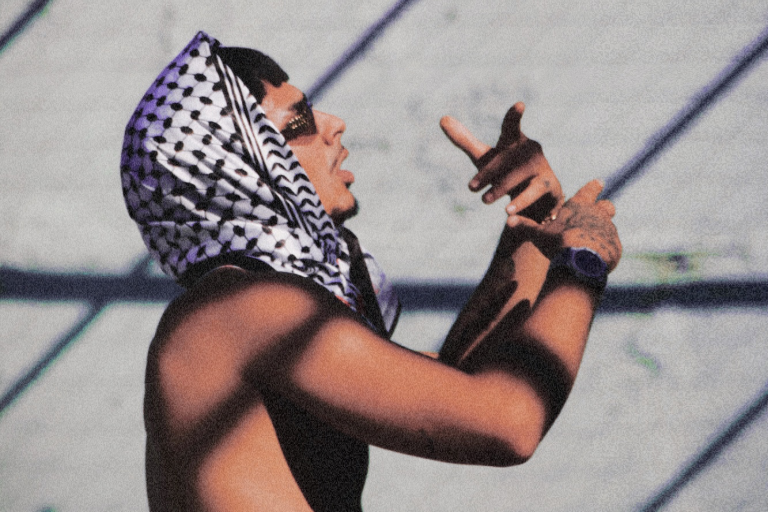
She auditioned for X Factor Italia in 2024 wearing a keffiyeh. That same year, Spotify Italia put her on the covers of Fresh Finds Italia and Anima R&B. By 2025 she had reached Sanremo Giovani, and still no full project out.
A 15-year-old fan runs her official Italian fan club. She has said that TÄRA’s Instagram reels documenting Palestinian life in Gaza were the first thing that made her understand what was actually happening there. With less than 2,000 Palestinians counted in Italy’s national statistics, that’s not surprising.
In six tracks, Zefiro calls out to listeners across the world to understand Palestinians as people before understanding them as headlines.
She opens with “Mezzaluna,” a 3am feeling, reaching for something familiar and finding that it’s no longer where you left it. “Chiamo casa, casa non c’è,” she sings. I call home. Home isn’t there.
“Diaspora” draws a line between two kinds of abandonment: Palestinian families expelled from their land and Southern Italians who leave their homes behind out of necessity. “Inside of Italy, there is an internal diaspora, too,” she says. “The South is being exploited. People from the South go to the North, they work there, and they have to leave their art at home.”
In “Yafa,” Palestine becomes a place. The stories she inherited instead of the steps she should be walking; the details feel no less real for it. Her grandparents described Jaffa so many times that the smells and streets become almost tactile through the music. The song keeps asking: do you remember, as if memory is the only form of possession left. “Ti ricordi quando a Yafa si poteva andare al mare?” Do you remember when you could go to the sea in Jaffa?
Some Palestinian families have held onto the physical keys to homes lost in 1948. “The key with which we’ll return home is all that binds us, more than any chain,” she sings, metal surviving longer than the locks they once opened.
“She doesn’t even need a viral song,” Sala says. “She is viral. She already is Italian. Just not the version the country is used to exporting.”
But TÄRA is less interested in being seen than being remembered. “I need to leave my mark, for my heritage.”
With three years of violence across Gaza and the West Bank, described by the UN and multiple human rights groups as genocidal, the scale of Israel’s assault has outgrown numerical meaning and become an archive of brutality.
“I have a culture they’re trying to erase. I have to show it before it’s gone. We don’t know what will happen.” She knows the most dangerous thing she can do right now is make you feel something true.
“This world is temporary. Maybe they make us feel like we don’t have the power because they don’t want us using our voice.”
Tamara Al Zool is using hers.
Presente.