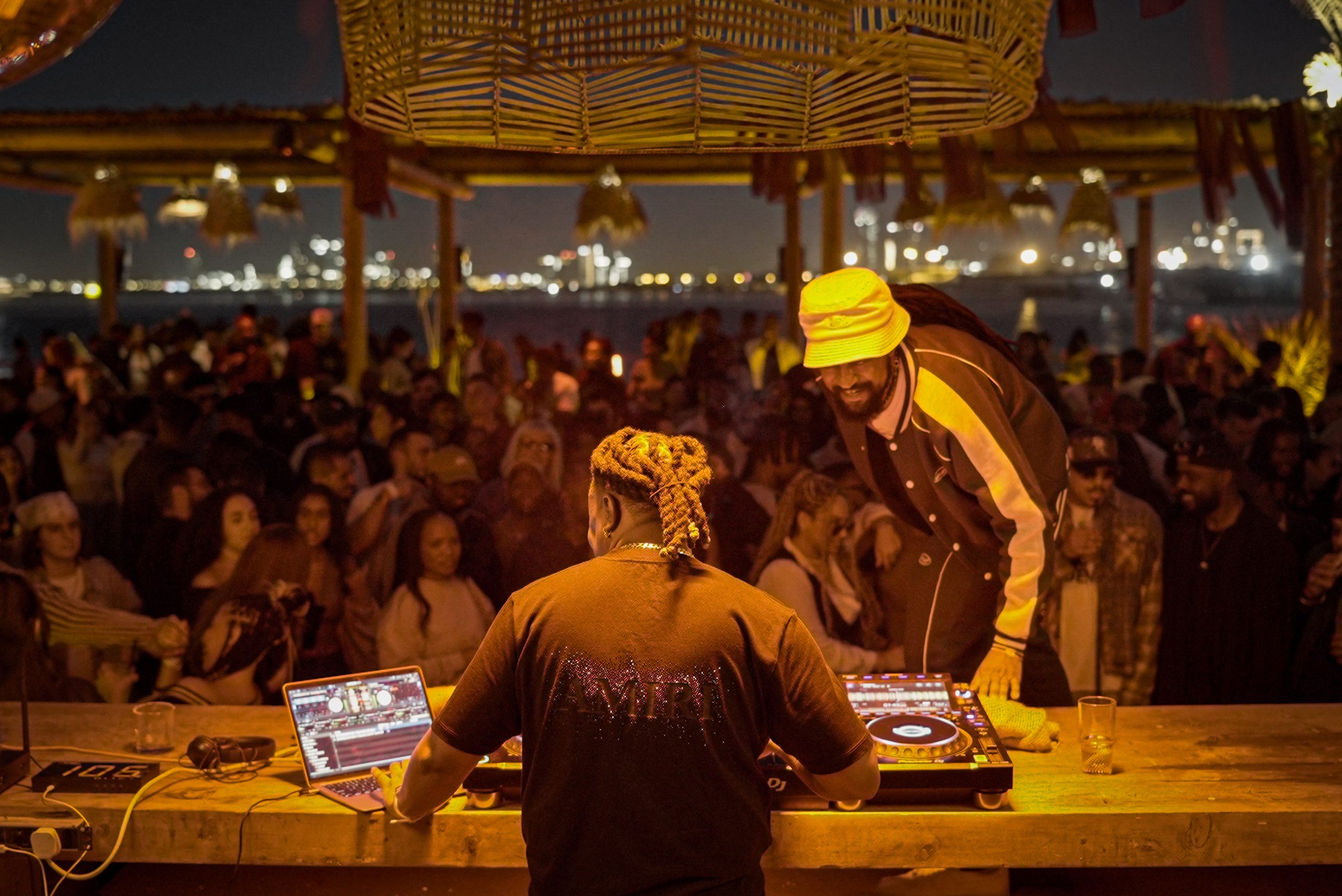
By the time Amapiano became a global phenomenon, House of Yanos had already spent years doing the unglamorous work of making that moment possible in the Middle East. And while the world was just beginning to catch up to what African electronic music had always been, three guys in Dubai were already three years deep into building the infrastructure, the community, and the cultural trust that would make the genre’s arrival in the region feel like a homecoming.
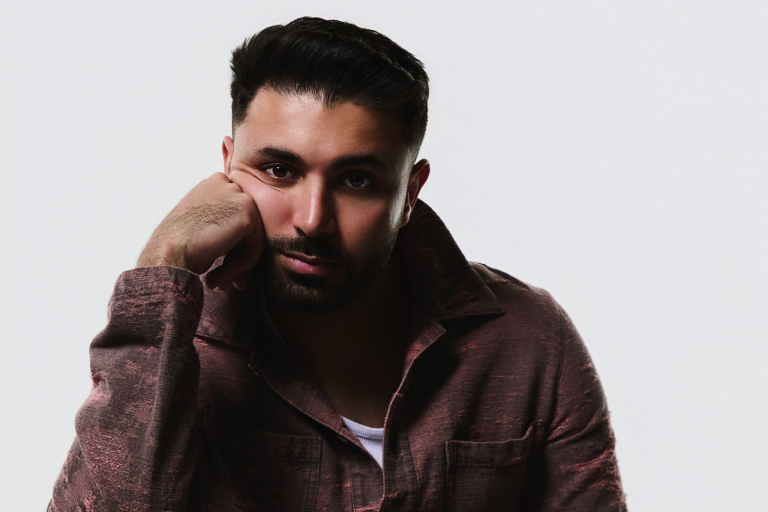
Toqsic, Saint Waldo, Grace, and GB turned a gap in the entertainment scene into one of the most consequential cultural projects the Middle East has ever seen. Theirs is a story about what happens when people stop waiting for recognition and start building the world they actually want to live in.
Cultural Bridges and Sonic Traffic
Hundreds of thousands of people from across the African continent had made the UAE their home, arriving from Lagos and Nairobi, from Johannesburg and Accra, from Kinshasa and Cape Town. They worked in hospitality, in finance, in construction, in every industry that keeps the city moving – and formed a substantial and vital part of what Dubai is.
And yet the entertainment industry treated their music as niche, and their need for authentic communal space as someone else’s problem to solve. “There was a clear gap in the entertainment scene genuinely open to exploring African sounds,” Toqsic says. “It wasn’t just about the music being played, but about who the space was really for.” His answer to that gap was not a complaint or a petition. It was a collective. “Instead of waiting to be included, we built our own house.”
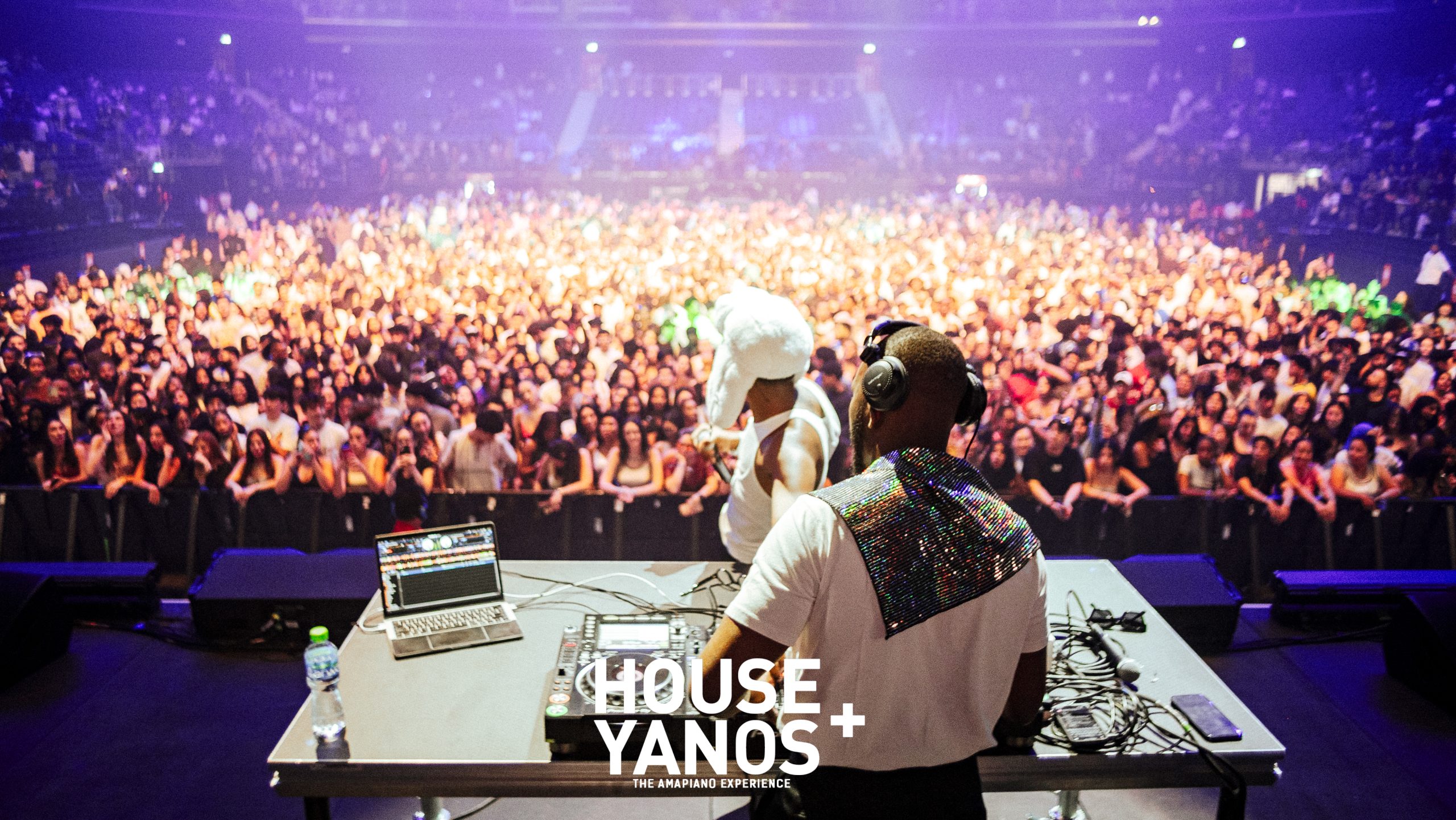
What followed was nearly a decade of deliberate, consistent, principled work. More than 120 events. More than 300,000 attendees. A portfolio of concepts that covers almost every register of communal experience, from the intimate underground laboratory of Bodega to the sprawling On the Beach Festival, from the deliberately unhurried Sunday mornings of the Breakfast Club Series to the main event nights that have introduced Amapiano and Afrobeats to audiences who arrived skeptical and left converted.
Saint Waldo, who this year marks a full decade living in the UAE, describes the engine behind that growth with characteristic directness: “Representation, originality, and most importantly, consistency. Not every event is going to be profitable, but showing up, staying consistent, and continuing to experiment has always been part of the journey.”
The early years demanded a specific kind of patience. Amapiano and Afro House were still largely unfamiliar to most audiences in the region, and introducing them meant dismantling the ego-driven hierarchies of conventional club culture.
The House of Yanos solution was radical in its simplicity: come and dance. “Our intention was to create an atmosphere rooted in genuine connection,” Toqsic says. “It was about sharing what we grew up with, introducing people to new sounds, and cultivating experiences inspired by home.” That framing mattered enormously. Instead of a product being marketed, the events felt more like a circulating invitation, and the difference between those two things is the difference between a transaction and a relationship.
The relationship that House of Yanos has built between African and Arab culture is perhaps the most under-appreciated dimension of what the collective has achieved.
Dubai, for all its cosmopolitan embrace, is a city where communities can exist in proximity without ever truly meeting. House of Yanos created the conditions for something different. When African artists perform at their events, they are not playing to a self-contained diaspora crowd. They are playing to rooms that include Arab audiences encountering these sounds for the first time.
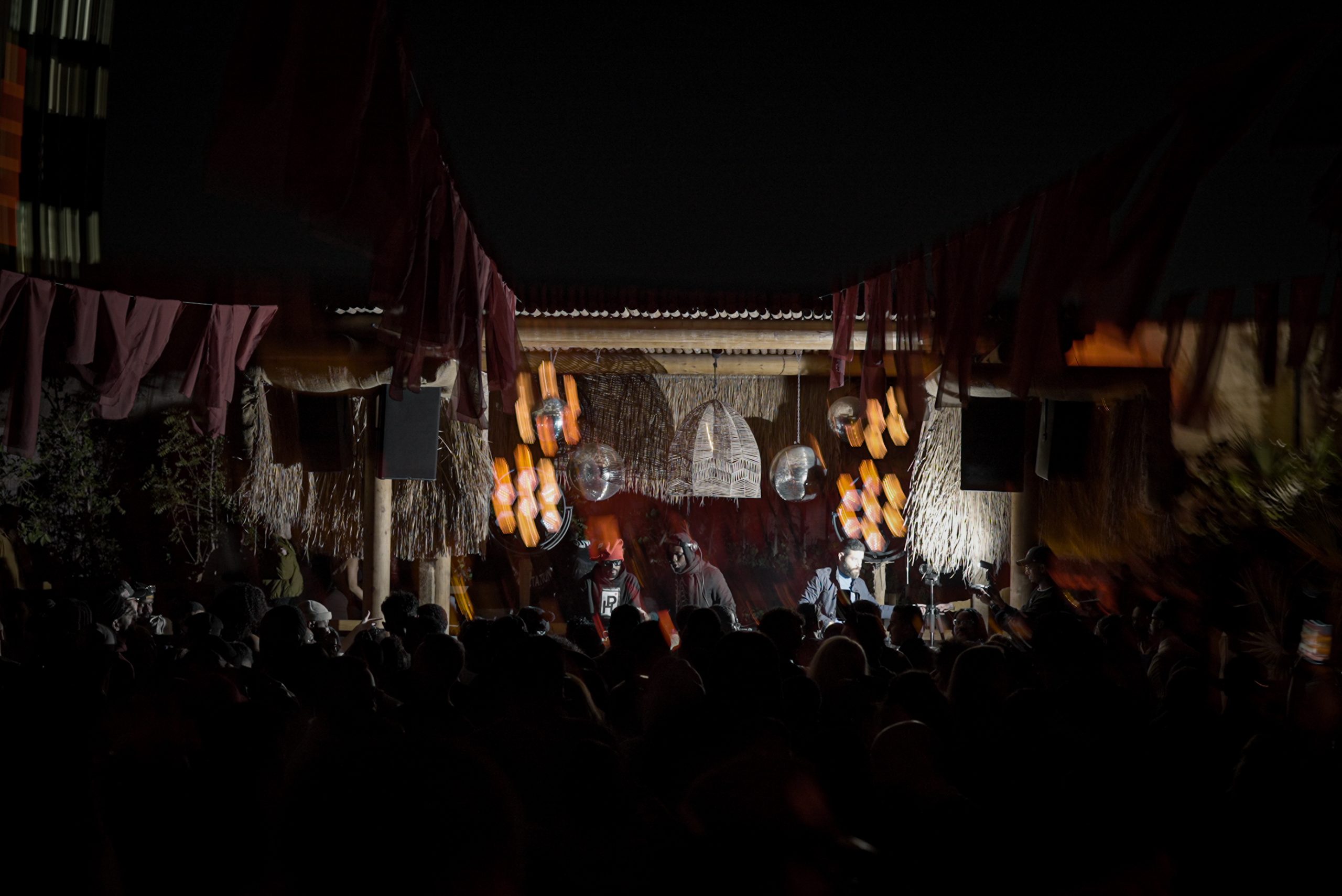
“The artists often leave having gained a completely new and diverse community of listeners,” Saint Waldo says. “It’s a moment where different cultures meet, connect, and understand each other through music.” In a region where the African and Arab worlds have historically run parallel to each other without intersecting, that moment is not small.
GB speaks about the global momentum behind African electronic music with the measured confidence of someone who has watched it grow from the inside. “African genres like Amapiano and Afrobeats are thriving globally because they’re driven by a new generation embracing their culture with confidence and pride,” he says. “Artists and DJs are sharing these sounds without dilution, which resonates deeply with audiences.”
That refusal to dilute is both an artistic principle and a political one. It insists on the music being received on its own terms, not filtered through the expectations of markets that discovered it late. House of Yanos has held that line from the beginning, and it is a large part of why audiences trust them.
A Bridge in Time and Place
The collective’s internal creative family, Sound System+, is where trust is generated and sustained. A tight-knit group of DJs, producers, designers, visual artists, and filmmakers, the core squad includes Toqsic, Saint Waldo, Capitano GB, Stickystrings, Grace, Mokay, Mneddy, Jo, Amyy Jamie, Smylie & Dee Kaz.
“We’ve been very intentional about using House of Yanos as a launchpad that creates opportunities for everyone to grow within their respective fields,” Toqsic says. The vision is generational. Not simply a roster of talent but a pipeline, a proof of concept for what becomes possible when creatives in the region are given genuine institutional support rather than tokenistic inclusion.
That generational thinking shapes their expansion plans as much as anything else. Bodega, the collective’s most experimental concept, is already functioning as a cultural embassy, moving into new cities while staying anchored in the underground values that made House of Yanos credible in the first place. The long-term map stretches from Doha to Madrid, Casablanca to Cairo, Cape Town to Tokyo. “Our focus goes beyond events to spotlight Afrocentric talent across music, art, and fashion,” Toqsic says, “helping the region connect with and celebrate this culture locally.”
For GB, watching a crowd in Dubai move to Amapiano is a step toward a larger reckoning with where African culture sits in the global imagination. His ultimate vision is one in which the gravitational pull reverses entirely, in which the demand for authentic African music becomes so powerful that the world travels to the continent to experience it at its source. “That’s when we can be unapologetically authentic to the core.”
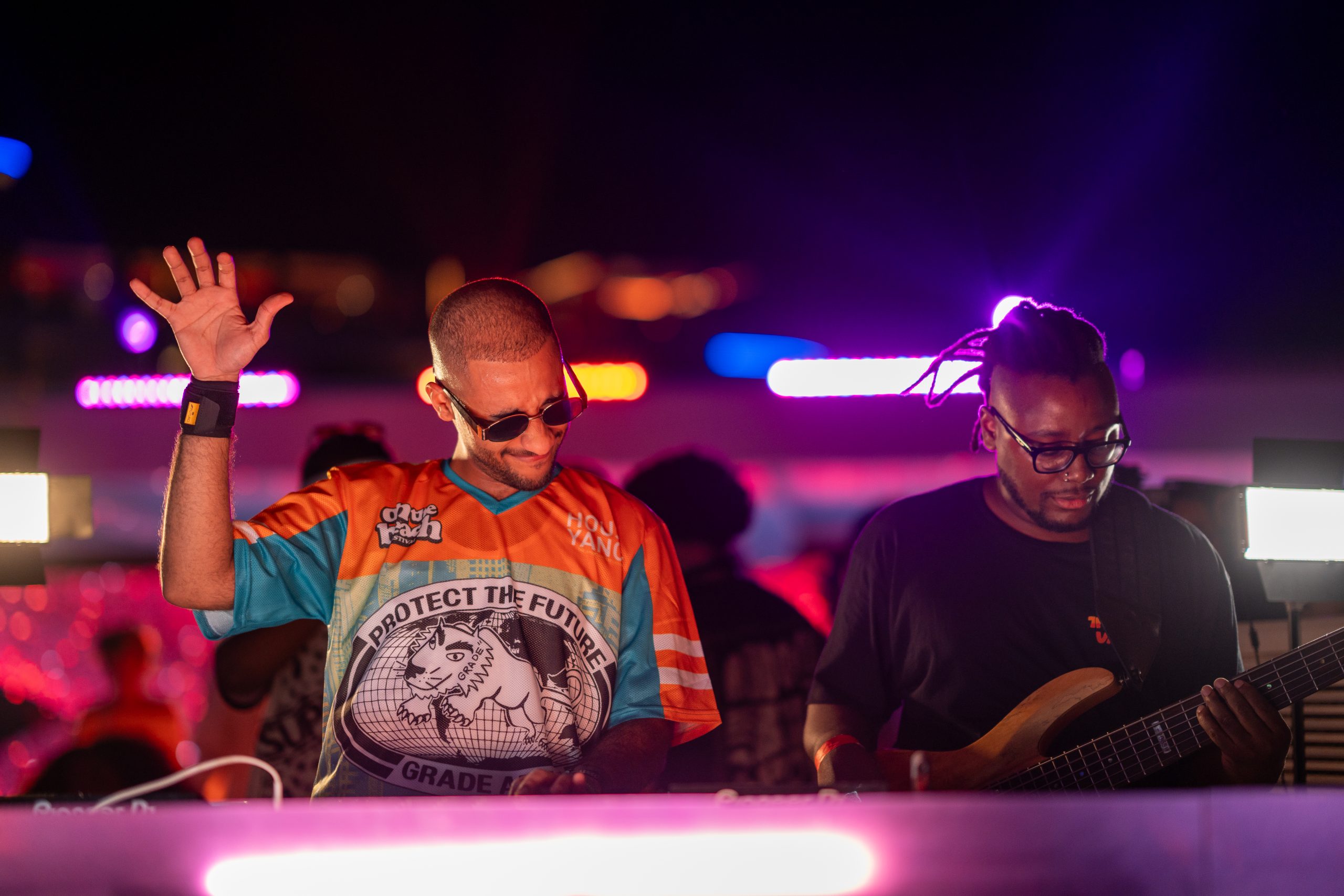
The most human measure of what House of Yanos has built, though, is not found in expansion plans or philosophical frameworks. It is found in the stories from the dancefloor. Couples who met at their events and are now engaged or married. Strangers who arrived alone and found a community that changed their lives.
“The world is much smaller than we think,” he says. First-time guests are guided through that discovery deliberately. Events begin at a slower tempo and build with intention, each artist carrying a specific responsibility within a carefully constructed arc. “Ultimately, it’s about storytelling through music and guiding people through that journey on the dancefloor.”
When Toqsic looks ahead to the next five years, he speaks not in the language of growth metrics but that of legacy. “Success for us isn’t just about numbers, it’s about leaving a meaningful cultural legacy that reflects our roots and becomes part of the MENA region,” he says.
“We want the next generation of DJs, artists, producers, and designers to feel like they belong from day one.” That sentence, belonging from day one, contains the entire history of House of Yanos. It is the thing they never had and decided to create. It is the thing they have now given to hundreds of thousands of people across the region. And in a city where African and Arab cultures are learning, event by event and year by year, to truly hear each other, it turns out that a house built on that foundation does not simply endure. It grows.