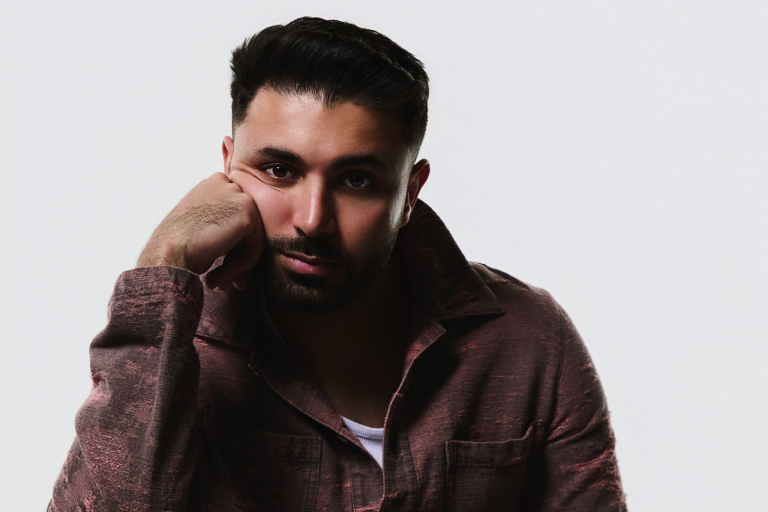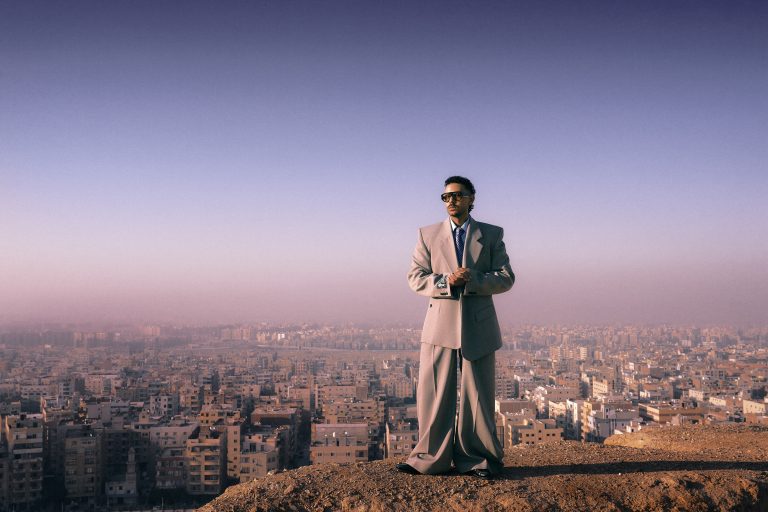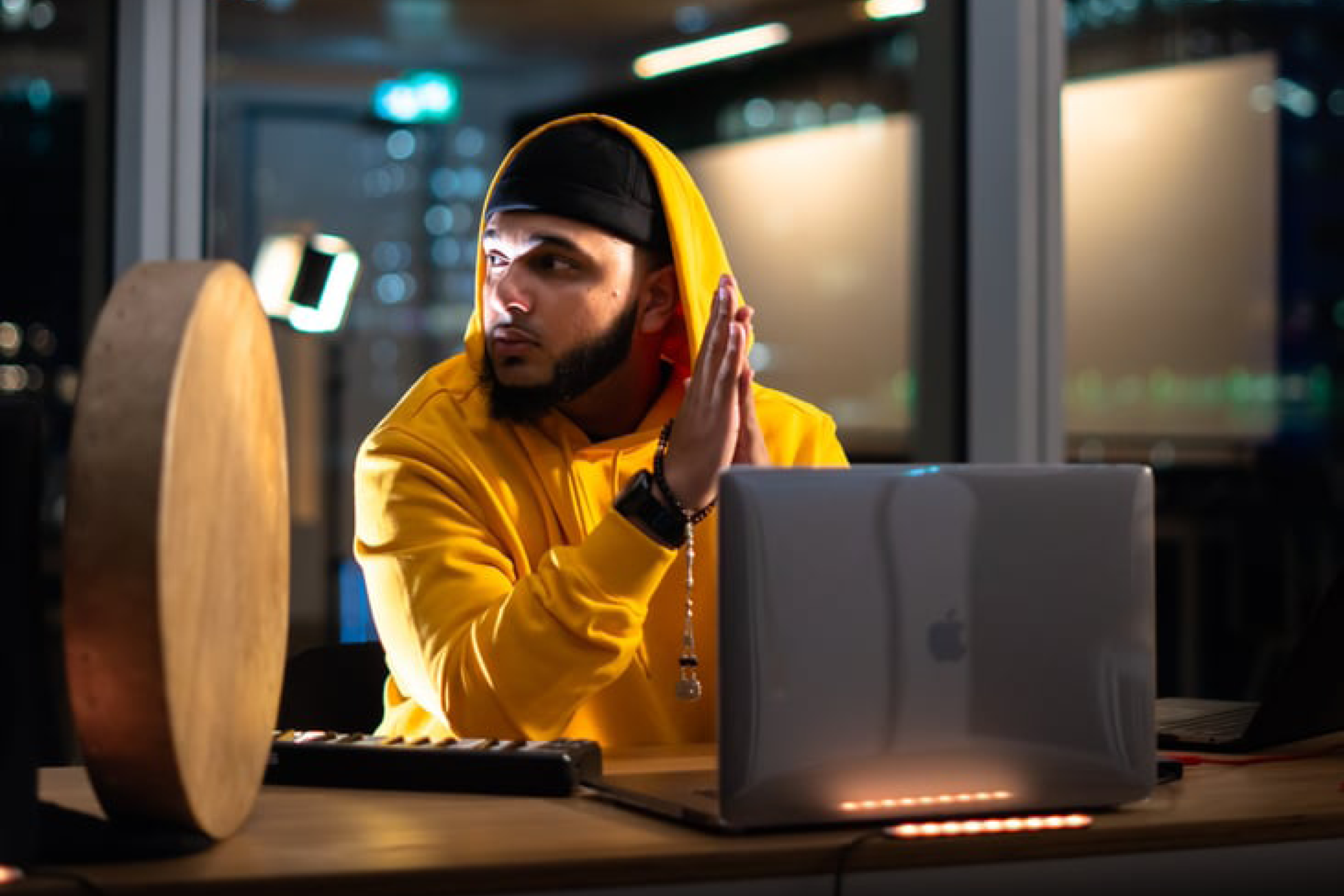
A tuned-up old Mustang in an American night setting – a city’s white and blue lights reflecting off its rims. The engine jolts as the driver pulls into a parking lot, his silhouette in a hoodie emerging from the purple neon glow of the car’s interior – 20 years of hip-hop grammar distilled into a short clip, where the producer ends up towering over the city, mixing a track in a glass high-rise.
Behind this familiar scene, the ambient beat in this video by British musician Umar Salaams has a very specific purpose: to appeal to a new Muslim audience of globalized digital natives. A generation raised on pop and hip-hop, craving “halal sounds for Instagram reels” and “music that resonates with their beliefs,” as stated on the website. Listen closely and there is another defining detail – the content is entirely vocal, with no instrumentation.
Vocal Tunez, Halal -Beats, -Music, -Trax, -Vox, Makkah Records and Melo-Deen – initiatives are multiplying to offer what can be described as halal beats – even the purchasing model is sometimes reimagined as direct buying versus halal installments – a contemporary reworking of the nasheed tradition (religious Islamic chants).
Shifting the spotlight from the singer-songwriter to the hip-hop producer and beatmaker, and from music labels to functional sound tailored for online content creators and influencers, the phenomenon also displaces the last prominent fusion of Islamic sound and internet culture known globally: the era of morbid gym bro nasheeds, produced by ISIS and widely circulated through countless remixes and variations, including Skrillex-inspired edits.
“Halal Beats is inherently flexible, designed to accommodate different interpretations of music in Islam and varied project needs.”
Previously, the 1990s and 2000s saw more serene Islamic-pop fusions: Turkey with its green pop (Yeşil pop), Malaysia with a wave of artists so influential it exported groups worldwide, such as Raihan, and Europe and the Anglo world with artists like Sami Yusuf, Maher Zain, Abdullah Rolle, Deen Squad and Raef.
A new chapter is now unfolding. By refreshing the sounds of their predecessors with contemporary styles, this generation is navigating shifting audiences, embracing new creative constraints and promoting a revived “Muslims have the right to be fun” ethos.
Vocals Only Era
In 2020, Umar Salaams created Halal Beats. Since then, he has positioned himself as an entrepreneur and Muslim founder on a clear mission: “It’s a whole empire that I am building.” A halal vocal sound empire.
A London-based singer and producer, Salaams comes from a bloodline of vocalists rooted in the Qawwali Sufi tradition. He grew up in a creative household and began making beats on Fruity Loops, later becoming a rapper during London’s grime-fueled surge in the early 2000s.
That momentum eventually collided with the darker realities of the mainstream industry – exploitative structures and opaque contracts – leading him to step away entirely. Years later, he returned with a new framework, reconnecting with music by “doing everything I like, but converting it in a halal way.”
Through him and others, such as Ilyas Mao – who introduced many listeners to the sound via his Drake-inflected “Eid Mubarak” – a new wave of artists reshaping nasheeds has emerged. Vocal-only or “only vocals and drums” formats have since proliferated. The concept itself is not entirely new: Maher Zain, an early star of halal pop, re-recorded his album Thank You Allah in this style back in 2012. The nasheed genre, and Islamic religious singing more broadly, has long been home to extraordinary voices, including Junaid Jamshed.
The turn toward hip-hop is equally familiar. Earlier tracks embraced a modest production aesthetic – echoing the rise of modest fashion in Islamic design – marked by slower tempos and sanitized lyrics, where even global references were adapted accordingly, as in the transformation of Starboy into Halal Boy.
What distinguishes the current halal beats movement is its technical ambition. In an era where home studios, autotune and beatboxing have become increasingly sophisticated, vocal production now expands to mimic full instrumental arrangements – see, for instance, MB14. In some cases, voices are layered with filters with such density and precision that they convincingly replicate bass, guitar and keyboard almost indistinguishably.
One recent example is “Committed,” a collaboration between Ilyas Mao and fellow artist Muzzy Mike. Its execution was so convincing that the artists were forced to respond on social media to waves of listeners questioning whether the track was truly “vocals only.”
Tailor-Made Sounds for Different Visions of Islam
Adaptation is the key word in this new scene, and everything is possible in halal beats by design. A track can be produced with or without rhythm – beatboxing is, depending on the school of thought, considered either a form of voice or an instrument – with fast or slow tempos, studio effects or none, more or less melodic structures, and melodies that range from Western styles to traditional Arabic maqamat.
“Earlier tracks embraced a modest production aesthetic – echoing the rise of modest fashion in Islamic design – marked by slower tempos and sanitized lyrics.”
Beyond artistic inspiration, this has now become a service tailored to a client by a producer, based on a flexible catalogue of options. Compared to figures like Maher Zain – who once re-recorded the same song in multiple languages for different regions, and later as a “vocals only” version – this new generation operates with agility from the outset.
Much of this production sits within an evolving creative economy, targeting uses that extend far beyond the concert stage: Instagram reels, commercials, animation, documentaries, weddings, charity galas and halal trade expos. These are the sounds of an ever-evolving “Market Islam,” as theorised by Patrick Haenni, now existing as plural markets serving diverse Muslim audiences.
Umar Salaams positions himself simultaneously as a sound and beat-maker under the name Halal Beats, and as a licensing service provider for “background sounds” through a sister company, Halal Soundtracks. He offers creators “a solution to prevent you from using and listening to music with bad lyrics,” and claims to address a gap where “there was simply no choice for soundtracks.”
Umar was recently featured at Muslim Tech Fest 2025 in London – one event in a growing circuit of halal expos and showcases worldwide – bringing together a wide range of Muslim entrepreneurs, many of whom identify as multitask slashers, like Umar himself, whose background spans teaching, music education, IT and coding, video editing and choir direction.
As with many contemporary products, halal beats is inherently flexible, designed to accommodate different interpretations of music in Islam and varied project needs. As one producer explains: “Some clients only want vocals, others ask for effects. It’s custom work. There are differences of opinion among scholars and it’s not our job to impose one over the other.”
The impossibility of defining a single, fixed vision of music in Islam has shaped a service-oriented, on-demand ecosystem – a plural market rather than a strict prohibition. Artists operating within this space often respond with patience and restraint to criticism from more conservative perspectives. “Thank you for your input,” Muzzy Mike routinely replies to the frequent “Music is haram” comments he receives on Instagram.
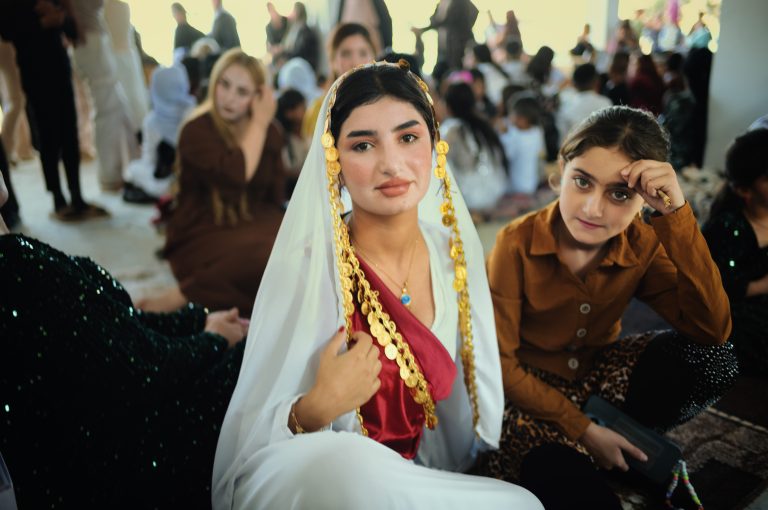
Many producers also offer tracks featuring either male or female vocals, navigating the long-standing religious debate surrounding women and music. Announced in 2020 as the first woman to join the prestigious halal label Awakening Music, singer Eman vanished before her debut album was ever released. Five years later, the same label successfully launched a new female artist, Jaqlyn, – while Zayaan, the daughter of nasheed artist Muad, has also begun her own career. Rooted in South Asian heritage yet based in cosmopolitan hubs like London and Berlin, several halal beats producers are familiar with the South Asian naat tradition, often performed or recited by women.
Halal Beats, Islam & Blues, or Inspirational A-Cappella?
The halal beats movement is further defined by the range of profiles it gathers – artists fluent in Islamic sonic traditions such as naat, nasheeds and tajwid (Qur’anic intonation), yet equally capable of distancing themselves from those forms. Most do not sing in Arabic. Instead, they operate within a hybrid space shaped by migration, conversion and multicultural upbringing.
Whether of mixed heritage or newly converted, many grew up listening to pop and hip-hop, and that influence is unmistakably woven into their work. They are also unafraid to use the word “song” – a striking contrast to the discourse of 15 years ago, when halal children’s releases would repeatedly declare THIS SONG CONTAINS NO MUSIC, despite clearly borrowing from pop structures and Beatles-esque harmonies.
The debate has shifted.
For many nasheed artists, including one who defines himself as an Islamic folk artist, the question is now largely rhetorical. “I say songs, because it’s all the same. It’s tomato, tomèto.” British artist Omar Esa once attempted to frame this emerging sound as “Islam & Blues (InB),” arguing that he “comes from Rhythm and Blues and replaced the rhythm with Islam.” Umar Salaams similarly sees parallels with American gospel traditions, describing the scene as comparable “to gospel music in the US.”
“In some cases, voices are layered with filters with such density and precision that they convincingly replicate bass, guitar and keyboard almost indistinguishably.”
Still, many artists and producers continue to search for terminology that better reflects their cultural and sonic hybridity, particularly when operating outside the Arab world. As one producer explains: “Nasheed is very Arabic. We sing in English, and we need a new term for that. I prefer something like Inspirational A-cappella Song for example.”
The End of an Awakening
A symbolic passing of the torch is underway between today’s newcomers and the earlier generation of artists explored by Jonas Otterbeck in his book The Awakening of Islamic Pop Music (2022). Awakening Music, founded in 2003 as the first Muslim pop label, introduced figures such as Maher Zain, a Swede of Lebanese origin, and Sami Yusuf, a Brit of Iranian descent, elevating them to global prominence through multi-million-selling records and worldwide tours.
This moment functioned as a musical companion to what researcher Asef Bayat described as “post-Islamism” – the emergence of an Islamic movement increasingly distanced from overt politics and framed as compatible with both democracy and consumer society. Intellectual Tariq Ramadan became one of its most visible European figures, while the UK served as its central hub.
The label’s founders, Sharif Banna and Bara Kherigi, were closely intertwined with this ideological current. Both were British and graduates of Al Azhar University – one the son of a sheikh, the other the son of Rached Ghannouchi, founder of Ennahda, the Tunisian Muslim Brotherhood party.
By contrast, today’s landscape is markedly less political and far more decentralised. “There are a lot of emerging artists. Over the last couple years, I got messages from Germany, the Netherlands and the UK,” notes one producer. The label is no longer the dominant reference point. Artists express suspicion toward the “fitna of the music industry“, and their aspirational models now lie elsewhere – in “music licensing companies”, for instance, in the case of Umar Salaams.
Within this new generation, and in line with broader global shifts since the 2010s, producing has become central to maintaining artistic and financial autonomy. Synchronisation – the “sync” of music with video, advertising and brand content – has emerged as an essential, if not primary, revenue stream.
Producers increasingly collaborate with peers from the same cohort, including social media content creators and new event agencies such as Twenty6 in the UK. These young companies operate at the intersection of Islam, marketing, event management and entertainment – demonstrating a modernised ecosystem of halal cultural production – from halal beats to Muslim stand-up comedy, from Twitch channels to animated series and “inspirational iftars.”
Jannahration and Halal Autotune
“Creative ethics” and “experiences with purpose” have become key phrases within this modernised, feel-good and openly expressive Islam. Umar Salaams takes pride in receiving “many comments on our videos coming from Christians, Jews, Hindus – they say ‘I am not Muslim but…'”. The discourse around music is also shifting within this new Jannahratio” – a portmanteau of Jannah (paradise) and generation, coined by sister artists Ain’t Afraid – a cohort of connected Muslims for whom zakat is calculated through online tools in much the same way as a carbon footprint.
The scholarly debates on Islam and music that were especially prominent in the post-9/11 period have largely receded. While new questions still surface within jurisprudence – “Is autotune halal or not?” or “Can you use autotune to recite the Qur’an?” – the conversation around music is increasingly channelled through the language of self-development and personal ethics.
Gone are the 1990s and 2000s, when venerable sheikhs would explain Islam and take live questions from viewers on television, alongside early internet forums and blogs. Today’s landscape is dominated by tightly edited, high-energy video content – from staged debates confronting opposing views on music in Islam to young female influencers reframing the conversation through the lens of “Muslim life hacks.”
During Ramadan, for instance, “no-music challenges” have emerged, such as viral formats in which participants count the number of days they have gone without listening to music and share coping strategies. The tone is often deliberately de-intellectualised. “It’s not about music being halal or haram,” begins Bliifee, a 25-year-old Australian with over 200,000 followers, in one of her videos.
“Listen closely and there is another defining detail – the content is entirely vocal, with no instrumentation.”
According to influencers with hundreds of thousands of followers, such as Hippiearab and the French creator Assiatique, the perceived harms of music are less understood through historical or theological frames and more through its allegedly addictive nature, its omnipresence and its capacity for emotional dependency.
New Audiences, Old Struggles
This new generation is also forming a new live audience. Concerts are changing, too. Otterbeck traced the first signs of this shift through his coverage of Maher Zain’s tours in 2014 and 2017, where a “more relaxed and spontaneous” crowd began to emerge.
More recently, the Vocal Only Tour and Vocal Arts Festival in the US and the UK – featuring an all-star band of seven nasheed artists – were welcomed by standing audiences, singing along with the performers.
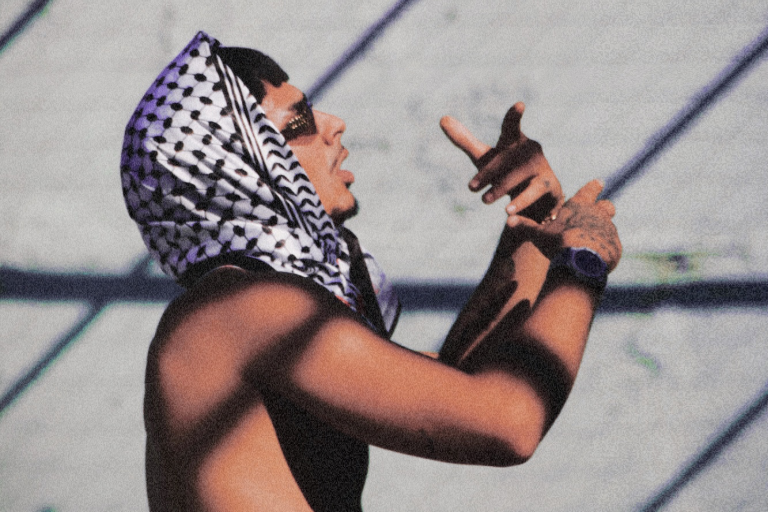
Palestine also entered the room. These shows became temporary bubbles of solace for anxious Muslim communities, much like other community-based gatherings that have unfolded over the past years.
They also mark a meeting point between the awakening generation and the new halal beats one. Throughout the 2010s, while most nasheed artists kept a cautious distance from overt politics, there was one safe cause – almost nostalgic in its consensus status – around which their activism gathered: Palestine – alongside recurring references to peace, love and redemption.
Since October 7, 2023, the awakening generation has revisited parts of its repertoire, disrupting its traditional cycle of Ramadan releases in favour of Palestine-related tracks. As early as October 8, Maher Zain reposted his classic “Palestine Will Be Free,” later releasing two new songs, captioned “Loving Palestine .” Omar Esa, for his part, released nine original tracks on the subject within just a few months.
Building on this existing engagement, these artists draw on a familiar aesthetic to craft songs that are hopeful, family-oriented and carefully stripped of insults, calls to violence or armed resistance. In a deeply chaotic context, they offer rare, carefully moderated moments of emotional refuge – often performed by figures framed as devoted fathers on social media.
In parallel, events organised by the new halal beats generation provide similar spaces to display Palestinian symbols in a calm, contained setting. These performances offer both artists and audiences a form of collective emotional release.
Yet while artists often present themselves as advocates of peaceful dialogue – occasionally engaging even with opposing voices – they remain vulnerable to hostility in polarised digital environments. Like other musicians, they face backlash through heated comment sections, shadow banning (the algorithmic suppression of reach) and demonetisation, all of which take a tangible emotional and financial toll.
Omar Esa, for instance, once announced his withdrawal from the stage before quietly returning with a handful of new concert dates for Ramadan 2025.
In many ways, this tension encapsulates the current moment: a space where devotion, visibility and creative expression coexist uneasily, and where halal beats emerge not as a simple soundtrack to faith, but as a fragile site of identity, care and negotiated belonging.