

This feature is also available in Arabic.
About a year ago, Mohamed Samy announced in a post on his personal page that he was stepping away from television drama after 15 years of directing in one of the region’s most intense and demanding production cycles, the Ramadan TV season. He cited burnout and doubts about sustaining the same level of quality.
Despite the transparency of his reasoning, the post sparked wide speculation. Some expected him to pivot toward larger-scale production roles in regional works, while others suggested possible censorship pressures tied to his tendency to push against taboos.
Samy didn’t leave the speculation hanging for long. Just six months later, he revealed plans to write and direct a new series titled Rad Kolleti. And while he didn’t have a show airing this season, producer Tarek Fahmy publicly thanked him in connection with the new, controversial show Al Set Mona Lisa – without clarifying his exact role. Still, some insiders suggested his involvement was pivotal, especially given the show’s success, starring his wife, actress Mai Omar, and its strong place in this season’s ratings race.
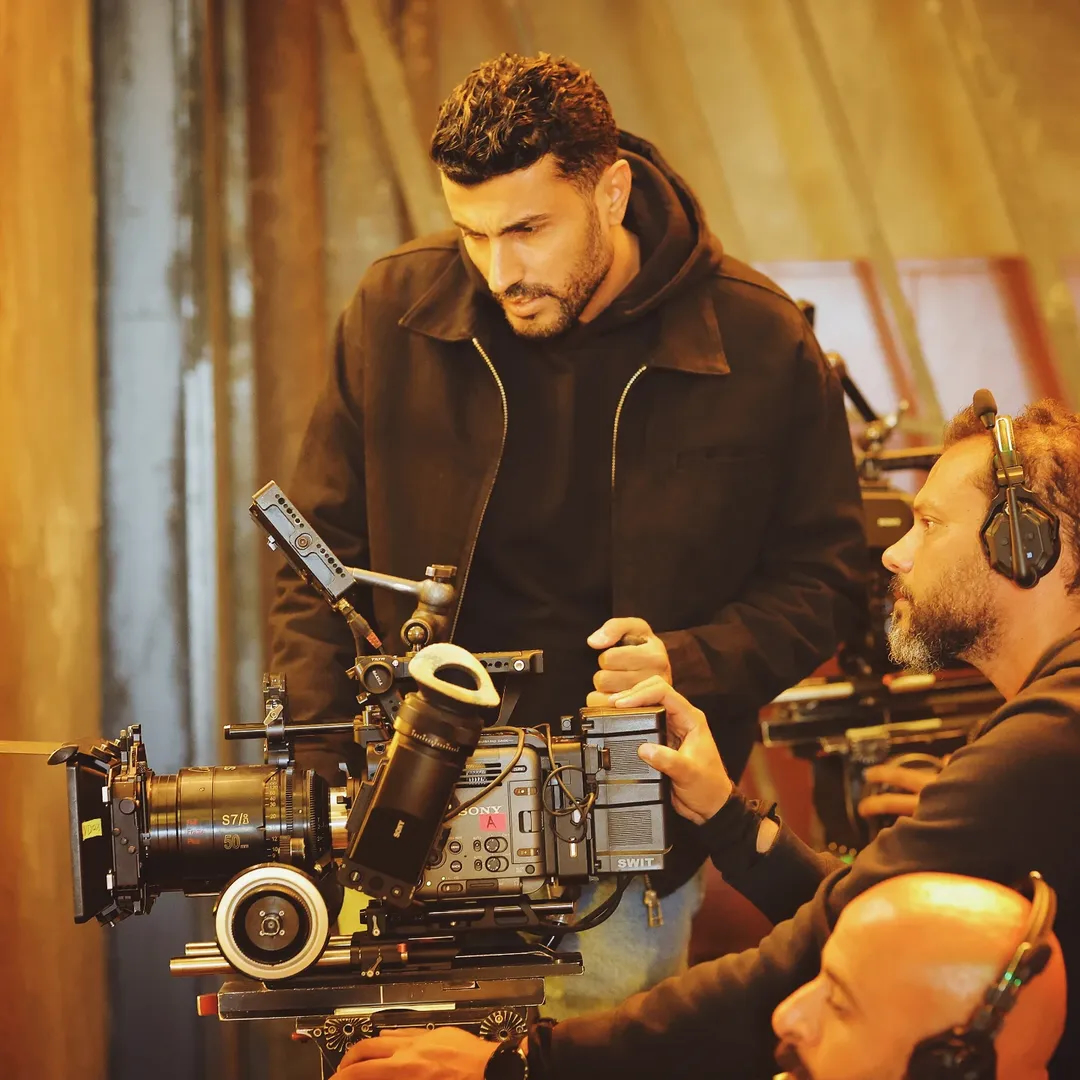
A recently circulated video of Samy – filmed inside his car, legs crossed, dressed in an elegant black suit as he addressed the show’s controversy – prompted me to reflect on a journey I’ve followed from the beginning: from a fast-rising music video director to a maker of consistently polarizing work, and ultimately to a figure who tapped into the street, turning his characters’ adventures into society-wide communal events, not different from football matches.
A Perfect Use of a Censorship Hiatus
A combination of factors gave Mohamed Samy a striking entry point into Egyptian television drama from his very first project. His TV debut came with Adam (2011), starring Tamer Hosny and written by Ahmed Mahmoud Abu Zeid, during the Ramadan season.
Hosny, at the time, needed a project to rehabilitate his public image following the backlash he faced after his Tahrir Square fallout. That context helps explain the bold choice of subject matter: a shaabi-inflected story about a man subjected to injustice and persecution by a figure within the security apparatus, fighting throughout the series to prove his innocence.
Hosny placed his trust in a director who had already helmed many of his music videos – and the gamble paid off. The show created a major buzz and positioned Samy as one of a new wave of bold directors benefiting from a temporarily expanded censorship ceiling shaped by Egypt’s political and social climate at the time.
He didn’t stop there. Over the next two years, Samy doubled down with even more confrontational works. First came Ma‘a Sabaq Al Israr (2012), about a lawyer entangled in political corruption networks tied to criminal operations. Then Hekayet Hayah (2013), which follows a wealthy woman institutionalized after developing schizophrenia in the wake of her husband’s betrayal with her sister – and being accused of causing her mother’s death. Thirteen years later, she returns to reclaim her fortune and clear her name.
The latter stirred enough controversy to be referenced on Bassem Youssef’s Al Bernameg, highlighting contradictions in censorship: a show like Hekayet Hayah was allowed to air, while Al Bernameg itself faced scrutiny.
Working on Hekayet Hayah also revealed Samy’s strategic instincts. Audiences received it as a drama akin to the Turkish series popular in Egypt at the time – glossy, emotionally charged worlds where family structures fracture and relationships unravel under pressure.
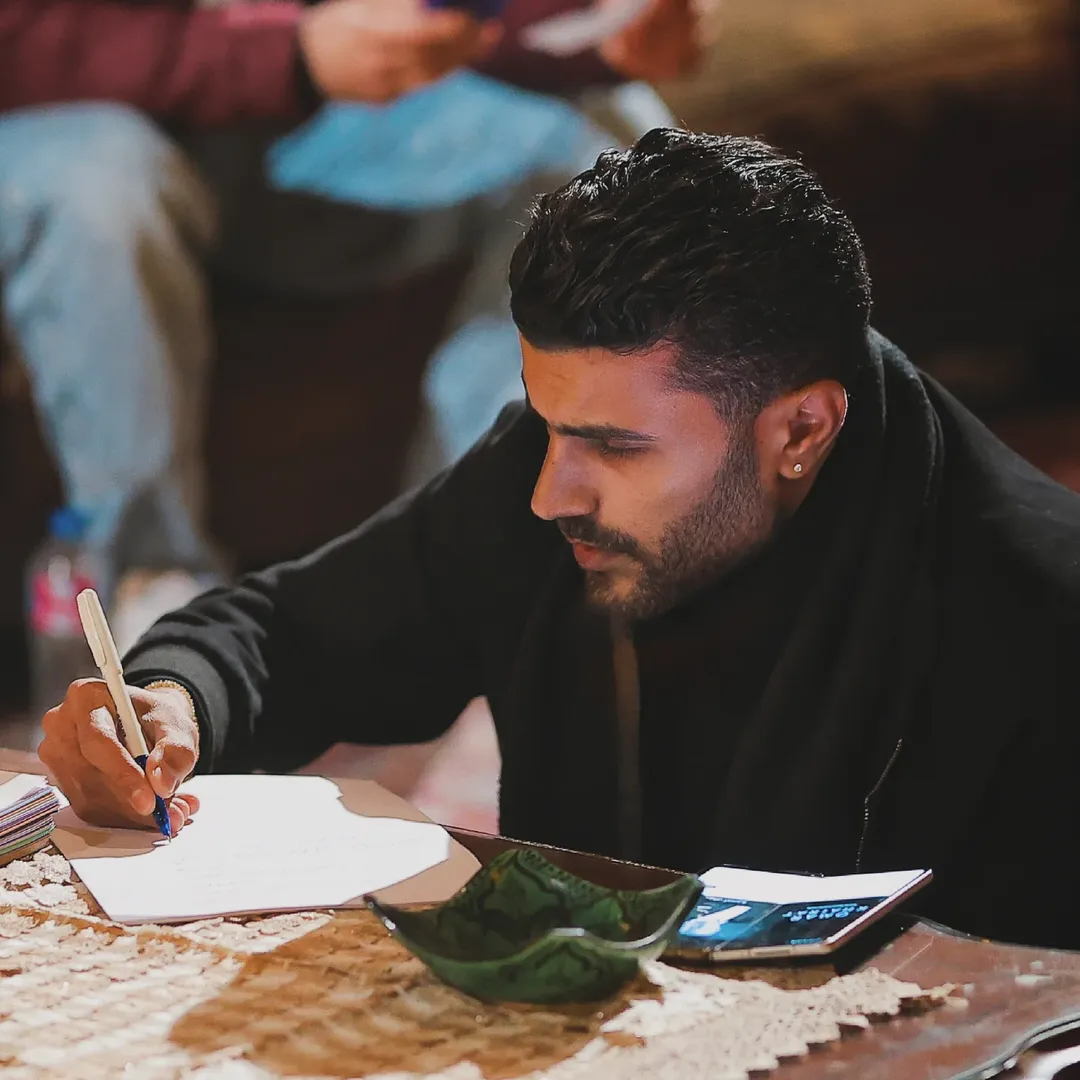
Alongside this expanded oversight margin – perhaps the loosest in Egyptian TV history – Samy’s stylistic trademarks began to solidify into what would later be recognized as his signature: heightened performances that externalize inner emotion, swelling musical cues underscoring conflict or internal monologue, and an overwhelmingly melodramatic tone shaping nearly all of his work.
Beyond the Ostoura: Dominating the Shaabi Hero Drama
In 2016, Mohamed Ramadan and Mohamed Samy both needed each other.
Ramadan was looking to break away from roles centered on the oppressed underclass figure – a victim of social injustice – and step into the realm of the shaabi hero: a self-made underdog who rises to power and controls the dynamics of his world.
At the same time, Samy was exploring the commercially potent terrain of the shaabi protagonist, moving beyond dialogue-heavy, interior-driven storytelling toward more spectacle-based narratives, where action and kinetic production techniques play a crucial role.
From their first collaboration in Al Ostoura (2016), through Al Prince (2020), to Gaafar El Omda (2023), the duo found a strong creative chemistry. Their work proved commercially powerful and left a clear imprint – not only on Samy’s later projects with other stars, but on the broader landscape of Ramadan television drama and the work of other directors and writers.
Samy reframed figures like the mo‘allem, the thug, or the “simple man” into beloved shaabi heroes, borrowing from the mythic structure of urban legends and traditional epic storytelling, and infusing it with traits often idealized in male social imagination: courage, loyalty, honor, and emotional restraint.
His heroes don’t operate in secrecy – they assert dominance publicly, even in defiance of authority. They are family men, disciplined, calculating, and single-mindedly focused on success. They endure devastating betrayals, only to return in grand, often operatic revenge arcs. Over time, these characters evolve into more volatile, powerful versions of themselves – wealthy, influential, and irresistibly charismatic across class lines.
Because of the lack of precise contemporary documentation about figures operating in illicit economies within shaabi environments, Samy doesn’t build his worlds from strict realism. Instead, he draws on circulated folklore – semi-mythical accounts of real-life counterparts – giving his characters unusually expansive spheres of influence.
A striking example appears in last year’s Ramadan series Sayed El Nas, where the protagonist discovers that his father had entangled him, before his death, in a web of dealings: a local cannabis trade, arms deals with traders in Sudan and Korea, gold mining operations, and illegal foreign currency trading involving his ex-wife.
Samy’s storytelling extends beyond main characters, crafting distinct behavioral patterns for supporting roles – from psychological makeup to speech and mannerisms – often inspired by folksy storytelling traditions, though not without moments of exaggeration that lean toward a kind of superhero logic.
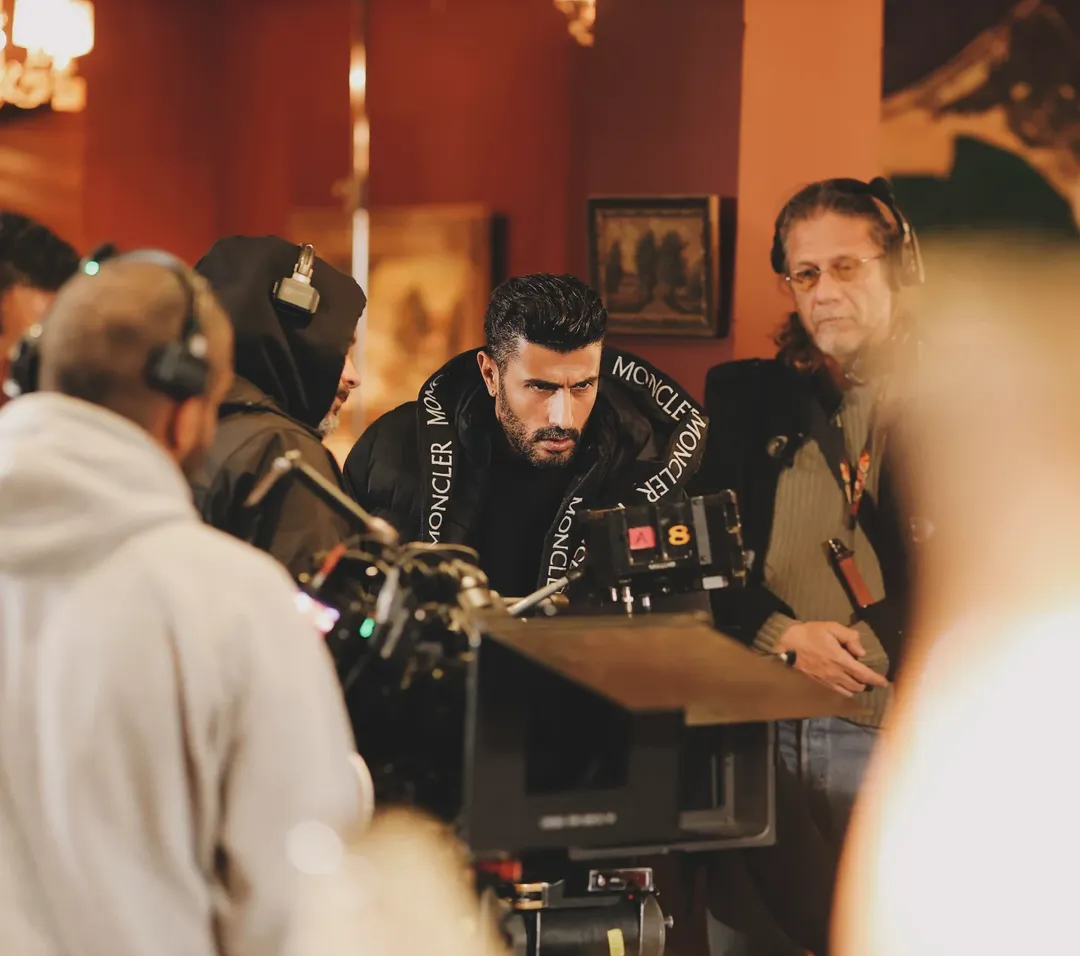
Within these worlds, he also constructs a women’s sphere that loosely echoes the classical idea of the harem – an internal social system within the shaabi hero’s orbit. While shaped by male dominance, this space still allows for engagement with women’s inner lives and struggles, even if framed in a broadly entertaining mode.
These portrayals have evolved over time: from reactive roles like Samah in Al Ostoura, to more active narrative drivers like Dalal in Gaafar El Omda, to fully centered protagonists, such as the dancer Ish Ish in last year’s series bearing her name.
Even street fights take on a different texture – shifting from raw physical altercations into choreographed, spectacle-driven sequences resembling professional wrestling matches, complete with dynamic camera work showcasing the hero’s combat prowess.
Set design, too, abandons strict realism, functioning instead as an extension of the fantastical, hyper-stylized shaabi universe Samy constructs.
An Easy Formula or a Shattered Glass Ceiling?
In an episode of the talk show Asrar two years ago, host Amira Badr asked Samy one of the most loaded populist questions: whether he considered himself better than iconic Egyptian director Youssef Chahine.
Samy tried, diplomatically, to sidestep the comparison – but the backlash was swift. For many critics and commentators, the mere invocation of Chahine was enough to reignite criticism of Samy’s body of work.
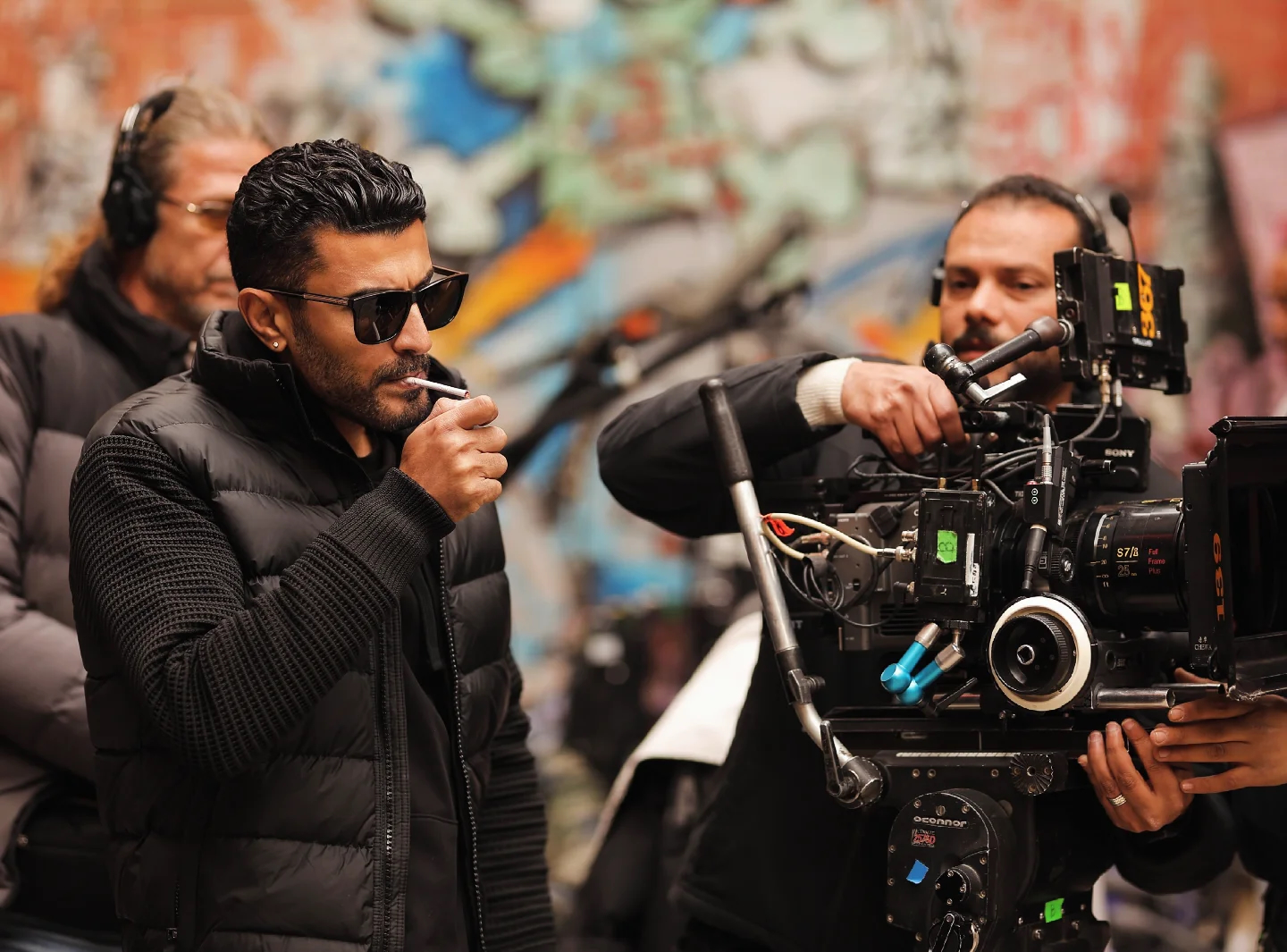
Still, the comparison wasn’t really about artistic merit as much as it was about influence – about each director’s ability to impose a distinct vision and claim ownership over their narrative space.
And this is where even Samy’s critics have to concede something: he raised the bar for how producers approach shaabi storytelling. He turned it into a viable, bankable form capable of sustaining multiple interpretations.
Yes, his productions sometimes fall short technically. Yes, they can carry the flaws of mass-oriented entertainment designed for broad appeal. But any creator working within shaabi drama today likely benefits from the negotiating ground Samy helped establish – particularly when sitting across from financiers.
Another undeniable truth in tracing Samy’s gradual rise is that he belongs to what might be called the commercial decentness of January 25. They may not have directly engaged with political upheaval, but they succeeded in creating entertainment that speaks to – and from – the street.






A Country in Retreat: Tunisia Jails Anti-Racism Pioneer Saadia Mosbah
Saadia Mosbah’s eight-year sentence raises urgent questions about repression, migration politics, and the cost of defending Black dignity.