For much of the past decade, Qatar’s economic story has been told through projects that transformed skylines and captured global attention. From world-class infrastructure and aviation to sport, diplomacy and energy, the country has steadily expanded its international influence while pursuing one of the Gulf’s most ambitious programmes of economic diversification. Less visible, but no less significant, has been another transformation taking shape beneath the surface: the deliberate construction of an innovation economy designed to attract entrepreneurs, technology companies and the long-term investment needed to help them grow.
Around the world, governments increasingly recognise that attracting venture capital is about far more than financing start-ups. The strongest innovation ecosystems emerge where regulation provides certainty, institutions think beyond electoral cycles and investors are prepared to support businesses over many years rather than chasing short-term returns. Creating that environment cannot be achieved overnight. It requires confidence, consistency and a clear national ambition. That is precisely why one decision made several years ago has become increasingly significant.
When Golden Gate Ventures, one of Southeast Asia’s most established venture capital firms, chose Qatar as the location for its Middle East expansion, it became the first international venture capital firm to establish a dedicated presence in the country. Founded in Singapore, where the firm has built a strong track record investing in high-growth technology companies, Golden Gate Ventures’ arrival represented far more than the opening of another regional office. It offered an early endorsement of Qatar’s long-term vision for innovation, entrepreneurship and private capital.
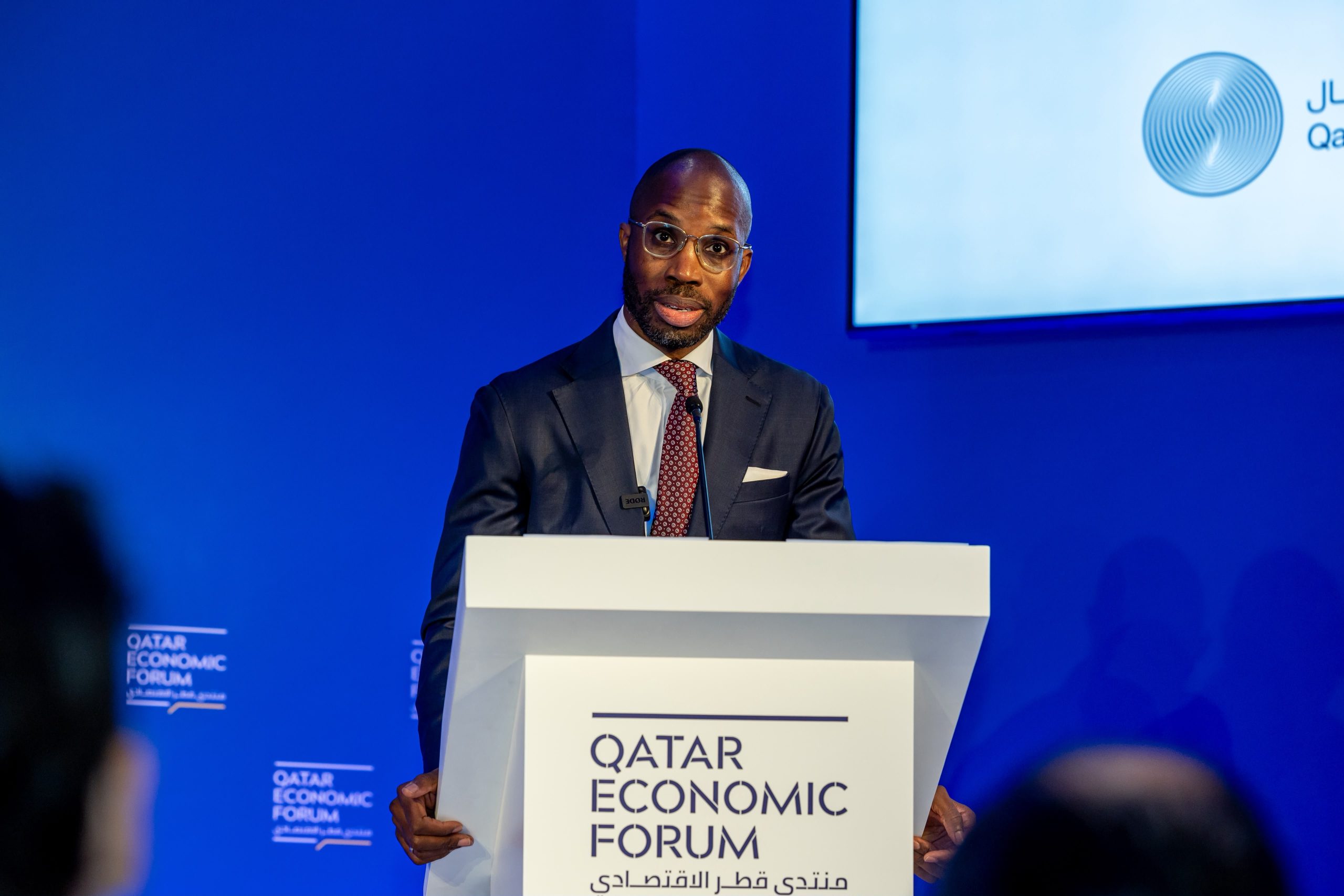
For Michael Lints, Founding Partner at Golden Gate Ventures MENA, the decision was driven by fundamentals rather than fashion.
“Qatar’s infrastructure gave us conviction – a clear regulatory base, patient anchor investors, and a genuine ambition to build a venture ecosystem. Our view on the region is straightforward: the MENA region is a global bridge. We view Africa as far more than an expansion market – it has a deep talent pool building serious companies, and the GCC offers those founders the infrastructure, expansion routes, and capital to scale. And that’s the future of the GCC itself: founders here are no longer building just for the region; they’re building global companies at scale. The companies that will define the next decade are the ones growing across that corridor.”

His assessment captures a shift that extends well beyond one investment firm or one national market. Increasingly, the Gulf is no longer viewed simply as a destination for capital. It is becoming a place where entrepreneurs establish headquarters, where international investors build permanent operations and where governments are intentionally creating the conditions for globally competitive businesses to emerge.
Qatar’s venture ecosystem has developed with remarkable purpose. Rather than attempting to replicate Silicon Valley or Singapore, the country has focused on building an environment that reflects its own strengths: institutional stability, long-term strategic planning and the ability to align public and private sector objectives. Organisations such as Qatar Development Bank have played an important role in supporting founders and expanding access to entrepreneurial finance, while universities, accelerators and industry organisations have steadily strengthened the wider ecosystem. Golden Gate Ventures has become part of that story rather than merely an observer of it.
Since establishing its presence in Qatar, the firm has invested not only capital but also expertise and leadership into the country’s growing venture community. Founding Partner Hussain Abdulla serves as a co-founding board member of the Qatar Venture Capital Association (QVCA), helping shape one of the country’s most important industry bodies, while Michael Lints sits on the board of the Middle East Venture Capital Association (MEVCA), contributing to collaboration across the wider regional investment landscape. Their involvement reflects a broader philosophy that successful venture firms do more than invest in companies, they help build the ecosystems in which those companies can thrive.
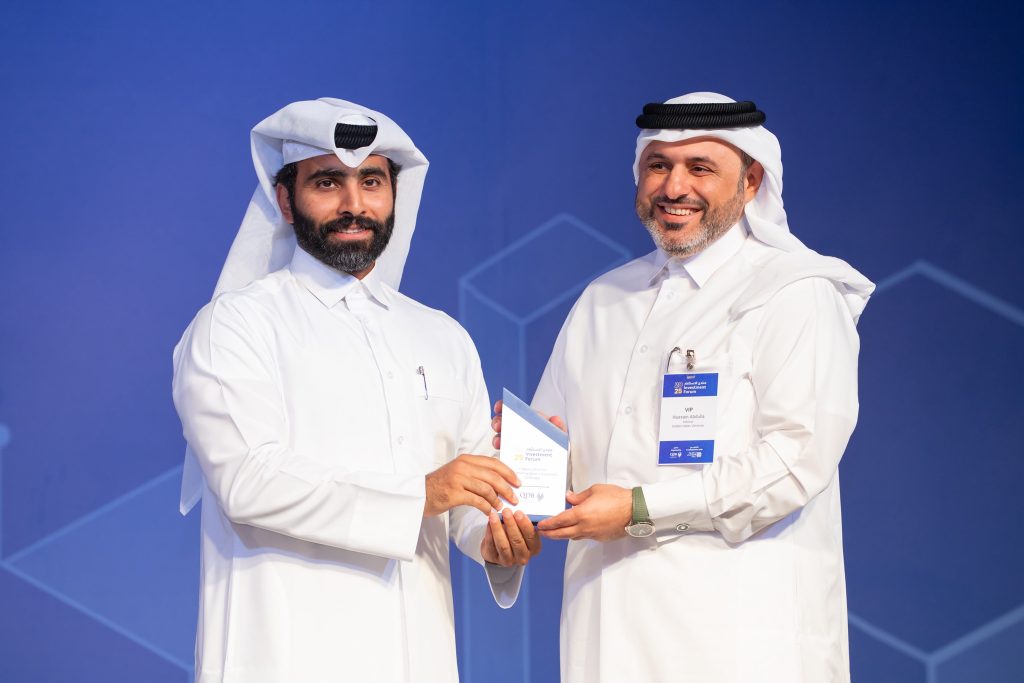
Golden Gate Ventures has received the Value Added Investor Award from Startup Grind Doha, recognition at the Qatar Entrepreneurship Awards hosted by Qatar University, and acknowledgment from Qatar Development Bank for its contribution to the country’s evolving startup ecosystem. Individually, these honours recognise industry leadership. Collectively, they reflect something more meaningful: the extent to which international investors are becoming active participants in Qatar’s long-term economic development. Perhaps the most compelling aspect of Golden Gate Ventures’ vision, however, lies beyond Qatar itself.
For decades, venture capital has organised itself around regional gateways. Silicon Valley became synonymous with North American innovation, London emerged as Europe’s financial bridge, and Singapore established itself as Southeast Asia’s entrepreneurial hub. The Gulf is increasingly carving out its own role within that global network, but with a distinctive advantage. Positioned between Africa, Asia and Europe, the region is uniquely placed to connect founders with capital, markets and international growth opportunities. It is this idea of connectivity that increasingly defines Qatar’s appeal.
Lints’ observation that Africa should be viewed as “far more than an expansion market” reflects an important evolution in global investment thinking. For many years, discussions around African entrepreneurship focused primarily on the continent’s consumer potential or demographic growth. Today, the conversation is changing. African founders are building globally competitive businesses across fintech, artificial intelligence, logistics, healthcare, climate technology and digital infrastructure. The challenge is increasingly one of scale rather than innovation.
The Gulf offers an increasingly compelling answer to that challenge. Access to institutional capital, international commercial networks and sophisticated regulatory frameworks provides founders with the tools required to expand beyond domestic markets while remaining closely connected to some of the world’s fastest-growing economies. Rather than viewing Africa as a market to enter, firms such as Golden Gate Ventures are helping shape a future in which the Gulf serves as a platform through which African innovation reaches the world.
That emerging corridor may become one of the defining investment stories of the next decade. As capital becomes more global and founders think internationally from the earliest stages of their businesses, the ecosystems that succeed will be those capable of connecting regions rather than serving them in isolation. Qatar’s ambition is not simply to attract investment. It is to become one of those connecting points.
The significance of Golden Gate Ventures’ arrival therefore extends well beyond the firm itself. It demonstrated that one of Asia’s most respected venture capital investors saw sufficient maturity, stability and long-term potential to make a permanent commitment to Qatar at a time when the country’s venture ecosystem was still taking shape. In many respects, that decision now appears increasingly prescient.
The question is no longer whether Qatar can attract internationally recognised venture capital firms. It already has. The more interesting question is what those firms – and the founders they back – will build over the coming decade.
Venture capital has always gravitated towards places capable of turning ambition into enduring institutions. Silicon Valley, London and Singapore each earned that reputation over generations, not simply by producing successful companies but by creating ecosystems where entrepreneurs, investors and ideas could continually reinforce one another. Qatar is pursuing that same objective in its own way, combining patient capital, institutional confidence and an increasingly international outlook to establish itself as a bridge between continents. If the next generation of globally significant companies is built across the corridor linking the Gulf, Africa and Asia, the firms that recognised that opportunity first may ultimately prove to have made one of the region’s most consequential investment decisions.