I.
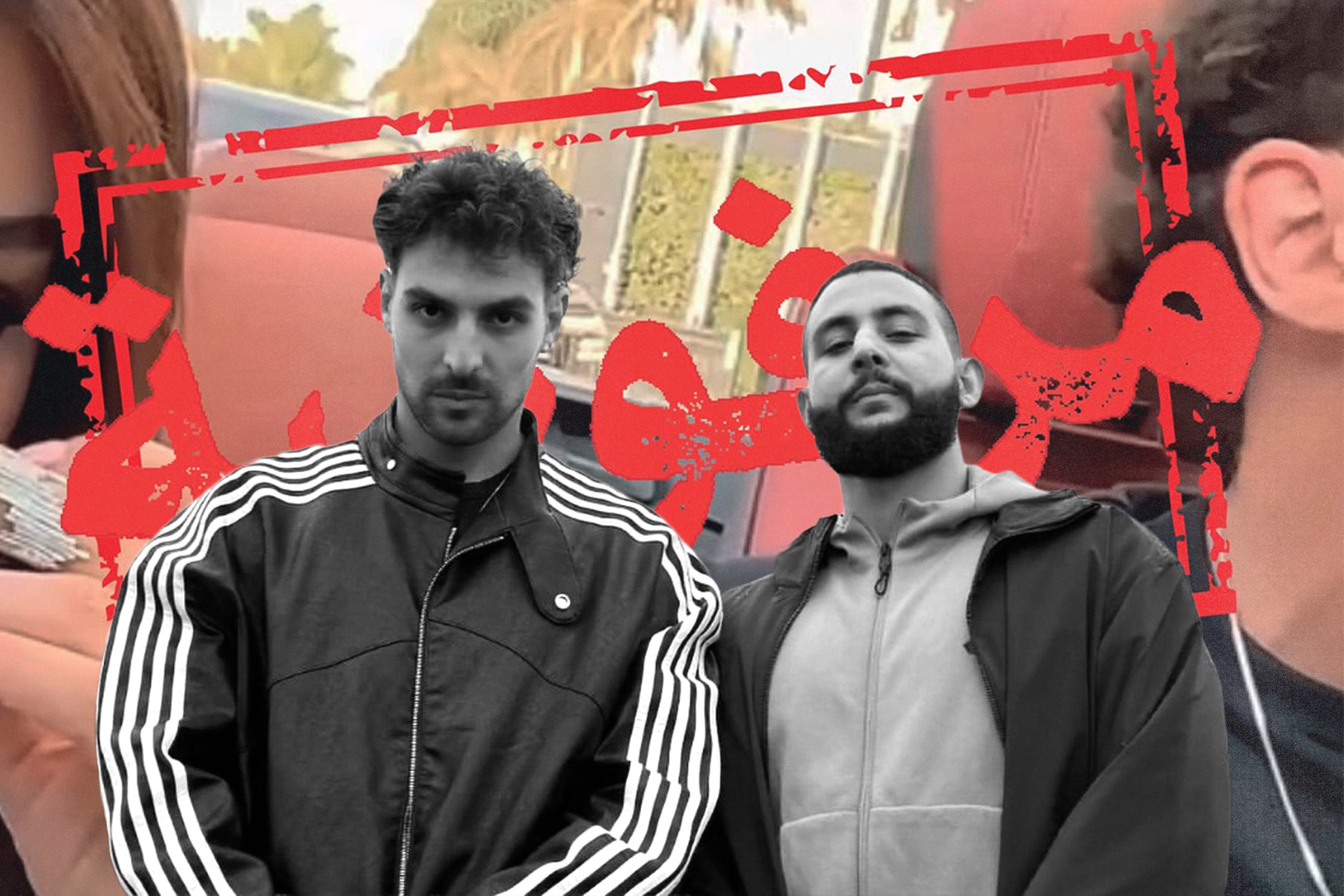
Halfway through the diss track, Shabjdeed does something that has nothing to do with insulting anyone. He unmasks himself.
He’s just finished stripping Saint Levant’s name down to its bones. هاد مروان ابن رشيد, this is Marwan, son of Rashid, here’s your father’s lineage, here’s where the polish comes from. It reads, for a second, like exposure. And then, four bars later, he does it to himself too: انا اسمي عدي, my name is Oday. Not the stage name. The one his family uses.
You don’t hand a rival your government name. You hand it to someone you’re claiming as kin. And then he keeps going: انا اخوك, I’m your brother, اذا جيت من الجسر باجي باخدك, if you come through the Jisr, I’ll come get you. The Jisr is the Allenby Bridge, the King Hussein crossing between Jordan and the West Bank, one of the only doors a Palestinian carrying certain documents gets to walk through. Shabjdeed isn’t threatening to meet him there. He’s offering to pick him up.
بنضيفك عقروب الهرش, I’ll add you to Al Harsh, the actual WhatsApp group, with guys like Daboor, Fawzi, Al Nather, the one BLTNM has posted to their own stories in affectionate memes for years. بتتسلى بتتونس, you’ll have fun, get comfortable.
This is, structurally, an invitation. It just doesn’t sound like one, because Shabjdeed is delivering it in the only register the street he’s from actually uses for love: relentless, undeflected, occasionally cruel mockery. Six years ago, in an interview with Ma3azef, he described the audience he writes for as شباب الورد, the guys on the street, and said this, precisely this tone, is how they talk to each other. Not despite the affection. Because of it.
II.
The online reaction has mostly missed this, because it arrived pre-sorted into a framework, two camps: the raw, local, untranslated rapper versus the polished, trilingual, diaspora-embedded pop star. A war over who gets to represent Palestine and how. Under that reading, the diss is a border being drawn: Shabjdeed telling Saint Levant he doesn’t belong, that his version of the cause is a liability, softened for Western consumption until there’s nothing left to be afraid of.
It’s not a stupid reading. There’s a real essay’s worth of material in the tension between an artist who trades in reach and one who trades in refusal, and at least one widely shared piece has mapped that tension carefully: ambassador and native voice, outward and inward, sympathy versus authenticity, each pole with its own function and its own cost. That piece ends up arguing the two artists are secretly doing complementary work for the same cause, gesturing toward the sociology of movements that need both a moderate wing and a radical one to function.
But movements-theory frameworks are built for organizations that don’t diss each other by name. The moment the metaphor requires one flank to publicly humiliate the other, it stops explaining what’s actually happening, because what’s happening here was never a negotiation between factions. It’s a phone call between people who already know each other’s real names.
III.
Which becomes obvious the second you actually sit with the bars instead of the plot.
انا بحتار فيك، بفهمكاش، بتقنعنيش
I’m confused by you, I don’t get you, you don’t convince me.
The opening is a gentle complaint, the tone of someone who’s watched a friend do something baffling more than once. And it’s aimed, specifically, at the register Saint Levant sings in: French, English, and Arabic braided together, built for an audience that needs the translation built in. Shabjdeed doesn’t do that. When he does reach for English on other tracks, it’s thick with accent and mockery, a bit, not a bridge. The confusion in these opening bars is real: why not just say it in Arabic brother?
بحترم قدرتك على التنفيذ اوقات
I respect your ability to execute, sometimes.
The compliment is genuine and the qualifier is doing all the work. This is the whole song’s method in miniature: give the credit, then immediately make clear the credit isn’t unconditional.
وتركيزك على موضوع النسوان بالذات
And your focus on the subject of women, specifically.
This is the bar that reads as pure misogyny out of context and reads as something much more specific in it. Saint Levant’s music has, over the last few years, leaned harder into a sexualized persona, nothing wrong with that on its own terms, but landing, for a Palestinian street audience raised on a very different register of public self-presentation, as exactly the kind of thing an older brother clowns you for relentlessly. The line isn’t “women are a shameful subject.” It’s “you’ve become the guy at the party who only talks about one thing,” delivered with the specific cruelty reserved for people you’re not worried about losing.
قلت اه او لا، مروان، لا مش بابلو، سان ليفان
Said yes or no, Marwan? No, not Pablo, Saint Levant.
A quick, almost throwaway callback to Marwan Pablo, another artist Shabjdeed has had friction with, folded into the wordplay on Marwan’s own real first name. The kind of joke that only works if you already know the history, an in-group wink, not an outward-facing shot.
ليش اسمك هيك، ليش نص شمال، ليش متصير سان نسوان
Why’s your name like that, why half-left, why not become Saint Women.
Saint Niswan, Saint Women, is the obvious pun and it’s the least interesting line in the bar. The one that actually detonates on delivery is نص شمال, half-off, thrown with a mocking cadence that anyone who grew up in Palestine will recognize instantly as calling someone مايع, spoiled, دلوع, soft, precious, performative, someone whose compass is a little off, walking crooked through his own persona.
انضف غزاوي بكل عمان، ليش ميصير بكل لبنان كمان معه مجال
Cleanest Gazan in all of Amman, why not become the cleanest in Lebanon too.
The word انضف here is more than “cleanest.” On the Palestinian street, “clean boy” is its own coded type, a guy so handsome, so groomed, so put-together he reads as soft, feminized, someone the joke quietly nudges toward being queer without ever saying the word, and the joke stacks two things at once: that coded insinuation, and a real, current jab, since Saint Levant has reportedly booked an event the same night Shabjdeed is performing in Amman later this month. The “why not Lebanon too” tags on the accusation of overreach: chasing every stage, every city, every room.
عشان فاهم فلمك، وعارف اصلك، وجاي اقوله للناس
Because I understand your act, and I know your origin, and I’m coming to tell people.
This is the hinge the whole song turns on, and it’s the line the “rival camps” reading gets backwards. This isn’t “I know where you’re really from, and it’s shameful.” It’s the opposite: I know who you actually are underneath the performance, and I’m going to say it publicly. Saint Levant founded the 2048 Foundation, funding and platforming young Palestinian artists. Shabjdeed is not calling him a fraud. He’s calling him back.
هاد مروان ابن رشيد، ابوه فالكار عتيق، خاتم الصنعة، صنعتهم هادي
This is Marwan son of Rashid, his father’s an old hand in the trade, the seal on the craft, this is their handiwork.بيخلط فلسطين مع اي تعريص مع محن اوروبي وبيقول يا هادي
He mixes Palestine with any fuckery, with European horniness, and says, whatever
The clearest statement in the song of what actually bothers Shabjdeed: not Saint Levant’s existence, but a specific tendency to dilute. Palestine folded in with sleaze, with whatever appeals to a European audience’s appetite rather than its politics, then waved off with a shrugging yā hādi, don’t make it a thing.
شلة بوشملك بطيخ عفخادي عشان تفهم بس قديش بحب بلادي
Part of the crew that tattoos a watermelon on my thigh so you understand how much I love my country.
The funniest bar in the song and the sharpest. It’s aimed at a very specific, very recognizable gesture: symbolic solidarity as skin-deep as a tattoo, positioned suggestively on the thigh, which is also its own dig at the sexualized-persona joke from earlier. Performative love of country reduced to body art nobody asked for.
شلة مية خليفة مع القدس لنا مع هيفا وهبي
The crew with Mia Khalifa, with “Jerusalem is ours,” with Haifa Wehbe.
Three names slammed together on purpose: an internet personality, a protest slogan which Saint Levant has tattooed on his arm, a pop diva, all pulled straight from his own catalog and his own skin, because the joke is that he’s already living inside it. This is what it looks like when the cause gets folded into the same aesthetic feed as everything else, no hierarchy, no friction, just content.
IV.
Here’s the thing this piece actually wants to say, and the diss just happens to be the best possible evidence for it: Palestinians do not owe anyone, including each other, a sanitized account of themselves.
Mohammed El Kurd’s Perfect Victims names this trap precisely: that Palestinian suffering only earns global sympathy when it arrives pre-cleaned, dignified, entirely without contradiction, a people who never joke crudely, never fight pettily, never want the wrong things out loud. The demand doesn’t only come from hostile outside audiences. It gets internalized. It becomes a standard Palestinian art is expected to hold itself to: stay legible as suffering, stay dignified, don’t give anyone a reason to look away from the politics by getting distracted by the mess.
This track refuses that at every level. It’s crude. It jokes about bodies, about sex, about who’s fruity and who’s spoiled and who tattooed a watermelon somewhere ridiculous. Some of that humor runs straight through queerphobic-coded insult, نص شمال, انضف used as a synonym for soft, and there’s no need to launder that into something gentler than it is to make the larger point land; if anything, it’s better evidence for it. This is not the version of Palestinian brotherhood built for export. Nobody workshopped this for how it plays outside the group chat it’s actually addressed to. And it is, simultaneously, one of the more loving things either artist has put on record: real name for real name, an offer of a ride from the one border crossing that actually matters, a standing invitation to the group chat.
Perfect victims don’t diss each other. They don’t have the slack for it. Every gesture has to argue the case, every public moment has to hold up under hostile scrutiny, nothing can be wasted on being funny for its own sake. What this track insists on, loudly and at Saint Levant’s expense, is that Palestinians get to have an interior life that isn’t organized around anyone else’s comfort. They get to be petty. They get to be crude. They get to correct each other in public, badly, using material that would never clear a Western sensitivity read, and mean it with their whole chest.
With love, the song ends on the offer: come through the Jisr, I’ll be there brother.