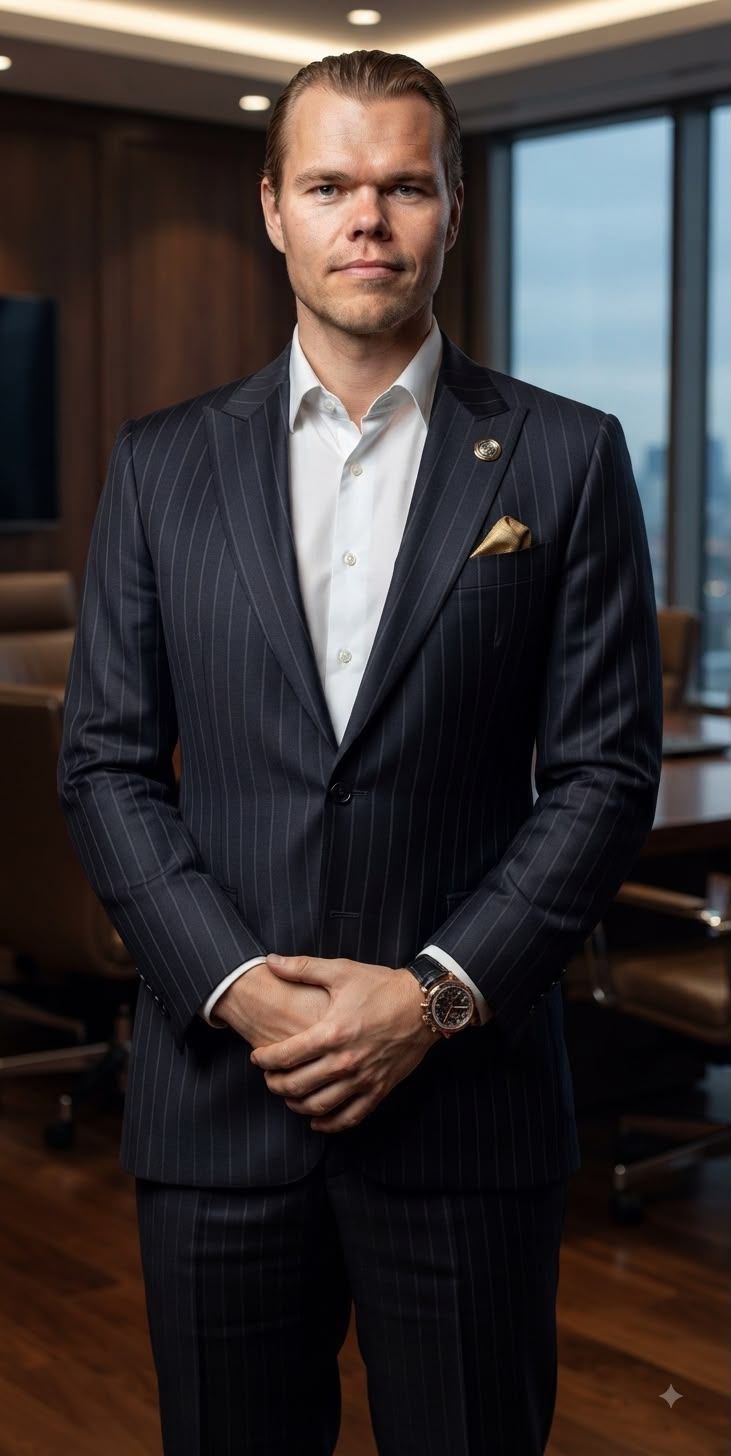
Founders often earn their first stage of growth by being everywhere. They sit close to clients, hiring, operations, and decisions because the business still depends heavily on their judgment. The harder stage comes later, when growth requires the founder to stop being the answer to every question and start building people who can carry the company forward. Brendan Gow says Capital Haus has reached that point.
When Capital Haus was smaller, Brendan’s attention was naturally pulled toward operations and immediate growth. Today, he describes his role in two very different directions. One is people. The other is strategy. He is spending less time inside day to day execution and more time thinking about who will carry the business forward and what the group should look like 20 years from now.
“I actually get to spend more time with staff and junior members of the company,” Brendan says. Those conversations, he explains, are now less about operations and more about development, career direction, and how he can help younger team members grow into larger responsibilities.
For Brendan, this is more than a change in calendar. It reflects a change in how he defines leadership. The value he can add today is not only in making decisions himself, but in helping other people become capable of making better decisions without him. Mentorship has become part of the way he thinks about the future of Capital Haus.
The shift matters because Capital Haus is itself becoming harder to describe as a conventional wealth management firm. The company is building toward a broader ecosystem of specialist businesses, investment capability, technology, media, research, and intellectual capital. Brendan has said the goal is not to own more businesses for the sake of scale. Each new capability should strengthen the wider group through better information, stronger talent, broader distribution, and greater access to opportunity.

A company with that level of ambition cannot depend indefinitely on one founder’s judgment. It needs people who understand not only what the business does, but why it does it. Brendan’s current focus on junior staff suggests he is increasingly thinking about leadership development as something that has to be transferred, not simply exercised.
His second priority is long term strategy. Brendan says he now spends more time thinking about the direction of the group on a global scale and what Capital Haus should look like in two decades. He is not only asking where the company can grow, but how it can remain coherent as it adds markets, capabilities, and people.
“I’m focused now on the longevity of the company and the people that will bring that future to reality, and then how do we protect it,” he says.
Protection, in this context, is not about resisting change. It is about making sure growth does not dilute the principles the company was built around. Capital Haus applies a similar logic when assessing companies, teams, or acquisitions. Brendan says personality and tone come first. Strategy and technical competence matter, but a business that does not fit the group’s voice can pull the wider organisation in the wrong direction.
This is where culture becomes practical rather than abstract. Processes can be documented. Technical knowledge can be hired. Values are harder to preserve because they show up in the decisions people make when there is no obvious script. Building future leaders therefore means giving them enough exposure, trust, and context to understand how the company thinks.
For Brendan, this also changes the meaning of growth. Early stage founders often measure progress through revenue, clients, hires, and expansion. Those measures still matter, but they do not answer the harder question of whether the organisation can remain strong when responsibility spreads beyond the founder.
The transition is already taking shape inside Capital Haus. Brendan is spending more time developing younger team members, shaping long term strategy, and thinking about how the business can preserve its standards as responsibility moves across a wider leadership base. Those are practical signs that the company is moving in the direction he describes.
Brendan’s role at Capital Haus is therefore becoming less about proving that he can run the business and more about building the people, culture, and strategic discipline that allow it to keep evolving. The company’s future will not be built by Brendan stepping away from leadership, but by expanding leadership beyond himself. If that process continues, Capital Haus will increasingly be defined not by how closely it depends on its founder, but by the strength of the people and systems he has already begun putting in place.
RS MENA staff were not involved in the creation of this content.