

Between an ongoing internet blackout and the constant strain of war, Mariam sends messages in short bursts from her apartment in Tehran. Like other Iranians, she has been living under war conditions for about six weeks since the U.S.–Israeli strikes began.
Iranian authorities have imposed a near-total nationwide internet shutdown, declaring the move a national security measure. To get online, people like Mariam pay exorbitant prices for black-market VPNs or rely on Starlink, managing just a few minutes of unstable connectivity before the signal drops again.
More reliable access is often limited to those with so-called “white SIM cards,” typically issued to government officials, journalists affiliated with the state, or those with connections, highlighting an unequal distribution of connectivity. This digital isolation has compounded fear and uncertainty, making it harder for civilians to check on family, access information on alerts, or share what is happening beyond the regime’s controlled narrative.
“The pressure on us is so much that we can’t think about anything,” Mariam wrote in late March, over WhatsApp. “We are all exhausted.”
That exhaustion follows months of violence. Since the start of the year, Iran has seen a deadly January crackdown, when security forces killed thousands of protesters, followed by American-Israeli strikes that killed Supreme Leader Ali Khamenei and numerous top officials. Iran responded with retaliatory strikes across the region, escalating into a wider conflict that only recently subsided under a fragile truce.
Days after the start of the recent ceasefire between Iran and the United States, that exhaustion Mariam described has still not lifted. For many Iranians, the pause in fighting has brought a fleeting measure of relief — but one without much clarity, with many anxiously awaiting what comes next.
“They (the IRI government) have done nothing for us. They treat us like prisoners.”
“Honestly, the events that have happened before and the actions of the regime against the people made all of us hope for foreign support,” said Mariam, an artist whose name has been changed due to security concerns.
At the time, the idea of outside intervention – often framed in the language of human rights or liberation – felt to some like a last resort, as internal change seemed impossible with the Iranian government leaving very little room for organized opposition. Mariam described feeling trapped, with little faith that change could come from within.
“They (the IRI government) have done nothing for us,” she said. “They treat us like prisoners.”
But as the war has unfolded, along with its impacts, these views have not evolved in a single direction.
“In my view, any kind of foreign intervention in any country, even under a ‘humanitarian’ label, is not acceptable,” said Arshia, an Iranian in Tehran who spoke on condition of anonymity. “I don’t think it’s right.”
He believes that the people of Iran should have the right to decide their own fate. That position has been shaped not only by political conviction, but also by cumulative pressures since January.
“At first, there were people openly supporting it, chanting things like ‘Trump act,’ ‘thank you Trump,’” said Arshia, referring to early calls for U.S. intervention. Videos from inside Iran captured that raw hope – with some even celebrating after the killing of the Supreme Leader and other high-profile figures.
“In my view, any kind of foreign intervention in any country, even under a ‘humanitarian’ label, is not acceptable. I don’t think it’s right.”
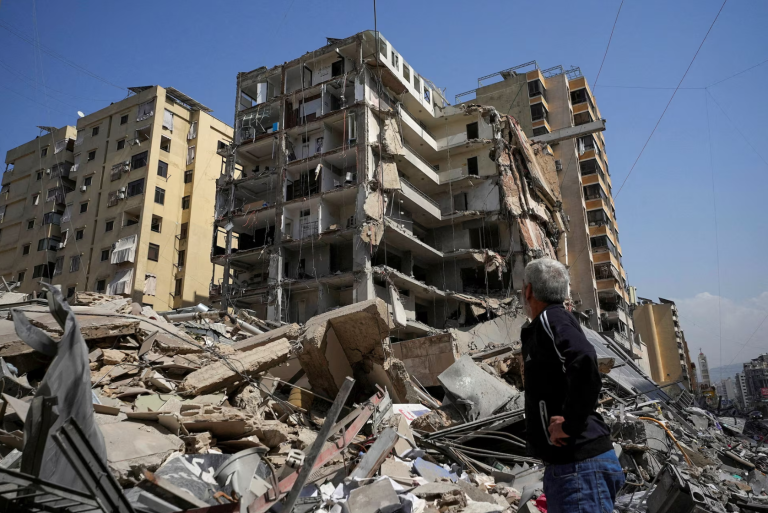
But over time, as what were described as targeted attacks began hitting more of civilian life – including residential neighborhoods, industries, and hospitals – the initial enthusiasm began to fade. The situation is complicated by Iran’s intertwined dual-use industries, where many facilities are both IRGC-linked and essential to civilian life, blurring the line between military targets and everyday infrastructure, and contributing to job losses, supply shortages, and economic strain.
As strikes broadened, the aims of foreign intervention grew less clear, leaving many civilians uncertain about the end goal.
For many Iranians, what has become clear is the economic toll of the war.
“Economically, for ordinary people in Iran, money is the primary concern,” said Arshia. “Inflation is extreme. Prices are skyrocketing. Many haven’t worked for months.”
He paused, then added: “Every conversation comes back to money. The real problem of the Iranian people is economic.”
Kamran, who continues to support foreign intervention, described a different perspective, one in which reactions to the war remain fluid.
“With the threats from the United States and Trump himself, along with the political maneuvering that the regime is doing on state television, people are being pushed in a direction where they feel that injustice is being done to them, and the war is no longer between leaders,” he said.
Mariam echoed these sentiments, saying the turning point came as President Trump escalated threats to target Iranian infrastructure, warning the country could be brought “back to the Stone Ages” and that “a whole civilization will die” if Tehran did not comply.
“Many people feel worried and anxious, and there is a noticeable sense of fear in society,” she wrote in early April over text.
Her concerns are practical, largely concerning electricity, water, and healthcare.
“Every conversation comes back to money. The real problem of the Iranian people is economic.”
“In the past, some people may have seen external support as a potential opportunity for positive change,” she said. “However, when such support is accompanied by threats, particularly those targeting infrastructure, the perception shifts significantly.”
Those fears have also deepened a broader sense of being caught between forces that feel equally indifferent to the lives of Iranian civilians. Amir, a businessman who lives in Tehran, said, “It is a dilemma, people are caught between resentment toward their government and fear of destruction caused by war.”
He also described the unevenness of these experiences across the country: “There are 90 million people with 90 million narratives. One can’t overgeneralize one’s observations.” As a result, reactions to the war and the ceasefire vary widely depending on where one stands, both geographically and economically.
For those with the financial means, connections, or family networks outside major cities like Tehran, moving away from heavily targeted areas is possible, where the effects of the war are less intense and daily life remains more normal. For many others, it is not.
Borna, who lives in central Tehran and attends pro-government rallies, described a different kind of shift – not necessarily in views on foreign intervention, but in how people relate to one another under pressure.
He pointed to subtle changes in everyday interactions. “People are fighting with each other less,” he said. “Even in traffic, people are more patient and kinder.”
Amir pointed to a similar observation of what he referred to as “social resilience” that has strengthened since the war began. “One thing that has been remarkable is the solidarity among ordinary people,” he said. “People open their homes, share resources, and support strangers. After every explosion people often call each other to check that everyone is safe.”
Even so, that sense of solidarity has not resolved deeper uncertainties about the war. Borna expressed skepticism about the ceasefire, reflecting a broader sense of doubt about whether the pause in fighting will hold.
“There are 90 million people with 90 million narratives. One can’t overgeneralize one’s observations.”
“People I’ve spoken to are against it,” Borna said. “Not because they want the war to continue, but because they think if it stops now, it will just start again in six months.”
“We have to wait and see what happens next,” he added, saying he believes the Islamic Republic will ultimately prevail.
Others, like Amir, do not see the government as representative of their views. “Most Iranians distinguish clearly between their government and their country,” he said, underscoring a wider sense of disillusionment with the state. “The future many hope for is an Iran that is both free and sovereign, shaped by its own people rather than by external pressure or internal repression.”
Some, like Kamran, continue to remain optimistic. “People are definitely still optimistic, because they think that this might truly be the last time that positive changes could happen for the country, and despite all the threats against the country, that optimism still exists.”
For Mariam, however, there is no clear path forward that does not carry risk. The ceasefire may have paused the fighting, but it has not resolved the overwhelming uncertainty about what comes next, or who, if anyone, will shape that future.
“Rather than seeing it (the ceasefire) as purely beneficial, many now view it as something that comes with serious risks and uncertainties,” she said.
That uncertainty builds on something Mariam has felt since she was a child – that the life she wants has always been out of reach.
“My dream in life is freedom of expression.”
For now, that dream feels distant – caught between a government that she explains has lost all legitimacy amongst its people, and external forces she now doubts can help facilitate that future like many Iranians desperately had hoped. Neither, she believes, will ultimately protect ordinary people.
The ceasefire may have paused the fighting, but for many Iranians, it has not eased fears that after so much loss, and with the economy further weakened, the same system will remain in place, perhaps more emboldened than before.







Trump’s Iran War Has Clear Winners and Losers
After weeks of intensive strikes, Iran is emerging from the war with potentially more sovereignty, fewer sanctions, and a weaker opposition.