
Amid escalating tensions in southern Lebanon between Israel and Hezbollah, Israel’s Defense Minister, Israel Katz, recently signaled that his country intends to maintain a “security zone” extending to the Litani River, framing the move as contingent on Hezbollah’s disarmament. Yet within the same government, Finance Minister Bezalel Smotrich has expressed a far more expansive vision, suggesting that Israel’s northern boundary should effectively be redrawn along the Litani – a statement that implies a full-blown occupation rather than a limited buffer.
Crucially, such propositions are not without precedent. Calls to extend Israel’s reach toward the Litani River predate the current conflict and date back to the founding days of the Zionist state – long before borders were formally drawn. Some envisioned it as part of the so-called “Greater Israel,” while others valued it primarily for its resources.
In that sense, the present rhetoric marks a continuation – an enduring undercurrent that keeps resurfacing in moments of direct conflict. As such, even in a hypothetical scenario where Hezbollah were to disarm, it is unlikely that these territorial aspirations would dissipate.
In fact, many in Lebanon and across the region argue that it is Hezbollah that has been keeping Israel from capturing southern Lebanon, as Israel has a long and ongoing history of military-led expansionism, marked by territorial transgressions involving Syria, Egypt, and the West Bank.
Why the Litani?
Israel’s first invasion into southern Lebanon in 1978 – launched in response to attacks by Palestinian militants in Tel Aviv – was tellingly named Operation Litani.
Military campaigns aren’t named arbitrarily; the choice alone underscores the river’s strategic weight. This operation marked Israel’s involvement in the Lebanese Civil War. A few years later, in 1982, Israel escalated to a full-scale invasion of southern Lebanon, leading to an occupation that lasted 18 years, until its withdrawal in 2000.
The Litani has long been a vital asset – and a double-edged one: valuable to Israel in itself, yet also something that can be reshaped into leverage over Lebanon.
Israel claims that controlling the Litani River would dismantle Hezbollah’s military and political power, neutralize a key Iranian ally, and secure northern Israel.
Yet these justifications mask a deeper imperial ambition: the river is coveted not merely for security, but as a strategic asset to occupy, control resources, and extend Israel’s territorial reach into Lebanon.
With only a few smaller rivers of its own, seizing the Litani would give Israel its first major independent water source – not out of necessity, but as part of a colonial logic: to control vital resources, reduce reliance on the Jordan River, and assert dominance over Lebanon’s land and wealth.
This would support energy production and agriculture – given the river’s fertile surroundings – and, crucially, control over the Litani Dam, a key Lebanese energy resource. Taken together, the river provides Israel not only with resources but also with a strategic tool that can be leveraged politically and militarily, capable of crippling Lebanon on multiple fronts should threats arise from the Levantine state.
During the Six-Day War in 1967, Israel occupied the West Bank and immediately took control of the area’s water resources. A few years later, during Israel’s prolonged occupation of southern Lebanon, allegations emerged that it had secretly diverted water from the Litani River to Israel through underground tunnels.
While Israel denied these claims, the denials remain disputed to this day. Both of these decisions occurred either long before Hezbollah was founded or before it had developed into a strong, well-established militia.
In addition, Israel’s recent encroachment would give it a natural border with Lebanon – one that is difficult to cross, unlike the flat expanses that allow movement both ways.
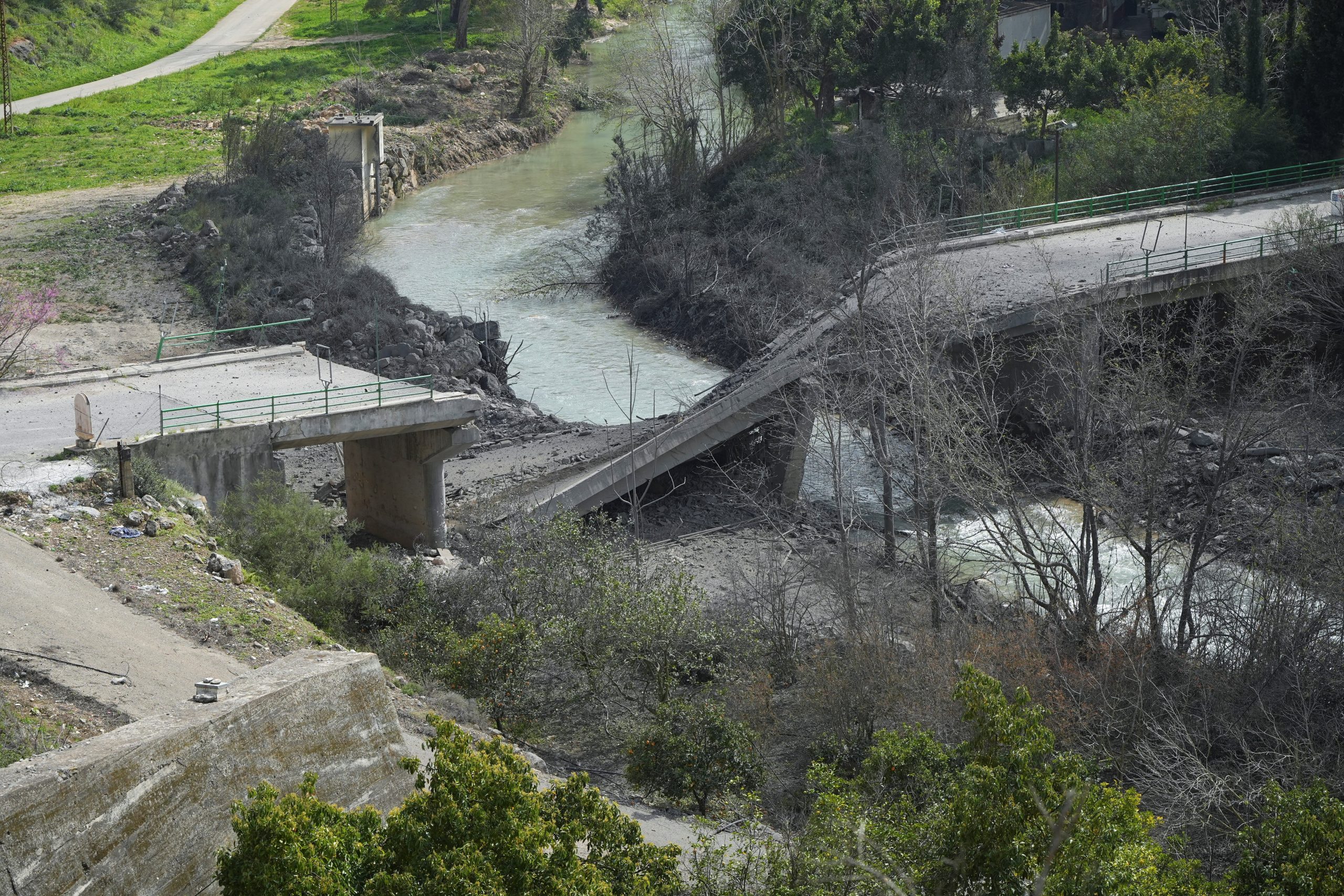
Over the past four days, Israel destroyed five bridges crossing the Litani River under the claim of “hindering any Hezbollah advancements.” In reality, the move may serve a broader objective: isolating the area from the rest of Lebanon and laying the groundwork for permanent occupation and settlement.
A Pretext to a New Occupation
After the Six-Day War in 1967, Israel seized vast territories – the Sinai Peninsula and the Golan Heights. Despite the illegal nature of the occupation, Israel quickly established settlements, signaling clear intent for permanence rather than a temporary buffer or security zone. Today, the Golan Heights remain effectively under Israeli control, with over 30 settlements.
According to Netanyahu in a 1994 interview – the same man still in power today – the Golan Heights is vital for Israel’s security, its occupation justified as a buffer against immediate threats from Syria.
With Netanyahu still at the helm, and with the security buffer zone narrative recited once again, the current encroachment may serve as a pretext for long-term occupation marked by the establishment of permanent settlements.
In fact, during the last round of embattlement between Israel and Hezbollah in southern Lebanon, extremist Israeli settler groups attempted to impose a presence on Lebanese soil, laying symbolic bases and outposts – tents and “nuclei” in areas like Maroun Al Ras – while assigning Hebrew names to local towns and lands.
Groups like “Uri Tsafon” and “Israel Skol” openly advocate turning southern Lebanon into part of “Greater Israel,” framing these moves as historical or security claims. These provocations, though temporarily removed by the Israeli army, reveal a deliberate strategy to normalize colonization, test Lebanese borders, and lay the groundwork for permanent settlement – an audacious violation of Lebanon’s sovereignty and a blatant attempt at territorial conquest under the guise of ideology.
Recent reports only deepen these concerns. The Israeli right-wing outlet Channel 14 has pointed to plans to expand ground operations deeper into Lebanese territory, potentially reaching the outskirts of Tyre, well beyond the Litani.
The proposal reportedly includes establishing at least 18 military positions inside Lebanon, aimed at entrenching a sustained presence under the claim of disarming Hezbollah. Yet beyond this justification, the scale and structure of the deployment point to an effort to impose a new reality on the ground – redrawing the map and embedding a long-term presence under the banner of security.
At this point, would Israel abandon this expansionist ambition if Hezbollah were to disarm?
Given the historical precedents and the current colonialist approach under the Likud-led government, there is little reason to believe it would stop there. Any place that can be exploited as leverage over neighboring states becomes a target for territorial grabs.
The long-held question in Lebanon – whether Israel has plans to annex southern Lebanon because of Hezbollah, or whether it was Hezbollah that kept Israel from annexing it all these decades – may finally get its answer, and it might be a devastating one.
A Regional Domino
Beyond the immediate Israel-Hezbollah dynamic, the implications of anchoring Israel’s northern boundary at the Litani extend across the region.
Syria, already weakened by civil war, would see a permanent Israeli foothold in southern Lebanon as a direct challenge to its territorial integrity and a potential corridor for Israeli operations along its western flank. This would only add to the ongoing Israeli encroachment in southern Syria since Assad was toppled in late 2024.
Iran, reliant on Hezbollah as its main proxy on Israel’s northern front, would perceive such a move as an attempt to sever its strategic depth in the Levant, potentially prompting recalibrations across multiple fronts, from Iraq to Yemen.
Jordan, while not directly involved, would still feel the ripple effects: Israel occupying a neighboring Arab country’s borderlands under the guise of security adds a new layer of strategic tension between Amman and Israel.
Other Arab states, with or without direct borders with Israel, are becoming increasingly alarmed by Israel’s renewed “Greater Israel” ambitions, reiterated at steady intervals since October 7.
Even governments that have normalized relations with Israel, or begun considering normalization, would struggle to stomach a new setback that further deepens and complicates the Middle East’s most prominent and destabilizing conflict, rather than bringing it closer to a sustainable conclusion.











A Country in Retreat: Tunisia Jails Anti-Racism Pioneer Saadia Mosbah
Saadia Mosbah’s eight-year sentence raises urgent questions about repression, migration politics, and the cost of defending Black dignity.