Across the global music industry, it seems as if the underground aesthetics have started to slowly reclaim some of its relevance. In North Africa, artists like Egypt’s Tul8te are climbing the charts with lo-fi, analog-driven sounds, proving that authenticity can cut through pop’s glossy veneer and even outweigh the force of corporate radio playlisting.
Morocco, too, has proven to not be immune to this trend, with its own alternative pulse growing like weeds through concrete. In between hooks engineered for TikTok-virality and mass appeal, a counter-current is gaining ground, drawing a new kind of listenership for its raw, jagged and unpolished sound.
Spearheaded by a hyper-connected generation frustrated, not to say disillusioned, by the mainstream’s dynamics, and the industry’s obsession with immediate returns – twenty-somethings in the Kingdom are challenging a well-entrenched status-quo to put out music that speaks to the pride, tension, and contradictions of growing up in a country where feelings are managed, muted even.
The movement already has a name, grunge rap, a genre that is, release after release, capturing the youth’s temper with lyrics that fans find legible and relatable, thanks to their abrasive nature.
Artists like Furelise or Valerieblud are at the forefront of this new wave, finding relative fame by tracking tremors that have, until now, been sidelined if not completely marginalized. Romantic turbulence, the aftershocks of juvenile addictions, and the specter of unresolved relationships recur throughout their work.
Sometimes dark, melancholic, and laced with irony, their music constitutes a language their peers recognize immediately – not because it has been simplified, but because it is lived first-handedly. It speaks in the first person, through confessions and fragments of life most of their listeners have experienced, but had to suppress because of cultural codes and normative masculinity.
“Although we can see change all across the region, gender norms and stereotypes still continue to hold a grip on our respective societies. Openly articulating one’s emotions – particularly within such a male-dominated industry like music – remains taboo.” Yassine Hariss, senior editor at Mille World and expert in contemporary North African music tells me. “And that hesitation was never born of unwillingness, but rather out of constraint: neither our peers nor ourselves were afforded the space to do so.”
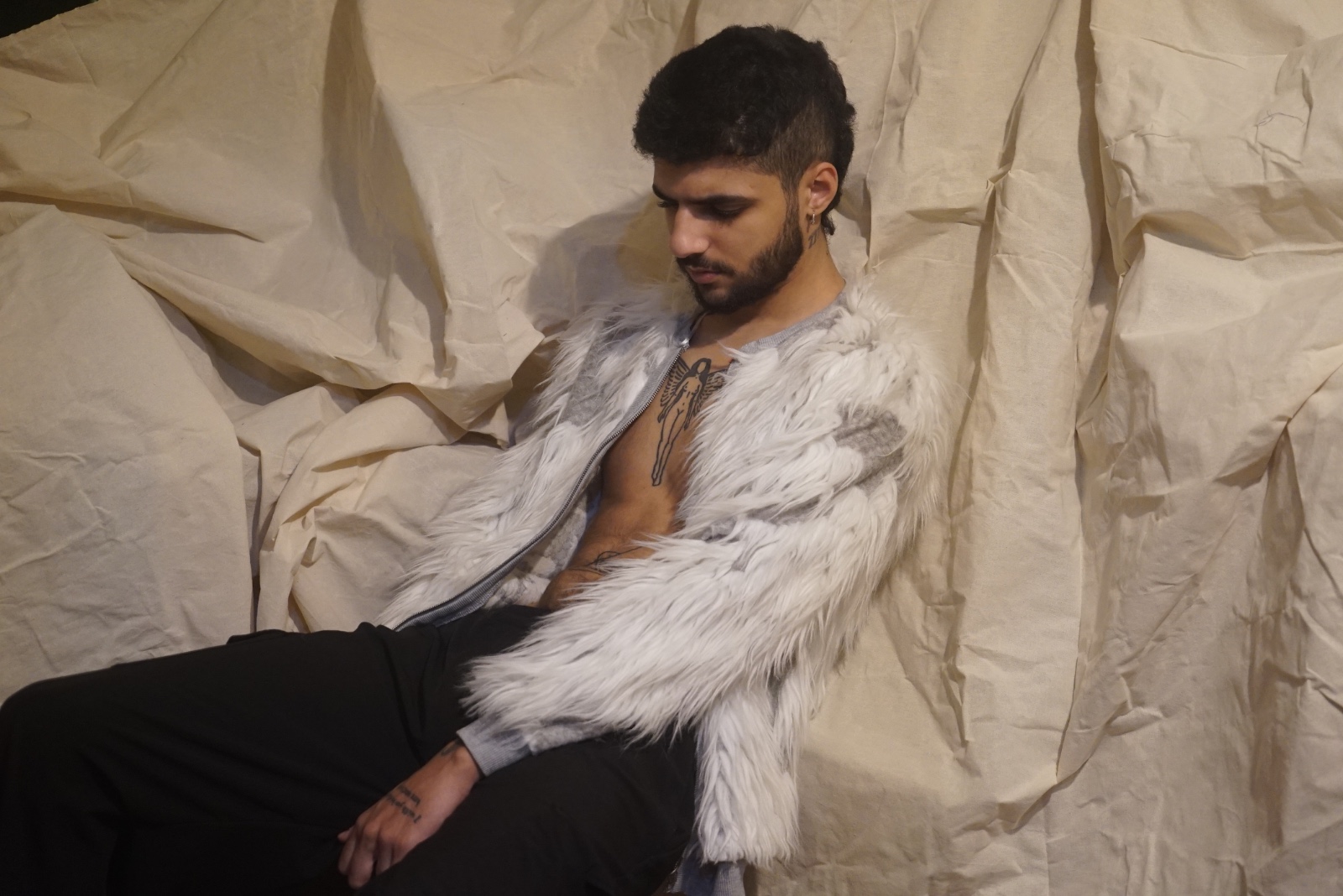
Promotion is often stripped to the bare minimum, but the thought behind every release is never left up to chance or accident. Each project connects to the next through an invisible line – in production, visual language, tone, and messaging. Collaborations exist, but they are chosen for alignment, not exposure. Every sonic choice, from a distorted sample to the deliberate weight of a single word, is measured carefully, shaping a world that feels complete on its own terms. But as Furelise puts it:
“My audience knows that nothing I do is left to chance,” Furelise reflects. “Since ‘771,’ they’ve understood that there’s always a common thread running through my work,” he tells me. “I move forward with everything Morocco has given me – my experiences, as well as its sensory, sonic, and visual archives – without trying to imitate or erase the past. Even my struggles become raw material for my lyrics, which I believe are deeply symptomatic of my generation.”.
From there, the visuals follow suit. Often shot as bold collages blending urban dystopias, VHS archives with striking visual character, and scenarios cut like three-minute Lars von Trier films. Personal branding is equally precise: every image, every video, every social post is aligned with an aesthetic that feels lived-in, consistent, and authentic without being theatrical.
The attention to detail is invisible precisely because it is integrated into the fabric of the art itself. Lo-fi imperfection, narrative honesty, and subtle visual political winks are part of this vocabulary, offering a depth of expression that could inspire beyond music – into fashion, film scoring, and advertising – providing a richness rarely found in formulaic commercial production.
“A music video shouldn’t just illustrate a song. It should stain it.” Valerieblud pauses, then adds: “That’s why I keep coming back to VHS. I like the idea that every time someone presses play, they’re not just hearing a track, but unlocking a memory – something intimate, fleeting, almost fragile, and yet somehow built to last.”
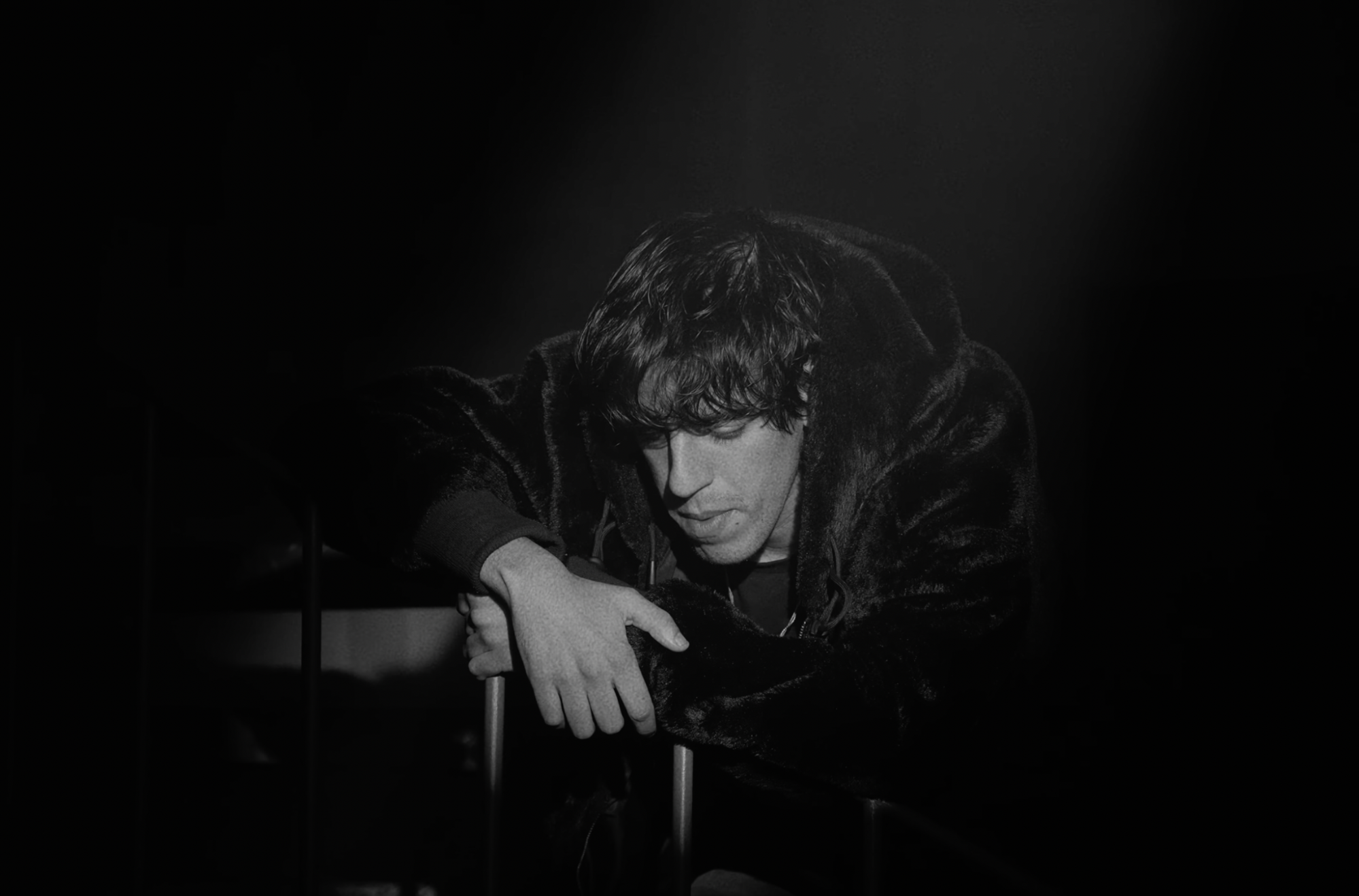
What makes this movement striking is not just the quality of its output, but the loyalty it generates. Its artists have cultivated fanbases that are not merely passive listeners but active participants. The audience is responsive, engaged, and fiercely protective, pushing and promoting releases from the first hour of availability.
The fanbase understands the nuances in production, the references that are often invisible to outsiders. The community gravitating around this niche corner of music happens to be built on trust and shared taste, one that cannot be manufactured or replicated by A&R strategy alone.
The rise of Moroccan grunge rap, however, has had to resist the many obstacles the industry sometimes lays intentionally along the way; read: obstructing movements that can’t be standardized.
“When you bring something new, people won’t understand it at first. They might try to pull you off your path, so sometimes it’s better to step aside and protect your energy,” Valerieblud reveals. “Music is changing, and ears are tired of overused sounds; that’s why anything that carries authenticity has the power to capture attention and leave a lasting mark.” he adds.
For years, Moroccan grunge rap made major labels in the MENA region uneasy. Signing North African underground artists was considered risky, not because the music lacked an audience, but because it refused to conform. It wasn’t built for radio-friendly hooks, didn’t fit neatly into regional branding, and resisted the polished narratives labels expected.
Its dark, stark visuals, last-minute blitz, and raw emotional weight were often read as commercial limitations rather than strengths – a genre that thrived on tension, shadows, and grit.
Now, with the commercial potential impossible to ignore, those same labels are starting to circle. The darkness that once scared them is suddenly seen as opportunity. But attention brings risk: polish the sound, soften the edges, smooth the narratives, and the very intensity that gave the movement its power could vanish. The challenge is to embrace visibility without surrendering the edge, to grow without losing the raw, disruptive force that defines Moroccan grunge rap. Meanwhile, the underground kept moving, finding its own rhythm outside the industry’s gaze.
Once upon a time, festivals like L’Boulevard – Casablanca’s landmark stage – brought punk kids, rap crews, and gnawa-rock veterans all under the same sun. They created a rare dialogue between mainstream and alternative sounds, showcasing cult bands like Hoba Hoba Spirit, masters of urban rock infused with gnawa grit, and Betweenatna, a ferocious punk outfit ripping through the streets. Today, however, the indie underground operates mostly off-grid. That dialogue laid the groundwork for a new generation to claim its voice.
It’s no coincidence that during the GenZ212 protests across Morocco, Furelise and Valerieblud’s tracks became generational anthems. From TikTok reels to Instagram stories, from chants in the streets to impromptu playlists, their music articulated the frustrations, the pride, and the restless energy of a youth demanding to be heard. Even without institutional support, the movement’s momentum only grew.
For Yassine Harris, the connection is obvious. The younger generation is finding strength in those they recognize themselves in. More than just rappers, artists like Furelise and Valerieblud operate as megaphones for the trials and tribulations of a segment of society that often feels sidelined, if not completely marginalized, articulating its realities through a language and vernacular that belong to them, and to no one else.
That’s also why, as Yassine’s points out, some of their songs have naturally slipped into protest movements, echoing the role Soolking’s “Liberté” once played in Algeria. Not because today’s youth lack intellectual depth, but because they deliberately strip language back, making it accessible enough for everyone to feel involved – and, crucially, represented. This kind of organic momentum, so often dismissed or misunderstood by white-collar corporate structures, is precisely what can mobilize people at scale.
There are no editorial playlists on DSPs dedicated to this current, no radio airplay, no glossy magazine spreads, no sponsorships dictating aesthetics. And yet, the work continues, quietly but stubbornly, because these artists are building a culture, not just an audience.
Paradoxically, this absence of institutional recognition has only underscored the movement’s power. Furelise and Valerieblud have repeatedly claimed the top spots in the charts, forcing their way onto playlists despite being overlooked by curators, overtaking mainstream pop acts and fleeting hitmakers – not through industry machinery, but through the raw force of their audiences and the intensity of their connection with them.
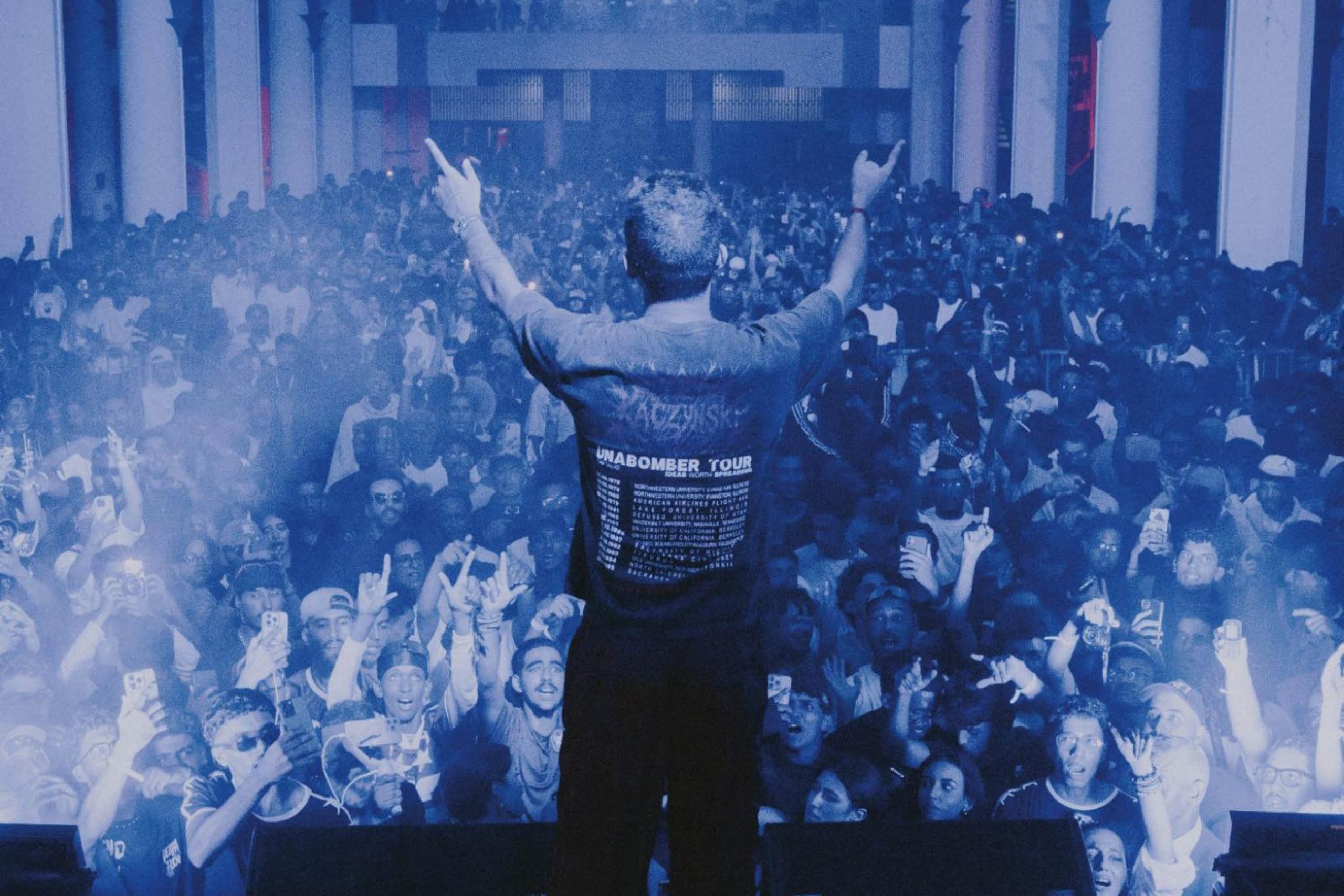
This surge in influence, and the undeniable impact of these artists, naturally led to the creation of independent initiatives seeking to showcase this underground force: Egregore Festival was one such vision. The eruption during Furelise and Valerieblud’s sets said it all: lyrics hurled back in unison, bodies moving as if bound by the same pulse, a tidal wave where a generation suddenly recognized itself – finally represented.
Each surge to the top made visible what was once confined to the underground: proof that fidelity to one’s own vision can outlast and outshine any manufactured trend, and that what might appear invisible to the uninitiated is, in fact, a barometer of authenticity and creative rigor.
Dosei Trissinti, the mind behind Morocco’s Egregore Festival and a driving force in the country’s grunge rap movement, explains: “Culture must be shaped by those who live it. Our closeness to rappers was forged through years of building visuals and artistic direction with them, while our bond with the audience grew through shared street culture.” He adds: “Egregore was born from a simple realization: many of the most listened-to rappers in Morocco had no access to live stages. It emerged at the intersection of those two realities – not as a top-down platform, but as a direct, unfiltered space between artists and their public, free from institutional and corporate mediation.”
At this moment, Moroccan grunge rap stands as proof that engagement, culture, and aesthetic authority are not dictated by algorithms or marketing budgets. Its practitioners have reasserted control over the tempo, tone, and trajectory of their work. They show that underground music can foster loyalty, build cultural capital, and command attention without ever compromising vision. It is a lesson for creators everywhere: coherence, integrity, and the refusal to conform are themselves acts of audacious strategy.
And so, the sound continues to ripple. It is not loud in the conventional sense, but it is deeply felt. It moves through cities, bedrooms, and digital spaces with a quiet insistence, a pulse that is at once intimate and communal.
It reminds us that culture is not always broadcast, sometimes it is sculpted in the shadows, sustained by attention that is earned rather than bought, and carried forward by those who refuse the ephemeral in favor of the enduring. Moroccan grunge rap is more than music; it is a blueprint for creative independence, a declaration of fidelity to one’s vision, and a testament to what emerges when art refuses to say yes to the machine.