As the dust settles on the winter festival season in the Arab region – after an intensive run from Dubai’s Sole DXB to Riyadh’s Soundstorm – Saudi Arabia seems to have one last secret to spill. Held during the final week of January, MDLBEAST’s second major festival, Balad Beast, offered a more condensed two-day program packed with live music and music alone, unfolding in Jeddah’s UNESCO-listed old city neighborhood of Al Balad.
We attended its fourth edition this year to see what it’s all about. Our experience can best be broken down into three parts: the place, the sound, and the crowd.
The Place
At a time when major festivals in the region boast massive constructions and brand-new venues – from Egypt’s El Gouna to Jeddah’s Onyx Arena – Balad Beast takes a step back from the modernization race. Instead, it chooses to root itself in history and tradition, transforming an old town – an essential part of any major Arab city – into a maze of music discovery from 9 p.m. till 3 a.m.
Holding the event in Al Balad carries significance beyond the musical. It introduces visitors from different parts of the world to a side of Saudi Arabia often overshadowed by images of skyscrapers, vast deserts, and rapid modernity.
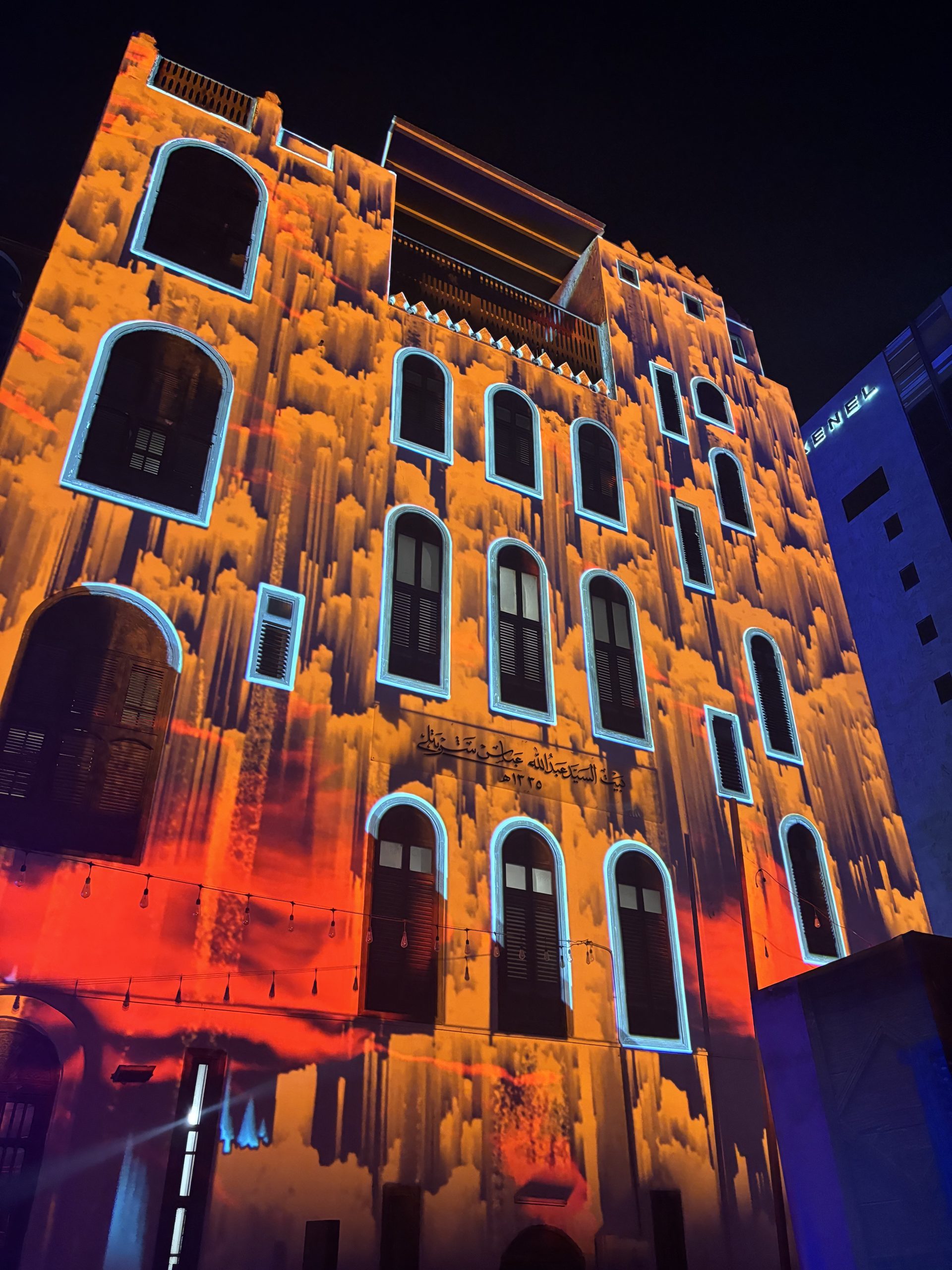
Yet, beneath those layers lies an older, enduring essence that has always existed and deserves attention. Experiencing it firsthand offers a deeper, more nuanced understanding of the Kingdom and its cultural fabric, one that mirrors the constructed with the inherited, and the artificial with the lived.
Entering the venue requires a stroll through the everyday life of the old district, lined with local shops and small cafés where traditional rhythms still dominate. Stepping from this environment into the festival feels like crossing into another world. The streets and buildings remain unchanged, yet a sharp cultural shift creates two coexisting realities – a transformation that feels almost surreal.
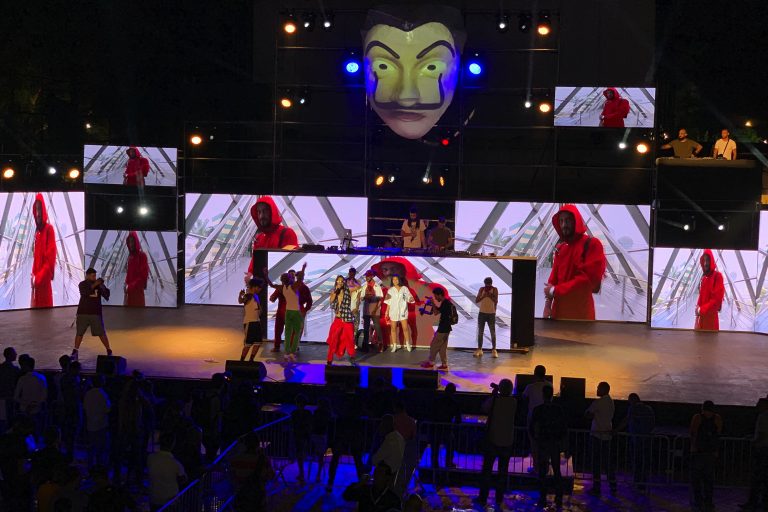
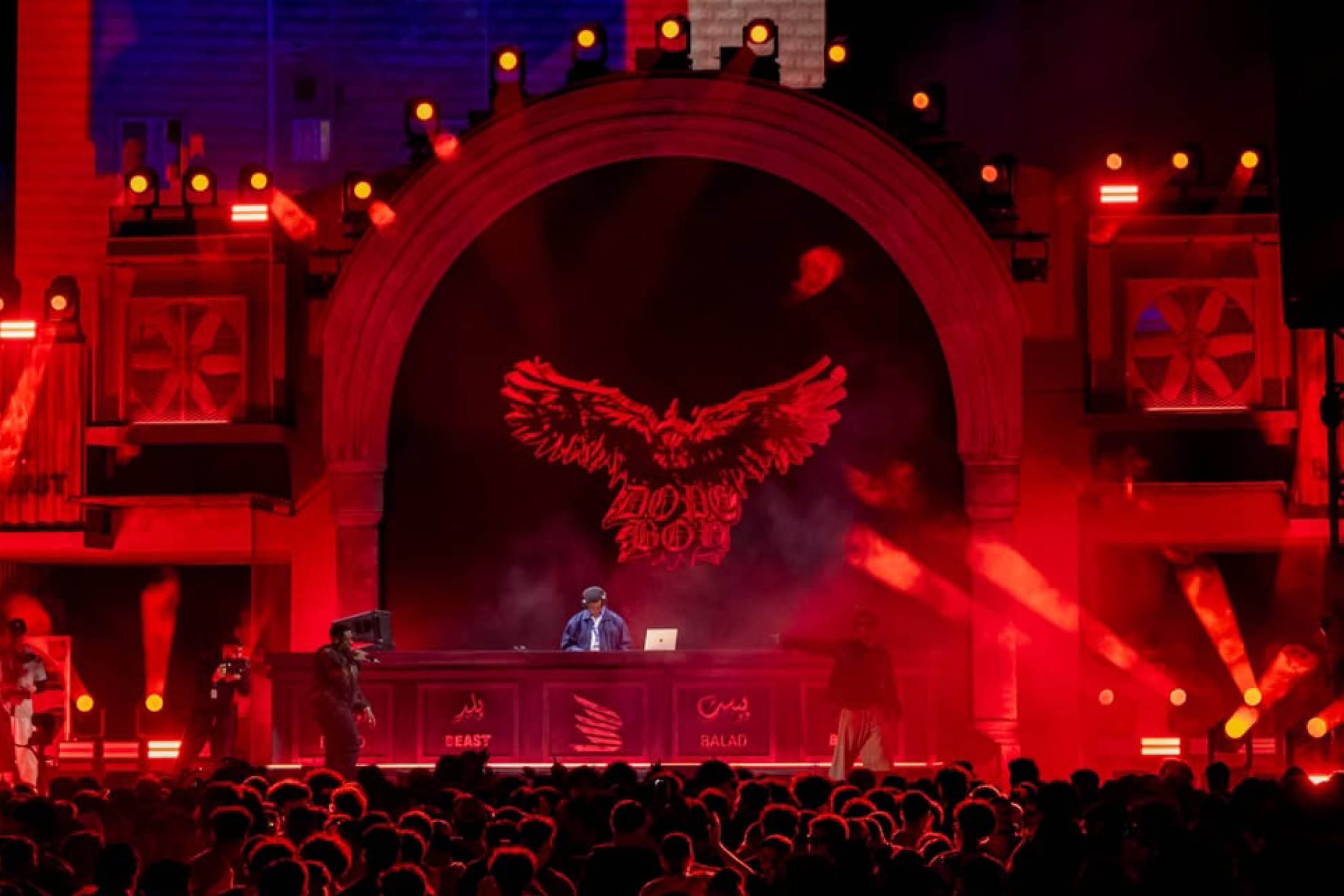
Not the entire district was dedicated to the event. A section was divided into four main stages, referred to as Squares: Roshan, Omda, Souq, and Bab, all within close walking distance. This layout made it intuitive to move from one stage to another, allowing visitors to experience more sounds and artists in a shorter time, since all four Squares hosted performances simultaneously.
Wherever you went, music was never far, as the venue’s compact scale kept the energy contained and immersive. This setup enhanced the overall experience, making it easier to navigate while ensuring that FOMO never set in.
The Sound
The stages at Balad Beast brought together a mix of local and international names – from Tul8te and Baloo to Solomun, Playboi Carti, Ben Böhmer, and others. And while the festival showcased a strong lineup, one element was notably missing: diversity.
At first, Balad Beast didn’t present itself as an electronic music festival, yet its program largely leaned in that direction, relying heavily on international artists to draw attention. Local talent, by contrast, was often given secondary time slots.
Depending almost entirely on international names misses an opportunity to showcase prominent regional artists – many of whom could reliably draw crowds, sell tickets, and enrich the festival’s soundscape.
With that said, hope remains for future editions. Expanding the lineup beyond electronic music and giving local artists meaningful slots could create a richer, more diverse experience. Even in this year’s edition, acts like Playboi Carti, Naika, Tul8te, Baloo and Shaggy brought significant variety and broader genre representation.
On the other hand, the festival could straightforwardly brand itself as an EDM-focused event, similar to peers like Zamna or Sandbox. In that light, Balad Beast would undoubtedly shine, as it holds real potential to establish itself as one of the world’s major EDM festivals in the future. This edition alone featured a lineup of exceptional dance, house, B2B, drum and bass, and techno sets – delivered flawlessly by artists such as PAWSA, Solomun, Dishdash, NTO, Alesso, Ben Böhmer, and Emanuele Barilli.
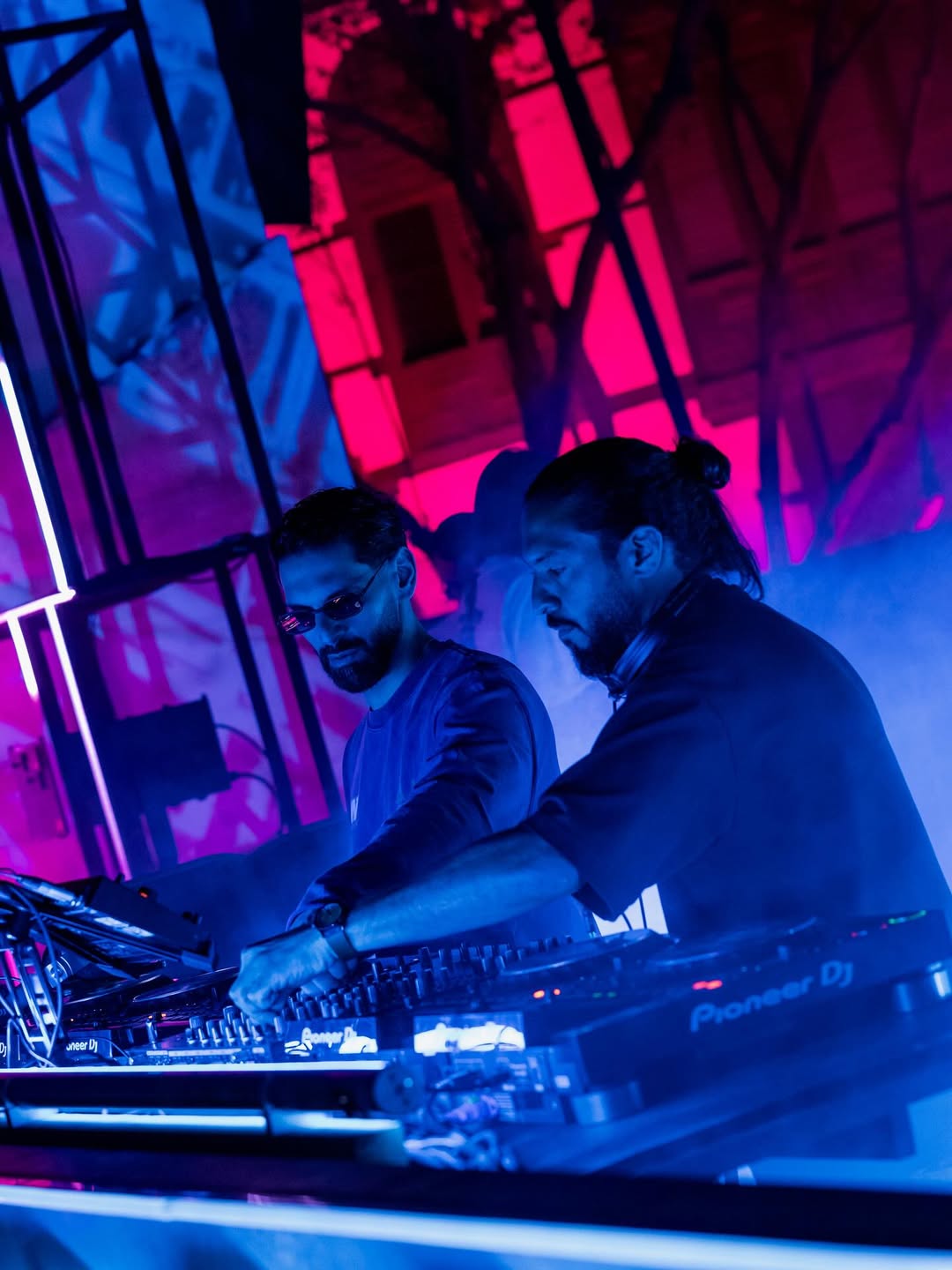
Ultimately, it all comes down to direction. Once Balad Beast makes its mind about what it wants to focus on, it has the foundation needed to join any race it chooses to, and to start at an already advanced position.
The Crowd
There is no festival without people, and Balad Beast made that unmistakably clear. Throughout the festival days, the turnout was consistently high, with audiences streaming in without pause across the full seven-hour run each night. All four Squares hosting the stages were packed regardless of time slot, artist size, or whether the act was regional or international. What drew people in was the music itself, not the names or labels attached to it.
The audience reflected a level of diversity that many might not expect. While local attendance was strong, the crowd extended far beyond that, welcoming visitors from across the globe – from East Asia to West Europe – who traveled specifically to experience the festival.
For many, it was not just about the music, but about encountering it in a new cultural setting, staged within a historic UNESCO World Heritage Site. This convergence of backgrounds, cultures, and identities unfolded naturally, without friction or intrusion into one another’s spaces.
In that sense, the crowd itself became a reflection of the broader shift taking place within the Kingdom. Change was not limited to sound or scale, but extended to social dynamics, acceptance, and coexistence – as attendees felt relaxed and at home regardless of identity or orientation. The festival created a space where people could simply be themselves, comfortably and safely.
Most importantly, the audience showed a clear hunger for such experiences. Conversations with locals revealed a genuine appetite for more events, broader sounds, and greater musical expression – wherever the groove emerged, the movement, excitement, and dancing followed.