

Between my infancy and the mid-2010s, the relationship between my father and I was maintained most meaningfully by car music on the drive to and from school. I think almost-silence is a condition of North African fathering, especially in exiled, uprooted men; where words were my mother’s remit, music was my father’s.
There was little variation in the car playlist, in the sense that over the course of over a decade, few tracks were added or relegated. On the radio he’d skip everything except Shaggy and Akon, and a Jalal El Hamdaoui CD was played so much that it barely works anymore. 1,2,3 Soleils made up the rest, the three kings of Raï music – not just royals in the car, but mediators, teachers, lawyers, entertainers.
The reverence that I had for Cheb Khaled, Rachid Taha and Faudel has never dissipated, but it has been marked by age, research and experience. As a result of my unfortunate isolation in a small British city during my early adolescence, my twenties have thus far been seized by a sort of North African renaissance: conscious cultural rediscovery, nostalgic searches for songs that I cannot name, and an obsession with studying Raï music in order to somehow ‘catch up’. I am determined to be able, one day, to discuss contemporary Raï as though I was actually present in cities and the clubs where it found its footing, but I have encountered a trip hazard, and his name is Faudel.
I have heard that Faudel’s rise and fall was spectacular, for lack of a better word. At only 20 years old, he formed one third of perhaps the most significant performance in Raï history, at the Palais Omnisports de Paris-Bercy on 26th September 1998 – exactly four years and a day before I was born. Had I been born by then, I might have been conscious enough to remember when Faudel performed at the Place de la Concorde – the site of many a public execution – on 6th May 2007, in celebration of Nicolas Sarkozy’s electoral victory.
I might understand better now, if that had been the case, why the French-North African community could never forgive Faudel for that betrayal, and I might be able to do more than speculate about that critical inflection point in Raï history. Alas, I was not, so where I have found disdain and dismissal in former-fans at the utterance of Faudel’s name, I feel more of a fascination with his character and the longevity of his exile.
For the uninitiated, Sarkozy is widely understood to be the most Far-Right French President in the history of the Fifth Republic. His tenure took a hard-line, zero tolerance approach to crime and immigration, which disproportionately affected minority ethnic groups in the banlieues of large French cities – mainly North and Sub-Saharan Africans.

In 2005, the country was torn apart by a series of riots after the death of two young boys in Clichy-sous-Bois as they ran in fear from police. The civil unrest was also attributed, in part, to Sarkozy’s incendiary comments as Minister of the Interior, where he denounced youth in the suburbs as ‘racaille’ – scum – and pledged to wash France of them with a ‘pressure washer’.
In 2007, he took an exceptionally flashy approach to his bid for leadership, surrounding himself with the celebrities of the time – like Faudel – but after being sentenced in 2025 to 5 years in prison for criminal conspiracy related to the illegal financing of his campaign, his enduring legacy is equal parts racism, arrogance and white-collar crime. He was released after three weeks, so despite a 2007 campaign rhetoric of ‘equal opportunity’, Sarkozy is remembered as a symbol of inequality and corruption in France.
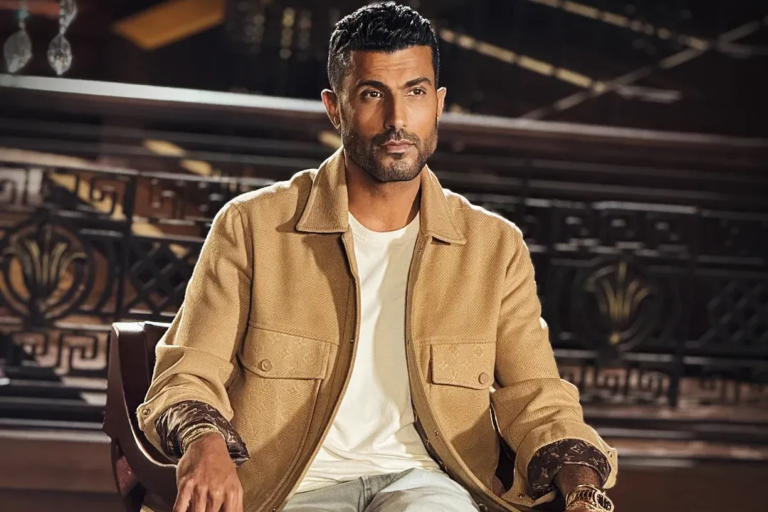
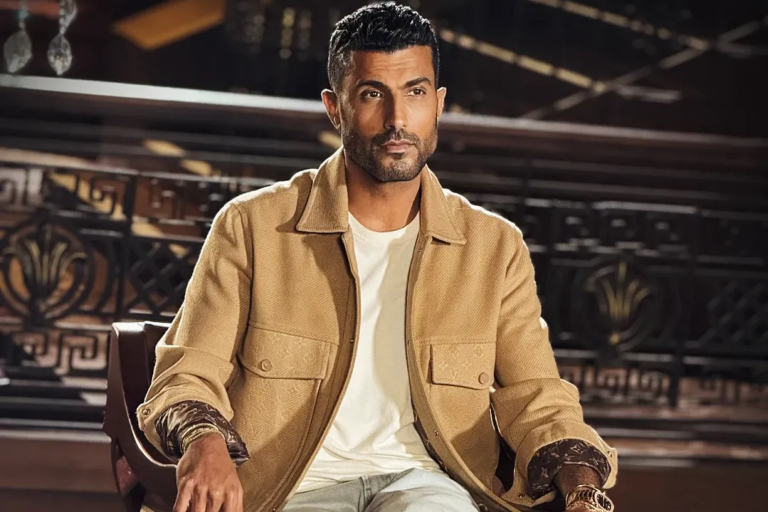
Faudel was born to an Algerian family of artists. His parents met in France, having both migrated from their home country after independence in search of work. He declared to me: “It was those people, like my parents, who built France as it is now.” And it is precisely that France to which he has returned this year, after over 15 years of self-imposed exile in Morocco, performing only in the MENA since the shattering – or shifting – of his career. “In the end, I integrated into the Middle Eastern scene when I left the French one. And you can say that, you know, I was the first to make that move. The first to export Raï to the Middle East.”
With the I Gotta Feeling Tour, Faudel is performing 26 times across the country alongside other faces from the 2000s, until March. Though he speaks sweetly of his sisterland Morocco, he shared that “I’ve missed France a lot. It’s like I’ve come home.” He made sure to tell me that over the years, he’s received many messages asking him to return, so when this opportunity arose, “I said yallah, vas-y, why not?” He then grinned and sang to me: “Ya rayah, win msafer? Trouh, ta3ya, wa twli…”
The lyrics of a song that Rachid Taha – front man of Raï-Rock band Carte de Sejour and French-Algerian immigration activist – popularized feel slightly misplaced in this context, but I suppose there is a similar placelessness in Faudel, unceremoniously booted from his fatherland, to arrive not in his motherland, but a sisterland. I asked him how he ended up in Morocco rather than Algeria, to which he explained that it was somewhat accidental. “I started singing very young, and I was experiencing a kind of burnout, so I took my car and drove to Marrakech for a few months to recuperate, but now it’s been 15 years.”
Faudel, Rachid Taha and Cheb Khaled were initially thrust together by a fateful magazine cover by Les Inrockuptibles in February of 1998, which featured the former two and Cheb Mami in place of Cheb Khaled, for an issue themed ‘L’Algérie, la France, la Musique’.

The edition highlighted 1998 as the ‘year of rock’, and saluted the transformation of the French music scene to make space for Rock and Raï’s meteoric popularity. “The big boss at Universal Music”, Faudel explained, “saw the cover, and was inspired by the success of Los Tres Tenores” – an operatic supergroup composed of Pavarotti, Domingo and Carreras in the 1990s – ‘and he thought to himself…” Faudel gave a goofy, operatic trill. “I don’t have Cheb Mami, but I have Faudel, Rachid Taha and Cheb Khaled.”
With that, Universal Music Group produced 1,2,3 Soleils, and the careers of each member soared exponentially. It was a historical era for Raï artists and their marketability on a global scale; ‘Desert Rose’, by Sting and Cheb Mami, came out the following year. Faudel told me, with slightly disingenuous modesty, that he, in fact, was the one to have introduced Cheb Mami to Sting. He shared that anecdote and others with a barely concealed hunger, with the appetite of a man who hadn’t been asked about his golden era in some time.
He smiled widely and gesticulated even wider as he told me more, about performing ‘Abdel Kader’ at Le Bal de la Rose in Monaco, in front of peak Michael Jackson, and then a story of a comedic confusion between Sting, a ‘funny cigarette’, and English rock band The Police. We made our way chronologically through his career, from 1,2,3 Soleils to I Gotta Feeling, and then, at last, it was inevitable that we unpack his past missteps in politics, and the mistake that changed the trajectory of his career.
I was nervous to ask the questions I had planned – my reverence for le petit prince du Raï has yet to dissipate, after all.
To his credit, he didn’t refuse to answer any questions, but he leaned heavily on his smile and charisma, and he prefaced all of his answers with a regionally-informed defense – ‘Maktoub, maktoub’ – which he wore like armour when faced with uncomfortable suggestions.
“If not for this small error that I made, I wouldn’t have ended up in Morocco, or met my wife. In my line of work there is a lot of fakery, and it allowed me to see who is real and who is not. It was a good lesson.”
“When I met Nicolas Sarkozy in Neuilly, [where he was mayor from 1983 to 2002] he wasn’t well-known. Then he became a Minister, and when he became President, he asked me if I could sing for him.” I pressed him: did he not anticipate vicious backlash for his support?
At that, he smacks his forehead and looks away from the camera. “I put the microphone down at the end and thought, what have I done? Shit. This is politics.” And this seems to have been Faudel’s greatest takeaway from his brush with cancellation, before it was commonplace. “An artist should not involve himself in politics. The community didn’t like it at all, which I can understand. It’s true – an artist should not go anywhere near politics.”
When I asked what drew him to the political figure of Sarkozy in the first instance, Faudel explained: “There was something he said that I liked: ‘l’égalite de chance (equal opportunity)’. And that’s all.” He then reiterated, “But me, I’m not political.”
It would have been better, I think, if he had admitted to some political strategy, to some insidious agenda he had to gain favour with a high-powered politician, or even that he genuinely believed in Sarkozy’s manifesto. But instead, perhaps from jadedness or self-preservation, he continued to denounce the relationship between art and politics altogether. The more he talked, the more he revealed a misunderstanding of the French community’s grievances with his endorsement of Sarkozy. He insists that his mistake was endorsing a politician, any politician.
He spoke as though Sarkozy had not been a villain then – just a politician. “It was only later that we saw the true face of Sarkozy’s policies on immigration.” I paused, sensing a falsity that I might be forced to address. “My name became entangled with his, but that doesn’t mean that I believe in everything he did. What came later hurt me. He had played with my sincerity, but my parents are immigrants, so of course I am not anti-immigration.”

In that moment, I felt that my own sincerity was being toyed with, because the civil unrest in 2005 had revealed to everyone that Sarkozy had no love for immigrants in France, or their children. That is why the Prince of Raï was descended upon so ferociously after Election Day, why he was labelled a ‘token’, a ‘sell-out’, a ‘puppet’ – ‘l’Arabe de service’, they called him, drawing on old colonial dynamics between militants and informants.
Faudel was one of the most successful Algerians in France at the time, one of the first sources of second-generation representation in an overwhelmingly white celebrity ecosystem, and his indulgence of a man who embodied the essence of colonial France carried immeasurable weight.
He struggles to acknowledge the colonial history laid out on the operating table, the dynamics of French ego and Algerian humiliation at play, so almost 20 years on, I was not able to write him the hauntingly tender absolution piece that I had in mind.
“If you ask any artist to speak up politically now, they will say ‘Oh no, no, no! I don’t want to end up like Faudel.’ It was brave what I did really.”
His story poses even greater questions today than it did in 2007, about the price of politics, the expectations that we have for our celebrities, and the standards to which we hold them. Representation, in this intensely fractured, polarised world, is not enough anymore. We demand full political disclosure, for consciousness to align just as much as taste or aesthetic, and I think Faudel was one of the first examples of an artist who failed to meet all the criteria.
This applies particularly to the idols of a minority group in a hostile country; deviation from the standard national character necessitates political investment as a result of political precarity.
Bad Bunny won a grammy this year, for an entirely Spanish-language album in a country where ICE was patrolling the streets outside the venue, targeting people who look and speak like him, and yet he takes every opportunity to make his position amongst his people known. By contrast, Nicki Minaj, a Trinidadian rapper, made a recent and bizarre choice to endorse Trump, and for that, her career is all but over. Like ‘l’Arabe de service’, she remains representative of her origins in aesthetics only.
In our current global reality, we pressure our artists to post for Palestine or Iran or Lebanon, aware that their post will have very little effect on the ground, but so that we can rest easy in the knowledge that our money and our time and our love is not being wasted on the undeserving. In an age of social media, a platform is a weapon, and when even our basic rights no longer seem unimpeachable, it feels demeaning to consume the art of the passive. Even more so because art itself is neither passive nor apolitical.
As such, my closing question to Faudel was ‘Do you believe art to be political?’
He applauded the question and answered without hesitation: “Of course! It’s unfortunate, but yes, art is always political.”




A Country in Retreat: Tunisia Jails Anti-Racism Pioneer Saadia Mosbah
Saadia Mosbah’s eight-year sentence raises urgent questions about repression, migration politics, and the cost of defending Black dignity.