In the summer of 1953, Dmitry Shostakovich wrote a stream of letters to a pianist in Baku named Elmira Nazirova, then buried her name inside the horn line of his Tenth Symphony. This autumn, in the city he wrote it for, someone will finally play it back to her.
Nobody in the hall is likely to catch it by ear. You would need the score in front of you, and probably someone to point at the bar. But it is there: five notes in the third movement of Shostakovich’s Tenth Symphony, spelling out the name Elmira in a private code that crosses German note names with solfège — E, La, Mi, Re, A. He wrote it in 1953, the year Stalin died, the same year he sent his student in Baku a stream of letters that read like a man working something out in real time and not quite managing it.
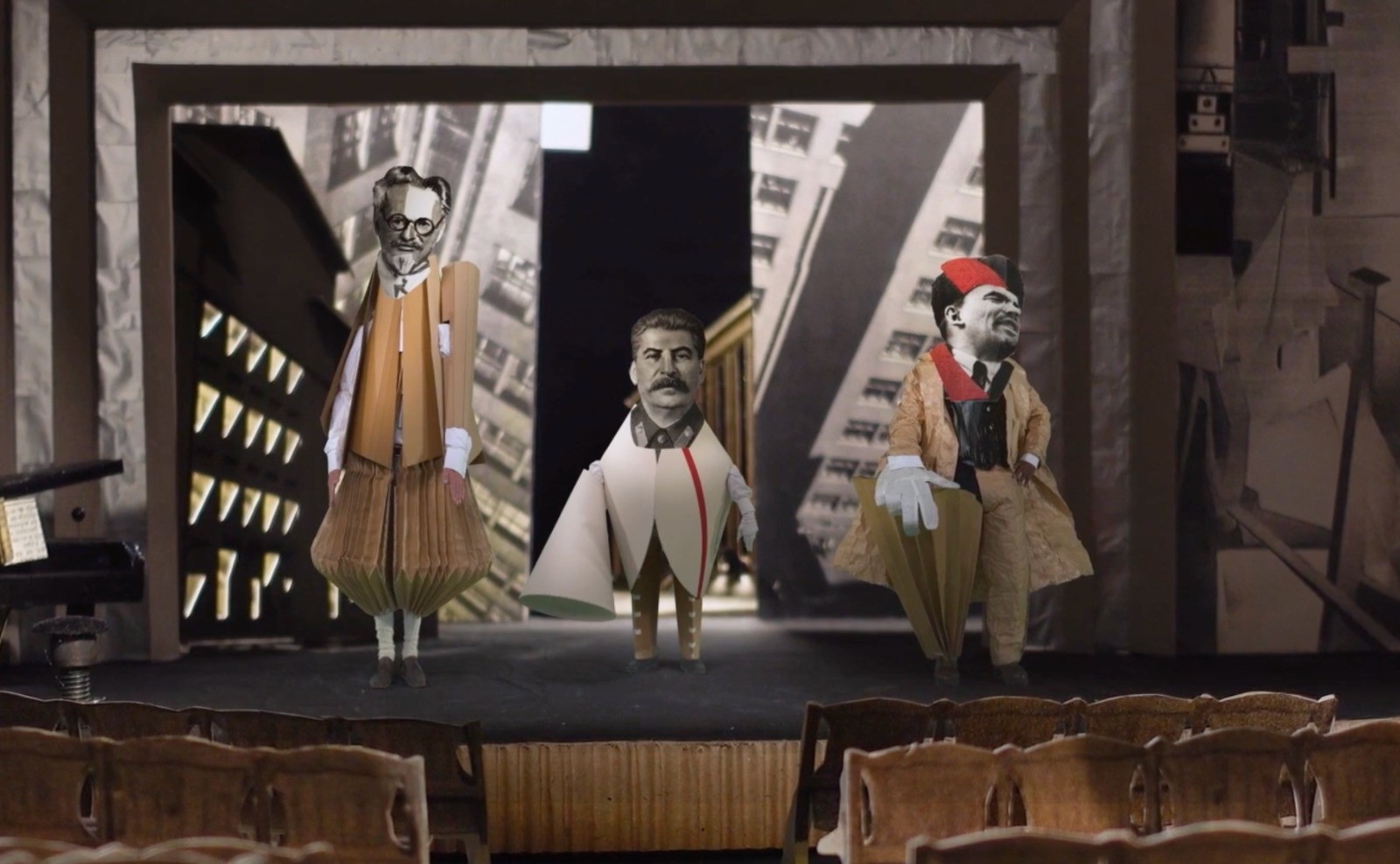
Seventy-three years later, an orchestra assembled by one of the city’s own, the violinist and conductor Dmitry Sitkovetsky, will play that symphony in Baku, beneath a film by William Kentridge built from cardboard, torn paper and stop-motion.
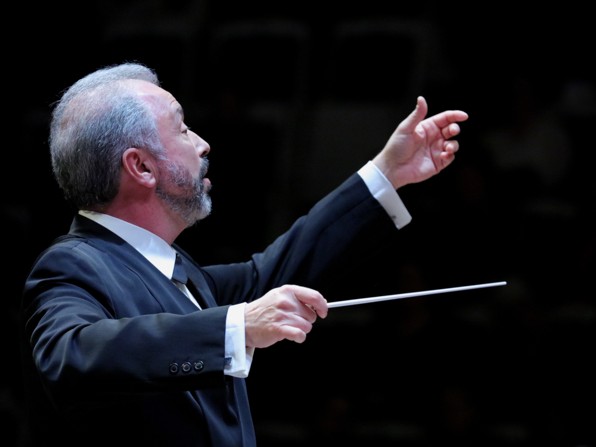
It is the kind of detail that gives a festival an identity, and identity is what turns an event into an institution. Baku’s International Arts Festival is only one edition old, after a successful inaugural run in 2025, and it is setting the bar high.
Staging an ambitious first festival is the easy part. When the second eclipses the first, something is happening — and this year’s artist list suggests it is. The 2026 edition runs from 28 October to 8 November: twelve days, eleven core productions, and a parallel programme spilling into cinemas, museums and courtyards across the city.
Akram Khan, William Forsythe, Crystal Pite and Shahar Binyamini are on the dance side; Kentridge, Sharon Eyal and Romeo Castellucci at the more experimental end; Les Ballets de Monte-Carlo and English National Ballet both make the trip; Lev Dodin, Rezo Gabriadze and Dmitry Krymov carry the theatre; and Maxim Vengerov and David Garrett cover, between them, roughly the entire distance a violin can travel.
Look at who the festival is trying to reach before looking at who it has booked. Garrett’s Millennium Symphony, at the Heydar Aliyev Center, is not the odd one out in a programme otherwise stacked with Dodin and Castellucci. That is the point of him. He trained at Juilliard and has spent his career refusing to pick a lane between the concert hall and the arena. His Baku premiere is aimed squarely at people who would not otherwise buy a ticket to anything else on the bill. AISEL’s electronic mugham set works the same door from a different angle.
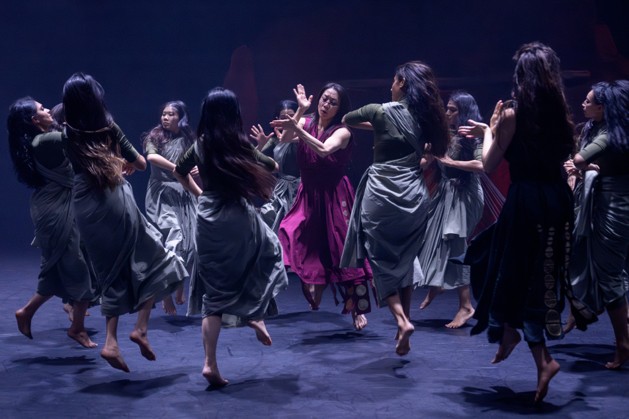
The programming has a second habit: almost nothing in it sits inside a single form. Kentridge’s contribution is a film played live against a full orchestra rather than screened in a cinema. Akram Khan’s Thikra: Night of Remembering, made with Saudi artist Manal AlDowayan, credits a choreographer and a visual artist as joint authors. Castellucci stages an installation whose sound is generated from human hair, inside a museum rather than a theatre.
None of this is imported curatorial fashion. It is closer to how Baku has always made things: mugham worked into European operatic form a century ago, and jazz-mugham, the genre the pianist Vagif Mustafazadeh invented in the 1960s by running mugham’s improvisational logic through jazz harmony. The festival has also revived open-air cinema, in a city that once ran some thirty cinemas through the summer before the habit lapsed.
The geography explains a good deal of it. Baku sits at the narrowest point of the corridor between the Caspian and the Caucasus, a pinch point for caravans, armies and eventually pipelines, and it has behaved accordingly for most of its recorded life. Its opera house exists because of a wager: two brothers made rich on caviar are said to have built it in under a year after a visiting soprano remarked that she could hardly return to a city with no proper stage for her voice. It opened in 1911, and the same building — now the Azerbaijan State Academic Opera and Ballet Theatre — supplies dancers to this year’s programme.
People of many origins built the city between them. Synagogues, churches and mosques still stand within blocks of one another by design rather than by accident, which is more or less the plot of the city’s own myth, Ali and Nino: a Muslim boy, a Christian girl, and a place that belongs to neither Europe nor Asia and has to invent itself as a result.
That geography has become a focal point again. Trade across the Caspian is picking up along what is now called the Middle Corridor. Baku sits at its intersection, where the line runs from Istanbul to Samarkand. This year’s roster reads like a map of that crossing: artists from St Petersburg and Jaffa, Tbilisi and London, Monte-Carlo and Johannesburg, sharing stages within days of each other. Few cities could put that particular group in one room without it feeling forced. In a year when much of the world is sorting itself into camps, a festival that does the opposite is worth noticing.
Shostakovich’s own relationship with Baku runs considerably deeper than one hidden name. He first performed here in the summer of 1934, aged twenty-seven, already notorious for Lady Macbeth of the Mtsensk District and not yet condemned for it. Two of the composers who, between them, define twentieth-century Azerbaijani music, Gara Garayev and Jovdat Hajiyev, studied under him in Moscow in the 1940s, and the relationship outlasted the coursework so thoroughly that Shostakovich is said to have called Garayev his son.
The opening concert, at the Philharmonic Hall, deliberately echoes that first visit: the pianist Lukas Geniušas and the trumpeter Tine Thing Helseth play the same concerto Shostakovich played here in 1934, under Sitkovetsky, who was born in Baku two decades after that concert into a family thick with musicians, and who returns to open the festival before conducting the Tenth beneath Kentridge’s film. It is not a borrowed anniversary. The symphony has a Baku address written into it, and this festival proves it.
Dance carries a parallel inheritance, most of it tracing back to Diaghilev’s decision, a little over a century ago, to take Russian ballet out of the imperial theatres and put it on the road. Les Ballets de Monte-Carlo’s LAC, at the Heydar Aliyev Palace, is the most direct descendant. After all, Monte-Carlo invented the touring model. English National Ballet, making its first Baku appearance, brings Forsythe, who pulled Balanchine’s neoclassicism off its axis, and Crystal Pite, who came up through Forsythe’s own company in Frankfurt — two generations of the same argument in one evening.
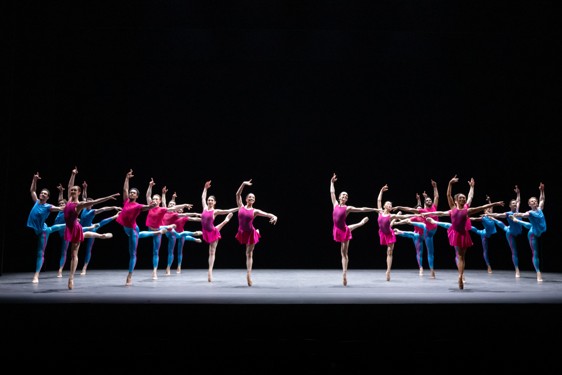
Locally, Shahar Binyamini folds dancers from the Azerbaijan State Academic Opera and Ballet Theatre and the Baku Choreography Academy into his own company for New Earth / Bolero X, closing the dance programme with Ravel’s Boléro: seventeen minutes on a single accumulating idea, not unlike mugham’s own habit of staying inside one mode and letting intensity, rather than harmonic movement, do the work.
Theatre supplies the more melancholy version of the same story. Dodin’s The Seagull, from the Maly Drama Theatre in St. Petersburg; Krymov’s Bloody Mary with Gesher, the company founded in Jaffa by theatre people who left Moscow; and the Rezo Gabriadze Marionette Theatre’s Alfred and Violetta all descend from the same Russian and Soviet school of ensemble psychological theatre, and each shows something different about a tradition once it has left home. Dodin hides the machinery completely. Krymov, trained as a designer, shows it on purpose. Gabriadze, working with puppets the size of a forearm, hangs it on a visible string. Put the three side by side, and you have an accidental essay on theatrical illusion, written by companies that were never trying to write one together.
The festival closes on 8 November. Somewhere before then, in the horn section, five notes will spell out a buried name. Store something carefully enough and trust that the right person will eventually find it — Baku has been doing that since long before it had a festival.