The biggest difference between consumers now and even a few years ago is intentionality. Since the end of 2023, younger consumers aren’t just spending more carefully, they’re spending more consciously. There’s a pause before the purchase. A question: “Where is my money going? Who does this support?” And it’s not theoretical. Corporations like McDonald’s, KFC, and Pizza Hut have all felt the impact in real time.
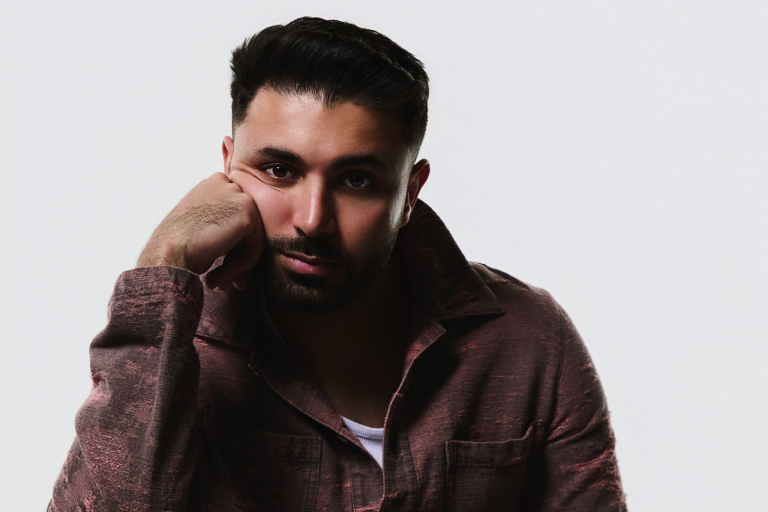
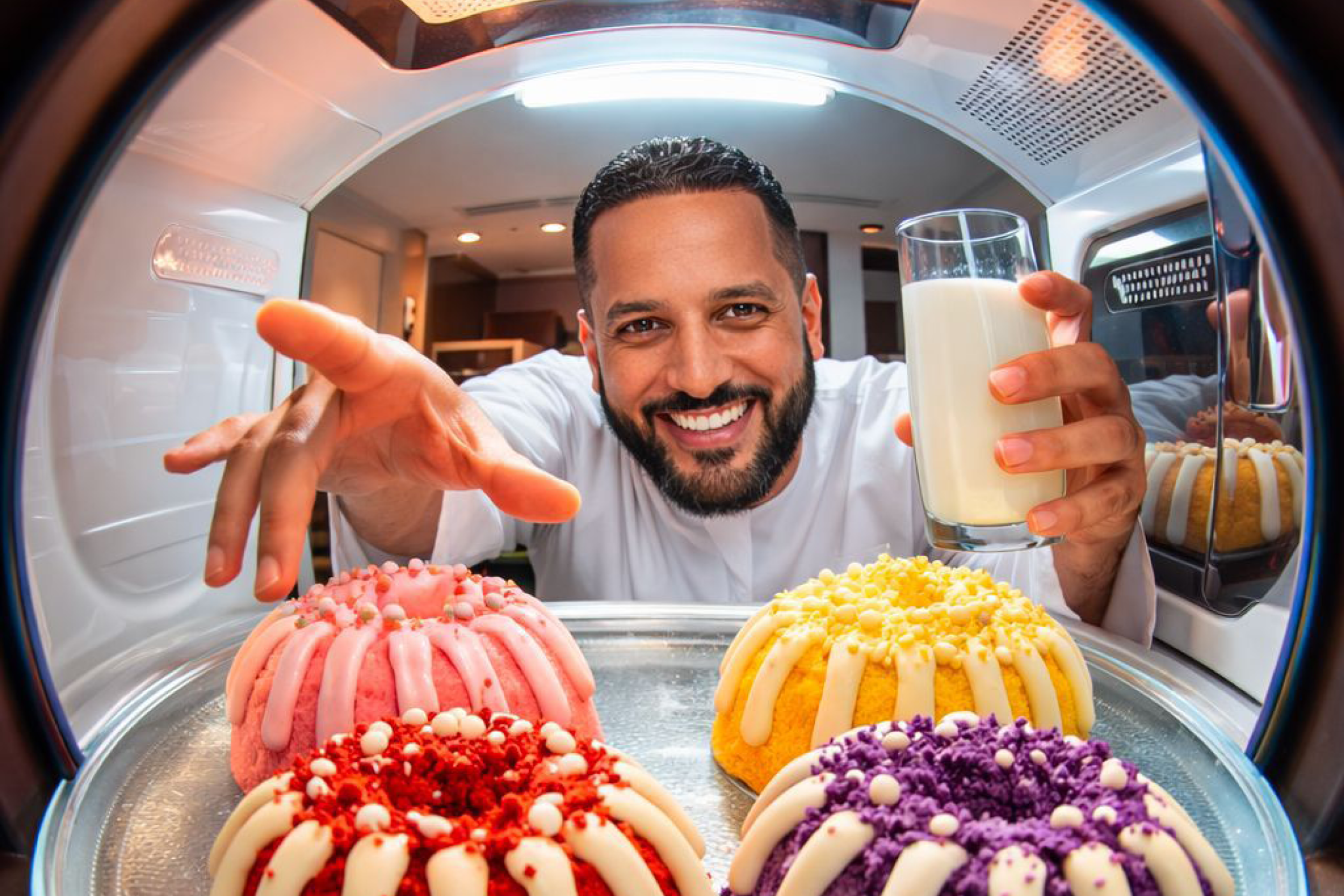
Fadie Musallet doesn’t just understand that kind of intentionality; he’s built his entire business around it.
His latest venture, FadieCakes, functions off a “buy one, give one” model; with every purchase, a cake is gifted to a labor worker. “Our slogan is ‘Cake brings us together,’” he says. Behind the scenes, with a team of ten, FadieCakes gives out an average of 500 cakes every Friday.
“So you’re not just buying a good cake,” he explains, “But on the back end, you’re also feeding someone.”
Musallet’s energy comes through immediately, even over Zoom. We’re speaking just after Eid, after the buzz of Ramadan had worn off, but Musallet was still riding off the energy. He’s not overly polished, not trying to sell you something, it’s more like he’s trying to make sure you get it. His life’s work, he tells me, is a deeply personal mission.
“Giving back is just something that’s branded in my heart for the rest of my life,” he says. “The more I give, the more God gives me. Everything in life God gives us is a test, what are we going to do with it? And the more I give back, the more I see God giving me. I don’t stress anymore.”
Before all of this, Musallet was working as a medical device salesman in Michigan. The move to Dubai was a reset, and it’s there that he started The Giving Family.
What began as a single meal distribution, feeding around 400 labor workers, has grown into something much bigger. This past Ramadan, The Giving Family distributed nearly 250,000 meals. “Outside of Ramadan, we do it every Sunday,” he says. “Last Sunday we did 2,000 meals. This Sunday, another 2,000. We try to keep it consistent.”
What separates The Giving Family from other organizations doing similar work in Dubai and elsewhere, is the intentionality Musallet brings to the table. He sees this as a responsibility.
“Because without them,” Musallet says, referring to labor workers, “we wouldn’t be living in this beautiful city.”
The operation runs almost completely because of the dedication of local volunteers. There’s no registration process, no sign-up sheet. You just show up.
“I feel like everyone that comes has good intentions, because they’re not obligated to come. They come because they want to give back.”
And over time, that openness has turned into something real – a community that keeps growing in unexpected ways. Musallet tells me that four couples have met while volunteering through The Giving Family.
“One of them had twins, a boy and a girl,” he says. “Another couple got married two years ago and just had a baby.”
That same thinking carries over into FadieCakes. The “buy a cake, give a cake” model works because it doesn’t feel like an add-on, it is the business.
It’s also rooted in a bigger idea: that a company can exist in a place like Dubai, built on luxury and excess, and still center the people who made that city possible in the first place.
And with the recent war between the U.S. and Iran, Dubai and the UAE was caught in the crossfire; the seemingly untouchable nation suffered strikes unfamiliar to its modern memory. These strikes have targeted civilian, economic, and energy infrastructure, causing disruptions to aviation, property market downturns, and residential evacuations.
But it was during these unparalleled times, Musallet says, that sense of community was fortified.
“I’ve never seen anything like this in my whole life,” he says. “Everyone was posting, ‘if you want to collaborate, let’s collaborate.’ ‘If your business is slowing down, let us know.’ People were tagging each other, supporting each other.”
At the moment the community needed it, people showed up for each other in a real way.
“To see the community come together like that – it showed you why this is the best place to be living,” he says. “It was incredible.”
That same spirit of collaboration has become a huge part of FadieCakes’ growth. Since launching at Sole DXB, Musallet has leaned into partnerships that feel culturally aligned.
One of the first major ones came through Huda Kattan and Huda Beauty, where FadieCakes catered a major product launch in early 2026.
“She’s always been supportive,” Musallet says. “To this day, she’s posting us – on her personal account, on her business account. She’s been amazing.”
From there, the collaborations kept building. A current partnership with Rowley’s Steakhouse Dubai is moving over 100 cakes a day. Pull Me Pizzeria is selling around 150 cakes a week. And there’s more coming – Home Bakery, El Primo Tacos, Miss Lily’s Jamaican, with what Musallet describes as “a cake with a Caribbean twist.”
And maybe that’s what FadieCakes understands better than most, that people don’t just want to consume anymore. They want to feel where it lands.