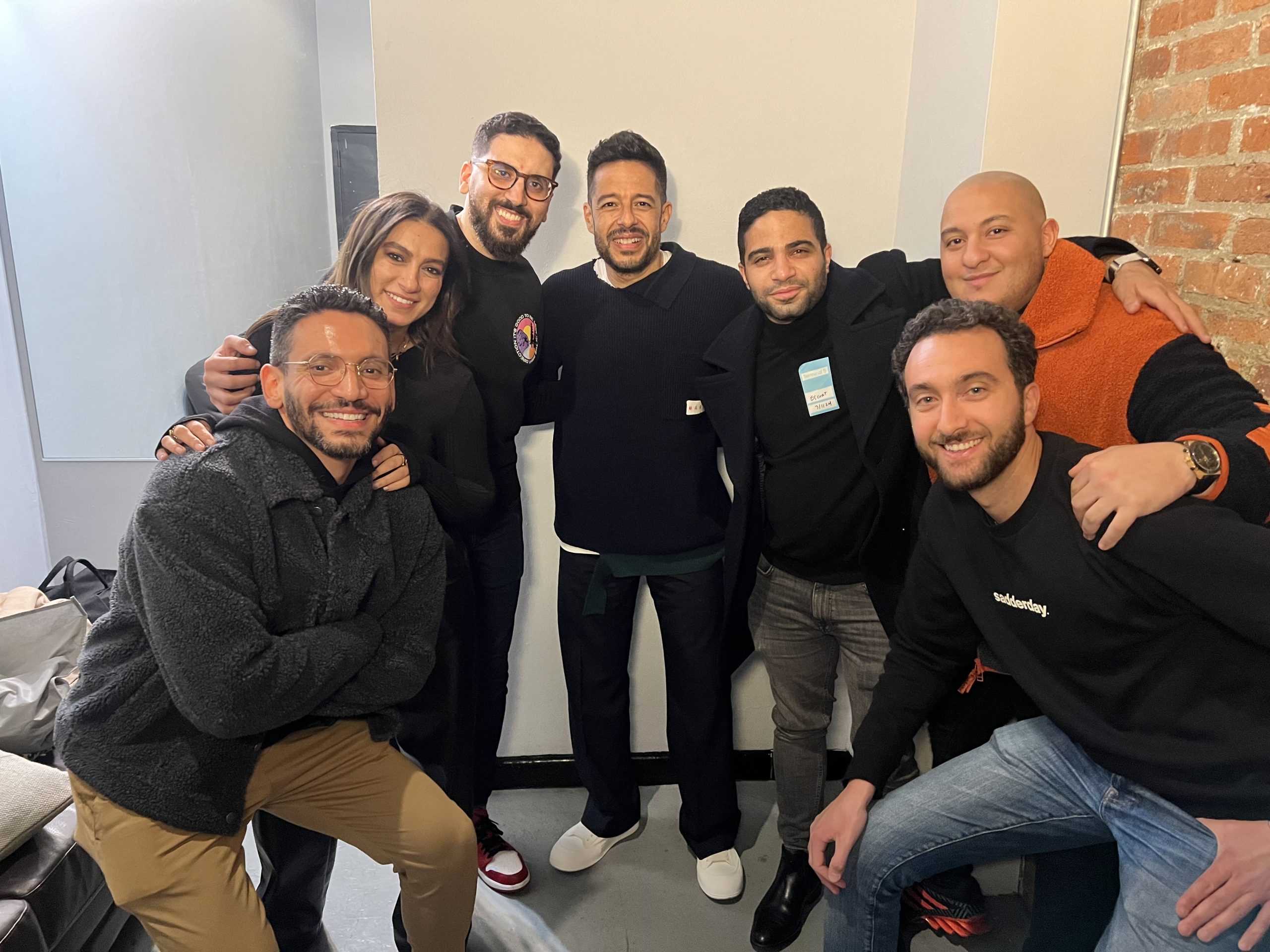
In early August, four friends huddled over their laptops in a private Brooklyn backyard, running through the evening’s list of tasks. With two months left before tour, every detail – ticket sales, flight bookings, venue logistics – had to fall into place before opening night. At the head of the table, Ahmed Murad or “Damby”, wearing a black T-shirt and baseball cap, checked off each item with the kind of practiced calm of someone who’s done this many times before.
Together, the group forms the New York core of Kème, an indie production house taking on the outsized challenge of bringing some of the Middle East’s biggest artists – from musicians to comedians – to North America for the very first time. Though they focus on live concerts and tours, the company has steadily expanded under the wider umbrella of entertainment, covering everything from film production to celebrity management.
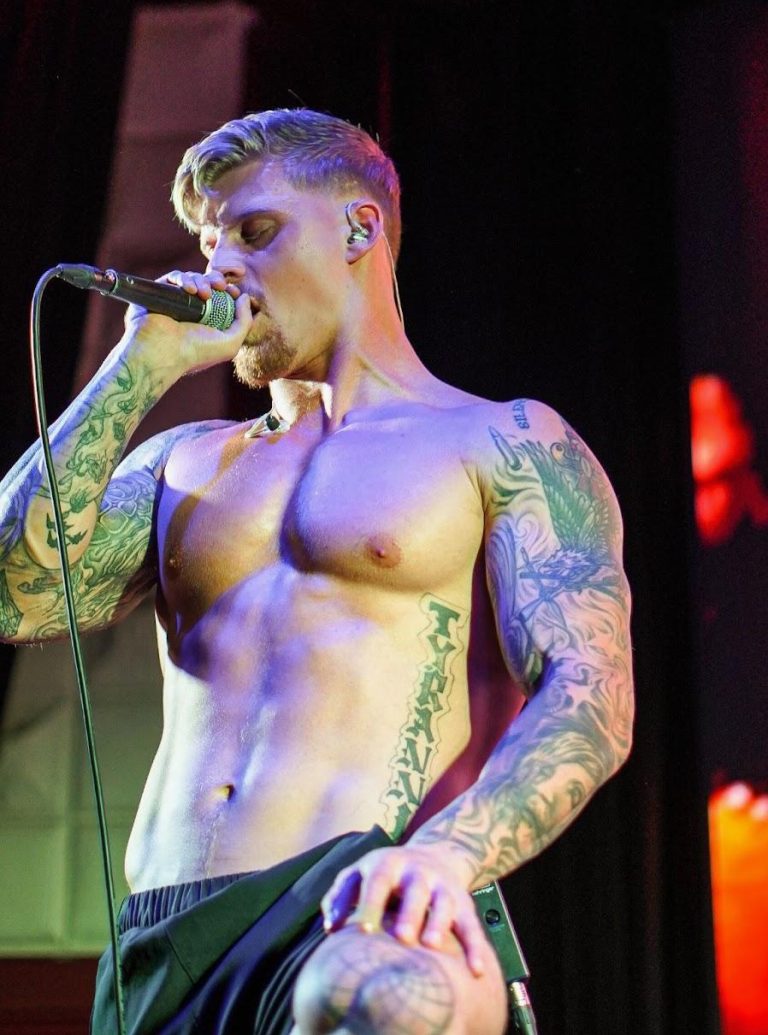
On that particular Tuesday’s meeting agenda: a fall festival debut and a coast-to-coast run for Afroto, a rising Egyptian hip hop star.
“Everyone wears different hats,” said Murad, Kème’s co-founder and CEO. “But during tour, you see all of us on the ground working.” And in a matter of weeks, such will be the case, when laptops will be traded for backstages, airports, and long nights on the road. While the work might seem all logistics, at the heart is a love of music and connecting audiences with an experience close to home.
Founded in 2017, Kème began several years after Murad moved from Cairo to New York City. There, through the local Egyptian community, he met and formed a friendship with Sarah Elgabri. They bonded over their heritage and a desire to create something outside of their day jobs. What they discovered was a gap.


“We started to notice something missing in our community, which is the entertainment piece,” said Murad. “It was there – I’m not going to say that we were the first – but it was not as satisfying as other concerts or shows in New York.” He added that while Middle Eastern artists had passionate followings, many at the time were still largely disconnected from the globe stage.
The motivation behind starting Kème was also personal. As Elgabri put it, “Music was always the part of my culture I felt most connected to. And I wanted to expose that to other people.” With that shared vision in mind, the duo set out to reimagine what the MENA live entertainment scene could look like in the West.
They started with small production concepts, like filming a short documentary for the Egyptian rock band Cairokee. Then in late 2019, Kème staged its first concert, headlined by singer Mahmoud El Esseily in Long Island City, followed by a night with the band Sharmoofers early the next year.
“It was pretty thrilling actually to sing for all those people who live abroad and the younger generations… Art is a form of connection and bond to their roots,” reflected El Esseily on his first North American tour, which sold out to 1,200 fans. “The feeling that everyone across the ocean knew every single word of my lyrics literally gave me goosebumps.”
By the time the pandemic hit and put things on pause, Kème had already begun carving out both a space and reputation for themselves. “Whenever we would speak to the artist or their managers, they were kind of already convinced, just because of the amount of knowledge that we would have about who they are and where they come from,” said Elgabri. “And that’s how we just ran with it.”
Driven by the conviction that live music would return post-lockdown, Kème carried its momentum into 2022 and 2023 – their busiest stretch yet, with nearly four tours each year across the U.S. and Canada, including a Cairokee tour which filled 3,000 seats at Terminal 5 in New York. In each city, they paired headliners with local openers like DJ Carmen Sandiego, deepening ties within the diaspora.
Part of the company’s early strategy was to build audiences by encouraging cross-cultural exchange. At shows, attendees were invited to bring along a non-Arab friend for free in the hopes that they’d share their experience of the event. The idea was to familiarize new listeners to MENA music, over time helping to diversify crowds and extend the genre’s reach.
“When we started, we wanted to introduce ourselves. It wasn’t a matter of simply making a profit,” explained Ahmed Hussien, who leads marketing. “We wanted everyone to know that Kème is bringing you a taste of home, and that was pretty successful in helping us grow.”

Some milestones are a co-produced tour with Live Nation for rapper Wegz, an independent one featuring Hamaki, and the first sold-out Arabic show in the U.S. for comedian Bassem Youssef – cementing Kème’s role as the go-to bridge for Middle Eastern talent. Most recently, the production house brought TUL8TE across North America and Europe, including celebrated openers like Palestinian-American singer Lana Lubany.
The journey hasn’t been without its hiccups: emergency drives to get bands to their gigs on time, 13-hour airport days, entry troubles at the gate, one missing bass guitar, and many delayed flights. Yet in less than a decade, that original founding vision has evolved into countless events and a team of a dozen staffers spread across New York, Los Angeles, Dallas, Toronto, and Cairo, where Elgabri is now based.
Along the way, Kème’s trajectory has somewhat mirrored the rise of MENA music itself, which in recent years has become the fastest-growing region in terms of recorded revenue. “The market segment we cater to – whether music or comedy – is growing quite fast,” said partner Karim Khattab, who came on board in 2022 and oversees finances. “Whether the world likes it or not, we bring in really good music to the scene.”
Even industry giants like Live Nation have taken notice of such growth, betting on the region while signaling MENA music’s place on the global stage. Meanwhile, Kème has built its name as a boutique operation with an ethos of hospitality – one that emphasizes cultural translation as much as production scale. Over the years, their mission has stretched beyond concerts: the team has built ties with record labels as well as powerhouse booking and management agencies, helping embed artists more firmly into the broader music business.
Last year, Kème organized an Arabic-Latin “fusion tour”, where they brought a Colombian artist on the road with an Egyptian band. Right now, they’re working on a fall festival called “Cairo to Cartagena” at a nonprofit arts venue in New York, and an expansion into Latin America next. “Both [regions] have a lot of culture and heritage they can share,” said Khattab. In other words, the calendar is busy.
The payoff is visible every time Kème announces a new run, comments on Instagram rolling in fast: pleas to add a stop in their respective city, gratitude the timing of the tour (intentionally) doesn’t fall on Ramadan, and requests to eventually bring in another star. Underneath it all, a current of excitement from fans to witness a performance they love live. As one follower wrote when the Afroto tour was first posted in late July: “You’re really out here fulfilling our diaspora dreams.”