
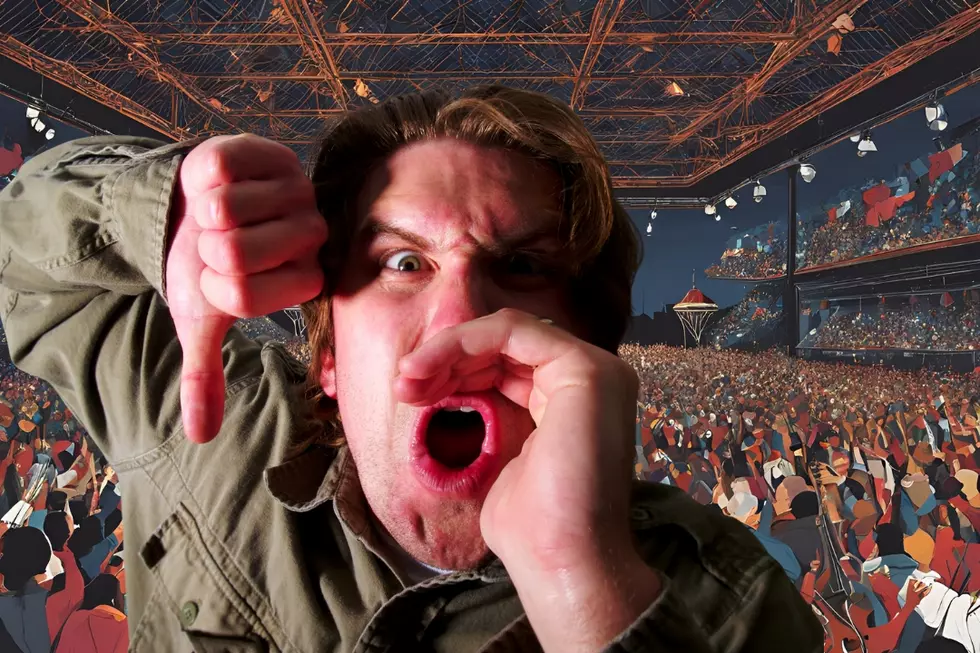
Last year saw several highlights in the regional music scene, particularly with the release of Wegz’s debut album, Aqareb. On this record, the rapper deliberately stepped away from the safe zones that often guarantee commercial success, exploring new musical territory that ranged from hip-hop and R&B to afro-house, disco, and beyond. Opinions on the album were naturally divided, but the conversation quickly went beyond the music itself. It became personal – and, in many ways, revealing.
The central debate was simple: had Wegz stopped representing his fanbase? Some critics and fans argued that he had drifted from his roots, now representing primarily himself and the social strata he had recently joined. Across social media, many called for the “old Wegz” – the one who rose to prominence with tracks like “TNT,” “Wardyan,” and “El La2ta.”
This conversation recalls an earlier moment in Egyptian hip-hop with Marwan Pablo. When he released his hit “El Gemeza” – considered by many the first mainstream success in the modern Egyptian hip-hop scene – he faced criticism for incorporating mahraganat-influenced production, a style popularized by Molotov. Some accused him of abandoning hip-hop and trap, claiming he was no longer true to his identity, and argued that such fusion could harm the fledgling rap scene.
This kind of discourse is hardly unique to rap. In 2015, when Mashrou’ Leila released Ibn El Leil, fans asked the now-familiar question: “Are you trying to go pop?” The band, rooted in rock, had simply attempted something new. A year later, El Morabba3 faced similar accusations after releasing Taraf El Kheit, an electronic-leaning follow-up to their post-rock debut. Fans claimed the band was “losing themselves” and demanded the return of the older, rock-driven sound.
These examples reveal a more complex dynamic: the tension between underground artists and their fanbase. Does commercial success inherently dilute an artist’s creative essence? Does striving to reach a wider audience make music less authentic? And why is underground or niche appeal often framed as the gold standard of artistic integrity?
The Question of Authenticity
Listeners sometimes equate authenticity with staying in certain spaces: the streets, the underground, the early days of a career. Breaking out, moving into mainstream spaces, or experimenting with different genres can provoke criticism – not necessarily for the art itself, but for what it symbolizes: success, mobility, and, for some, a perceived betrayal of the collective identity that first embraced the artist.
Globally, mainstream artists and pop music have long been looked down upon. Whenever an artist appears to “make it big,” alarm bells go off for certain fans. And this isn’t without a good reason: mainstream music does often prioritize commercial success and mass appeal over artistic risk. Catchy hooks and familiar formulas are designed to reach the widest audience possible, which feeds the perception that pop artists are products of the industry rather than independent artists.
Contrast this with subcultural music, emerging from underground scenes or countercultural movements, and mainstream music is cast as safe, commercially driven, and largely non-confrontational.
This instinct is far from new, yet it contradicts another long-held belief by loyal fans: that their artists should be not only able to live off of their music, but also to enjoy wider access to resources that they need to further hone and develop their craft. Embracing mainstream visibility continues to be the clearest path to doing so. Fans should be able to hold these contradicting truths at once, striking a balance between support and critique.Artists are rarely treated like professionals in other fields, where striving for growth and success is expected and respected. Music-making is many things, including the fact that it’s a job, and an artist’s livelihood depends not just on creativity but also on the team and infrastructure supporting them. Beyond that, artistic freedom – the ability to create and evolve without undue judgment – is something every artist deserves.
The Weight of Listening
So why is reaching a wider audience often seen as “losing oneself”? It doesn’t inherently mean that. Yet many still believe an artist must stay lowkey, as if remaining where they started automatically equals authenticity. Experimenting with something new isn’t always an attempt to go mainstream; sometimes it’s just the intersection of creative exploration and what people are actually listening to.
Perhaps there’s also an element of elitism at play. Hardcore audiences often impose their own standards on the broader public, perceiving themselves as more discerning, while dismissing whatever resonates with most listeners as automatically “inferior.”
Sociologist Pierre Bourdieu argued that taste is a form of social distinction: those with cultural capital – education, exposure to “refined” arts, social status – define what is “good” and look down on what the masses enjoy.
Economists and sociologists also describe the snob effect: the more accessible or popular something becomes, the less prestigious it seems to those who prize exclusivity. Philosophers from Matthew Arnold to Clive Bell have similarly framed “high culture” as inherently superior to popular culture.
On a psychological level, people tie their identity to the sophistication of their preferences; admitting that widely enjoyed art can be genuinely good threatens that self-image.
Taken together, these forces explain why a small group elevates their own taste above the public’s, policing authenticity and dismissing experimentation that resonates with more listeners.
Yet what they call “selling out” is often just an artist navigating the intersection of creative exploration and audience engagement – not a loss of self. Artists like those mentioned earlier remind us that evolution, experimentation, and growth can coexist with authenticity, challenging us to reconsider how we define what it truly means to “stay true” in music.
And ironically, some tracks that became major hits might have been celebrated even more by the hardcore fanbase if they hadn’t topped the charts. This effect can be felt in certain older songs, which over time have come to be recognized as true bangers.
The Weight of Crafting
Yet there’s a sweet spot that can bridge the gap between hardcore fans and artists – and it’s the artist’s responsibility to find it. In this two-sided dynamic, whether an artist aims to reach a wider audience or experiment with something new, they still need to add their own touch, contributing meaningfully to the conversation or the genre.
Art doesn’t always have to carry a message; entertainment can be a message in itself. Still, an artist can do good by remaining aware of their surroundings, considering the economic, political, and societal realities of their community. While artists can be intensely personal in their work, staying grounded in reality often amplifies the impact, creating a point where personal expression and social awareness complement each other.
That intersection is where the real friction, and the real magic, happens. When artists evolve, they inevitably pull their audiences into that evolution. Some listeners cling to the version of the artist that first made them feel seen; others embrace the shift as proof that the work is alive rather than frozen in nostalgia. But growth isn’t betrayal. If anything, it’s the price of artistic honesty. And in a region where a proper music infrastructure is still missing, artists who take risks aren’t abandoning their roots; they’re expanding what those roots can hold. That tension between expectation and experimentation is a natural part of any scene finding its voice.
A classic example comes from Bob Dylan in 1965: when he went electric at the Newport Folk Festival, folk purists saw it as a betrayal of his pure political songwriting, even going so far as to label him “Judas” for embracing a broader sound. Yet, as Dylan’s career unfolded, it became clear that their criticisms were revisionist, and, over time, it was unmistakably evident that his decision had been more than justified.
Lastly, in a region like ours – where political and societal constraints shape much of what can be expressed – stepping outside the flock to explore broader, sometimes riskier themes is genuinely challenging for artists. Yet many regional artists have done so before, whether bluntly or subtly, and this should neither cease nor slow; the most important thing is that today’s artists continue to push their practice in their own way.
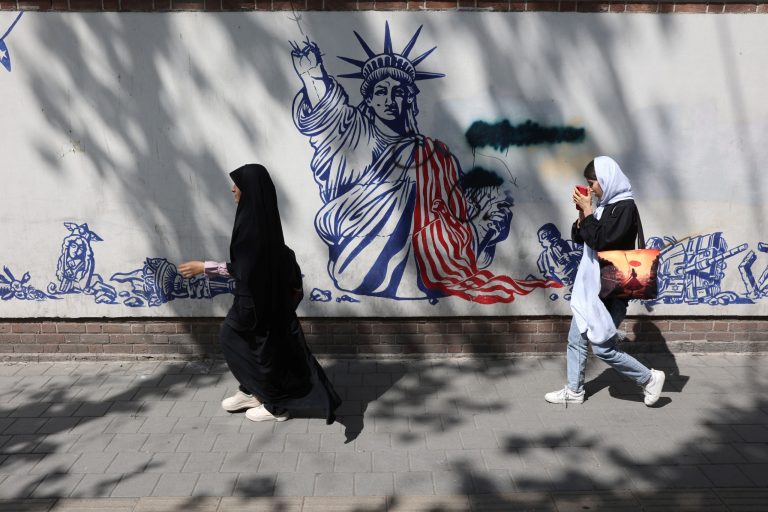










Trump’s Iran War Has Clear Winners and Losers
After weeks of intensive strikes, Iran is emerging from the war with potentially more sovereignty, fewer sanctions, and a weaker opposition.