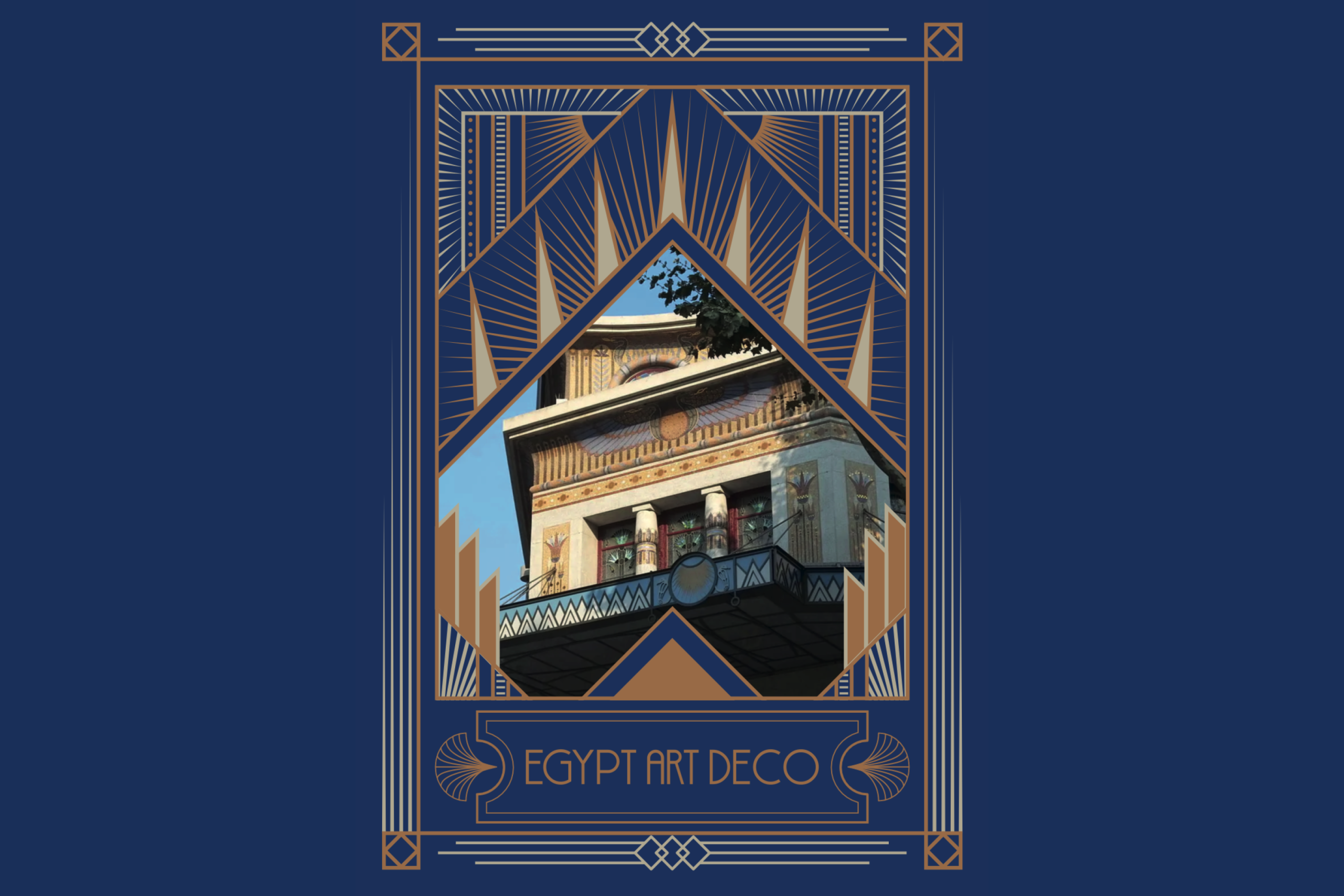
Launched in July 2025, Egypt Art Deco is a project surveying Egypt’s influence on global Art Deco. Its public program begins November 11th, 2025, combining interviews, newly commissioned essays, artworks – eventually culminating in a series of public talks, exhibitions and public interventions.
When we launched our project, ‘Egypt Art Deco,’ in July 2025, we quickly realized that the gap to be filled was larger than just publishing. It was to urgently document buildings in Egypt that carry the 1920s grace, while also looking at Western capitals and wondering how Ancient Egyptian influences and material reached them. It was to document what was once produced, but also to push contemporary designers, artists, musicians, and performance artists to create new work that draws inspiration and material from older histories. It took us a moment to realize it wasn’t just to celebrate and document, but to generate, disseminate and produce. It is not a project to mark anniversaries – it’s a new curatorial framework.
I wondered how I ended up here – initiating a project on Art Deco. Or why I am gathering antique prints, looking for patterns in a photograph of an ancient temple as I study a fireplace mantle when I’m not a designer – or why I collected Erté’s illustrations, Talli fabric from Assiyut, Sonia Delaunay’s prints or plates, or hand-painted contemporary pottery from Fayoum.
As a curator, artist and collector, it turns out that for the past decades I have been rebuilding the house of my grandmothers, by collecting items that reminded me of certain colors, sounds, textures, or those prisms that would form on the lacquered walls when the sun hit the chandelier. All swayed with languid and lithe music, where Mounir Mourad’s jazz would pour into an Um Kolthoum hour-long song, then back to the swinging sounds of early Hollywood film scores, to Badia Massabni’s 1920s cabaret hits. In fact, Badia was so loved in the family that my grandmother’s nickname was Badia.
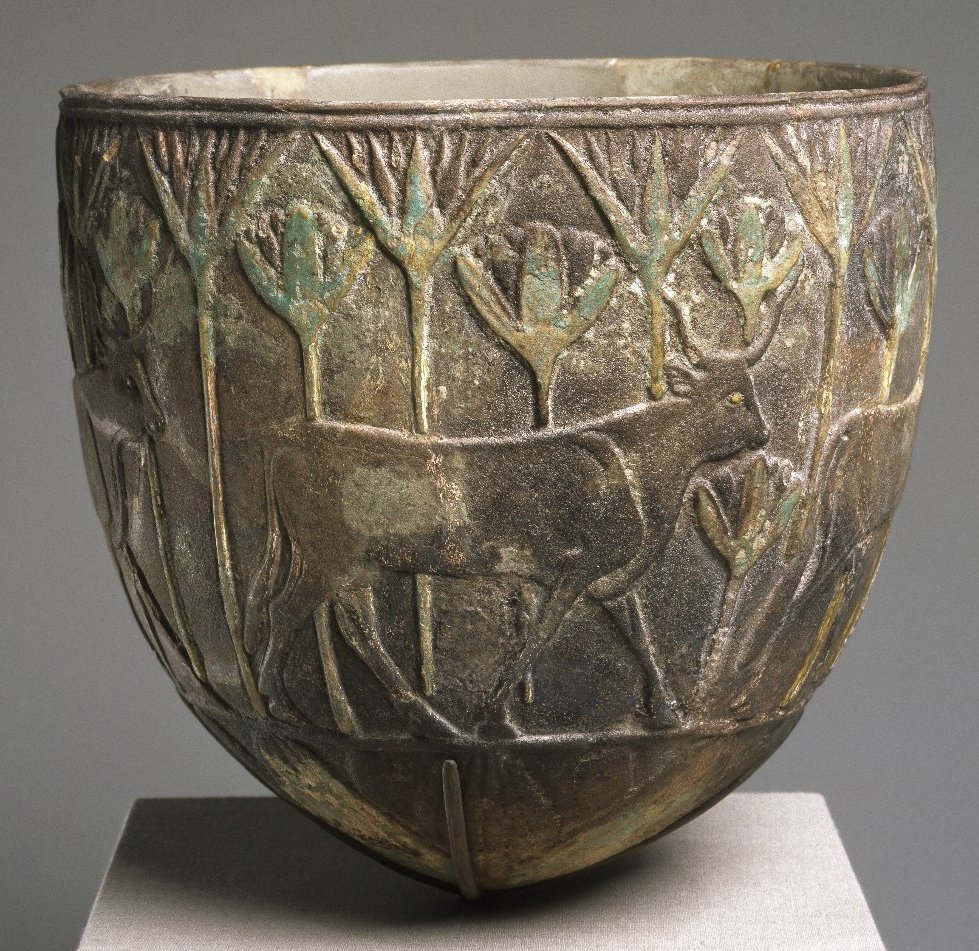
I was born in a home filled with Art Deco wonders: ebony and wrought iron, crystal and smoke, patterned bespoke fabrics, perfectly curved wood and hidden cabinets. That little 1930s Ronson chrome lighter was clad in red leather and sat on a lacquered smokers’ tray with ebonized handles, where as a kid I was fascinated with the parts that sparked fire and the magic miniscule chute that hid ash and cigarette butts, leaving no need for a besmirched ashtray on the coffee table. The old bar cabinet looked monumental, and if it wasn’t a lotus handle, it was a detailed wood-inlay sideboard where my toys and books were kept.
Growing up within an Art Deco setting in Cairo meant the old with the new, the ancient with the 1920s, the Um Kolthoum with the jazz, Mounir Mourad with Gene Kelly. This density of sonic and visual input compels an artist or a curator to see what’s deemed iconic in the west, through kaleidoscopic glasses. The years go by – between New York, Paris and Berlin, and back to Cairo – to work on this project, ‘Egypt Art Deco,’ to document what is about to be lost in my hometown, from buildings to objects and stories, and to mark Egypt’s influence on global Art Deco in cities including Paris, New York or London, where even for the untrained eye, the winged sun motifs, pyramids and lotus shapes glow with the opulence of an ancient culture revived through fascinated western eyes.
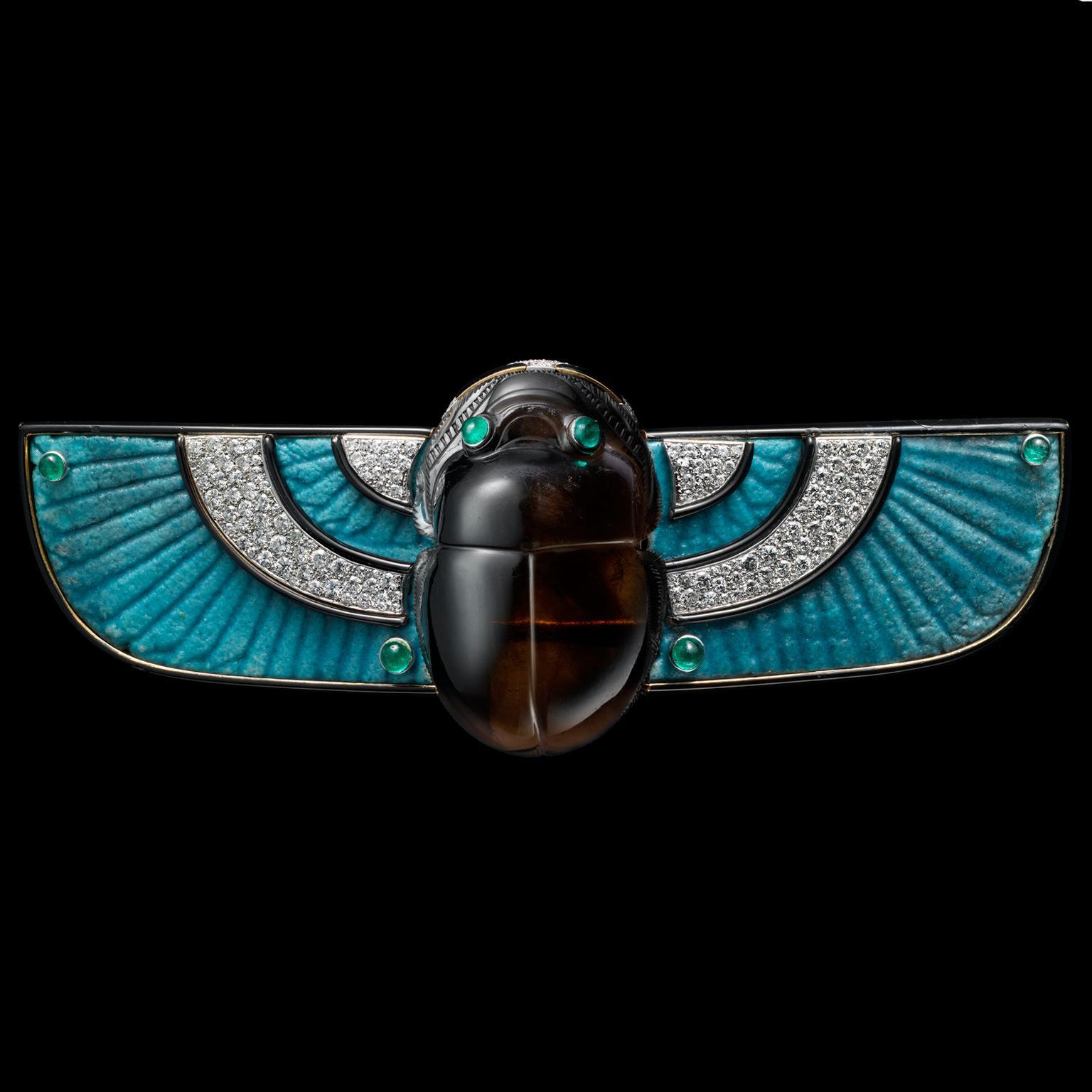
But perhaps it’s the scarab in Maison Cartier’s iconic brooch from their 1924 collection that made me ask what Western modernism is made of? For many, the brooch symbolizes the elegance and opulence both of Maison Cartier, as well as of the Art Deco aesthetic. It is made out of diamonds, emeralds, enameled parts and quartz, and the signature material: ancient Egyptian faience – a material extracted from ancient Egyptian pottery and jewelry. The very material of what was once the symbol of peak modern elegance is made out of the extracted remains of Ancient Egyptian objects, disassembled jewelry, and ceremonial items. Colonialism extracts, and design remembers.
The very design of that Cartier brooch closely replicated Tutankhamun’s jewelry, leaving us to wonder what would have happened if Howard Carter hadn’t opened and paraded King Tut’s tomb in 1922? Would Maison Cartier be still producing their iconic scarab brooch? Would the Chrysler building have Lotus designs inside its hallways? Would London’s Hoover Building have Egyptian sunburst patterns and Neo-Pharaonic wrought iron work?
Basically, the question today as we look back at Art Deco’s history, and the elegance of London, Paris or New York’s most popular designs and iconic patterns, is to ask, would western modernism in the 1920s look the way it does today without our ancient civilizations? And would Art Deco be Art Deco without Egypt?
We are now exactly 100 years after the famed international exhibition of 1925 took place in Paris, namely the ‘International Exhibition of Modern Decorative and Industrial Arts,’ which in French is called ‘Exposition Internationale des Arts Décoratifs et Industriels Modernes,’ from which the term Art Deco was later adopted. As one would expect, anything that made its way to that exhibition became the peak of the roaring 20s ‘pop culture’ – be it in fashion or furniture, art or design.
And as one would equally expect, the influence of Egypt, as well as other ancient cultures and civilisations, was never given the due recognition it deserved in how it was a formative and inextricable part of shaping western modernity, to borrow the term ‘modern’ from the title of the 1925 exhibition. In certain cases the very materials of a design object, such as Cartier’s brooch, were actually Ancient Egyptian in origin, and the questions on how the material reached French or British fabricators after leaving Egyptian lands, was never raised – not back then, and not today, as the world celebrates the 100th anniversary of the Exposition Internationale.
Yes, you guessed it right, the 100th anniversary events and conferences being held globally in Europe and North America this year did not include Egyptian experts, writers, designers, architects or historians speaking about that missing chapter: Egypt’s influence on Art Deco and Western modernity. But aren’t we still discussing if Nefertiti belongs to Berlin or Cairo in this topsy-turvy history we’re living?
So if we celebrate 100 years of Art Deco today, what exactly are we celebrating? The influence of ancient civilizations, such as Egypt, on the West? And is it truly a celebration that we’re discussing here, or a commemoration meant to decode cultural and material influences and to unpack Western dominance, tracing it back to its colonial roots and extractive nature?
‘Egypt Art Deco’ is not just an exhibition, and it’s certainly not an anniversary celebration. It is a reminder that the Paris movie theater Le Louxor could have only been built that way because of Egypt’s immense influence on Paris at the turn of the 20th century – and you’d be surprised how many Parisians never made the connection between the Cinema and Egypt, even though it is called ‘Le Louxor’ and its Art Deco slick designs reproduce Ancient Egyptian vernacular.
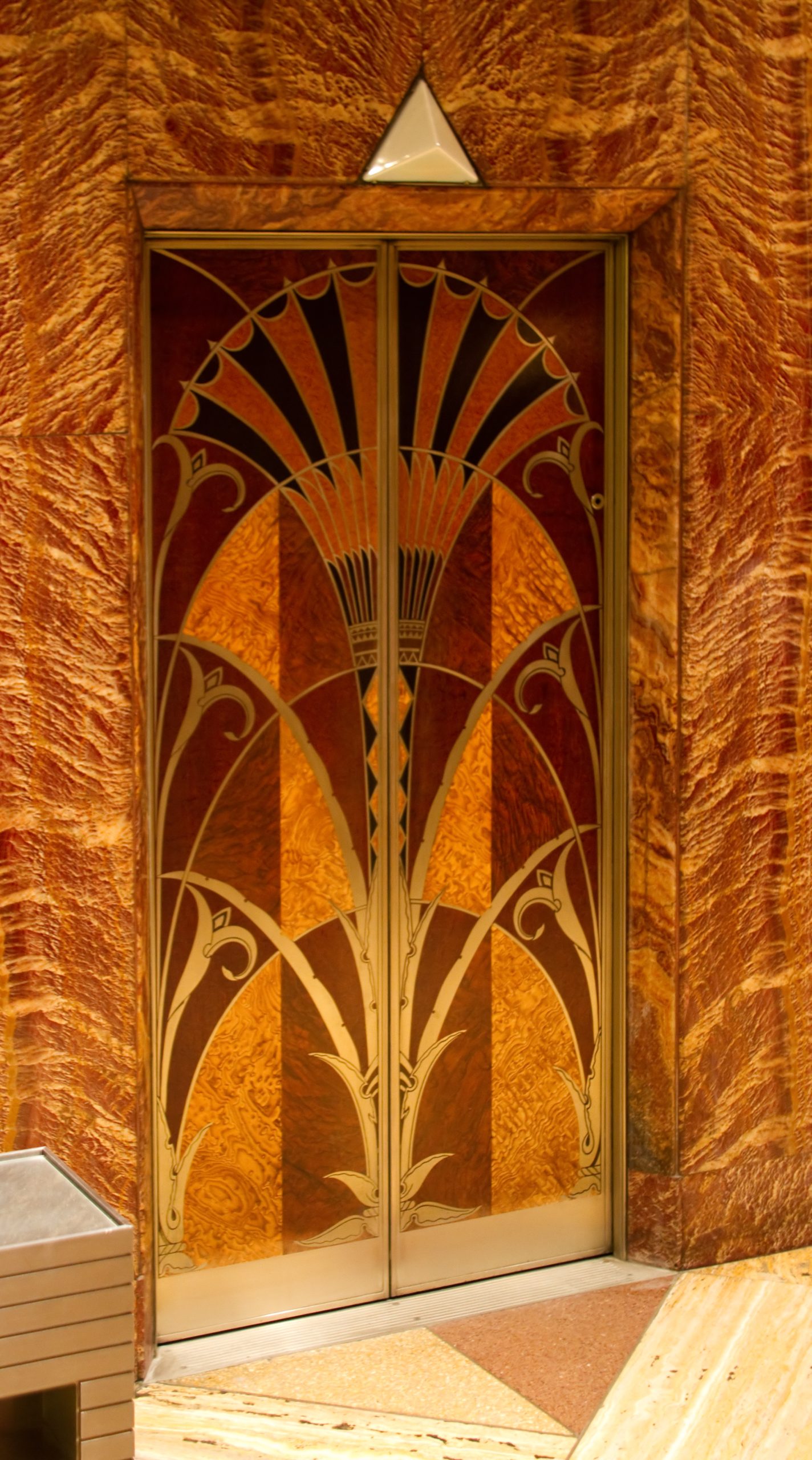
The way people don’t pause to wonder why the elevator doors of the Chrysler building have giant lotus flower designs on them, or why, long before the Chrysler tower was built, American choreographer Ruth St. Denis’ first performances were inspired by Egyptian goddesses and queens, from manners of dressing, to inspiration for choreographic spectacles touring American cities in the early 20th century.
The questions I ask are questions that are at the core of our project, ‘Egypt Art Deco,’ and they are questions raised within our team of collaborators from Wizara’s creative studio and the project’s stellar artists, such as Omar Houssien or Nader Hafez, or fashion designers such as Maison Saedi’s Ahmed Saedi; musicians like Marilena Roussoglou, urbanists and anthropologists like Adam Samuel Kucharski, or curators and creative producers including Alexandra Stock, Sama Waly, Lamia Gouda, Malak Elabd or Omar Abuheif.
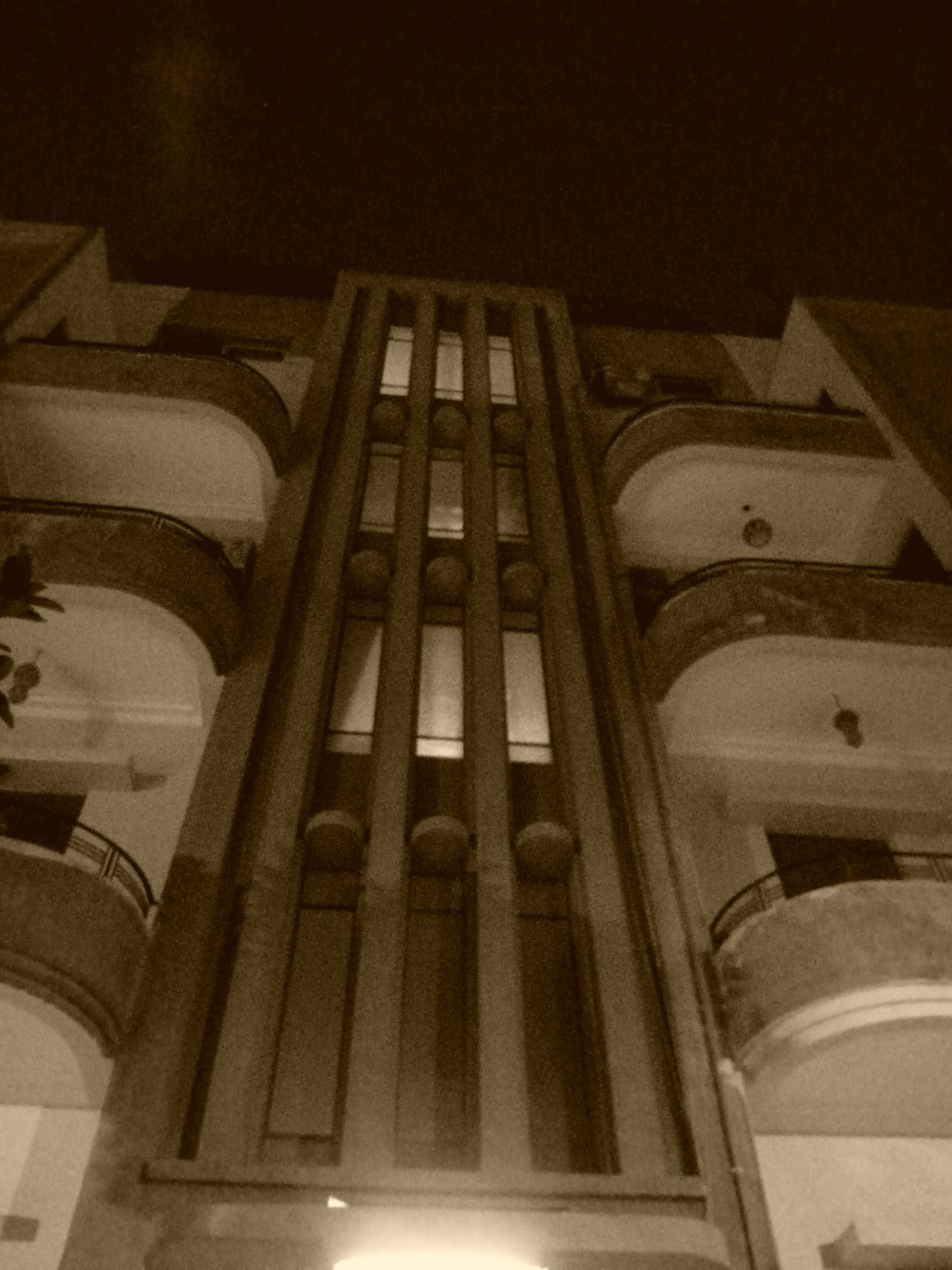
What the project also asks is how wild it gets when we look beyond Paris, London and New York – and travel south from Athens down to Eritrea, and across the oceans to India or The Philippines. Kepsilli’s doors in Athens, Prince Asaka’s former residence in Tokyo, Regal Cinema in Mumbai, Asmara’s Fiat Tagliero building, or the Perez-Samanillo Building in Manila, are all reminders of the viral visual vernacular of Art Deco, and how each locale edited and adapted it to its own myths, mysteries and histories.
Like the songs of the era; Mounir Mourad’s jazz mixed with maqam, Badia Massabni seamlessly blended her musical revue with Arabic ballads, Josephine Baker danced in Cairo’s Emad Eddin Street, and Sophia Vembo sang in Alexandria’s Cafe Delice. Similarly, the popular culture and iconic design influences mixed the strangest sources together to create lasting monuments, and people from worlds apart met across the strangest cities.
Just like the cocktails of that era, Art Deco was a slick Martini, of equal parts elegance and rebellion stirred. A perfect Manhattan, made out of license and restraint.
Today, a hundred years later, I think what we’ve learned from the daring designs of the 1920s is that innovation requires curiosity, and the assimilation and creation of a long lasting new. A new which might be rooted in an ancient past, but it still produces its own structures, codes and canons distilled to their very essence.
With this renewed sense of interest in Art Deco as a design movement, now as the world looks back at Paris a century later and with the renewed Egyptomania after Egypt’s opening of the Grand Egyptian Museum in 2025 – one could only hope that this brings a wave of innovation rather than imitation, and that what merits celebration in these long histories is the daring spirit of its innovators, and the experimentation in arts and design, and not merely the reproduction of patterns. As the urbanist Adam Samuel Kucharski notes: “This is all the more urgent when we think of the public realm. Art Deco’s architectural touch points shaped the global expectations of modern urbanity. Do our contemporary architectural motifs measure up? Should we not demand that our public art is not solely instagrammable but rather creates an aesthetic bridge from the motifs of the past to our aspirations for the future?”
It’s not about sticking another lotus illustration on fabric to make Art Deco drapes, or dropping an electro-swing album, but rather asking ourselves what were the strategies and maneuvers that we can learn from within this iconic art and design movement? And how do we produce new work without watering down the spirit and essence of the source materials.
And as some take their drinks on the rocks, swimming in a sea of slowly melting ice, others like to do theirs up, with no dilution, just the distilled spirit and essence of the roaring 20s. Mine is always up!
Here’s to glamour – to the ancient shining once again, and to the new, opulent and ample.