

On a rooftop in Beyoğlu, the evening crowd moves with familiar energy. It could be Berlin or Brooklyn. The music cuts mid-beat, creating a moment of perfect suspension. Then the call to prayer begins, cascading from dozens of minarets across the sprawling city. The dancers don’t stop; they adjust their rhythm, weaving the ancient call into the electronic pulse.
When the bass returns, it carries something transformed. This is how Istanbul’s electronic scene operates: not by choosing between tradition and modernity, but by discovering ways to make them converse.
The Ironing Board Revolution
In 2015, Sami Baha was crafting beats in his cramped Istanbul apartment with the most makeshift setup imaginable. Through SoundCloud’s digital corridors, these bedroom experiments traveled to Planet Mu, the revered UK label behind Aphex Twin and Squarepusher.
“I literally produced my first serious track on an ironing board. Not even a table, and terrible headphones,” he recalls. Now back in Istanbul after formative years in London and Berlin, Sami channels deeper, more personal influences. “I grew up listening to Arabesque music, Turkish pop. When I was three years old, my family was videoing me singing Turkish songs.”

His approach goes deeper than sampling. “Turkish music drums are not straight. There’s always something wavy going on,” he explains. This reflects aksak, the traditional concept of asymmetrical rhythm that creates a distinctive “limping” feel. Rather than lifting melodies wholesale, Sami encodes these irregular patterns into contemporary beats. It’s a cultural translation: maintaining the DNA while transforming the expression.
Cultural transmission happens through the most unexpected channels. A recent taxi ride became impromptu education: “The driver was playing really intense wedding music with traditional Turkish elements but really rave-like. I told him: this is the best club I’ve been to tonight. During that half hour, he literally made me a DJ set in the taxi.” These moments of serendipitous discovery fuel the scene’s evolution.
This urgency pulses throughout the underground. Can Molti, shaped by his time at the legendary Istanbul club Minimüzikhol, and now established as one of the city’s most respected house music ambassadors, articulates this lived reality: “The scene is survival-driven rather than nostalgia-driven. Because we don’t have a stable ecosystem, venues and artists build everything instinctively, fast, adaptive, and willing to take creative risks.”
Tucked away in Cihangir without signage, Minimüzikhol has endured seventeen years at an intimate 150 capacity. Co-owner Ceylan İpek El explains their philosophy: “We see ourselves as cultural ambassadors. When we bring an international artist to play at Mini, we’re not just importing their music. We’re introducing them to our city, our culture, our community.”
The venue’s most profound connection materialized in 2018. “I remember hosting the Bassiani crew from Georgia,” she recalls with emotion. “They were key figures in the Georgian protests. We weren’t just sharing music; we were connecting scenes facing similar pressures, exchanging solidarity through sound.”

Scaling the Underground
At Klein Phönix, marking ten years as Turkey’s leading electronic venue, the approach balances international acts with local talent. Co-founder Mertkan Akd sees this as essential: “Our focus has always been to connect Istanbul with the global electronic scene while supporting local talent.”
The cultural programming reflects Istanbul’s unique position. “Many producers weave Anatolian melodies and traditional rhythms into their work,” he explains. When done thoughtfully, the impact can be powerful, as seen with Mahmut Orhan‘s recent edit of Erkin Koray, which resonated strongly both locally and globally.
What does this emergent frequency sound like? Seçil Karbo, who performs across the city’s venue spectrum, captures the sonic evolution: “Artists are slowly moving away from copying Berlin’s industrial severity or London’s groove-heavy bass lines. What’s emerging now is more emotional, more melodic yet still raw. A bit dreamy, a bit melancholic, unmistakably dramatic.”
The energy springs from lived experience, not aesthetic calculation. “The city carries so much tension and beauty intertwined that dancefloors feel alive in ways different from Berlin or London. It’s never minimal or sterile – it’s human, romantic, dramatic.”
Where Berlin techno pounds in mechanical 4/4, local electronic music breathes with irregular patterns that mirror Istanbul’s complex pulse. These aren’t conscious sampling choices but unconscious cultural absorption.

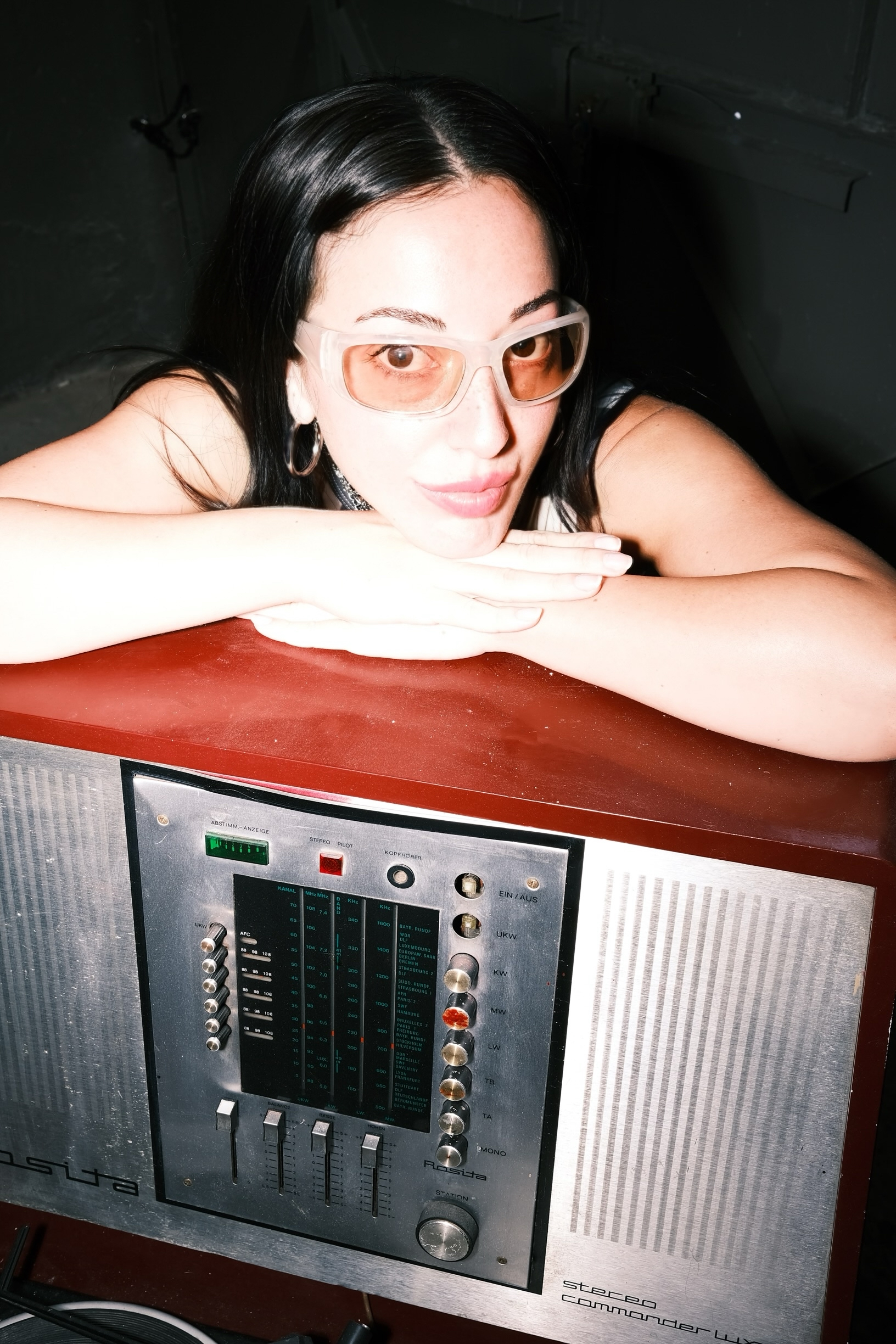
Emiran, whose experimental work gracefully bridges genres, describes this process of unconscious absorption: “Growing up in Turkey, being surrounded by so many different sounds isn’t something you consciously seek out. It’s simply the natural background tapestry of life here. Greek melodies float in from the west, Balkan rhythms spill over from the northwest, Kurdish music shapes the southeast. All of it sinks into you without asking permission.”
Can Molti attempts definition through contrast: “We’re not trying to copy other cities. The music that comes out of here is like the city: rooted in the old, beating fast, in love with the night, and stubborn enough to keep living until sunrise.”
Carlita‘s trajectory from Istanbul Conservatory to international festival stages embodies this expanding potential. “Conservatory training teaches you something irreplaceable that you can’t get from YouTube tutorials. It teaches how to think structurally about music,” she explains. “But Istanbul possesses this raw, electric energy: chaotic, poetic, ancient and futuristic simultaneously.”
Moving to Boston and New York expanded her world, yet leaving clarified her identity. “Moving away made me understand how much of my identity was rooted there, the sound and the chaos.” Getting signed to Ninja Tune symbolized broader possibilities: “Turkish artists don’t need to fit stereotypes for international recognition. We can be experimental and genre-blending.”
She’s part of a wave that’s been building. Mahmut Orhan‘s 2016 breakthrough with “Feel” (537 million views on Youtube, chart-topping across 11 countries) proved Istanbul’s global appeal. His “6 Days” remix conquered the Balkans. The sound keeps evolving naturally, driven by the city’s unique position between continents and cultures.
Cultural Archaeology
The movement to reclaim and recontextualize Turkish musical heritage spans multiple generations. Mehmet Koryurek‘s Turkish Edits project represents systematic cultural archaeology: “We edit, produce, collect, and curate 70s and 80s Turkish folk, Anatolian rock and psychedelic tracks, making them more dancefloor-friendly while preserving their essential spirit.”
This direction has deep historical roots. Artists like Kabus Kerim and Baris K pioneered it, inspiring a new generation of producers to dig deeper into their dusty archives. The movement gained unstoppable momentum as collectors discovered that forgotten Anatolian psychedelia could ignite contemporary dancefloors with surprising intensity.
But authenticity matters more than algorithm appeal. Fosil, co-founder of the defunct BADMASH collective, emphasizes this principle: “The scene was built by people who spent years sweating in the same rooms, taking risks, supporting each other. People always know who put in the real work. Authenticity outlives hype every single time.”
Anatolian Sessions, working with Harabe Records, treats heritage as living material: “We’re translating traditional music into modern language, ensuring its survival for today and tomorrow. This is an effort to rescue cultural heritage from fossilization.”
Can Molti describes his subtler approach: “Turkish music has never been the core of what I do; it’s more of a side channel that opens memory at the right moment. I place it selectively, not to create nostalgia, but to help listeners connect with their own story.”

Mercan Dede, who pioneered this synthesis in the 1990s, sees natural evolution: “As Nina Simone said, ‘An artist’s duty is to reflect the times.’ I learned traditional instruments living in Turkey, then moving to Montreal brought me to a place where both Eastern Sufi elements and progressive electronics became part of who I was.”
Surviving and Thriving
Economic factors shape every creative decision. Equipment imports face crushing taxes; currency fluctuations devastate purchasing power. “Artists from Istanbul are fortunate and unfortunate simultaneously,” Sami Baha observes. “You have this city full of inspiration, but venues where you can play are severely limited.”
Hemi Behmoares, promoting events since 2008, identifies the systemic challenges: “The biggest problem is funding, with no foundations supporting independent artists, absolutely zero state support. During COVID, support for musicians was a disaster.”
Yet the scene persists through collective resilience. Can Molti pinpoints what’s needed: “For growth, the most critical need is stability. Economic fluctuations make long-term planning almost impossible. Because many club-goers can no longer afford nights out, algorithms started shaping taste.”
Yet this creative resilience is quietly building tomorrow’s infrastructure. Mehmet Koryurek, documenting the city’s electronic evolution for three decades, sees renewal ahead: “Istanbul is the first melting pot of the world. It’s a crossroad between east and west. It’s like a sponge that soaks whatever passes through.”
His Life From Istanbul project proved this during the pandemic, reaching one million viewers globally with 180 DJs. “We tried to keep spirits up, get into people’s homes, generate income for DJs who were out of work.”

“The decline is exciting for me,” he observes. “I have seen it before. A burst has always helped the scene come back stronger. I believe late 2026 and all of 2027 will be much livelier than today and definitely much more rooted.”
Ceylan envisions scaling through collaboration: “What nightlife here really needs is its own Arthur’s Table. We need to come together, clubs, bars, artists, sponsors, building something bigger.”
“A few years ago it felt more fragmented,” Seçil Karbo observes. “Now there’s more courage, more identity, more people trusting their own sound.”
From bedroom studios to international stages, a generation creates music drawing from local tradition without becoming imprisoned by it. The sound carries this metropolis’s distinctive DNA (emotional, asymmetrical, layered with unexpected elements) while remaining thoroughly, unapologetically contemporary.
Artists like Oceanvs Orientalis and Avangart Tabldot succeed by maintaining authenticity while speaking fluent global musical languages. “We’ll keep the lights on, the music loud, and the doors open,” Ceylan says with quiet determination.
The beat continues, asymmetrical and eternal.










Noose Politics: What the Death Penalty Means for the West Bank’s Future
A new Israeli law mandating executions in military courts could reshape the conflict and close one of its last political channels.